How the First-Ever Plantation Almost Fell to Full-Scale Revolt
Daniel Rood on The False King of São Tomé
The priest was accustomed to belting the rites of Mass over a chorus of coughs, wheezes, and creaking pews. But on a Sunday morning in July 1595, the groan of the heavy wooden door startled him from his gesticulations. Necks craning to the back of the hall, a hush fell over the small parochial church of Santa María Trinitá on the African island of São Tomé. The priest watched a group of Angolans stride up the aisle, likely clad “in the manner of heathens.”
Luxuriant flashes of red and purple cloth rolled up and sank away as the tightly bunched group advanced on the altar. An instant before the attack commenced, and far too late, the priest recognized them as mocambos: escaped slaves, sworn enemies of Portuguese rule who occasionally descended from mountain redoubts to attack individual plantations before beating hasty retreats. This time there would be no retreat.
Armed with muskets and cane knives, Black rebels “killed as many whites as they could find” in the church, including the priest. With the dead and the wounded sprawled around them, the mocambos gulped the wine from the sacramental chalice. Then they torched the building.
For the planters, the plantation was a “New-found Eldorado of the West,” minting gold for planter and king alike. For the mocambos, the plantation was hell.
The rebels next turned to the source of their torment: the sugar plantations of the island. During the five-month cane harvest every year, thousands of enslaved people were forced into the backbreaking task of cutting down vast, uniform fields of cane. Teams of oxen hauled the wagonloads of the crop to the boiling house, where more slaves spent countless hours feeding canes into the grinding mills and scooping gallon after gallon of juice through a succession of fire-heated pans to condense the sugar and ready it for drying and packing.
When the Portuguese planters of São Tomé transformed a diverse tropical island ecosystem of thousands of plant species into a uniform landscape dominated by a single crop; when they used merchant capital to fuse agricultural and manufacturing operations into a single top-down organization; and when they imported thousands of slaves from mainland central Africa to undertake the labor, they assembled a kind of economic machine that the world had not yet seen. For the planters, the plantation was a “New-found Eldorado of the West,” minting gold for planter and king alike. For the mocambos, the plantation was hell.
On the first day of the revolt, the rebels burned down sixteen sugar mills. A Portuguese scribe reported that, as they engaged in this work, they “gathered to themselves all the people and slaves that they encountered.” Recruits “swore loyalty to the death to the Negro who began to be called ‘King of the Island,’” a charismatic leader named Amador, who ordered escaping slaves to return to their former plantations and burn them down. The people on whom the planter depended to make his plantation run, Amador probably reasoned, were the same people who were best qualified and most motivated to annihilate it.
By the time they were finished with the countryside, Amador’s followers, now numbering around five thousand souls, had “burned sixty properties with their sugar mills, and during sugar-making season no less.” They had devastated the export economy of São Tomé. In what would become a refrain in the official account of the revolt, the number of dead Europeans was mere background noise: “In all of the island,” reported the Portuguese official, “there didn’t remain a single property that could make sugar.”
Five days after the attack on the church, thousands of rebels-in-arms assaulted the Portuguese capital city on the island. They employed military tactics they had most likely brought from the African mainland. Banners rippling in the breeze, they advanced on various entrances to the city in independent columns of soldiers, each led by a captain. In spite of their organization, better-armed Portuguese “militiamen responded with much ardor,” reputedly killing at least three hundred of the attackers. The surviving mocambos retreated, burning all the properties they came across.
Two weeks later, to finish off the reign of the Portuguese, and with them their plantations, Amador led another attack on the city with at least twenty-five hundred armed combatants, but then, “both sides being afraid,” Amador made a fatal error. He delayed the planned nighttime attack until dawn, giving the city’s defenders time to prepare. “Impetuous battle” began around five or six in the morning and lasted until midday, with clear victory for the Portuguese: “At least 500 negros [were] killed,” a scribe boasted, with “many taken prisoner.” But Amador evaded capture yet again, “fleeing to a property where he had his principal force.” That force was then routed, yet Amador still was not caught.
After the successful defense of the city, the Portuguese governor extended amnesty to all rebels who surrendered. Four thousand of them, hoping to avoid torture and execution, declared loyalty to the slaveholding regime, but Amador and many others were still at large. On August 14, 1595, Amador was betrayed by five lieutenants, who captured him and handed him over to the city of São Tomé. Once in the hands of the incensed and terrified Portuguese authorities, Amador was swiftly punished.
Sugar, the real false king, the sickly sweet sacrament, had brought São Tomé to catastrophe—but not before it had brought such riches that European elites had already begun the plantation cycle in the conquered Americas.
First, they tied him in a leather sack and dragged him behind a horse. Then they chopped off his hands. Finally, he was drawn and quartered, his remains displayed in the public square. Other leaders were tortured, and a couple sent to prison. The remainder of the ex-rebels were granted amnesty, but we do not know if they were dispatched back to the plantations they had razed. It seems more likely they were sold and chained in ships’ holds bound for the newer sugar plantations of Brazil.
During his breathless recounting of these violent events, the same scribe who acknowledged that thousands of people on the island had called Amador “King” began to refer to him dismissively as “the False King of São Tomé.” While intending to flatter his primary audience, King Philip II, as the one true ruler of all Iberian possessions, the official may have protested too much. After recounting the revolt that ended with Amador’s gruesome execution, he concluded with the same haunting refrain: “And with this the Island rests quiet and secure, there still remaining intact 24 or 25 sugar mills.” Even Philip II was not the supreme authority of the island. The plantation was sovereign. Immediately upon regaining control of the lowlands of São Tomé, the Portuguese dedicated scarce manpower and equipment to the resumption of sugar cultivation, the repair of the mills, and the terrorizing of new shipments of captives.
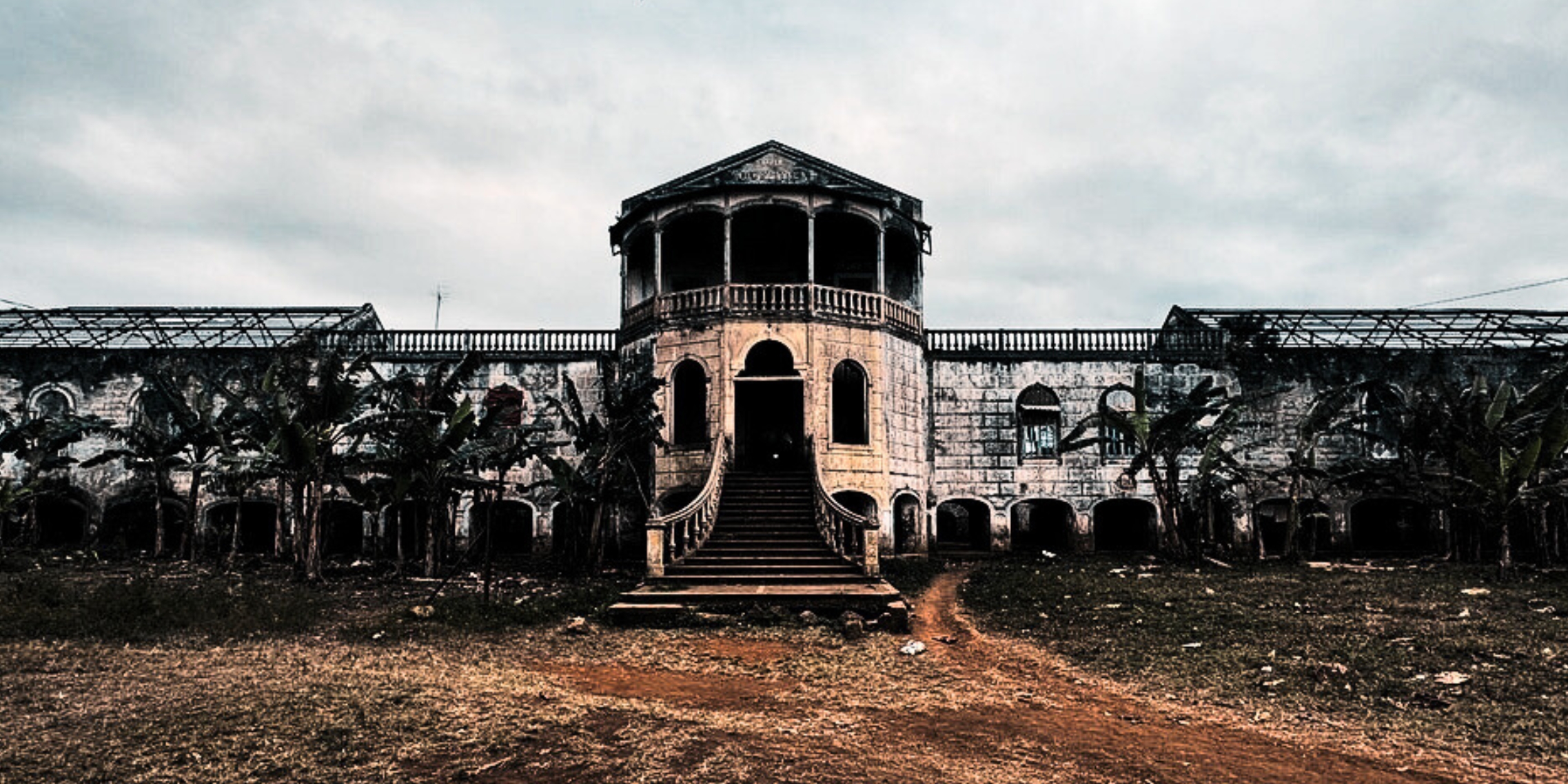
The rebuilding process would fail. While in 1570 the island furnished 70 percent of the sugar in Antwerp—Europe’s most important market—the figure had crashed to 2 percent in the 1590s. By 1609, Portuguese officials were fondly recalling the days when the northern third of the island waved its glossy leaves of sugarcane at the sun, and “500 or 600” captives arrived from Congo and Angola every month to labor and die at the “many sugar mills” dotting the deforested coastal plain.
The colonists awoke from their dream of lucrative plantations to find churches in ashes and molasses cauldrons rusting in the grass. Sugar, the real false king, the sickly sweet sacrament, had brought São Tomé to catastrophe—but not before it had brought such riches that European elites had already begun the plantation cycle in the conquered Americas. By 1600, 86 percent of the sugar in Antwerp came from Brazil. São Tomé witnessed the first plantation boom and the first plantation ruin in the history of the world.
So influential was the “false king” of sugar in the seventeenth century that wars between Protestant and Catholic forces in Europe often became a struggle over plantations in the Americas.
After the decline of their sugar industry, São Tomé merchants and planters began to redirect their more short-distance slave trade to the Americas. They transformed the island into the major seventeenth-century stopover point for slave ships beginning the journey to the Americas. Those same merchants and planters were also heavily involved in the first Portuguese incursions into mainland Central Africa, which resulted in the establishment of the colony of Angola in 1575—a key lever for the slave trade’s growth. One Portuguese official enthused in 1591 that, even though sugar production on São Tomé was in decline, the Angolan slave trade “would not wear out until the end of the world, because the land is so populated.”
The promise of an infinite supply of captives gave Portuguese merchants reason and ability to do something unusual for the time: to concern themselves with the making of goods. Early modern men of commerce rarely did this, but on São Tomé the Portuguese saw a new kind of potential in industrializing agriculture on the basis of racial slavery and conquered land. They saw the plantation system as a new machine for producing wealth by pricking the desires of European consumers, and this entry of merchant capital into the hurly-burly of tropical agriculture was fateful.
The plantation offered something much more sustainable than wealth coming from a silver mine—the other engine of European empire in the early modern world. Each coin newly minted reduced the value of the silver already in circulation. The more you made, the less it was worth. By contrast, planters could always seek out new sources of land, and they would never run out of cheap labor. Because the consumers’ appetite they promised to satisfy was also bottomless, they could grow the system indefinitely without confronting diminishing returns.
So influential was the “false king” of sugar in the seventeenth century that wars between Protestant and Catholic forces in Europe often became a struggle over plantations in the Americas. A nine-year conflict between the Dutch and Portuguese over the sugar zone of northeastern Brazil was mirrored by their brutal struggle for control of the slave trade in Angola. For the Portuguese, the Dutch capture of the Central African port city of Luanda in 1643 threatened the whole system.
As the governor-general of Brazil lamented to the king, “Angola, milord, is completely lost, and without it Your Majesty does not have Brazil, because settlers will lose heart without slaves for the sugar mills.” This was probably the first transoceanic conflict over a commodity in the history of modern capitalism, and it highlighted the links between the New World plantation and slave-trading forts of the African coast. Policymakers were well aware that one could not exist without the other.
To regain their burgeoning slave-sugar empire in 1648, Portuguese warships attacked the Dutch-run plantation colony of Pernambuco in Brazil. As historian Geoffrey Parker writes, they “burned so many plantations . . . that the province lost forever its position as the colony’s leading exporter of sugar.” But new frontiers beckoned. The cessation of sugar shipments out of Brazil provided an unparalleled opportunity for ambitious planters in the new British possession of Barbados.
__________________________________
From In the Shadow of the Great House. Used with the permission of the publisher, W. W. Norton and Company. Copyright © 2026 by Daniel Rood

Daniel Rood
Daniel Rood is an associate professor of history at the University of Georgia specializing in the history of Atlantic slavery. He authored The Reinvention of Atlantic Slavery: Technology, Labor, Race, and Capitalism in the Greater Caribbean. He lives in Athens, Georgia.