How Lewis and Clark Invented the Western
Craig Fehrman on the Duo’s Influence on a Nascent American Literature
In the nineteenth century, empires fought over science and resources and land. But they also fought over poetry. “The Americans,” John Quincy Adams wrote to his father, “have in Europe a sad reputation on the article of literature.” The young diplomat hoped to change this: “I shall purpose to render a service to my country by devoting to [poetry] the remainder of my life.”
Adams would serve in other ways, but he was right to worry. During this period, a nation’s literary achievements could provide patriotic pride and a measure of national success—or national failure. “In the four quarters of the globe,” sneered one British critic, “who reads an American book?”
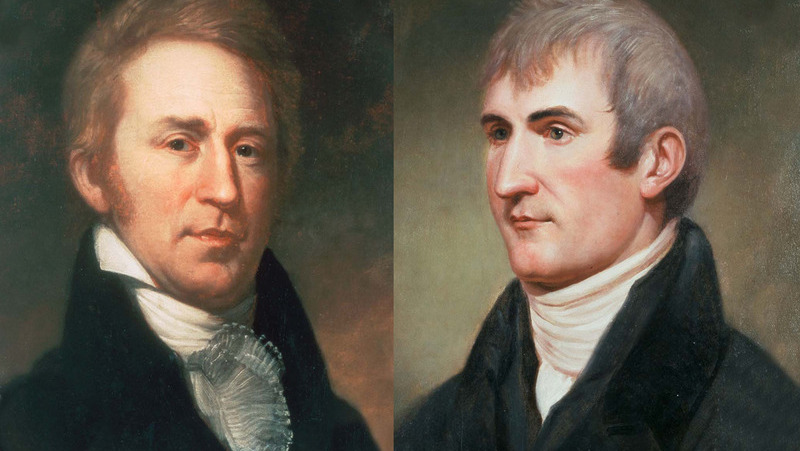
Meriwether Lewis and William Clark also hoped to change this. Thomas Jefferson had many goals for their expedition, and one of them was literary. When the captains returned in 1806, they did so as international celebrities. Lewis quickly announced that he was writing a book in three volumes—the first a narrative of their epic journey, the second a survey of the Native nations they’d met, the third a volume of science, all of it accompanied by a massive map from Clark that would finally fill in the North American interior.
Given Lewis’s literary talent, and given the expedition’s global fame, this book seemed destined to be the third great work of American nonfiction, joining Jefferson’s Notes on the State of Virginia and Benjamin Franklin’s Autobiography. But Lewis never submitted a word. “Everybody is impatient,” Jefferson wrote to him in 1809. It was the last letter he ever sent his friend.
Living in Poe’s America, it can feel like the anxiety of influence has reversed itself—like Lewis, the real Lewis, has been a Poe protagonist all along.
That same year, in the fall, Lewis killed himself. The reasons for this were as complicated as the expedition itself, and those complications bled into one another. One of the documents I uncovered while writing my new book on Lewis and Clark was a letter from Adams, who shared a dinner with Lewis a few days after his return. The great explorer, John Quincy wrote, was “more altered in manners and appearance…than I ever beheld any man.” Adams could not believe how much the expedition had worn Lewis down. “I did not know him again, though I expected to meet him,” Adams wrote. “He looks fifteen years older.”
With Lewis gone, the book fell to a grieving Clark. He ended up working with Nicholas Biddle (the same Biddle who would later battle Andrew Jackson in the Bank War). Biddle studied the journals from the captains and their men, which ran to more than a million words. He asked Clark follow ups, and Clark asked his men, including Toussaint Charbonneau. This meant Sacajawea also contributed her insights, indirectly or not.
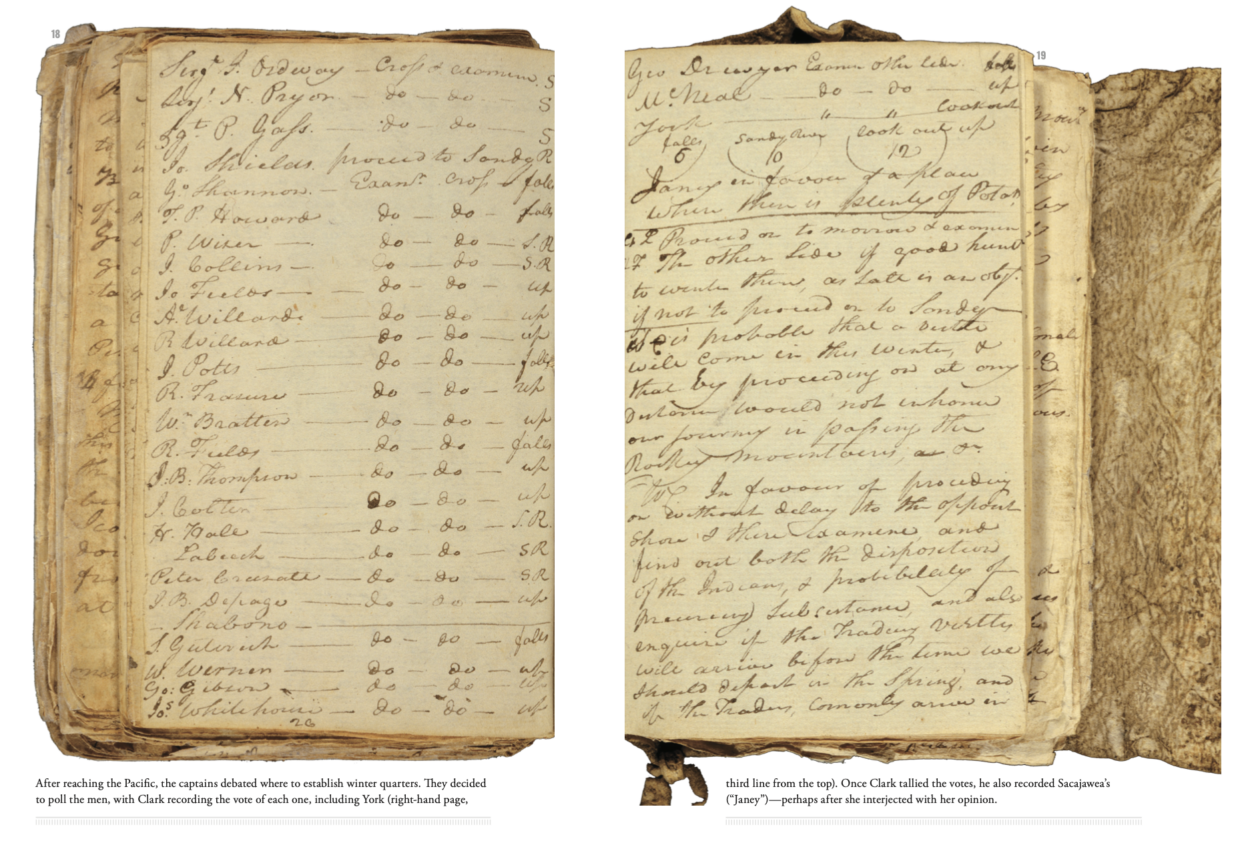 A spread from Clark’s elk-skin journal.
Biddle synthesized this material into his own third-person narrative. Another writer, Paul Allen, pitched in.
So did Jefferson. He wrote a long and heartbreaking “Life of Captain Lewis” to open Biddle’s book. Jefferson described the years he’d spent with Lewis at the White House: “While he lived with me in Washington, I observed at times sensible depressions of mind.”
Now Lewis was dead, a tragedy with many costs. One of them, according to Jefferson, was that readers—readers in America, readers around the world—had lost “the benefit of receiving from his own hand the narrative…of his sufferings and successes.” Lewis and Clark had sacrificed so much to cross “that vast and fertile country,” a country Americans were “destined to fill.” And what would they fill it with? Well, farms and future states—this was Jefferson, after all. But the ex-president saw other possibilities: “with arts, with science, with freedom and happiness.”
Americans would fill it, in other words, with books.
*
Biddle’s History of the Expedition Under the Command of Captains Lewis and Clark finally appeared in 1814. Its paraphrases remained the only available version of the journals for most of the nineteenth century, and it was widely and obsessively reviewed. Who reads an American book? Robert Southey, it turns out.
The famous Romantic, whom the king had recently appointed Britain’s poet laureate, wrote an essay about the expedition. It ran for fifty-one pages. While Southey admired the Americans’ courage, he found much to mock. Biddle had simplified his History, omitting most of Lewis’s science. Southey didn’t know this, and he criticized the captains for failing to record enough Enlightenment observations, especially when compared to their British counterparts like Captain Cook.
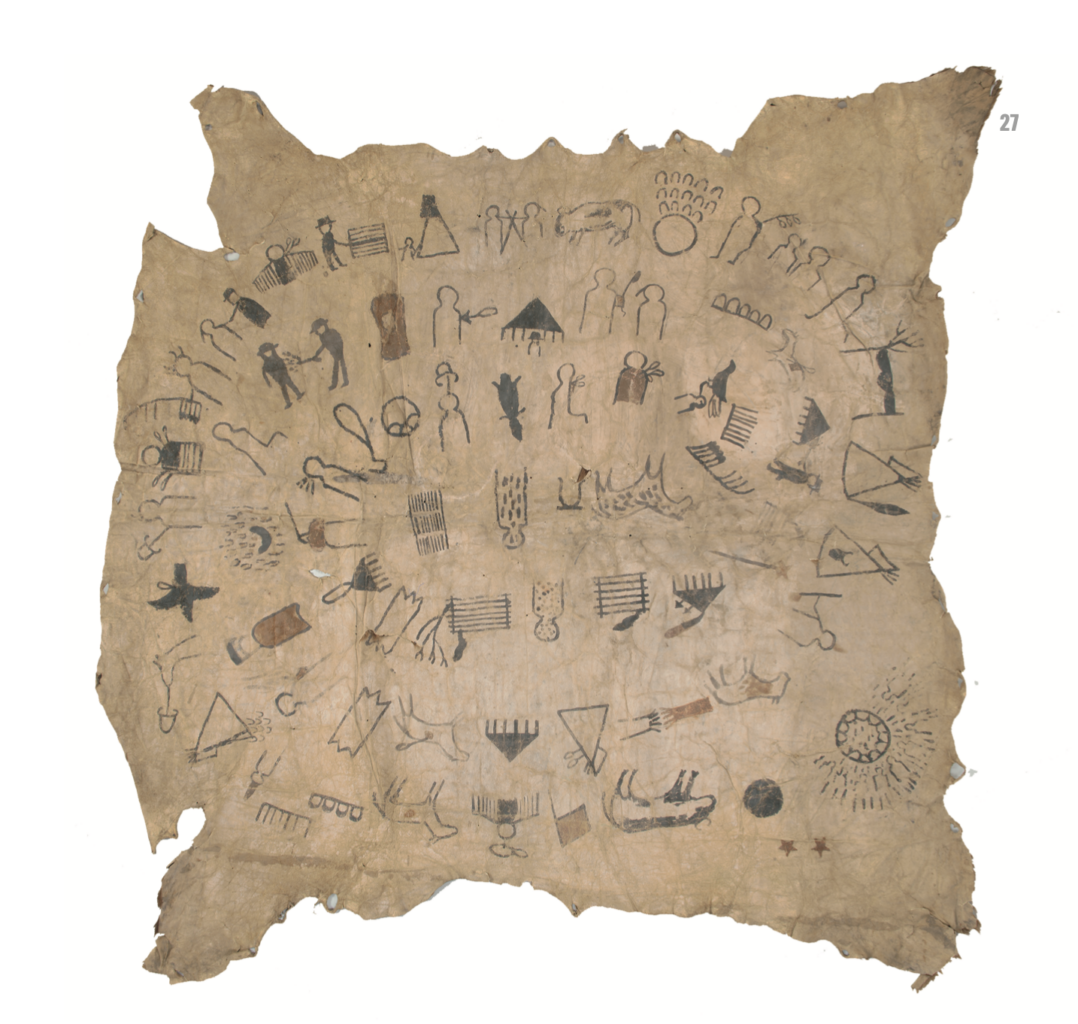 A winter count by Lone Dog, a Yanktonai.
Of course, Southey would have said that no matter what. This was a rivalry, if not quite a war, and literature remained an important imperial front. The poet paused to smirk at the homey names on Clark’s maps—Rum River, Little Shallow River, Onion Creek. To Southey, they felt as uniquely American as the captains’ swaggering confidence. “When this country shall have its civilized inhabitants,” Southey wrote, “how sweetly will such names sound in American verse!”
Then the poet, in classic big brother style, offered some lines of his own:
Flow, Little-Shallow, flow; and be thy stream
Their great example, as it will their theme!
Isis with Rum and Onion must not vie,
Cam shall resign the palm to Blowing-Fly,
And Thames and Tagus yield to great Big-Little-Dry.
*
The authors who would defeat critics like Southey—who would at last elevate American literature on the international stage—came a few years later. Their names are still known today: Washington Irving, Edgar Allan Poe, James Fenimore Cooper. What’s less known is that all three drew deeply on Lewis and Clark for inspiration, for subject matter, and for research.
Irving was the most obvious acolyte. He spent most of his life thinking and reading about the American West. Another big review of Biddle’s History ran in Analectic Magazine, which Irving edited.
In 1832, Irving decided to see the region for himself. He had read Biddle’s History carefully. (During his western trip, Irving met with an aging Clark, and they talked about York, the enslaved man who’d emerged as a key member of the expedition.) Once Irving turned to his own books inspired by his travels, he dusted off his copy of Biddle. Astoria and A Tour of the Prairies abounded in anecdotes, landscapes, and descriptions of Native people lifted directly from Lewis and Clark. Southey had scoffed at their place names. Irving recycled them proudly—for their authenticity and their announcement that he was writing a distinctly American literature.
Poe’s debts were stranger. In 1840, he began publishing magazine excerpts from The Journal of Julius Rodman. The journal was a hoax, like his later hoax involving a balloon. Poe had invented both text and author, but each month he presented them as the truth—as a newly discovered and freshly footnoted record of an expedition that predated Lewis and Clark by a decade.
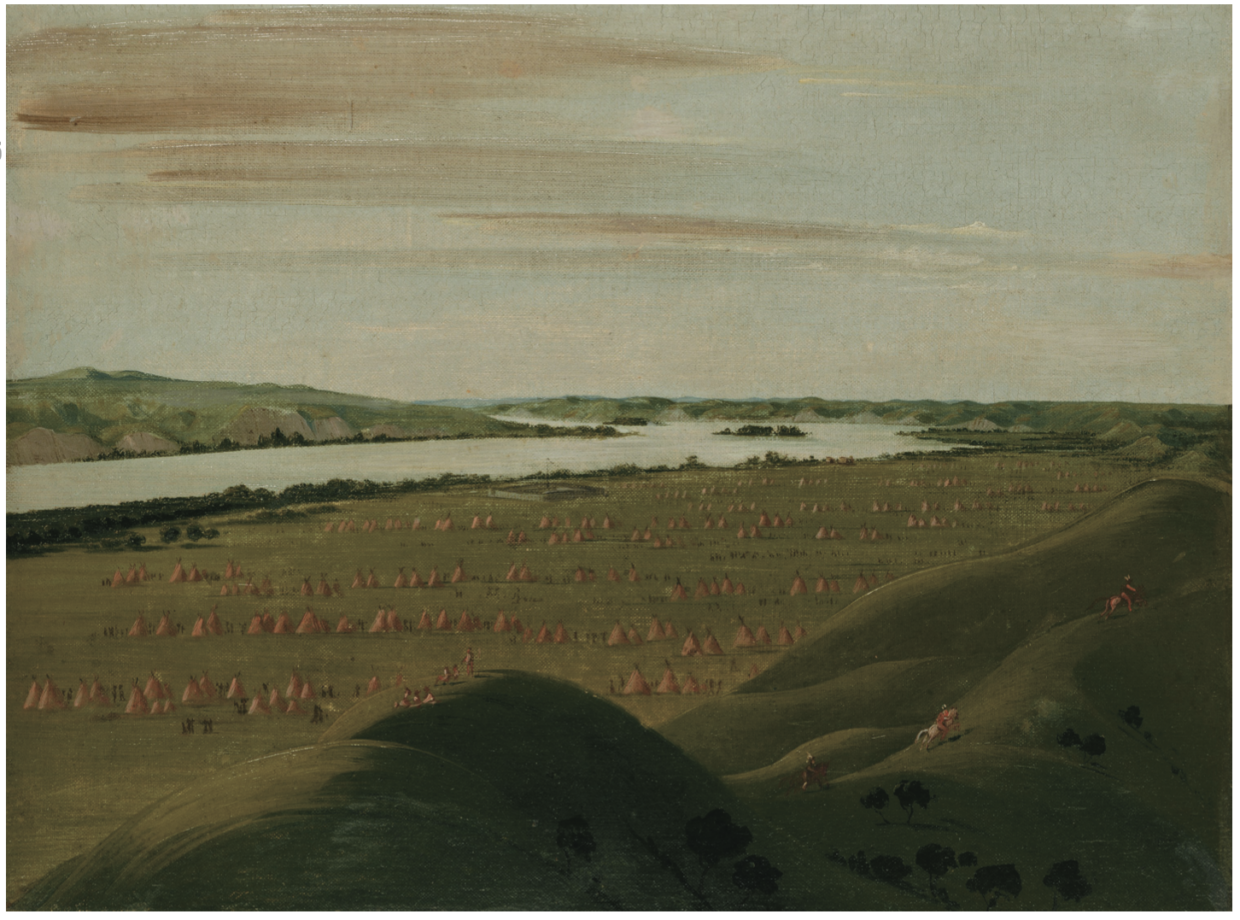 A painting of Lakota tipis along the Missouri by George Catlin.
Like Irving, Poe had read Biddle’s paraphrase closely. “Julius Rodman” followed the same route as Lewis and Clark—a route Poe, who would never cross the Appalachian Mountains, had never actually seen. Rodman even traveled during the same seasons as Lewis and Clark. His party included an enslaved man, modeled after York, and a trusty dog, modeled after Lewis’s Newfoundland.
Parts of Rodman’s journal remained pure Poe. Consider his description of the saturated scenery:
On the edges of the creeks there was a wild mass of flowers which looked more like art than nature, so profusely and fantastically were their vivid colors blended together. Their rich odor was almost oppressive. Every now and then we came to a kind of green island of trees, placed amid an ocean of purple, blue, orange, and crimson blossoms.
Rodman himself felt like a classic Poe protagonist, a man with an intricate psychology and a fanatic’s commitment to his cause. To fortify the hoax, Poe wrote an introduction to the “journal,” and in it he described Rodman as someone haunted by “a desire to seek, in the bosom of the wilderness, that peace which his peculiar disposition would not suffer him to enjoy among men.”
And yet those traits were clearly inspired by Lewis. Poe’s introduction claimed that Rodman suffered from “hereditary hypochondria”; Jefferson’s “Life” claimed that Lewis suffered from “hypochondriac affections,” which was “a constitutional disposition in all the nearer branches of the family.”
Lewis and Clark didn’t invent or even inspire this genre by themselves. They did it with the help of others, starting with the imagination of Cooper and the humanity of his Native sources.
Today, living in Poe’s America, it can feel like the anxiety of influence has reversed itself—like Lewis, the real Lewis, has been a Poe protagonist all along.
*
Irving’s Astoria became an international hit, with editions appearing in Britain and Germany and France. Julius Rodman never finished his voyage, but Poe’s hoax fooled at least one reader, a US senator who cited the incomplete “journal” as evidence for America’s imperial claims to Oregon.
Lewis and Clark’s most important early reader, though, was Cooper. In 1825, he began writing The Last of the Mohicans, his second novel starring a hunter named Natty Bumppo. This project made Cooper nervous for several reasons. (A sequel? Would readers and publishers really want a sequel?) But the most pressing was his lack of authentic details about Native people and Native culture.
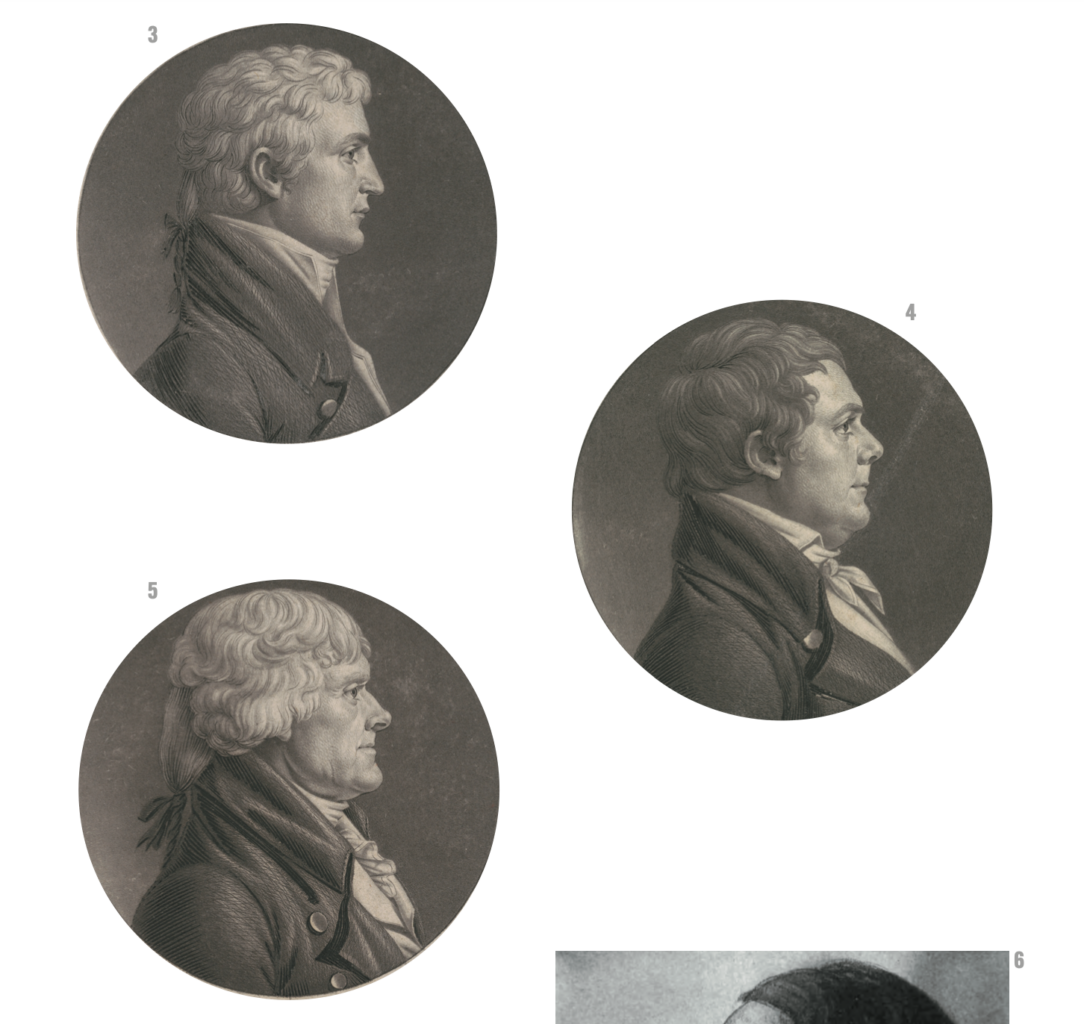 Portraits of Lewis, Clark and Jefferson by Charles B. J. Févret de Saint-Mémin.
The author, who would also never cross the Appalachian Mountains, discovered those details in books. Cooper’s young daughter, Susan, would stare at her father’s stacks of books, ready for reference, “lying on his table for months.” Sometimes, he would stop writing and help her sound out a page or two—Susan was learning to read. Many years later, she could still recall the authors he’d consulted, including “Lewis and Clark.”
The Last of the Mohicans was set in New York in the 1750s. But Cooper decided to set his next Natty Bumppo novel, The Prairie, in the West around 1804. That made Biddle’s History even more essential. From the captains, Cooper borrowed names—not just for places but for actual Native leaders. He borrowed the dull routines of camp life. He borrowed grizzly bears. He borrowed the details that would make his novel feel American. When Irving was working on Astoria, he scrawled a note to himself: “Everything on a large scale, talk of distance.” But Irving had seen some of those landscapes. Cooper never would. He had to find them in his library, which meant finding them in Lewis and Clark.
The Prairie appeared in 1827, the first major novel to be set beyond the Mississippi River. Today, many literary scholars see it as the first Western, and The Prairie included many of that genre’s conventions: the stark setting, the rugged hero, the inherent violence, the encroaching modernity. It’s easy to draw a line from Cooper to the dime novelists to Yellowstone. But that line should start with Biddle’s History and the way it influenced America’s first generation of great authors. Cooper read the accounts of other explorers. (So did Irving and Poe.) But the first American account came from Lewis and Clark, just like the first American Western came from Cooper. The captains were the fathers, or at least the grandfathers, of this genre.
Still, there’s more to say about this family tree. Susan Cooper didn’t just remember her father reading. She remembered him meeting with Dakota and Pawnee leaders—remembered him traveling to the big eastern cities that Native people visited on diplomatic delegations. (Cooper’s best biographer, Wayne Franklin, has confirmed this.) Cooper interviewed those Native leaders. He observed their gestures, their personalities, their forms of speech.
In The Prairie, Cooper worked in a wink at Lewis and Clark, a minor character who mentioned the famous expedition. “Lewis is making his way up the river, some hundreds of miles from this,” the character says. “I come on a private adventure.”
“A private adventure”: that’s what a good Western often feels like. But Lewis and Clark didn’t invent or even inspire this genre by themselves. They did it with the help of others, starting with the imagination of Cooper and the humanity of his Native sources.
Any honest account of the Western—and any honest account of the West—must reckon with the multiple sides of this messy American story.
__________________________________
This Vast Enterprise: A New History of Lewis & Clark by Craig Fehrman is available from Avid Reader Press, an imprint of Simon & Schuster.

Craig Fehrman
Craig Fehrman, a journalist and historian, spent five years writing and researching This Vast Enterprise. His first book, Author in Chief, was described by Thomas Mallon in The Wall Street Journal as “one of the best books on the American presidency to appear in recent years.” Fehrman lives in Indiana with his wife and children.