How Just a Few Taps on a Bunch of Buttons Can Curate Meaning
Robert Isaacs on the Rhythm of Writing
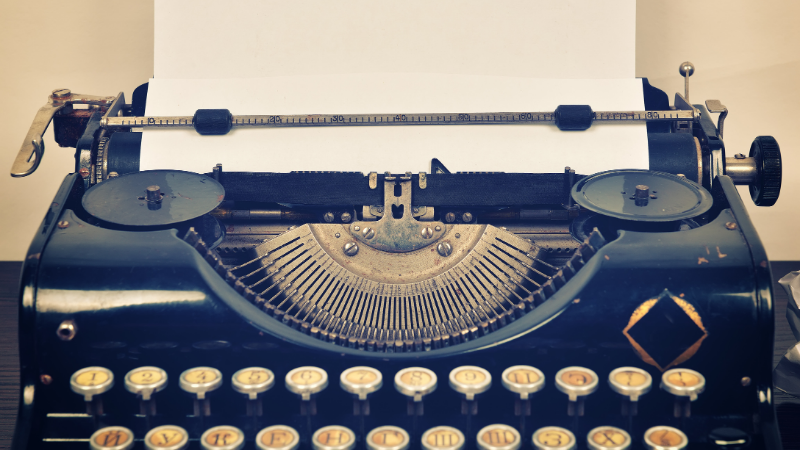
My new job consists of pressing buttons in the right order. Before me sits a panel with eighty-two buttons, whose arrangement I know so well I don’t even look down anymore—like a pilot, perhaps, who sends her hands rapidly around the cockpit to pull knobs and adjust dials and nudge the throttle forward, all while keeping her eyes firmly focused out the windscreen, squinting through the rain toward the quavering runway in the distance. My hands and fingers, like hers, have learned the territory and just get on with the job.
Because I engage with them for many hours at a stretch, I’ve invested in high quality, professional-grade buttons designed in France. Each is separately spring-loaded, depressing four millimeters at most (though they can be actuated with as little as two millimeters of travel) before bouncing back with a confirming click. My buttons do not shoulder the load equally—some record hundreds of pushes per day, some only a dozen, and a few may pass months or years without being pushed except by accident—yet while individual buttons vary widely in use, I’ve been told by outside observers that my two hands appear to divide their work equally.
No one tells me how to proceed, and I rarely know more than the next few dozen buttons to be pressed. Naturally, I make mistakes. But if I stray from an efficacious pattern, I can go back and insert the necessary sequence, as doctors do with their latest DNA-based gene therapies—in fact, such removal and replacement is not the exception but the rule in this career, a constant doubling-back to reconsider, feeling my way forward. After half a decade in this new career, I reckon I’ve pushed my buttons fifteen to twenty million times, and the vast majority of those commands were rescinded. Perhaps one in twenty presses will remain in effect by the time I release a new sequence into the world.
Yet even beyond their immediate, material purpose, there’s a compelling beauty to these patterns when I finally discover one—a rhythm, a dance, a complex and deeply satisfying balance.
And to what end? No pattern enacted on these buttons will safely land a four-hundred-ton jetliner, flaring and bouncing and settling heavily onto its twenty-two wheels while the spoilers on the wings snap up and the jets scream in reverse and the passengers sigh in relief.
Yet they can call up the same feeling—indeed, they just did—in the mind of another. The buttons on my panel, depressed in the correct sequence, can even alter the physical body of another human: accelerating the squeeze of ventricles in the heart, spurring the lacrimal glands to secrete tears from the eyes, stimulating the production of saliva in the mouth, sparking the contraction of arrector pili at the base of hair follicles on the back of the neck… all these physiological changes can be induced by buttons like mine, when deployed correctly. Their effect has been documented remotely, at a distance of tens or thousands of miles; they can even send their influence forward (though alas not backward) in time, manipulating the autonomic nervous systems of individuals hundreds of years in the future.
The curious thing, though, is that no one button can produce any of these results. Indeed, the tapping of an individual button is perhaps the least significant event on the planet, shifting nothing apart from the dust beneath it. It is only by stringing together a carefully curated series of button-presses—hundreds, thousands of depressions in succession—that I can accomplish anything meaningful. The significant, potent patterns, while theoretically infinite in number, are themselves a vanishingly small percentage of all the sequences which might be generated: the odds of randomly hitting the right buttons in the right order to complete any of the tasks above are essentially zero.
Yet even beyond their immediate, material purpose, there’s a compelling beauty to these patterns when I finally discover one—a rhythm, a dance, a complex and deeply satisfying balance. I know I’ll never fully comprehend why some patterns are noise and others are music, but the tantalizing possibility draws me back to my buttons day after day, and pressing them feels like the most meaningful thing I could do with the remaining years of my life.
Also, their clickety-click is so agreeable. I’m listening to the soft tattoo under my fingers even now—steadily plodding here, hesitant and stuttering there, every once in a while trilling as rapidly as a Geiger counter. I wish you could hear it too. Perhaps you can?
__________________________________
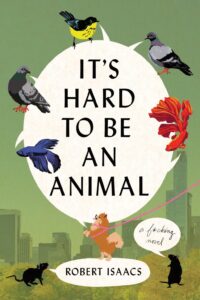
Robert Isaacs spent thirty years waving his arms at choirs before turning to writing. His first novel, It’s Hard To Be An Animal, comes out from Grand Central Publishing, an imprint of Hachette, on May 19th.

Robert Isaacs
Robert Isaacs has survived an eventful life. He has escaped an angry hippo in the Okavango Delta, dodged tear gas on the Mount of Olives, roasted marshmallows over cooling lava in the Guatemalan highlands, and been run over by a boat off the west coast of Australia. In his youth he supported himself as a juggler and unicyclist on the streets of San Francisco before turning to music; over the course of thirty years he conducted everywhere from Carnegie Hall to the Cook Islands, released a dozen CDs, and earned a Grammy nomination. It’s Hard to Be an Animal is his first novel.