How Do You Write a “Mighty Book” in 2026?
Alexander Starritt on Finding Inspiration from Tolstoy, Eliot, and the Financial Crisis
“To produce a mighty book you must choose a mighty theme,” Herman Melville writes in Moby-Dick. In the US, one of the mightiest for the past generation has been the shift from a society dominated by people of European heritage to a truly multiracial culture, with all that entails in life experience, historical memory, and reckonings with colonialism or America’s origins.
For my last book, which was mostly about the Second World War, I—a half-Scottish, half-German man—was giving a talk to high schoolers near Dayton, Ohio. At the end, a girl whose parents had come to the US from India asked a question I haven’t stopped thinking about since. It was, more or less: “What does all this World War Two stuff have to do with me? In the period you’re writing about, the big experience for my family was Partition.”
Of course I could make arguments about what it has to do with her—I’m sure you can too—but what she put her finger on was this: Americans’ stories have become more multiplicitous, as have stories of America. Writers have cast their nets into that fertile current and brought up a rich haul of fiction.
Many would say this theme is the spirit of our age. Maybe they’re right. But my hunch is that when future historians come to explain this period, they’ll also be writing about something else.
*
For the past couple of decades, we’ve been living through a very unusual and distinct sort of era, an interregnum, a time of flux between the breakdown of the world order led by the United States and whatever is going to come afterwards. It’s become a cliché for good reason to quote Gramsci: “The old world is dying, and the new world struggles to be born: now is the time of monsters.”
I was born in the mid-80s and my childhood unfolded in the peace and prosperity that followed the end of the Cold War. In the 1990s, people could write essays about The End of History? and have that concept taken seriously. Newspapers now like to beat up on Francis Fukuyama, but he’s famous because most people suspected it just might be true.
All over the world, the ideological warfare of the twentieth century seemed to have given way to a general acceptance that democracy and capitalism were the best way to run a country. The Evil Empire had ended not in a bloodbath in elections. Britain’s MI6 was sharing best practices in Human Resources with the former KGB (this really happened). The Chinese opened up to the West. Northern Ireland’s Catholics and Protestants gratefully halted the cycle of vendetta. France and Germany—at war since the Romans led punitive expeditions over the Rhine from Gaul into Germania—had become the twin-stroke engine of a united Europe. Britain’s New Labour won a landslide victory in 1997 with the campaign song: Things Can Only Get Better.
Everywhere, borders were coming down; life was becoming freer; it seemed you’d be able to move anywhere, marry anyone, dress and talk and love however you liked. History seemed to only flow in one direction. All that society asked of you was to fulfil your own potential. Pursue self-realization. It’s striking how much of 90s culture now feels faintly comic: so much is about being bored, about life being essentially too stable.
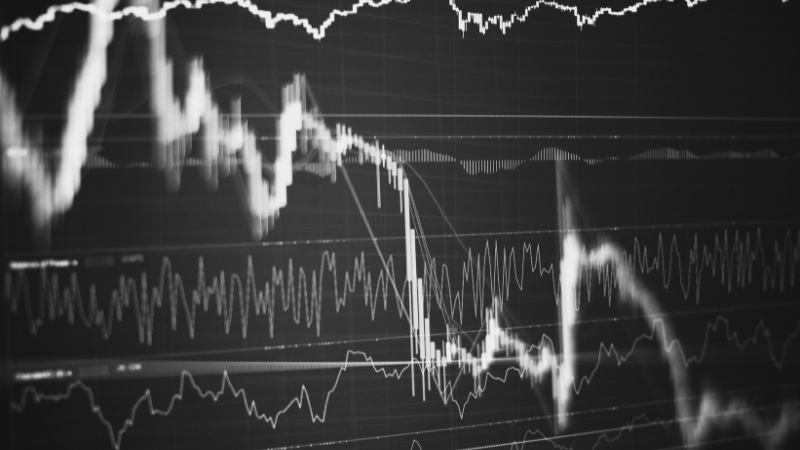
The 9/11 attacks traumatized that world, but what actually broke it, like a brick into a car windscreen, where the cracks spread and ramify until at some point the whole thing shatters, was the 2008 financial crisis: the moment when the underlying economic engines shifted into reverse.
Americans’ stories have become more multiplicitous, as have stories of America. Writers have cast their nets into that fertile current and brought up a rich haul of fiction.
Not globalization but tariffs; not free trade but protective barriers; not free movement but barbed wire and border patrols; a circling of the wagons, a growing hostility to outsiders, a feeling that things have gone “too far”, a jaundiced suspicion of the future, a retrenchment, a desire to go back in time, back to some passed zenith of American confidence.
The 2008 crisis was when people stopped believing in ever-rising progress and affluence. The last time the US signed a new free trade agreement was in June 2007, with South Korea. The Tea Party, that movement of grass-roots right-wing anger that evolved into MAGA, was founded the same year.
It played out all over the Western world. In Greece, the openly neo-Nazi group Golden Dawn went from the lunatic fringe to more than a dozen seats in parliament. In Britain, prime minister Gordon Brown—a decent, moral man of the left—shocked the country in 2009 with a new slogan condemned as not just racist but illegal: British jobs for British workers.
*
When I came to write my new novel, Drayton and Mackenzie, I kept thinking about two of the mightiest books ever written, both on the theme of a generation being slowly altered by the pressure of the times they’re growing up in.
In War and Peace, Tolstoy’s concept—among a million other things—was to show how the young people who lived through the Napoleonic invasion went on to lead Russia’s first democratic uprising, the Decembrist Revolt of 1825.
In Middlemarch, Dorothea, Will Ladislaw, Lydgate, Fred Vincy, and their peers have to figure out adulthood in an England being transformed by the Industrial Revolution and the Reform Act, which extended the franchise beyond titled landowners to middle-class men.
As a sidenote—painful for authors—the bits people don’t like in these novels are the bits where the authors explain their big ideas. Almost everyone hates the epilogue to War and Peace, in which we see our beloved characters as middle-aged parents talking about the Decembrist plans. And in Middlemarch, you do find yourself wondering whether you really need this much about the 1832 election campaign.
When I looked at what was shaping my own generation, I saw the sea-change of 2008 flowing through their lives. The way, for instance, that expensive housing, student debt and meager job prospects mean they can’t afford to live as their parents did. A sense that the old ladders to success could no longer be trusted. On top of that, the iPhone, which came out in 2007, has remade everything from our love lives to our brains. And as if that weren’t enough, the climate itself is changing.
I think one way we’ve been marked by all this—along with generalized anxiety—is that we’ve developed a heightened need for a sense of purpose; a desire to feel that, as things turn to shit, we are at least spending our lives on something meaningful.
My novel is about that sea-change and the search for purpose. It follows two friends from 2005 to 2020 as they try to make their way in life. It’s also about ambition, money, friendship, idealism and trying to redirect the course of history. Peter Thiel and Elon Musk appear as characters.
Whether the novel succeeds or not is for readers to judge. But my belief is that this is the mighty theme contemporary fiction has largely overlooked.
________________________________________
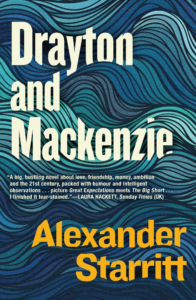
Drayton and Mackenzie by Alexander Starritt is available from Atlantic Monthly Press, an imprint of Grove Atlantic.

Alexander Starritt
Alexander Starritt was born in Scotland in 1985. His debut novel The Beast was a 2017 Spectator book of the year; his second novel, We Germans, was published in 2020 and translated into six languages. It was awarded the Dayton Literary Peace Prize in the United States, and nominated for the Prix Femina, Prix Medicis, and Prix du Meilleur Livre Étranger in France.