How Do You Create Surprise When Your Story’s Ending Is Inevitable?
Ayşe Papatya Bucak on What to Do When Your Characters Can't Do Much
It’s a fairly conventional belief in fiction writing that the strongest structure of a short story is one in which a character changes over the course of that story. But what to do if you have a character or community that is so stuck in a situation that there is no real hope of change? How in such a situation does a writer create suspense, mystery, tension, surprise?
Senaa Ahmad’s story “Let’s Play Dead,” from her collection The Age of Calamities, starts with a truly unexpected event; but swiftly, the reader understands that event will repeat over and over…and over…and over…and also, over. The story opens:
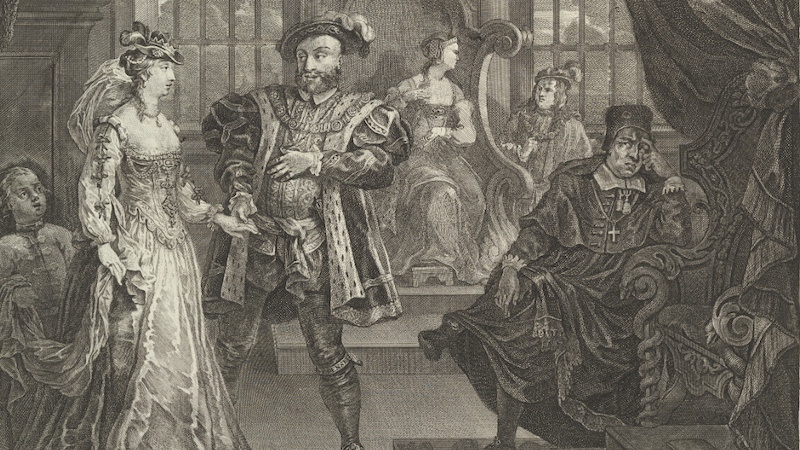
There was a man, let’s call him Henry VIII. There was his wife, let’s call her Anne B. Let’s give them a castle and make it nice…Let’s give him a fussy way of being. Let’s make her smart and sneaky, because it’s such a mean thing to do.
Let’s make it so she can’t escape.
Let’s seal the bottle, and shake it, and shake until our hands fall off.”
Note the point of view is editorial omniscient—a version of a first-person narrator who is not a character in the story, but, unlike most third person omniscient narrators, has a voice and a point of view.
Ahmad has chosen a storyteller’s perspective that gives her the ability to surprise, because it’s a point of view that is not really bound by convention. This is useful to her because she has a character who “can’t escape.” Plot is not our only tool for surprising the reader. Point of view can, and probably should be, surprising.
We know that a moment is coming. We know the crank is being turned and turned and turned and eventually something is going to pop out of that box. But we don’t know when.
Notice also how Ahmad uses summary and a reader’s likely knowledge of the history of Henry VIII and Anne Boleyn, to launch the story. Ahmad very efficiently reveals the central conflict in that first paragraph of exposition.
The plot twist in “Let’s Play Dead” is that Anne B. doesn’t die. Her head is cut off, but she puts it back on and the next morning shows up at breakfast. And some version of that happens again and again throughout the story. Henry has Anne killed: she returns to life.
You would expect the predictability of this would get tedious, yet it doesn’t. How does Ahmad create suspense when the reader knows what is going to happen?
One tool is her use of editorial omniscience, including the voice and tone of the story. The narrator has a playful tone that creates its own surprises. The story is full of what George Saunders call micro-choices, choices at the level of the image or the word, that make the story constantly surprisingly. Such as: “he drowns her himself. And who could blame him? If you want a job done right, you’d better know the end of this sentence.”
Ahmad also uses the jack-in-the-box version of tension. We know that a moment is coming. We know the crank is being turned and turned and turned and eventually something is going to pop out of that box. But we don’t know when. By varying the rhythm of the story—the amount of time between the killings—Ahmad keeps us on edge. Anticipation creates tension as we anxiously await the pop which could come at any moment.
Ahmad also makes Anne so likeable that we hope for a different ending for her, against all odds. Anne never gives up and like her, we keep thinking…maybe this time. By creating a full and believable character—which adds depth to the story—Ahmad also adds tension.
The more Ahmad fleshes out the world of the story (again adding depth), the more the circumstances in the story keep changing and we hope that will change things—Anne’s maids start to help her (we hope they will be strong enough to have some effect), Henry starts to be more human (we hope he will change), we hope too that Anne B will learn from her repeated experiences. We even start to hope maybe she will kill him.
One way Ahmad achieves this hope in the reader is by giving Anne small victories, so even though we suspect there is no way to change history—she is fated to die—we end up hoping for it.
Ahmad smartly uses that hope to make a thematic point. She acknowledges our desire for this to be a happier story than it is. She writes:
You will want to hear that Anne takes solace in these precarious days, so let’s say that’s true: she takes that trip she always meant to, an ethereal island resort where every day the indigo waters whisper Get out, get out while you still can and the jacarandas whistle a jaunty tune of existential dread. She cashes in her many retirement portfolios, she doesn’t so much throw parties as fling them, handfuls of bacchanalia into those feverishly starlit nights.
Note how Ahmad writes this as something imagined, not something that happened. She does this repeatedly throughout the story saying, maybe this happened or maybe that. This allows Ahmad to have her cake and eat it too—her character is trapped but the imagination of the narration is not… intellectually we understand the narrator’s brutal circumstances, but in terms of story, the reader can still experience surprise. This is a useful way to cope with a character who lacks agency because of her circumstances. It also deepens the story by showing us how fiction can be an escape—but only a temporary and limited one.
The final turn that the story takes is in letting the reader imagine if they want Anne to finally die. Would this be the only release available to her? Thus, the story takes on larger questions of fate and destiny, and even has us asking what makes a life worth living when we know it must end. The reader never stops caring about Anne, but we recognize the futility of her situation. Metaphorically we can see how her continued death and rebirth echoes situations in which marginalized people are sometimes stuck—able to survive but not to thrive. The repetition that Ahmad uses to create tension ultimately is also a tool for delivering theme.
Repetition is a great tool for creating meaning because readers notice it. When writers call attention to what they’re doing, it can be a signal to the reader: watch me, what I’m doing here matters. Because the murder is committed over and over, we end up paying more attention to all the micro-events that surround that repeated event—we see how Anne has a sense of humor, how she has allies, how Henry also is stuck, how hard it can be to break a cycle of violence, how hard it can be to escape an abuser. All of those things might be present in a single realistic depiction of abuse, but a reader might fail to see the same nuance in such a story. Through the fantastical nature of this story and the original nature of the omniscient narrator Ahmad is able to continually surprise.
It is perhaps not so surprising though that death is a plot point in narratives such as these. Because what is death but the pinnacle of humans’ lack of agency.
If it’s challenging to sustain interest in characters who lack agency in a short story, it’s all the more challenging in a novel. But let’s consider, Never Let Me Go by Kazuo Ishiguro; the novel about a group of clones born and bred to serve as organ donors. A condition that the clones largely accept.
In the introduction to the twentieth anniversary edition, reprinted on Lit Hub, Ishiguro writes:
…over the years I’ve been asked many questions about the novel … the great majority of them can be gathered into two broad categories.
The first might be summarized by this question: ‘Given the awful fate that hangs over these young people, why don’t they run away, or at least show more signs of rebellion?’
The second group of FAQs is slightly harder to characterize, but essentially comes down to: ‘Is this a sad, bleak book or is it an uplifting, positive one?’
It seems to me that these most-asked questions about Never Let Me Go arise because of tensions concerning its metaphorical identity. Is this story a metaphor about evil man-made systems that already exist today—or are in imminent danger of existing—ushered in by uncontrolled innovations in science and technology? Or, alternatively, is the novel offering a metaphor for the fundamental human condition—the necessary limits of our natural lifespans; the inescapability of aging, sickness, and death; the various strategies we adopt to give our lives meaning and happiness in the time we have allotted to us.
It may be both a strength and a weakness of this novel that it often wishes to be both of the above at one and the same time, thereby setting certain elements of the story in conflict with one another.
Perhaps every story in which the characters are fundamentally unable to change their lives is subject to this same dilemma. Each story serving as a memento mori, reminding us that we must die, and therefore must find a way to live under that one inescapable conclusion, while also serving as a critique of the circumstances that make it difficult to live life well.
It can be a challenge not to turn such a story into something pollyannish—a character that meets great suffering with great dignity, or a character that is so mindful that they appreciate each moment, that they find love in the middle of horror and beauty in the face of the grotesque. These situations can be beautifully rendered or they can serve to romanticize suffering.
Perhaps every story in which the characters are fundamentally unable to change their lives is subject to this same dilemma.
Perhaps one reason Ishiguro’s novel is so successful is that it’s painful for readers to accept the narrator Kath H.’s final acceptance of her fate. The novel asks us to love her for her acceptance rather than to loathe her for it. It’s frustrating to witness her acceptance even while we recognize that it serves her.
Ishiguro says of his clones, “if that’s the world you’ve grown up in, you cannot see the boundaries for which you have to run. You cannot see what you have to rebel against and instead you just try, sometimes heroically, to find love, friendship, something meaningful and decent, within an horrific fate that you’ve been given.”
For many of us, to say a character is powerless is to suggest they are in the worst possible situation. For that character to accept their powerlessness is for them to be depressed, destroyed, it’s a loss of their selfhood. But yet when we talk about a person accepting their death—often this is viewed as heroic, as spiritually evolved… Ishiguro dares to suggest that accepting one’s life might not be so different as accepting one’s death. That seeing value in your small role is a powerful act. Ishiguro does not see acceptance of powerlessness as inherently a tragedy.
Nor perhaps should the “rules” of writing fiction.

Ayşe Papatya Bucak
Ayşe Papatya Bucak is the author of The Trojan War Museum and Other Stories, which was awarded The Story Prize’s Spotlight Award and shortlisted for the PEN/Robert W. Bingham Award for a Debut Story Collection. She is a contributing editor for the journal Copper Nickel.