How Do We Keep Writing When They are Killing Poets?
Sayantani DasGupta Writers on Creating in a Time of Dread
How do we keep writing when they are killing poets?
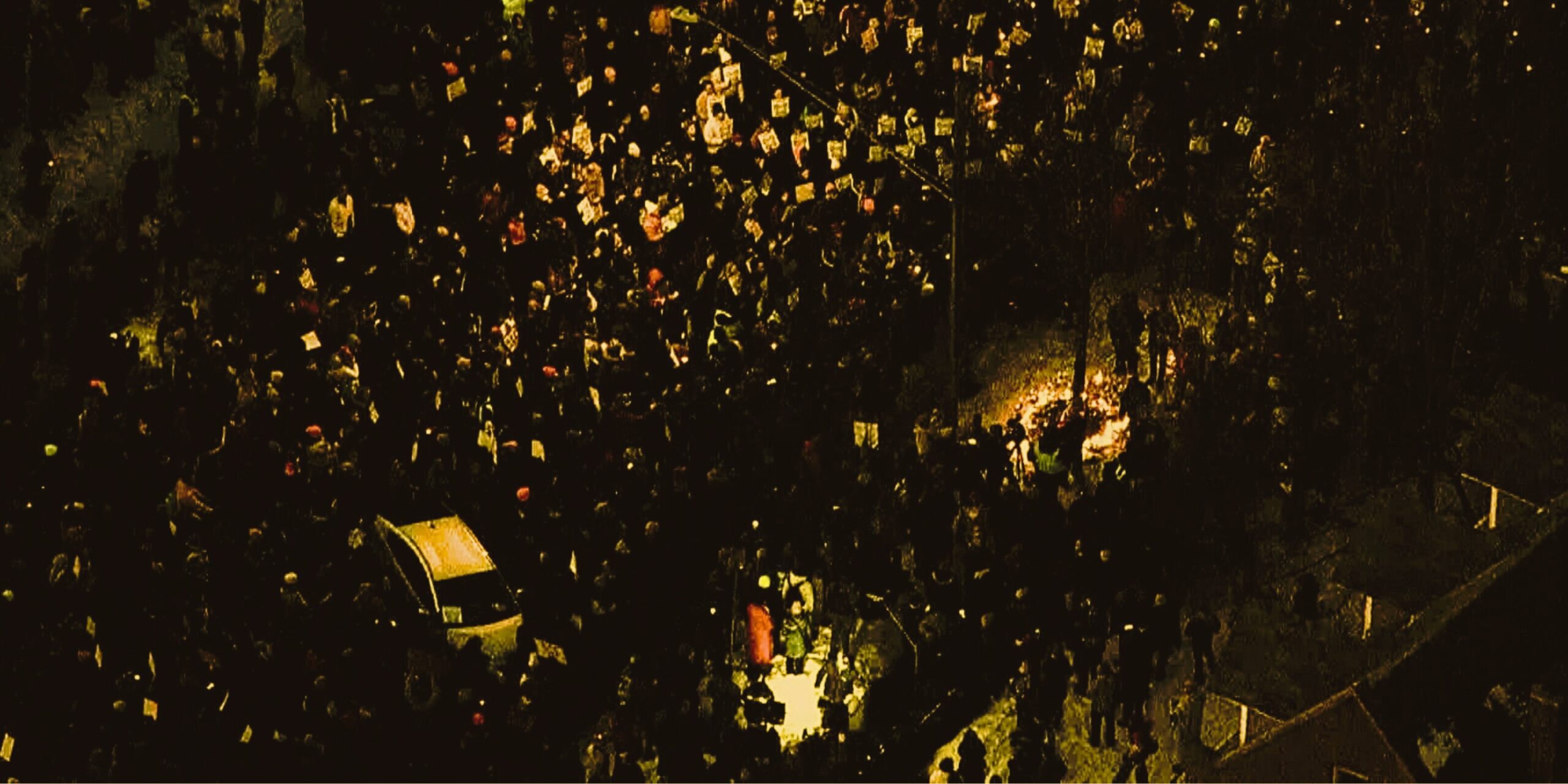
How do we keep creating when they are shooting us in the streets?
How do we keep going when the healer they killed was protecting another, after we find out his last words were “are you okay?”
How do we keep hoping when the poet they murdered once wrote, “the bible and qur’an and bhagavad gita are sliding long hairs behind my ear / like mom used to & exhaling from their mouths ‘make room for wonder.’”
How do we keep making room for wonder?
How do we keep writing in these times of dread?
*
Every day, I promise myself and my nervous system that I will not be attached to the endless news cycle, the relentless torrent of terrible things happening in the world. I will not check my phone continuously, I will not doomscroll until my heart races and throat grows dry with fear. I will not do any of that, I promise myself.
Every day, I do not keep my promise.
I do what I can in these terrible times. I protest. I donate. I speak out. But that doesn’t change the fact that I am afraid all the time. I am afraid and anxious and horrified at the world. And I imagine most of you are as well.
As someone who trained as a doctor, I can tell you, America is sick, and the prognosis is uncertain.
*
In my classrooms, I have long told my students that they wield the power to change the world. That their work lies at the intersection of the stethoscope and the pen. I teach my students of this fledgling field called narrative medicine about listening, witnessing, attention, healing, and justice. I tell them storytelling can heal. I convince them that writers have the power to change the world, and if they didn’t, dictators wouldn’t be so afraid of them. I point to fascist regimes of eras past, remind them that writers have always been dangerous—remember Galeano, see Cortázar, recall Allende and Rushdie.
In retrospect, my earnest lessons seem very theoretical, very quaint.
How will I face them now, now that they are killing artists and healers in the streets of America?
*
My own words too are stuck in my throat. Fascism demands a tempo change. This chaos is happening rapid-fire, international and domestic, far and near, too quick to comprehend. We are all drinking from a fire hose of horror. I cannot catch my breath, catch my thoughts, catch my heart long enough to put idea to paper. It feels selfish to look for metaphor, to think of plot twists, to map out a character arc.
How can I write when that other helper’s hands are stilled?
How can I imagine when that other poet’s heart no longer beats?
*
In a 2015 essay entitled “No room for self pity, no room for fear,” Toni Morrison writes about feeling stuck and depressed and afraid, just like I am, and perhaps many of you are reading this. She writes about a friend who tells her: “No! No, no, no! This is precisely the time when artists go to work—not when everything is fine, but in times of dread. That’s our job!” Morrison is chastened, recalling those who wrote from “gulags, prison cells, hospital beds” those who were “hounded, exiled, reviled, pilloried… executed.” She goes on to write,
There is no time for despair, no place for self-pity, no need for silence, no room for fear. We speak, we write, we do language. That is how civilizations heal. I know the world is bruised and bleeding, and though it is important not to ignore its pain, it is also critical to refuse to succumb to its malevolence.
I am here to tell you, to tell myself, not to succumb to the world’s malevolence. Especially not now.
*
We must tell our stories to give an alternative history of this time, an alternative reckoning to those who would narrate us into oblivion. Because stories are of course not necessarily liberatory. Stories can injure, they can demean, they can propagandize, they can enable violence against the marginalized. Most genocides begin with extraordinarily compelling stories—ones that transform neighbors and friends into interlopers, invaders, infections, and infestations. What is the slogan “make America great again,” after all, but a certain kind of violent story.
In a long-ago movie, emblematic of America’s uncritical, dangerous addiction to nostalgia, Kevin Costner played a farmer who mows down his corn field in order to create a baseball diamond so that the ghosts of former baseball players can come and play there. He razes his abundant fields of fertile crops, food that could feed the hungry, because he dreams of some kind of golden unproblematic past filled with baseball-playing ghosts. “If you build it,” he is told in this dream, “they will come.” And in the film, they do.
What I’m suggesting here is that we use our storytelling practices in a different way. Not to raze to the ground our diverse identities, our cultures, our fertile values, in service of some narrow, singular, bereft story—a ghost story, a story of glory long dead. Instead, we writers must use the lessons of the past and present to imagine new, yet unrealized futures. Not “if you build it, they will come,” but “if we can dream it, only then, maybe we can build it.”
As Morrison reminds us in The Source of Self-Regard,
dream a little before you think, so your thoughts, your solutions, your directions, your choices about who lives and who doesn’t, about who flourishes and who doesn’t, will be worth the very sacred life you have chosen to live.
And we writers are, after all, society’s professional dreamers.
*
There was another recent time of despair (how horrific that we should have so many unprecedented times right at our fingertips from which to draw), when I was stuck teaching students on zoom, even as we listened to the endless wail of emergency vehicles rushing the dead and dying to NYC hospitals, I read to my class an excerpt from Arundhati Roy’s essay, “The Pandemic is a Portal.” In it, Roy wrote of the rupture between past, present and future that was the coronavirus pandemic, but she also wrote about it as a portal, a potentiality to something different:
Historically, pandemics have forced humans to break with the past and imagine their world anew. This one is no different. It is a portal, a gateway between one world and the next. We can choose to walk through it, dragging the carcasses of our prejudice and hatred, our avarice… Or we can walk through lightly, with little luggage, ready to imagine another world. And ready to fight for it.
Do you remember how afraid and hopeless and yet simultaneously hopeful we were then? For a brief and shining moment there was that hope—that we would somehow come out of the portal of COVID more awakened to our own interdependence as people, as countries, as a species, as a planet. That we would in this country awaken and finally face our legacies of racial injustice and police violence. That we would continue to make room for disability and illness and aging in our workplaces and communities.
But COVID wasn’t that kind of a portal. I used to think, cynically, that it was more like a rubber band, one of those Escher paintings of a mobius loop. We stretched, we changed, we got pulled right back in (read those words in an Al Pacino-like accent).
But what if, maybe, just maybe, that time wasn’t a rubber band at all. What if it was a rehearsal—practice, strength training for what we’re facing now. What if we’re living through cycles of growth and retraction, like that giant organism that is all of us on this planet altogether, breathing in in in, only to finally breathe back out. Violence and liberation, oppression and justice, tumbling over and under and around each other in some kind of cosmic dance—and it is our role as artists, as storytellers, to lean together on one side of the equation, bending, with our sheer stubborn persistence and effort, the arc of the moral universe more toward justice.
Roy has some thoughts on how we might do that when faced with structural forces so much larger than us, seemingly so malevolent toward our very humanity (from Capitalism: A Ghost Story):
Our strategy should be not only to confront empire, but to lay siege to it… With our art, our music, our literature, our stubbornness, our joy… our ability to tell our own stories. Another world is not only possible, she is on her way… on a quiet day, if I listen very carefully, I can hear her breathing.
*
It was Walidah Imarisha, co-editor of Octavia’s Brood: Science Fiction Stories From Social Justice Movements, who taught me that all organizing is science fiction. All freedom struggles, before they came to fruition—ending slavery, suffrage, abolition, revolution—seemed like an outlandish story, a dream, science fiction. In her words,
Science fiction allows us to imagine possibilities outside of what exists today. The only way we know we can challenge the divine right of kings is by being able to imagine a world where kings no longer rule us—or do not even exist… it is only through imagining the so-called impossible that we can begin to concretely build it. When we free our imaginations, we question everything. We recognize none of this is fixed, everything is stardust, and we have the strength to cast it however we will. decolonization of the imagination is the most dangerous and subversive decolonization process of all.
*
Besides being an academic, I am a writer of speculative fiction and fantasy novels for young people. My various series are based on the Bengali folktales I used to hear from my grandmother on my long summer vacations to India. Gathering me by her in bed, the whirring fan above our heads making the mosquito net sway gently around us, my grandmother would tell me stories to remind me where I came from, to give me language with which to imagine myself in the lineage of my ancestors, even as I moved forward into a very different world.
I write speculative fiction and fantasy inspired by histories of ancient Bengali folktales set in a diasporic present, and reaching toward a liberatory future. My modern day heroine Kiranmala, for instance, thinks she’s just an ordinary Indian immigrant daughter from New Jersey, until it turns out the fantastical stories her parents have always told her about her really being an intergalactic demon-slaying princess… are true. Kiranmala realizes that the tales her family has been spinning for her aren’t just entertainment, they are her roadmap to the stars, the way she will travel across galaxies to the magical “Kingdom Beyond Seven Oceans and Thirteen Rivers”—because she is not from this ordinary mortal plane, she is from somewhere else.
What if, today, I told you the same? That through your art, your writing, you, like Kiranmala, can learn your real origin story— that you are in fact a denizen of another, magical place? That through your storytelling practice you can bring that magic here, make it real?
As Kiran’s Baba says at one point in The Serpent’s Secret, “We humans may not be magical or powerful, but the stories we tell our children can be.”
What are the stories you were told? What stories will you tell your children? What are the stories we can tell each other, now, here, today, as we huddle together like frightened children in the dark?
*
As writers our tools are not just language, but truth, and imagination. How will you use your art, fellow writers? How will you tell your truth? As Ursula K. Le Guin once wrote,
A writer is a person who cares what words mean, what they say, how they say it. Writers know words are their way towards truth and freedom, and so they use them with care, with thought, with fear, with delight. By using words well they strengthen their souls. Story-tellers and poets spend their lives learning that skill and art of using words well. And their words make the souls of their readers stronger, brighter, deeper.
Or, in the words of Pinki, revolutionary rakkhoshi heroine of my Fire Queen series, who finally learns to use her fire-breathing power for the greater good:
I raged, my fire something that defied the bounds of my body and consciousness. I was my power and my power was me, and I was no longer afraid of anything… We began to sing as we fought. We sang of the fire in our own hearts, the fire that could light up any night. Anything at all [felt] possible. Even victory. Even freedom.
And so it was. Not that day. And not the day after. But like the spark that ignites a giant bonfire, that battle was the beginning of something new. We breathed life into the seemingly dead revolution of our parents’ time. We had joined together to battle what was wrong in our world and to search together for something better. Like seekers looking for stars in the night, we were looking for a truer tomorrow.
We had tasted freedom and we wouldn’t stop until it spread across the land, flowing like air and water, burning like fire, shining like the sun and moon and stars.
*
As we see communities in Minnesota and across this country protecting each other with food, care, their very bodies on the line, I remember that part of the power of writing too is this calling forth of community. In an essay called “Carnal Acts,” memoirist Nancy Mairs describes putting out work based on her experiences with disability and chronic illness and others reaching out to her calling, “Me too! Me too!” she goes on to say, “It’s as though the parts we thought were solos turned out to be a chorus, although none of us was singing loud enough for the others to hear.”
Let us make a pact, dear fellow writers. I will reach for my words. And I hope you will reach for yours. In this liminal time and space, this portal between one world and the next—we must write, radically imagining forward the world as we want to see it. We will map our future through our art—our words seeding forests, our paragraphs spawning oceans, our metaphors shaping mountains.
Even in these times of dread, we writers must continue to do our work. We must sing out stories into the void and wait for the answering echo of community, that tuning fork of resonance—me too me too me too! It is more imperative than ever for us to share our stories—for our readers, for our fellow writers, for ourselves. At a time when nothing seems possible, maybe, just maybe, everything is possible.
Sayantani DasGupta
Sayantani DasGupta, MD, MPH, is a pediatrician by training, founder and faculty in the Master’s Program in Narrative Medicine at Columbia University, holding additional appointments in the Center for the Study of Ethnicity and Race and the Institute for Comparative Literature and Society. She is also a New York Times bestselling author of over a dozen novels for young people, including the critically acclaimed, Bengali folktale and string theory-inspired Kiranmala and the Kingdom Beyond books, the first of which—The Serpent’s Secret—was a Bank Street Best Book of the Year, a Booklist Best Middle Grade Novel of the 21st Century, and an EB White Read Aloud Honor Book. Sayantani was a long time team member of We Need Diverse Books and is a founding member of Authors Against Book Bans. You can find out more about her work at www.sayantanidasgupta.com