








How Derek Walcott’s Postcolonial Epic Helped Me Write My Novel
Schneider K. Rancy on Writing a Haitian Reimagining of The Odyssey
It’s hard to understate the importance of the classical tradition to postcolonial literature. The Puerto Rican playwright Luis Rafael Sánchez recast Sophocles’ Antigone in La pasión según Antígona Pérez, set in the fictional Caribbean republic of Molina, to portray the United States’s extreme economic and political suppression of 1960s Puerto Rican nationalist movements.
In Wide Sargasso Sea, Jean Rhys’s response to Charlotte Brontë’s Jane Eyre, the Dominican-British novelist fabulated a Creolized backstory for the “mad wife” Rochester abuses and keeps stashed away in his attic, painting a picture of colonial detest and neglect. The Martinican poet/playwright Aimé Césaire brilliantly adapted and enriched Shakespeare’s The Tempest into Caliban’s existential drama after having his name, language and identity stolen from him upon Prospero’s arrival in Une Tempête, dramatizing the colonial dilemma of all Caribbean island nations. More contemporaneously, Jamaican poet and memoirist Safiya Sinclair viscerally wrote to and through Césaire’s own seminal rewrite in her guttural poetry collection Cannibal to reframe the issue of postcolonial identity for one who has immigrated to the metropole of the imperial power, in this case the United States. This Caribbean tradition of literary hybridity, intertextuality, and relation is long.
In college, I didn’t know or care about any of that.
In his words, the Iliad could be more than a story of glory, pride, war, and death; it was a framework for one’s struggle with vanity and the dark paths down which it might take you.
I would sit in well-crafted chairs in grand lecture halls or ornate classrooms arranged around large, elegant tables, listening to my professor and classmates debate Homeric epithets, patrilineal descent, and dactylic hexameter, watching the lazy sun flitter in through the windows, and nearly doze off. I remembered my childhood as largely idyllic. I had grown up in a close-knit Haitian immigrant family in a South Florida so peopled with immigrants it seemed a microcosm of Latin America and the Caribbean. My sister, cousins and I hung out together often as children, and as we got older would take the rare night trip to Miami to celebrate the holidays or special occasions.
We had a nice neighborhood park with green fields and a basketball court, the occasional Black boy-directed police aggression aside. We would ride our bikes through the streets for hours, late into the evening. Both of my parents worked good, stable jobs: my father, a former physics teacher in Haiti, was a construction worker and plumber; my mother put herself through school and became a nurse, at least until illness forced her to step away from work. We weren’t rich but we certainly weren’t poor.
Away at school, I enjoyed the Beaux-Arts and Neoclassical architecture on campus, the impassioned discussions on imagery, meter, and line in poetry workshops, and the idea that academic prestige would one day help me find a job in a respectable field. Still, I had trouble envisioning how reading dry texts by ancient Greeks—the proverbial Dead White Men—about men killing each other in gory detail while waging pointless wars would benefit my future. Homer’s Iliad and Odyssey, Virgil’s Aeneid, Dante’s Inferno, Milton’s Paradise Lost were all nominally interesting, but in the end they were only the base fodder for another exam I would take, conquer, and move on from.
That changed the first time I read Derek Walcott’s epic poem Omeros. Walcott’s Achilles was the Saint Lucian fisherman Achille who was struggling to get by in a tourism-based economy with his seafaring way of life, ultimately requiring a spiritual journey and ancestral communing akin to Odysseus’s katabasis and counsel with Tiresias. His Hector was the sellout fisherman-turned-driver who exchanges his canoe for a gaudy van for want of money, destined as in the Iliad for a tragic end. His Helen was the maid and local island beauty over which the two men quarreled, rather than the Achaians and the Trojans. His Philoctetes is transmogrified into a tourist guide with a chronic wound who drinks rum, speaks French Creole, and holds the common Caribbean superstitious belief that a camera can capture not just your image but your soul. The human element is that of islanders struggling with love, fraternity, and identity. One might argue these are the source material of many such simple, pedestrian dramas, but a grander scheme shapes everything.
Walcott’s poetry is suffused with such beautiful language that even the everyday is replete with grandeur. Oars become spears and rain falls over the nodding ferns like lances and arrows; buses are chariots and trees are hacked down with the great violence of men at war; a pantheon of West African gods transported to the Antilles stands alongside the Greeks, and Shango’s thunderbolt is likened to Zeus’s. All this is framed by the enormity and eternity of the Caribbean Sea, whose ancient currents flow across history to blend into the Atlantic and then the Aegean.
But what did the classics have to do with the Caribbean? When Walcott writes passages like
our only inheritance that elemental noise
of the windward, unbroken breakers, Ithaca’s
or Africa’s, all joining the ocean’s voice,
because this is the Atlantic now
or
Why not see Helen
as the sun saw her, with no Homeric shadow,
swinging her plastic sandals on that beach alone,
as fresh as the sea-wind? Why make the smoke a door?
he makes the answer plain: his home is mythic and magisterial, too.
He had not just copied or adapted the epic. He had taken the genre’s structure and found in its hollows where the poem echoed with his own history, found the commonalities that stretched across time and space and cultures and were subsumed into one larger epic.
In his words, the Iliad could be more than a story of glory, pride, war, and death; it was a framework for one’s struggle with vanity and the dark paths down which it might take you. The Odyssey could be not just the adventurous misdeeds of a deceitful man’s homecoming, but the story of losing one’s way and finding it back again. These epics were everyman’s tales and formed a shape that today’s stories—in all their unique specificities—could fill.
I wanted to tell a story about a man in a place.
As Walcott said in his 1992 Nobel Prize acceptance speech, the literature and culture of the Caribbean were not “timid, not derivative, any more than the hard white petals of the frangipani are derivative and timid.” He wasn’t imitating a colonial precedent. He was describing a synthesis of the Antilles. He had taken a text that existed within the lineage of a language that the happenstance of colonization had made his own and shown a resonance. I felt that resonance, too.
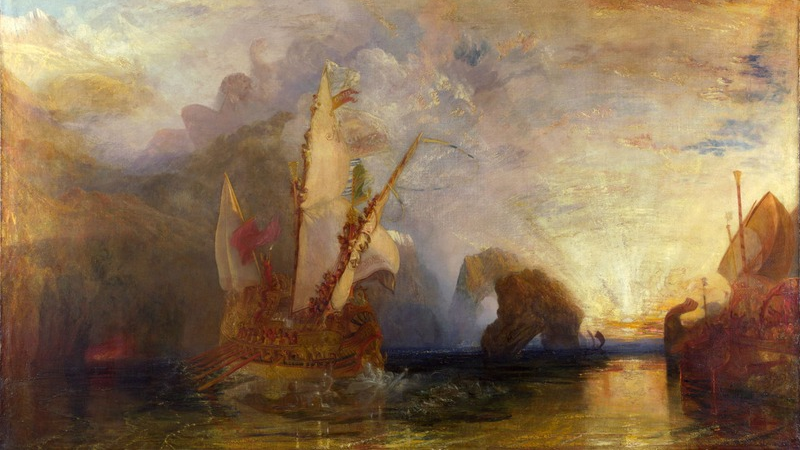
Literary homages to the Odyssey aren’t new. Dante Alighieri predicted a vain Ulysses’ demise in the Inferno when he has Ulysses speak to Virgil from the flames in the Eighth Circle of Hell, damned for letting his lust for travel lead him astray. Alfred, Lord Tennyson beautified that yearning for adventure in his Romantic poem “Ulysses.” Joyce’s Modernist novel Ulysses, set in contemporary Dublin, is perhaps the most obvious and famous example.
Ezra Pound’s 120-section epic poem The Cantos borrows the figure of an Odysseus archetype traversing global politics and literature as a unifying motif throughout the work to force a coherence of history and civilization. William Faulker borrows the language of Agamemnon’s ghost lamenting his sad fate to Odysseus in the underworld for the title and macabre plot of As I Lay Dying. Margaret Atwood ironically problematizes the Odyssey’s male-centric narrative with Penelope’s wry commentary in The Penelopiad. One could argue that the aimless roving across countries and years by Ulisses Lima and Arturo Belano in Roberto Bolaño’s The Savage Detectives is an oblique, fragmentary evocation of the classical Odyssey form. This same tradition is likely why Christopher Nolan felt it pertinent to adapt the Odyssey into his recent film (Emily Wilson’s searing critique aside) to frame a story about cultural collapse in our war-mongering late capitalist society.
The list goes on, but what Walcott had done, for me, was unique. He had reified and invigorated Homer for me as a narrative of relevance. I wanted to tell a story like that, too. I wanted to tell a story about a man in a place. A place like the one that I was from, in all its racial and social complexities, so starkly different from the ivory towers of my university campus. I wanted to write a story about a place I had left and to which I hoped I would one day return. I wanted to write about home. That’s what I endeavored to do in writing my novel Beyond the Baths of Stars, alchemized from the poetry of the classics, the Caribbean imagination, and a uniquely Haitian immigrant experience. Walcott gave me that permission. I hope I made something of it.
__________________________________
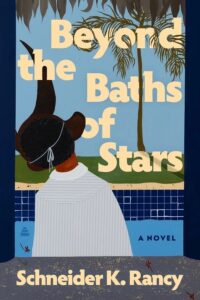
Beyond the Baths of Stars by Schneider K. Rancy is available from Amistad.

Schneider K. Rancy
Schneider K. Rancy is a Pushcart Prize-nominated writer born to Haitian immigrants in South Florida. He is a graduate of Columbia University, where he earned a BA in English and Comparative Literature and Biology. His poetry has been published in Apogee, The Adirondack Review, The Seventh Wave, Moko Magazine, and elsewhere. His debut full-length poetry collection, Dreams of Diaspora, received praise from National Book Award Finalist Desiree C. Bailey. He is also the author of a poetry chapbook, Self-Portrait in Hospital as Camus. In his spare time, he is a surgical resident in Manhattan. Visit his website www.skrancy.com.