How an Animators’ Strike Led to the Making of Song of the South
Vicky Osterweil on the Intersection of Labor Conflict, Nationalism and White Supremacy Within Disney Studios
“Black people will not be fully able to breathe—a word I do not use lightly—until property itself is abolished.”
–Rinaldo Walcott
*
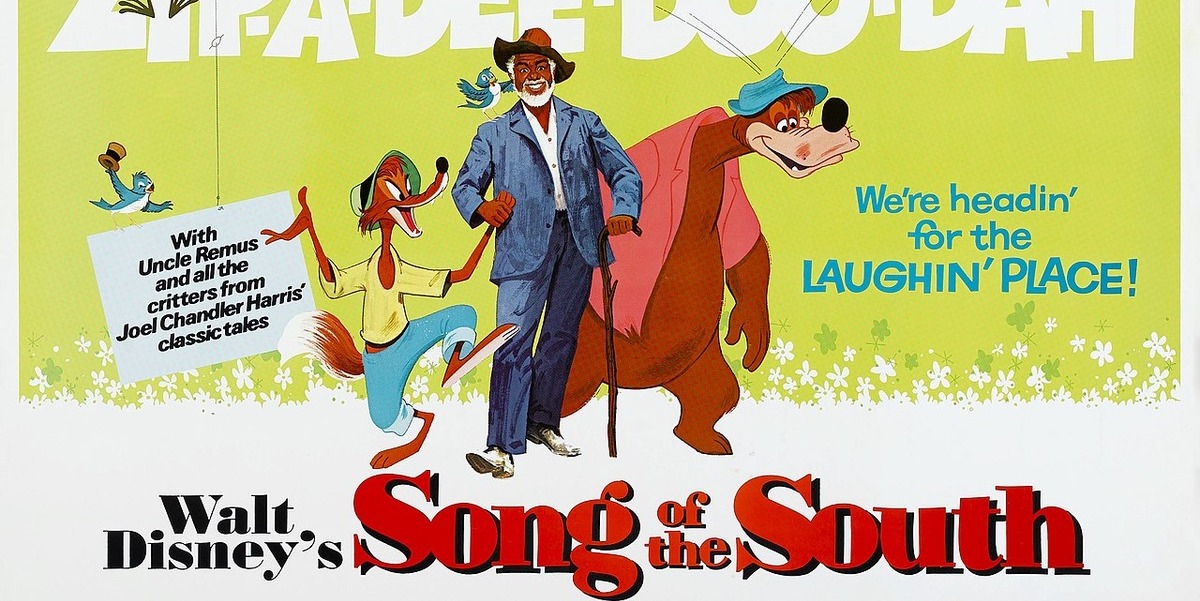
There is perhaps no film that so clearly illustrates the racial dynamics of cultural appropriation and IP-driven domination as Disney’s 1946 film Song of the South. So naked is its message that I am tempted to instruct people to watch the movie and end the chapter there. But I can’t do that, because Disney makes it almost impossible to see. Despite the fact that the film was a hit for the studio, despite the fact that its characters live in perpetuity in one of Disneyland’s most iconic rides, Splash Mountain, and that the film’s hit song, “Zip-a-Dee-Doo-Dah,” is one you might now be hearing in your head having just read its title, it’s quite possible you’ve never even had an opportunity to see it.
Disney has never released Song of the South on home video in the US, and it has never been available on Disney+. Many of its parts have been recycled in TV compilations, DVD extras, and audio formats, and as a result, you may feel like you’ve seen it—I did, until I watched it for this book and realized I had only seen bowdlerized snippets. But this whitewashing of Disney’s whitewashing is more recent than the story implies—the film was rereleased into US theaters (and protested) four times, most recently in 1986 in anticipation of the opening of Splash Mountain. And because Disney did give the film a home video release in Europe and Asia, it is still possible to access. The internet never forgets.
Song of the South is about a seven-year-old white boy, Johnny, who is sent with his mother Sally to his grandmother’s Georgia plantation outside Atlanta, while his father, a journalist, deals with some political turmoil back in the capital. Johnny is incredibly upset to be abandoned by his father and stuck in the backwoods, so he sets to run away, until he comes upon the cabin of Uncle Remus (played by James Baskett), who convinces Johnny to stay by regaling him with stories about Br’er Rabbit, Br’er Fox, the Tar Baby, and others. These stories are animated, but Baskett seamlessly enters the animated world, talking with Br’er Rabbit and singing songs surrounded by animated bluebirds.
Walt had long described himself as a benevolent father to his workers, and the strike seemed an act of personal betrayal and disloyalty verging on patricide.
The frame narrative, involving Johnny befriending Toby, a Black boy his age on the plantation, Uncle Remus, and a white-trash girl, Ginny, who is bullied by her brothers, is stilted and poorly paced. In it, Johnny uses the lessons of the mischievous Br’er Rabbit to befriend Ginny, save her puppy from her brothers (they plan to drown it out of pure malice), and relate more joyously with his family. But it was the innovative integration of animation and live action—an integrated spectacle o ften shown to segregated audiences—along with “Zip-a-Dee-Doo-Dah,” that made the film a success for the studio.
*
The early 1940s were among the hardest times Disney faced. A er the massive success of Snow White and the Seven Dwarfs, Walt did not rest on his laurels. Despite the unprecedented expense and effort it had taken, Walt declared that Disney would release two new animated feature films every year, and by 1939 Pinocchio, Bambi, and Fantasia were all in different stages of development, alongside an expanded complement of shorts.
The profits from Snow White were used to build Walt’s long-dreamt-of animation studio, organized on the modern Taylorist factory model. Construction on the studio began in ’39, and the company had fully moved by January 1940. While the new studio was spotlessly clean and a testament to industrial planning, its design also underscored the inequality and brutal efficiency of working conditions. Departments were entirely removed from one another, and moving from one to the other required getting past security and department secretaries. Walt and Roy, meanwhile, moved into large executive office suites from which they rarely emerged, while the brutal and foulmouthed axman and lawyer Gunther Lessing more and more handled the day to day work of employee management.
Lessing had an epic life story that appealed to Walt: He had once been an adviser to Pancho Villa, helping set up Villa’s film contracts with newsreel companies (a core part of the durability of Villa’s legend) during the bandito’s many raids from across the border during the Mexican Revolution. But while Villa was a revolutionary and man of the peasantry, Lessing became a sleazy entertainment lawyer. After Villa’s death his main client was Mexican starlet Dolores del Río, whom he met over the course of the Mexican Revolution. For years he behaved as a friend and confidant, o en going on double dates with his wife, Loula, and del Río’s husband, Jamie. They became quite close, and he even represented del Río through her and Jamie’s amicable divorce.
But a fter the 1929 market crash, and Jamie’s tragic sudden death during surgery, del Río, grief-stricken and unable to work, tried to renegotiate the retainer. At this moment of vulnerability, Lessing showed his true colors, and sued her for “lack of gratitude.” Del Río, shocked, then reached out in support to her friend Loula—who, as historian Jake Friedman writes, “was trapped in a miserable marriage, accusing her husband of throwing water in her face at a party, dragging her around by her ear in front of their friends.” Lessing sued del Río a second time, for encouraging Loula to leave him, and in this lawsuit publicly testified on details about her “sexual proclivities” hinting about potential scandals that could emerge (although there were no such actual scandals), false testimony designed to ruin her career. In the press around this case, however, Lessing’s name was never connected to the Disney Company, though by then he was working full-time for Walt.
In 1928, Lessing was brought on as a legal consultant to protect the Mickey Mouse copyright, and in 1930, aft er that copyright continued to bear more and more fruit, he became a full-time employee. It’s no surprise that from that lynchpin legal role he eventually went on to become a company vice president and its general counsel.
By the time Disney moved to Burbank, Lessing was increasingly representing management in dealing with staff day to day. In the sanitized and alienating new surrounds, with the camaraderie of the early Hyperion days but a faint memory, long-simmering discontent about working conditions wouldn’t take long to boil over.
Global conflict was also eating into revenues. Although National Socialist propaganda minister Joseph Goebbels cited Snow White in his private journals as a favorite American film and a perfect example of what Reich cinema should aim for, it was never screened for German audiences on its release: foreign films were almost entirely censored within the Reich. When war broke out, the rest of the Axis powers followed suit, and by 1940 that included occupied France, Belgium, Poland, and China. The international film market collapsed, which was a problem for Walt: He had long relied on the cross-cultural appeal of the cartoons for his bottom line, both in box office sales and merchandising.
Also, production costs continued to go up. Although Snow White took Disney completely out of debt, the company just opened up ever-larger lines of credit with Bank of America. Building a new state-of-the-art studio and hiring staff for three feature films put it deeper into the red than it had ever been before. Pinocchio was a hit, but a smaller one, and it cost nearly twice as much to make as Snow White, and so the margins were much smaller—whereas Snow White had made $6.5 million in profits, Pinocchio earned the studio only $1.2 million.
Walt continued to experiment with more and more expensive technological methods, pushing his dream of realistic animation forward but not always to the benefit of the company’s profits. The invention of the multiplane camera, Disney’s only major technological contribution to film animation, allowed unprecedented depth of image, but it was also incredibly expensive to operate and required a huge amount of space, time, and effort. Fantasia, released in 1940, was an embarrassing flop, made financially disastrous by the fact that Walt insisted that the film could only be shown with Fantasound, a particularly expensive sound system, which made for fewer and more expensive screenings. It did, however, earn Fantasia the historical distinction of being the first film released in stereo.
The forgotten film The Reluctant Dragon (1941) was another financial and critical dud for Disney—it lost $100,000—but it’s a fascinating example of the centrality of IP to Walt’s vision. The film, which is more of a feature-length advertisement for the new studio than a proper film, begins with humorist and writer Robert Benchley lounging in a pool in his backyard, when his wife suggests that he bring a picture book by Kenneth Grahame called The Reluctant Dragon to Walt Disney to sell the book’s adaptation rights to make it an animated film.
Once Benchley arrives at the studio, he is “comically” led from office to office, department to department, never finding the man himself, always getting distracted by the particular work going on there. At each station in the new studio (life-drawing classroom, camera room, paint department, etc.), the frame narrative is intercut with a short cartoon about the dragon done with those particular effects, demonstrating exactly what role each department plays in the production process. When he finally finds Walt, Walt has already somehow completed the adaptation of the book, and we watch this twenty-minute version of The Reluctant Dragon. As a result, he doesn’t need Benchley at all, and Benchley leaves empty-handed. When Benchley’s wife picks him up from the studio, she scolds him for failing to sell the rights to Disney.
Now it might just be that as a result of the humor being so poorly executed, what is being played for laughs makes the plot totally opaque, but despite being a movie about the process of creation, it actually further mystifies how rights are sold and ideas are turned into films. Making the actual legal processes more obscure is of a piece with the broader industrial story about IP, which is that it is too technical, too drab, and too obscure for regular people to worry about.
But it also presents this process as artistically and aesthetically justified: Walt has a magic touch, and once he has bought a story, only he can be trusted to bring it to life. To introduce audiences to his new studio and the very process of cartoon-making itself, Disney centers a story on the sale of rights: the buying and selling of IP is presented as the foundational structure of modern storytelling. Perhaps most damning, when Benchley finally finds Disney, Walt has already adapted, animated, and completed the film somehow, meaning Benchley’s rights were never meaningful in the first place. It’s very confusing, but to the extent the move clarifies anything, it positions Walt as all-knowing: There’s no good idea you can bring to Disney; he’s already had it. He’s a real genius.
The Reluctant Dragon, unsurprisingly, didn’t give Disney Studios the boost it badly needed. Bambi (1942) was neither a critical nor a financial success. Dumbo (1941), made on the cheap and in desperation, was an unexpected hit, which saved Disney Studios from almost certain demise, but it wasn’t profitable enough to solve the deeper financial problems.
In the popular story of Disney, these failures and frustrations, combined with a world war, brought an end to the golden age of Disney Animation. But Walt was never one to worry too much about other people’s money—it was the strike that truly changed him.
One of the few things about Walt Disney that almost everyone agrees on—his family and his close friends, the animators who stuck by him to the end, his contemporaneous critics, his biographers across the political spectrum, and even the man himself, according to his own self-reflections—is that the 1941 animators’ strike made him incredibly bitter. His role as lead storyteller, producer, and driving force behind the animating side of the studio more or less ended with the strike.
The proximate cause of the strike was the firing of one of the studio’s best animators, Art Babbitt. Babbitt was beloved by the rest of the staff: He had organized the drawing lessons that had become the studio art school, which made a Disney job such a prize. He was also a committed employee: In 1937 a Hollywood branch of the International Alliance of Theatrical Stage Employees (IATSE), widely known to be mobbed-up and corrupt, started signing up animators at other studios. Babbitt, concerned about the threat this posed to his fellow employees and the company, brought this to the attention of Roy Disney and Lessing and even helped management set up the Federation of Screen Cartoonists, a company union.
But the federation was designed by Lessing to be toothless, and conditions got worse and worse. Walt paid for the expensive new studios and a massive hiring boom for all the new projects by squeezing his workers. Animators were stiffed on long-promised bonuses for Snow White, which had been not just a grueling crunch to make but also the most financially successful film of all time—the bonuses were delayed almost a year and o en smaller than what animators received for a short. Lessing and Roy instituted a system of surveillance called the “Control System” that involved secretarial employees—“Control Girls”—who stood outside offices with stopwatches to find out exactly how long everyone “actually worked” at their desks (as opposed to goofing off, using the bathroom, etc). And for eighteen months they stonewalled the federation in endless contract negotiations. Babbitt eventually jumped ship to the Screen Cartoonists Guild, an independent or “outside” union, a fter trying over and over to negotiate with Roy, Walt, and Lessing in good faith. As with so many good and honest employees, Babbitt’s openness in his actions was rewarded with a firing. It was the spark that finally started the strike.
This was the other side of his paternal regard: Walt’s abusive father did not spare the rod, and Walt wanted to do likewise with his spoiled striking children.
The strike was fought bitterly on both sides. At one point, pro-Disney workers showed up with baseball bats and gasoline cans, poured out the gasoline, and threatened to light the picket line on fire. In a particularly infamous incident, early in the strike, Art Babbitt started jeering when Walt drove across the picket line. Walt leaped out of his car and ran at Babbitt, and if a studio guard hadn’t restrained Walt, he likely would’ve delivered a brutal beating. When the strike persisted, Walt tried to bring in the mobbed-up IATSE local and its violent leader, Willie Bioff, who came in to act as auxiliary police for the studio in exchange for Walt’s promise that they could organize the shop if they successfully crushed the strike.
Walt had long described himself as a benevolent father to his workers, and the strike seemed an act of personal betrayal and disloyalty verging on patricide. This was the other side of his paternal regard: Walt’s abusive father did not spare the rod, and Walt wanted to do likewise with his spoiled striking children.
A fter nine brutal weeks, the animators finally won the strike—with the rehiring of striking workers, union recognition, and the regularization of wages and other improvements in their working conditions—but the resolution was only possible a er extensive federal government intervention. Walt begrudgingly accepted the deal, but his heart was never in the animation side of the business again. And the bad blood and spiteful firings of many of the studio’s most talented artists in the wake of the strike’s victory ensured that it would be almost five decades before Disney Studios was again the home of animation’s preeminent talent. The animation staff was cut in half, and Disney biographer Neal Gabler describes the atmosphere a fter the strike as one of terror:
There was a fear of Walt now, a fear that had always been latent in the sweaty palms and nervous silence at the story sessions, a fear of displeasing him, but that now surfaced as a fear of arousing his wrath. Even Bianca Majolie, who had known Walt since high school, would vomit aft er she made a presentation to him. Everyone in the studio was terrorized by the swi ft distinctive clack of his heels on the hard gray tile floor and his hacking smoker’s cough as he approached a room, and the animators would jump into their seats when he arrived.
By 1941, the Disney brothers were forced to seriously consider selling or liquidating the company. It would take a series of US government deals to rescue Disney from insolvency. A er Pearl Harbor, the US military requisitioned parts of Walt’s studio for the war effort to defend the nearby Lockheed aircraft plant. A fter eight months—once a long feared Japanese attack on the West Coast of the US did not materialize—the Department of State released most of the studio back to Walt and contracted Disney as a producer of propaganda films.
Disney Studios went to work churning out corporate industrial films (titles include Prevention and Control of Distortion in Arc Welding for Lincoln Electric and The Story of Menstruation for Kotex), military instructional shorts (Aircraft Riveting;, Stop That Tank!), and propaganda for the public (an instructional history of corn called The Grain That Built a Hemisphere and, most famously, the Oscar-winning Der Fuehrer’s Face, part of the war bonds drive, in which Donald Duck is a resentful German citizen trapped working at an arms factory). Walt became the de facto leader of government film production, and the studio worked as fast as any munitions factory.
Disney Studios produced three hundred thousand feet of film in 1942, ten times the length of film they had produced in any prewar year. But it wasn’t just films. By war’s end Disney animators had designed insignia for over twelve hundred military units. In ’43, 94 percent of Disney’s work was war-related, and Disney was “the only Hollywood studio to be designated a ‘key war production plant’ and ‘essential industry.’”
Walt did contribute one passion project to the war effort, the feature film Victory Through Air Power (1943), which, despite an avuncular instructional affect, advocated for a basically genocidal campaign of total aerial bombardment of Japan.
But for the most part Walt resented these wartime necessities. As biographer Marc Eliot records, when Treasury Secretary Henry Morgenthau criticized cost overruns in the Disney effort, Walt “bitterly complained to Roy and Lessing about how the studio was now being forced to accept ‘that Jew,’ as Walt referred to the secretary.” But Walt’s victimization was greatly exaggerated in his own mind. “Disney was being paid for his efforts,” Eliot explains, “while nearly every major studio donated the services of its stars without charge for appearances in propaganda films.”
During this period, Walt himself would become more and more intertwined with the US state, becoming a special agent for the FBI; helping organize and found the Motion Picture Association (MPA), which remains the industry’s most powerful political lobbying group to this day; participating directly in the antitrust crackdown on the major studios as plaintiff and expert witness; and perhaps single-handedly convincing the House Un-American Activities Committee to pay attention to Hollywood, which Walt was sure was a hotbed of communism. The perception of Disney as an American institution par excellence became, in this period, a matter of legal and financial fact. But it bolstered that status with another great American tradition in the period—by producing an epic work of white supremacy.
__________________________________
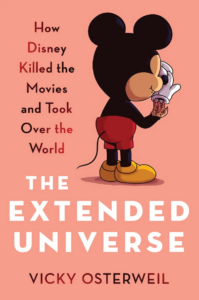
Excerpted from The Extended Universe: How Disney Killed the Movies and Took Over the World by Vicky Osterweil. Copyright © 2026. Published by Haymarket Books.

Vicky Osterweil
Vicky Osterweil is a Philadelphia-based writer, agitator, and worker whose first book, In Defense of Looting, described historical struggles for liberation in the US. She is a member of the anarchist journal CAW and has written about the intersections of film, politics, and culture for publications such as The Paris Review, Art in America, Al Jazeera America, The Baffler, Dissent, Lux Magazine, and The New Inquiry, where she was also a culture editor for many years.