







How a Love of Salem and The House of Seven Gables Inspired My Debut Novel
Ashley Woo on Otherness, the Darkness of the Past, and How History Shapes Her Writing
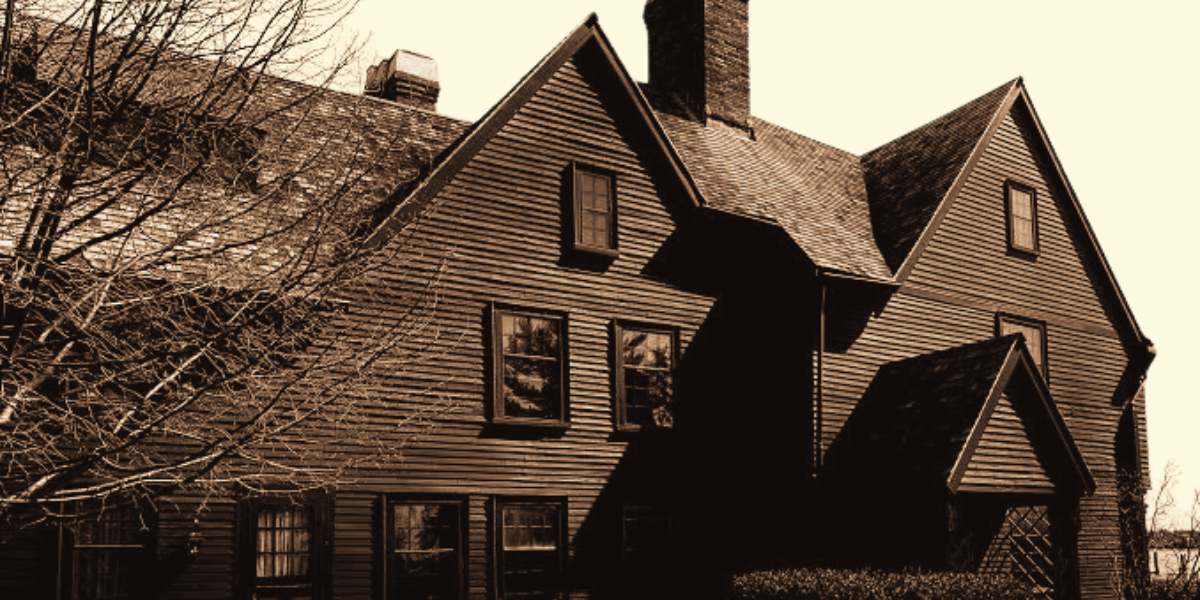
Situated directly on the waterfront of Salem Harbor in Massachusetts, there sits a two-story timber home. The wood is dark, evocative of the traditional First Period architecture of the early colonies. And most notably, it has many gables, triangular sections of an exterior wall, where roof lines meet. The effect is imposing. Eerie. It’s easy to imagine the home standing in those difficult early years in American history, witnessing both hardship and hope.
Indeed, this is no ordinary house. First built in 1668 for the sea captain John Turner, The House of the Seven Gables was later inhabited by American author Nathaniel Hawthorne. Hawthorne, whose great, great grandfather was a ruthless judge in the Salem Witch Trials, was so horrified by that dark period of American history and the role his family played in it, that he wrote a gothic novel taking place in an eerie and atmospheric home, about a family curse, generational guilt, and redemption. That book, an inspiration for my own debut novel Wildwood, was called The House of the Seven Gables.
History, as we know, has a way of repeating itself. I think because of this, the darkest parts of history have a way of resurfacing in literature, time and time again. Nathaniel Hawthorn wrote his novel in 1850, over 150 years after the Salem Witch Trials of 1691. But he was plagued by guilt over his ancestor’s role in the trials, and felt compelled to explore themes of human character, greed, and social decay through his work. The House of the Seven Gables follows the cursed Pyncheon family. The greedy Colonel Pyncheon accused a man named Matthew Maule of witchcraft, in order to steal his property. As Maule is executed, he curses the Pyncheon family, shouting that God will give the Colonel “blood to drink.” The rest of the story follows Colonel’s descendants, as they struggle with the ramifications of the curse, only breaking free by choosing a life of love, honesty, and humility.
Today, we see fear of the “other” as a tool wielded by those in positions of authority, to divide and control. We see the destructive power of excessive greed, on people and the environment. And we see the desire to deny history.
Like Hawthorne, I, too, have been long fascinated by the darker moments of history, by the actions people have taken against each other in times of fear and despair. As a child growing up in Massachusetts, I frequently visited Salem in the autumn. I vividly remember touring the Witch Dungeon Museum, first watching the reenactment of Abigail Williams accusing Sarah Good of witchcraft, of tormenting her using the specter of black and yellow birds, then touring the wax displays in the cellar, depicting key moments of the trials. Giles Corey, who refused to enter a plea so that his land could not be claimed, and was subjected to pressing, essentially crushed to death by stone. A woman, broken and battered in a tiny cell. A scene from the gallows. Those images stayed with me, got under my skin and never fully left.
I was disgusted, horrified, and curious. How could something like this happen? What must people have felt in order to believe such things? Or to do such things? Lie for land. Murder for wealth. Turn on their neighbors.
Today, Salem is a strange, beautiful and wonderful place. The state and town have made efforts to atone for the atrocities over the past centuries. In 1697 the Massachusetts General Court ordered a day of fasting and prayer to repent for the unlawfulness of the trials. Later, in 1711, the colony passed a legislative act to make reparations to the victims, including restoring the good names of the accused and paying financial retributions to the families of the accused. And in 1957, the state issued a formal apology, naming the trials as the result of mass hysteria.
Having recognized the hysteria, Salem now keeps the history alive, through an unlikely combination of museums dedicated to the witch trials and shops and festivities that celebrate the modern-day practice of, well, witchcraft. Though today witchcraft is largely not connotated with evil and sorcery, but instead, a practice focused on the reverence of nature, folk traditions, and a moral compass that is summarized as “an it harm none, do what ye will”. Salem is a vibrant, thriving, bustling city, attracting throngs of tourists in the autumn. Situated on a harbor, with a brick lined pedestrian way and historic buildings, Salem is quintessential New England with an edge. It’s a lovely place to celebrate the weird and witchy and then polish off the day with a lobster roll and a Sam Adams.
When I set out to write my debut novel Wildwood, a Vermont-set gothic mystery, about a woman who inherits an estate and discovers dark secrets beneath the floors and within the walls, I knew that I wanted my story to be chilling and intriguing, but also have deeper themes, a reason for the haunting beyond the scare. Wildwood is a dark tale, with whispers of a witch, set against the beautiful yet formidable backdrop of rural New England. It is also an examination of wealth and greed, inheritance and ancestral sin, and the unsettling question of who really owns the land we live on. I think these themes and cautions are as pertinent today as they were nearly two-hundred years ago when Hawthorne wrote The House of the Seven Gables.
Today, we see fear of the “other” as a tool wielded by those in positions of authority, to divide and control. We see the destructive power of excessive greed, on people and the environment. And we see the desire to deny history.
Finally, as with The House of the Seven Gables, and the story of Salem itself, my story is also one of redemption, illustrating that people and places can come back from their darkest deeds through acknowledgment of the past and consciously choosing love and empathy over wealth and power. Indeed, an apt lesson for these uncertain and volatile times.
__________________________________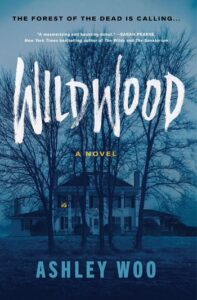
Wildwood by Ashley Woo is available from Harper Perennial.

Ashley Woo
Ashley Woo studied English Literature at Emory University and has masters degrees from Harvard University and Babson College. Born and raised in Massachusetts, she currently lives in Vermont with her husband and two young children. She writes gothic thrillers and her current work in progress is a murder mystery. Ashley’s debut Wildwood will publish with HarperCollins US in Fall 2026.