Here’s the shortlist for the 2026 Women’s Prize For Non-Fiction.
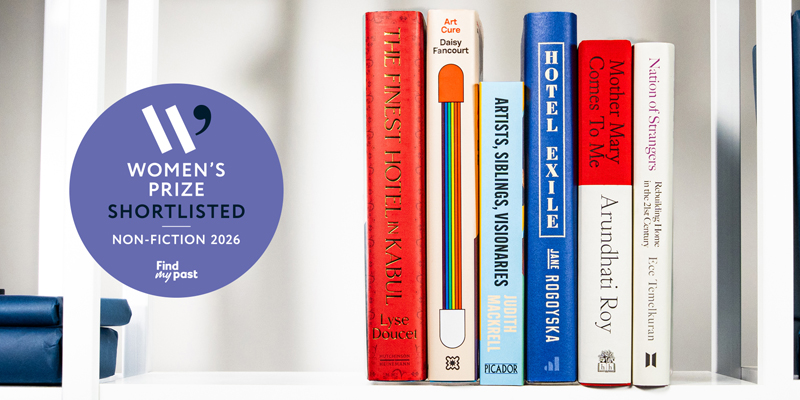
The six book shortlist for this year’s Women’s Prize For Non-Fiction has been announced, an impressive collection that includes memoir, contemporary politics, biography, writing on health and science, and more. The prize aims to elevate women’s underrepresented voices in non-fiction, where there is a persistent, systemic gap in publishing, coverage, and pay.
The 2026 shortlist is:
Lyse Doucet, The Finest Hotel in Kabul: A People’s History of Afghanistan
Daisy Fancourt, Art Cure: The Science of How the Arts Transform Our Health
Judith Mackrell, Artists, Siblings, Visionaries: The Lives and Loves of Gwen and Augustus John
Jane Rogoyska, Hotel Exile: Paris in the Shadow of War
Arundhati Roy, Mother Mary Comes to Me
Ece Temelkuran, Nation of Strangers: Rebuilding Home in the 21st Century
Thangam Debbonaire, this year’s Chair of Judges, said that the list “shows the power and necessity of women’s writing at a time when recent statistics suggest a decline in non-fiction print sales in the UK.”
This sales slump affects non-male writers in particular, who have been “overlooked in review coverage, award recognition and receiving lower advances,” says Claire Shanahan, the Executive Director of the Women’s Prize Trust. Shanahan acknowledged that “some progress has been made in certain disciplines,” but that overall “progress is slow and male writers continue to dominate in most non-fiction genres, and so more needs to be done to develop the talent pipeline.”
The winner of the Women’s Prize For Non-Fiction will receive £30,000 and a sculpture by Ann Christopher titled, “Charlotte.” The winner of the prize will be revealed in London on June 11, 2026, along with the winner of the 2026 Women’s Prize For Fiction.

James Folta
James Folta is a writer and the managing editor of Points in Case. He co-writes the weekly Newsletter of Humorous Writing. More at www.jamesfolta.com or at jfolta[at]lithub[dot]com.