Hannah Kauders on Grief, Translation, and Fátima Vélez’s Galápagos
“In death, all things are possible. It’s up to each of us to decide.”
The week after my father died of cancer, I was told I could pay to send his ashes to outer space. The funeral director stood opposite me and my mother, clicking through the details on a PowerPoint. The “Memorial Spaceflight” was their deluxe package, and we had options. For three thousand dollars, they could launch a portion of my father’s ashes into space and bring them back to earth again. For five, his remains could be cast into orbit, where they would circle indefinitely. Twelve thousand would buy him a “permanent journey” beyond the moon and into deep space.
Unmoored by the absurdity, I took in only a few of the details: the remains would travel on a rocket departing from Texas, and we could track the satellite location of the ashes, like some dystopian, intergalactic equivalent of the “find my friends” app. My mother and I looked at each other in horror. How did we get here?
Not even a week before, an on-call doctor had pronounced my father dead. Moments later a social worker appeared to ask what funeral home we’d be using. Off the top of my head, I knew the name of just one. I remembered it because, during the early days of the pandemic when I left New York for my parents’ seaside town, I would lead my dad past it every night as we walked his Seeing Eye Dog and my miniature dachshund. All the bars in town were closed. Each time our caravan passed the funeral home, my dad would pause and say, “should we grab a drink?”
And now here we were, at the funeral home, and they were asking us to choose a memorial website layout, an urn, a spaceflight. Was it too late, I wondered, to choose a different funeral home? But they already had his body.
I didn’t send my father’s ashes into deep space. But in the months after we said no to the memorial spaceflight, I made some other odd choices. I dated two different very religious people, neither of whom shared my religion (none). I got a tattoo of a Sondheim lyric that I sometimes regret. And I started translating a novel, which, it turned out, was about a gruesome death.
The book, titled Galápagos and written by Fátima Vélez, was a contemporary plague novel in verse. It’s not the kind of novel about death you usually read, in which just one character dies and everyone else goes on living. In Galápagos—it would be no spoiler to reveal, for you can learn as much from the book flap—pretty much everyone dies.
To read Galápagos is to bear close witness to death and decay.
The novel follows a young painter named Lorenzo. He spends his time in Bogotá and Paris, consuming art, procrastinating chronically, and flitting between the homes of his lovers. One day, he loses a fingernail. Then he loses the rest of them. As the novel progresses, we watch as Lorenzo, his lovers, and his friends are all consumed by an unnamed, unrelenting illness.
Meanwhile, their bodies progressively deteriorate. So does language. By the book’s last page, we can take in only fragmentary voices, “ancient” and “unsatisfied,” that “ring out without end.”
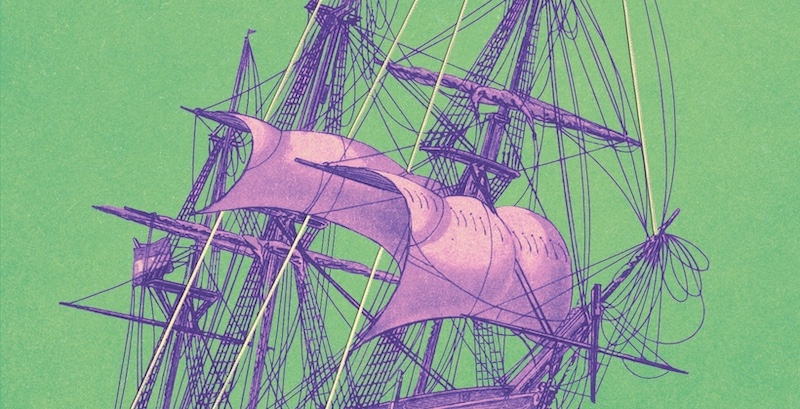
To read Galápagos is to bear close witness to death and decay. We are spared no detail as Lorenzo and his lovers disintegrate on the page, nail by nail, breath by breath. Then, in part two, they—their ghosts?—cruise on a custom-made ship through the Galápagos Islands. Is it an aquatic underworld? Is it purgatory? Unclear. We only know that as they cruise, they fend off boredom by telling each other absurd, rambling stories. All the while, they feast on delicacies—suckling pig, turtle eggs, Antillean rum, each other—until nothing remains that can satisfy their hunger.
I recently sat in on a conversation in which Fátima was asked what inspired her to write the novel. She said that years ago she’d seen a documentary by the Colombian director Luis Ospina called Our Movie. The film documents the final months in the life of Lorenzo Jaramillo, a well-known painter who died of AIDS in 1992. As Fátima put it, “he practically dies on camera.” Years later, once Fátima had begun writing Galápagos (it was her master’s thesis in creative writing at NYU), she mentioned Ospina’s film to her father, Simón Vélez, a celebrated Colombian architect. He reminded Fátima that he and Lorenzo had actually known one another in real life. The two of them and some friends had traveled to the Galápagos Islands. In the years following that trip, Lorenzo Jaramillo died of AIDS. So did the rest of the friends who had accompanied them on that trip. Fátima’s father was the only one who survived.
Galápagos’ protagonist is a different Lorenzo. But he holds within him something of the essence of that famous painter who once cruised the Galápagos with Fátima’s father. In this way, Fátima’s book was a kind of translation long before it ever crossed my desk.
Translation, for me, has always been connected to mortality and loss.
For months I tried to source Ospina’s film about Lorenzo Jaramillo. I could find only a pixelated clip of the trailer on YouTube. In it, a gaunt, bearded figure lies dying in a sumptuous bed. Opposite him hangs a black and white sketch by the French artist Henri Michaux. In a soft, lilting alto, Lorenzo describes the artwork, as though it were not on the wall directly before him. The whole time, his eyes are closed. In me sparked a sudden recognition.
Did Lorenzo go blind? I texted Fátima, who confirmed it.
I haven’t searched for the film since. Watching Lorenzo—blind then, his bed-bound body growing ever thinner—I could only see my father.
Translation, for me, has always been connected to mortality and loss. I fell in love with the craft just a few days after my sixteenth birthday while visiting Granada with a school group. Our chaperones took us to Fuente Vaqueros, the hometown of the poet Federico García Lorca, who was murdered by fascists during the Spanish Civil War. As we killed time on a train platform, they passed around one of Lorca’s poems, “Lament for Ignacio Sánchez Mejías,” an elegy for a gored bullfighter. I remember sitting alone on the train platform, and then on the train, with no interlocutor but the poem. I read it once. I read it again. And in the blank spaces between the verses, I started to translate.
I didn’t have a dictionary or an internet connection. Words I didn’t know I translated homophonically, too proud to admit I didn’t understand their meaning. Cal, the word for limescale, became call. An antiquated word for basket, espuerta, became spurt. Kilometers passed as I worked, oblivious to the majesty of the passing Andalusian landscape: scorched brown and sage green land, parched olive groves, almond trees bowing in the direction of the light. My first experience of translation was not dissimilar to my first experiences of being engrossed by a book. Another reality had superimposed itself fleetingly onto my own. But this time, each word, each image, had to pass through me. It was a slower process than reading, more deliberate, even more engrossing.
“The bed is a coffin on wheels,” Lorca wrote, “the room was a death rainbow” (Tr. Sarah Arivo). Now it strikes me as almost prescient that my first experience of translation was one of close contact with death and mourning. Twelve years later, I’d complete my first published translation—of Iván Monalisa Ojeda’s Las Biuty Queens—while my father was getting his first lymphoma treatments. This was during the pandemic, when only one person could accompany him to his chemo: me or my mother, but never both. When it was my turn, I’d translate by his bedside, my computer on a cafeteria tray in my lap. My dad would sleep through the infusions. When he woke up, we’d share a hospital cookie and he’d ask to hear what I’d been working on.
My father didn’t know a lick of Spanish, and, until I chose this strange vocation, he didn’t know a thing about translation. He was an attorney, a mediator who spent his career helping people resolve painful, often years-old disputes. Guided by his Seeing Eye Dog, he’d move between two conference rooms, in which sat the dueling parties whose peace it was up to him to broker. My father’s vocation made him an intermediary, and he could appreciate the complex balancing act required of translators. He was comfortable dwelling in ambiguities and a master at listening for places where two perspectives could be made to meet. Even when his treatment made him too immunocompromised for visitors, I’d call him in the hospital to read him whatever I was working on. Powerful translation, he’d text after we hung up. Love, your favorite reader.
I searched Galápagos for a lesson about grief, but the text seemed less interested in teaching me how to cope and more interested in forcing me to feel.
I learned, translating Galápagos, the varieties of tomatoes that grow in the French countryside. I learned about dance epidemics in the Middle Ages, and how buckwheat becomes a crêpe. I learned Galapagosian bird species, and turtle species, and what to call every corner of an antique ship. I even got to name the antique ship, which in Spanish is called “El Carajo,” with its shades of “fuck,” and “shit,” and “the middle of nowhere.” The Bumfuck, I christened her and felt pleased.
But the process challenged me in ways I didn’t expect. I had to take on the perspective of a narrator who was dying, to let Lorenzo’s voice, in all its fear and denial, speak through me. I became more aware of my body, of its chronic aches, its fragility. In Brooklyn I got a hangnail, worried my whole nail might come off, then worried they might all come off. In Granada I ate a bad clam, and lay retching on the bathroom floor, convinced I’d be found dead there by the Andalusian landlord, the book still unfinished. All the while, I searched Galápagos for a lesson about grief, but the text seemed less interested in teaching me how to cope and more interested in forcing me to feel.
Many have written eloquently about what makes translating intellectually intricate. Fewer have acknowledged its psychological demands. Translation is an embodied task. It’s my responsibility to put a finger on what it is about a work of literature that moves me, so that I can make choices in English that might move a reader in a similar way. It’s not unlike method acting. Only when I allow myself to be moved—to feel the text—can I go about the equally tricky business of re-writing the original in a new language, transposing its music, all while trying to preserve its sense as closely as possible. In this way, translation, much like writing, is a labor not only of thinking, but also of feeling.
Anne Carson’s Nox is one of the few works I’ve read that captures the affective work of translation. In it, she translates Catullus’s 101—an elegy for the Roman poet’s brother—while mourning her own brother. The book, which comes in a box and unfolds like an accordion, is a facsimile of a journal Carson kept to commemorate her brother. It’s a copy of a copy, a relic of the slippery boundary between translation and original. In the end, Carson remains openly unsatisfied with her translation of Catullus. “I never arrived at the translation I would have liked to do of poem 101,” she writes, “But over the years of working at it, I came to think of translating as a room, not exactly an unknown room, where one gropes for the light switch. I guess it never ends. A brother never ends. I prowl him. He does not end.”
A translation never ends, because when it comes to the messy business of meaning-moving, there is never a perfect answer. There is only ever a choice we make, hoping it’s the best one.
Recently I found a note to myself from the time I started translating Galápagos: “Come to the page only when you’re prepared to confront what must be lost.” What’s lost are the particular contours of the original. But something, too, stands to be gained. When the translator comes to terms with the unfinishedness of her project, it’s possible, in that unfinishedness, to find a kind of light. In his introduction to Ricoeur’s On Translation, Richard Kearney describes translation as an endless task, “a work of tireless memory and mourning, of appropriation and disappropriation, of taking up and letting go.” He reflects on the last word of one of Ricoeur’s last books, Memory, History, and Forgetting. That word is inachèvement, or “incompletion.” Kearney writes that “translation, understood as an endlessly unfinished business, is a signal not of failure but of hope.” The pain of translation is that—like Carson’s grief for her brother, like my grief for my father—it doesn’t end. Its hope? That like Carson’s brother, like my father, it doesn’t end.
In death, you can cruise the Galápagos in a disintegrating ship. You can travel the galaxies on a memorial spaceflight. You can defy the laws of grammar, of punctuation, of sense.
It’s been four years since my father died, a year since I finished translating Galápagos. I recently broke things off with a therapist who claimed I have chronic neck pain because I haven’t processed my father’s death (in fact, my spine has an abnormal curvature). I asked her if there was anything beside the neck pain that made her think I hadn’t processed it. She said that when I talked about my father dying, I would sometimes smile. She said that’s what someone months into grief would do, but not someone years into grief. I had the impression this woman thought I might be out of touch. That her next question might be, is your father in the room with us?
Later that day, I called my best friend. Hysterically I told her of the therapist’s comment. Was what she said true?
“That dumb bitch,” she said, and promised I’d processed plenty.
I felt seen. But what about my smiling?
“You smile when you talk about him because you love him,” my friend said, and that’s true.
But it’s only part of the truth. I smile because I loved him, but also because the fact of his absence is—though I literally watched him die—unbelievable, absurd. Maybe the fact of a soulmate’s illness and death cannot ever be computed, resists computation.
And I’m not sure I see the harm in that, or the harm in feeling our way through the absurdity and senselessness of loss at our own pace. Because if there’s one thing I’ve learned in translating Galápagos, it’s that grief—like language—is what you make it.
In one of the novel’s final scenes, Lorenzo’s best friend Paz María speaks with two sirens. They’ve come aboard The Bumfuck to swap stories, but when they discover the ship is—like all on board—quickly deteriorating, they return to the safety of the water. As they swim away, Paz María calls out to ask if she can join them. They tell her it’s not her destiny. “The secret no one knows,” they say, “is that everyone has her own island,” and that “death is, and here lies the secret, the place where all things are possible.”
In death, you can cruise the Galápagos in a disintegrating ship. You can travel the galaxies on a memorial spaceflight. You can defy the laws of grammar, of punctuation, of sense.
Today my partner and I visited the website of the company that offers memorial spaceflights. Their prices have gone up (inflation). But they’re still sending ashes and DNA up in spacecraft. For around thirteen thousand dollars, your loved ones can still go “on a permanent celestial journey, well beyond the Moon.”
My partner Aaron, an engineer, laughs even harder than I do at the website. Then he turns serious, says the last thing we need is more space debris. I hadn’t thought of that. What happens to a capsule of ashes sent into orbit? In a Wall Street Journal article, we learn the answer. The seven grams of ashes, in their tiny capsule, will circle the earth for up to six years. At which point “the Earth’s gravity will pull them… back into the atmosphere.” What will happen then? I scroll and read. “Everything will burn up. The remains of the 24 voyagers will be cremated a second time.”
The article is from 1997. Two years after that, Aaron would lose his father to a gruesome brain cancer. 22 years to the month after that, I would lose mine.
Aaron says a black hole is like an island in space. I take this to mean that a black hole is like a ship in the Galápagos that is condemned to sink and sink and sink, but in liminal intergalactic space.
But that will not be our fathers’ fate. I read once—or maybe I wrote once—that we each get our own island. One for Lorenzo, one for Paz María, one for Aaron’s father, one for mine.
In death, all things are possible. It’s up to each of us to decide.

Hannah Kauders
Hannah Kauders is a writer-translator from Boston. Her translations include works by Tania Ganitsky, Antonio Ungar, and Fátima Vélez, and her translation of Iván Monalisa Ojeda's Las Biuty Queens was a finalist for the Premio Valle Inclán and nominated for the International Booker Prize. She teaches writing at Harvard and is at work on her first novel.