Follow Awe: Deb Olin Unferth on Writing Speculative Fiction
“Eco-fiction feels to me like the most important thing I could be writing right now.”
This first appeared in Lit Hub’s Craft of Writing newsletter—sign up here.
Most of my books have elements of surrealism or sci-fi or the fantastic—the passenger pigeons mysteriously return, or a character has the power of knowing when people will die—but I really committed in my last book, the eco-fiction heist Barn 8, when I swerved twenty thousand years ahead into an apocalyptic tomorrow. It felt so right that I knew that in my next book the future would be my journey. From the first sentence of my new novel, Earth 7, I was fully down for eco-speculative fiction—cli-fi, I’ve heard it called. I wanted to write about the various technological band-aids we’re coming up with to keep civilization going in the face of climate change. I thought I’d follow those technologies to their inevitable endpoints. What would earth look like after a few hundred years of solar-panel arrays, wind turbines, carbon capture, stratospheric geoengineering?
I placed the story in the future, changed the setting, and I let the ripples of that choice spill over everything around it. The tone, the language, the characters, the plot, the problems, the images, even the air and light and the furniture in the rooms—they all shifted and reoriented, like going to another continent and seeing a new sky full of different stars.
I found myself sinking into research. Electromagnetic waves, CRISPR, molecular biology. That became my project for a few years: sitting alone in a chair and reading about genome sequencing, magnetic fields, the geometry of sand dunes, string theory. I talked to experts as I found them, and I felt my mind stretching. To strive to understand was the project—it was okay if I wasn’t a scientist by the end of it.
Landscapes, too. I wanted to write about a world of deserts and long horizons, emptiness, the absence of civilization. I read several books about sand and I visited deserts, stayed in a tent in the Sahara. I also went on a ship to the Arctic to look at the glaciers, icebergs, and pack ice. I spent a lot of the time staring—at landscapes and photographs—and allowing my experience of not understanding to be part of the experience. Occasionally I was lucky and arrived at something other than understanding. Awe, perhaps. From that, I grew the book.
That would be my craft recommendation for writing speculative fiction: follow awe.
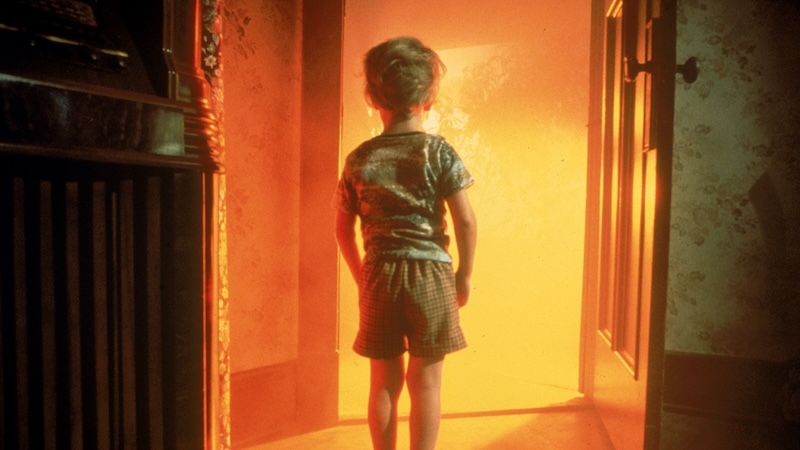
Eco-fiction feels to me like the most important thing I could be writing right now. I see a lot of artists around me also creating work about animals, climate change, technology. I like to think we are all turning toward a sound or image we can’t quite identify, but feel the urge to understand, like Close Encounters of the Third Kind. It turns out the dispatch arriving in our dreams is not an alien call from outer space. It’s the pulse of the earth. We are making our clay sculptures, we are scribbling the vision out on pages, filling canvases, lining up lighted figures on a screen. There’s a message arriving, not from the sky, but from the ground under our feet, from the air and the trees. Our mission is to listen and tell all.
___________________________________
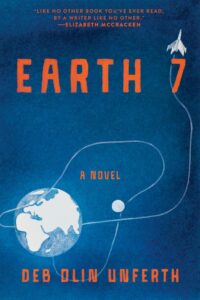
Earth 7 by Deb Olin Unferth is available via Graywolf Press.

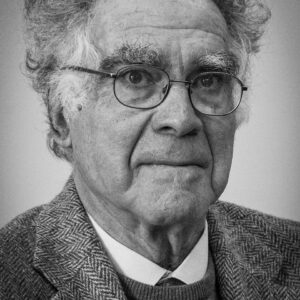
Deb Olin Unferth
Deb Olin Unferth is the author of six books, including Barn 8 and Wait Till You See Me Dance. She has received a Guggenheim Fellowship and three Pushcart Prizes, and was a National Book Critics Circle Award finalist. Her work has appeared in Granta, Harper’s, McSweeney’s, and the Paris Review.