Five Novels That Showcase Queer Domesticity
Erin O. White Recommends Alison Bechdel, Chelsey Johnson, Carol Anshaw and More
When I was a small child, five or six years old, I accompanied my mother to a gathering at the home of one of her friends. I amused myself with the crayons and coloring book my mother had provided while the women talked and drank their Celestial Seasonings tea. When I needed to use the bathroom, I decided to take the scenic route back to my mother and her friends, first giving myself a tour of the house’s many bedrooms. I can still remember the host’s bedroom; I can see myself standing in front of her low dresser wanting, so badly, to open the drawers. When my mother came looking for me, she gently escorted me out of the room, explaining that other people’s bedrooms were private.
I was an obedient child, but also a curious one, and a few years later I figured out a new way to get into other people’s bedrooms: reading.
Domestic fiction has always been my genre. While my friends and elementary school classmates were tearing through Madeline L’Engle’s Wrinkle in Time, I was tucked into her other, lesser known Austin Family Chronicles series, in which there is no time travel and no magic, only a family of six who live in a rambling Vermont house and, for one wild year, an apartment in New York City. Years later in AP English when our teacher assigned a paper on a contemporary novel of our choosing, my friends read Dune and The Firm. I read Jane Smiley’s Ordinary Love and Good Will.
I should pause here and acknowledge that my own definition of domestic fiction strays a bit from the more formal, literary one. Historically the term referred to a type of novel that rose to popularity in the ninetieth century and was stuffed with marriage plots, moral crises, class ascension, deceit, and other preoccupations assigned to the female psyche by primarily male authors. Now we tend to think of domestic novels as those concerned with the lives of families and intimate relationships. I agree with this, although my sense of the form is more physical. I think of domestic novels as dollhouses brought to life, stories that narrate and dramatize life in our private spaces: kitchens, bedrooms, backyards.
This perception is likely a holdover from my childhood when I could clearly see a book’s characters move through rooms staged in my mind to resemble those of my friends or relatives, so that every imagined scene had the aura of intimate recognition. In those days I was endlessly curious about families. If I could have read a book about my friends and their families, I would have, happily. These novels were as close as I could get.
My curiosities about family life only intensified as I matured and left my childhood home behind for dorm rooms and studio apartments. I devoured novels by Sue Miller, Mary Gordon, Laurie Colwin, Lynne Sharon Schwartz, and Ellen Gilchrist. I also became a writer and fell in love with a woman. We married and had children, embarking on the sort of life I had been thinking about in all its complexities for years. But we were doing it as two women, and in all my decades of reading I had not read a single novel about the private, familial worlds of lesbians.
In November of 2025, my first novel was published. I like to say, in my cheeky moments of book promotion, that I set out to write the first domestic lesbian novel. But the truth is my book is not the first novel to tell the story of what it means to share your life with another woman. Here are five novels I love that tell the story of queer domestic life.
*
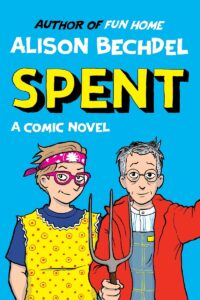
Spent by Alison Bechdel
In this year of grief, of worries and losses piling up for queer people, especially trans people, Bechdel delivered unto us a gift. In Spent Bechdel parts the curtains on the most delightful literary household in recent memory. Each panel is a two-dimensional diorama depicting the habits of that fascinating creature, the New England lesbian. There is visceral pleasure in the recognition, the familiarity, and the gentle teasing; an intimacy that is familiar yet foreign enough to sate my nearly infinite curiosity about the private lives of strangers. Other people’s bedrooms, indeed.
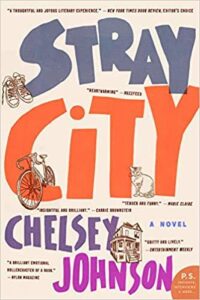
Stray City by Chelsey Johnson
Andrea Morales is a young lesbian living the gritty Portland dream when a drunken hook-up with a man leaves her pregnant. Stray City is a beautiful story of our past, a jeweled time capsule that holds not just the physical relics of ’90s queer life, but the heart of what it was to make a queer family in the days before Obergefell v. Hodges.
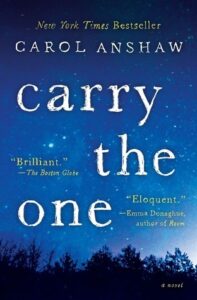
Carry the One by Carol Anshaw
The tangle of siblings, spouses, friends and lovers that make up the cast of Anshaw’s fourth novel must “carry the one,” as they move through their lives, the one being the victim of a devastating car accident the occurs in the book’s early pages. Anshaw effortlessly folds her lesbian characters into the book’s familial mess of guilt, atonement and forgiveness, depicting lesbian relationships and sex with great humor and warmth.
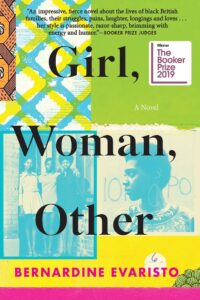
Girl, Woman, Other by Bernadine Evaristo
Girl, Woman, Other isn’t entirely a domestic novel because it isn’t entirely any kind of novel. The book is a tree, a mural, a tapestry woven with the threads of twelve British women’s public and private lives that cross through time and circumstance. There’s Dominique, a lesbian actor struggling to keep pace with trans liberation, Bummi, a Nigerian immigrant burdened by shame, and Morgan, a young nonbinary person offered a surprising legacy by their grandmother. Even though just a few of the book’s many characters are lesbian or nonbinary, I would say that they are all queer, in the sense that their true selves—and their true joys—exist outside the confines of convention.
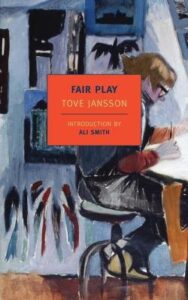
Fair Play by Tove Jansson
Jonna and Mare are serious artists who spend their days working on their own art while also offering each other encouragement and critique. They watch silent films and B-westerns from their painstakingly cataloged collection, travel by boat to their tiny summer house on a Finnish Island, and take a bus trip across the United States. Jonna doesn’t like Mare’s mother, who ruined her carving knives and was annoyingly fussy about crispbread. Mare can’t stand it when Jonna shoots at pigeons. They laugh and bicker, worry and console. And while there is not one mention of physical contact between the two of them in the entire book, it is one of the most romantic novels I’ve ever read.
__________________________________
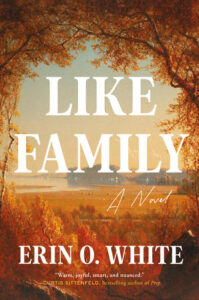
Like Family by Erin O. White is available from The Dial Press, an imprint of Random House, a division of Penguin Random House, LLC.

Erin O. White
A fifty-one-year-old debut novelist, Erin O. White is also an essayist and the author of the memoir Give Up For You. After growing up in Colorado and living for twenty years in western Massachusetts, she now lives with her wife and daughters in Minneapolis.