Five Books About Breaking Up... With Your Friend
Sarvat Hasin Recommends Elena Ferrante, Sharlene Teo, Maeve Binchy, and More
Breakup culture is well trodden and established. When you announce to your friends that you are going through a romantic separation, people know what to do. Pints of ice cream and drinks and condolences are offered. Some will begin to take sides, to tear down your ex’s character on your behalf, to detail the many reasons you are better off without them. Others will encourage you to cherish the time you had together and to mourn it as you move on. There is language for you and your ex partner to engage in. Will you consciously uncouple? Will you go no contact? Will you try, after a respectful time period has lapsed, to stay friends? Beyond that, the culture around it exists—tragic love stories to watch, songs to weep over in the bathtub, novels to turn to. Personally, I’ve been known to both watch and read The Age of Innocence in a moment of romantic vulnerability.
No such script exists for a friendship breakup. There is rarely a confrontation, a clean break. It is possible and probable that you may linger in misunderstandings and misery for months. Often you can’t talk to your friends about it because they are probably their friends too. Even if you do break up, a big conclusive fight that ends with a severing of the relationship, no one is here to pick up the pieces. The loss often goes unacknowledged, the wound untended to. I am so curious about this, about how central friendships can be to our lives and understandings of ourselves and how we have so little ceremony to acknowledge the end of them.
So these five novels are a kind of canon for the friendship breakup. Maybe you need to mourn by listening to Bad Friend by Rina Sawayama in the shower or watching Frances Ha and letting yourself crumble when Frances first sees Sophie with Patch and realises she is no longer her person. Or maybe, you need to read one of these?
*
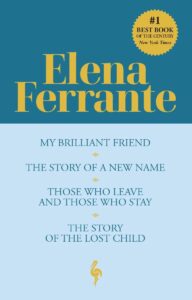
Elena Ferrante, The Neapolitan Novels
Lila and Elena may be the most important text in the friendship breakup canon. Growing up together in 1950s Naples, the two have a series of minor conflicts before their last and final split, the one that frames the narrative of the quartet. First the pain of Lila not being able to continue at school despite being smarter than her friend. Then the rift when Lila marries first at sixteen. They swallow these and continue. Their friendship survives many more hammerings, including loving the same man. Ferrante’s portrait of these schisms is exquisite, detailing all the jealousies and insecurities that can thrive in a friendship between two bright ambitious women. In the end, it is Elena breaking a promise to Lila that severs them – the promise that she would never write about her and their friendship.

Sharlene Teo, Ponti
Circe and Szu meet as outsiders in their school in Singapore, each other’s only friends, bound by the intense energy of teenage girlhood but also a mutual fascination of Szu’s mother Amisa. Amisa, a retired horror film actress who is “out of this world and incorrigible”. They have a brief intense friendship that Circe will later refer to as “the Age of Szu”. When Teo depicts the claustrophobic nature of a relationship where the temperature is constantly rising. When Amisa dies, Szu’s life changes drastically. She and Circe are unable to hold on to what initially drew them to each other. What Teo details so well here is the friendship ick: how quickly that kind of intimacy can sour and how closeness can become cloying.

Louisa May Alcott, Little Women
Laurie and Jo grow up together in the kind of perfect harmony that leads many of their family to assume it will grow into matrimonial bliss. Laurie agrees; Jo does not. Picking it up again, I am struck by the way Jo is dreading his proposal as it comes – and the intensity with which Laurie asks again. No one around her can understand how she can care for Laurie so much and not want to marry him. The separation between romantic love and friendship love can feel paper thin and many loves can flicker between the two: after all, we all want our spouses to be our best friends. But for Jo, the position is clear. Laurie may be her best friend but he won’t be her husband. In the aftermath of the rejected proposal, Laurie heads to Europe to lick his wounds. There he will meet and fall in love with Jo’s sister Amy and later in the book, his and Jo’s friendship will resume – they’ll be bros again as she always intended.
Not all friendships rifts are permanent. Sometimes the narrative changes and people can come back.

Kamila Shamsie, Kartography
This novel is full of friendship breakups, both past and present. It’s about a quartet of young Karachiites, whose parents all know each other and have a shared and knotty history that our heroes discover over the course of the book. Shamsie’s early novel is an elegant portrayal of breakups, coloured by many different things: bigotry, misunderstandings and shame are all things that tear people apart in this book. Raheen and Karim are at the heart of the book, friends first and an eventual love story. Even when they both leave Pakistan and move to American, they continue to satellite each other. The friendship breakup in the diaspora is its own particular haunting: representing not just your past relationship but the home you’ve left behind.

Maeve Binchy, Circle of Friends
As the title might suggest, Binchy’s sprawling novel tells the story of a group. Drawn together on the first day of college when they witness an accident together, the young Dubliners begin a journey of being in and out of each other’s lives (and in and out of love). The big friendship break up occurs between Benny and Nan when it transpires that Nan has been sleeping with the former’s boyfriend. What Binchy does so well here is draw out each of these characters’ internal lives and motivations. There’s no heroes or villains in this story. There is skill also in her depiction of the collective: when something ruptures between two people can reverberate through a whole friendship group.
__________________________________
Strange Girls by Sarvat Hasin is available from Dutton, an imprint of Penguin Random House.

Sarvat Hasin
Sarvat Hasin is a novelist and dramaturg from Pakistan. She has a masters in creative writing from the University of Oxford. Her first novel, This Wide Night, was published by Penguin Random House India and longlisted for the DSC Prize for South Asian Literature. Her second book, You Can’t Go Home Again, was published in 2018 and featured in Vogue India’s and The Hindu’s best of the year lists. Her third novel, The Giant Dark, was a runaway critical success, won the Mo Siewcharran Prize, and was shortlisted for the Royal Society of Literature Encore Award. Strange Girls is her US debut. She lives in London.