Fiction as a Filter: On Writing the American West’s Water Crisis
Claire Boyles Considers the Ways Her Environmental Activism Informs Her Literary Life
Years ago, during the Great Recession, I attended an event sponsored by an environmental organization that had formed in protest to a planned dam construction project on the Cache La Poudre River in northern Colorado. At the time, my husband and I owned water rights that drew from that river system, which we used to irrigate our small-scale vegetable farm. Most of the farmers in our rural community were in favor of the dam, but as environmentalists, we opposed it. I admired the work the group was doing and was considering joining myself.
That is, until one of the group’s members, upon hearing I was a farmer, cornered me to deliver a condescending lecture about how agriculture should be managing water. I might have still had water spots on my glasses from installing our drip irrigation system, and I was not about to be farm-splained by some dude who wouldn’t know a ball valve from an intake line. I’ve come to believe that the most effective activism often involves sitting in long, boring meetings with people you find vaguely annoying even though you are on the same side, but I never went back to any of that group’s events.
I wanted to write a novel in which the water crisis of the American West was “redeemed by the imagination.”
Years later, while writing my novel, Appraisals, I spent some time dissecting this exchange. In real-life, it was obnoxious, but not especially meaningful. In fiction, I could see the narrative potential. I became fascinated by the force of our instant disdain for one another and the assumptions each of us carried into that space. I had been very certain of my place on the moral high ground, and it was clear to me that he had felt the same. I began to wonder: what if my husband and I talked about the dam project with such mutual contempt? Or one of my teenage kids? A neighbor or a friend I cared deeply about?
Appraisals is about water rights and marriage and local farms and parenting and zoning laws and grandmothers, which is to say it is about the emotional impacts of climate anxiety in rural spaces, how these issues put us at odds with, or, more hopefully, draw us closer to the people we love. The novel is set during the Great Recession, on a farm much like the one my husband and I bought in 2008, the one we sold at a loss in 2013, just barely avoiding bankruptcy and foreclosure. Originally, I thought that having such deep real-life experience would make the book easier to write, but the opposite turned out to be true. Through multiple failed drafts, I struggled to separate all of my opinions about the book’s political background issues—the value of local foodsheds, regenerative practices, water law and the water crisis, and the impact of oil and gas development on rural communities—from what I know good fiction does, which is center character and relationship.
In the author’s note to the 1995 paperback edition of In the Time of the Butterflies, Julia Alvarez writes:
What you’ll find here are the Mirabals of my creation, made up but, I hope, true to the spirit of the real Mirabals…I wanted to immerse my readers in an epoch in the life of the Dominican Republic that I believe can only finally be understood by fiction, only finally be redeemed by the imagination. A novel is not, after all, a historical document, but a way to travel through the human heart.
I did not want to write a memoir, and I did not want to write essays. I wanted to write a novel in which the water crisis of the American West was “redeemed by the imagination.” For models of how to keep the polemic from overpowering the personal, I turned to other writers working in the subset of climate fiction that I call contemporary agrarian.
*
In Ruth Ozeki’s My Year of Meats, the protagonist Jane Takagi-Little produces a TV show called My American Wife! that is really a series of advertisements meant to sell American meat to Japanese housewives. When the job takes her to an eastern Colorado cattle ranch, Jane notices that the family’s young daughter has precocious breast development as a result of the hormones the operation uses. Here is Jane deciding to confront the child’s mother, Bunny, about her suspicions:
I know what denial looks like, and what it feels like too. It’s a mercurial flicker of recognition in the eye, quickly blanketed with a vagueness that infuses the body like sluggish blood. It is opaque. Murky…I know this because I make television and try to walk through it on a daily basis. It feeds on convention, cowers behind etiquette, and the only way to deal with it is a blunt frontal attack.
In fiction, we connect with characters we don’t have to continue living with, and in that ephemeral state of love we may be more willing to consider ideas and perspectives we would otherwise resist.
Beyond the larger metaphor for the climate crisis in those first sentences, this is where the large-scale agricultural politics become mere backdrop to the more compelling personal story. Jane understands that calling Bunny out is a social and professional transgression, but her decision to do it anyway is ultimately an invitation for redemption, which Bunny accepts. The intricacies of the interpersonal dynamics and conversational turns in the scene ground the dispute in emotion, and two characters who were once at odds find common ground.
But what if there is no common ground to be found? In Diane Wilson’s The Seed Keeper, Rosalie Iron Wing, the main character, grows an organic garden on her husband John’s conventional farm. When he is young, their son, Tommy, works with Rosalie in the garden, and she teaches him about their Dakhóta history and beliefs. When Tommy starts working in the big fields with John, who is white, he pulls away from Rosalie.
Surrounded by approving adults, [Tommy] learned that his father’s beliefs were blessed by God and church and community. Eager to please him, Tommy began spending less time with me, until I finally stopped asking if he wanted to help in the garden or gather plants in the woods. Because this is what he remembers, Thomas grew up believing that I had given up on him. And that is what he can’t forgive.
This emotional rift is deeper than just the family’s disagreements about what to grow and how, encompassing the brutal history of genocide and displacement that is embedded deep in America’s agricultural history. Wilson explores these relational fissures throughout the novel but does not resolve them. Rather, she leaves them to mirror and amplify the still unresolved wounds of the nation’s story.
Returning to these writers helped me find the distance I needed to get closer to my novel’s characters, and in doing so, I became even more convinced of the importance of fiction set in the contemporary climate moment. Increasingly, media is moving away from real-life climate stories, assuming, I think, that people don’t want to read them, much in the same way that I did not want to join the same group as the farm-splainer. It’s hard to summon the energy for confrontation, with strangers or beloveds or even our own complicity in this disaster. In fiction, we connect with characters we don’t have to continue living with, and in that ephemeral state of love we may be more willing to consider ideas and perspectives we would otherwise resist.
_______________________________
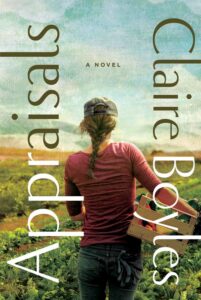
Appraisals by Claire Boyles is available from W.W. Norton & Company.
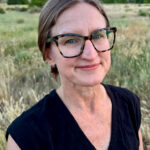
Claire Boyles
Claire Boyles is a writer and former farmer. A 2022 Whiting Award winner in fiction, she is the author of Appraisals and Site Fidelity, which won the High Plains Book Award and was longlisted for the PEN/Robert W. Bingham Award, the Colorado Book Award, and the Reading the West Award. Her nonfiction has appeared in Sierra Magazine and Virginia Quarterly Review, among other journals, and she is a screenwriter with multiple credits on the Hallmark Channel. She splits time between Loveland, Colorado and Ames, Iowa, where she is an Assistant Professor of Creative Writing and the Environment at Iowa State University.