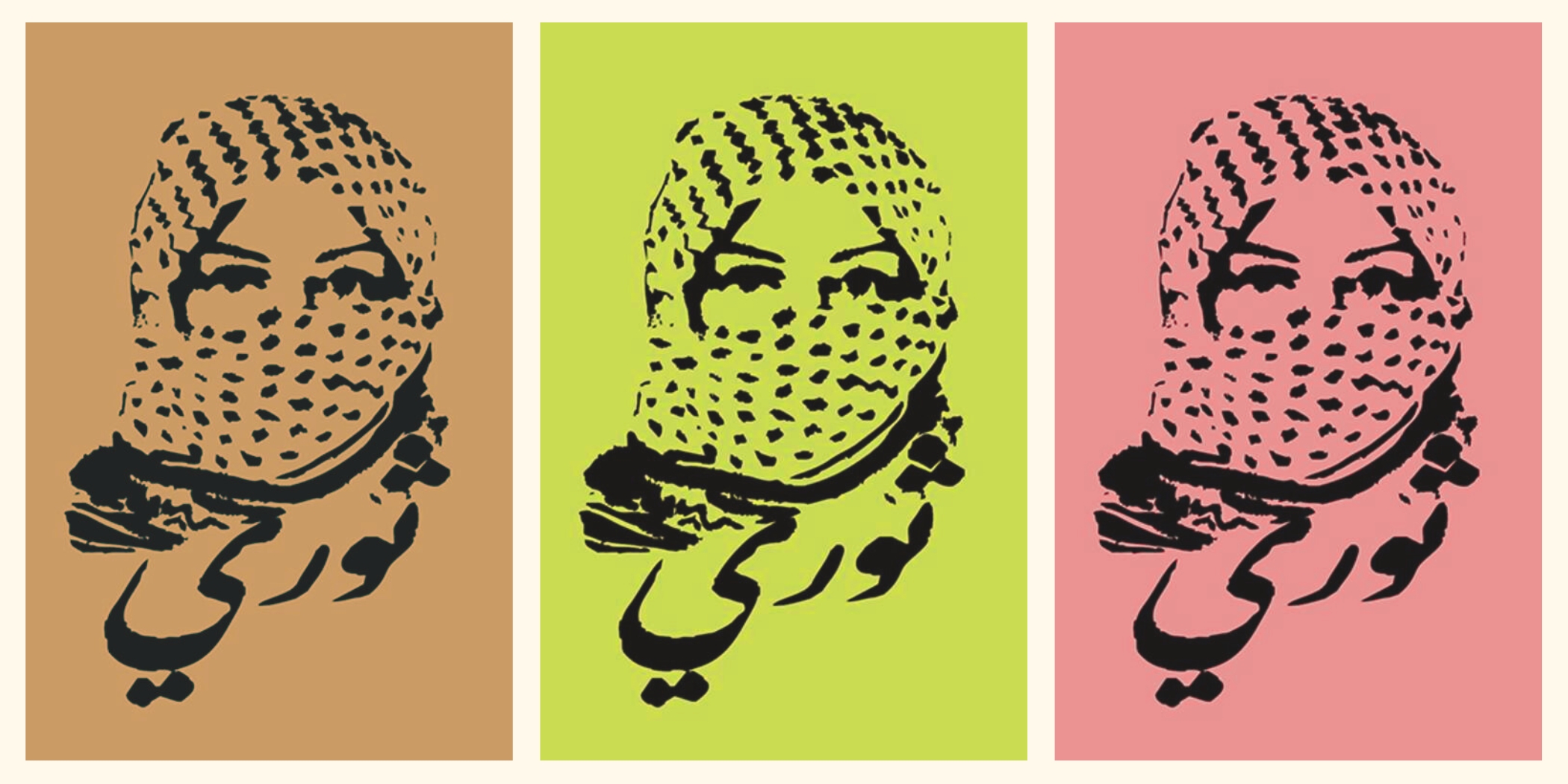
Feminism and Palestinian Liberation Go Hand In Hand
As the popular Palestinian saying goes, “Our mere existence is resistance.”
Palestinian women and queers in the homeland are often asked by concerned Westerners how we negotiate the challenges of living full, rewarding lives in a conservative society. Those of us in the Western diaspora are asked if we are not better off, really, living in “modern” societies, where we can wear whatever we want, go wherever we want.
These questions are misguided.
Instead, Palestinians should be asked how we persist, how we continue to live, love, and care, in a society that is living under a brutal system of apartheid intent on erasing our very existence and history. We should be asked how we persist under the rule of law of an ethno-supremacist country that views each and every one of us as a “demographic threat,” simply for being who we are. We should be asked how our youth retain the impulse to be free when trigger-happy Israeli soldiers and snipers are ordered to kill unarmed children demanding their human rights. We should be asked how we continue to build community, nurture each other, and denounce settler colonialism in the same breath as we reject patriarchy.
And anyone who is concerned that those of us in the diaspora are better off than in Palestine should stop and think about who is the greater oppressor of the Palestinian people, including women, and queers: Israel, which denies every Palestinian their basic rights, or Palestinian society, with its at times stifling “traditional values,” which are often little more than an attempt to hold on to one’s culture, threatened with erasure.
Nevertheless, as far as the mainstream discourse in the West is concerned, Palestinian women and queers either do not exist or are oppressed by “Islamic fundamentalism,” with little recognition of Israel’s violence, much of which is gendered.
And they should consider that, for the millions of us longing for the homeland, our diaspora is not a choice but a reality imposed upon the Palestinian people by Israel. I begin, reluctantly, with a brief discussion of the Western discourse on Palestine because I believe it is of critical importance to our circumstances, as the question of Palestine is a global one, with close to 80 percent of the entire Palestinian people forcibly displaced from their ancestral towns and villages, while Israel, which dispossessed us, receives financial support and political immunity from Western powers.
Indeed, the recognition of the West’s critical role in ending the oppression of the Palestinian people is implicit in the fact that the liberation strategy agreed upon by a broad coalition of Palestinian civil society organizations, namely the Boycott, Divestment, and Sanctions (BDS) movement, hinges on global solidarity by individuals living in those countries that can impact Israel—and these happen to be mostly in the West. Nevertheless, as far as the mainstream discourse in the West is concerned, Palestinian women and queers either do not exist or are oppressed by “Islamic fundamentalism,” with little recognition of Israel’s violence, much of which is gendered.
The long-standing Western refusal to address Palestinian women’s struggles was made clear in 1985, when a patronizing Betty Friedan, an icon of Western feminism, with its “the personal is political” rallying call, attempted to censor the prominent Egyptian feminist Nawal El Saadawi at the United Nations International Conference on Women in Nairobi, Kenya. “Please do not bring up Palestine in your speech,” Friedan told El Saadawi. And in a stunning demonstration of bad faith and intellectual laziness, both stemming from unfettered racism, Friedan “explained” to the fiery Arab feminist that “this is a women’s conference, not a political conference.”
Simply put, Israel does not make exceptions for queer Palestinian refugees when it comes to the denial of their right of return.
Friedan obviously had no clue who she was dealing with. As El Saadawi later wrote, in a clear articulation of Palestinian women’s circumstances:
Of course in my speech, I did not heed what she [Friedan] had said to me since I believe that women’s issues cannot be dealt with in isolation from politics. The emancipation of women in the Arab region is closely linked to the regimes under which we live, regimes which are supported by the USA in most cases, and the struggle between Israel and Palestine has an important impact on the political situation. Besides, how can we speak of liberation for Palestinian women without speaking of their right to have a land on which to live? How can we speak about Arab women’s rights in Palestine and Israel without opposing the racial discrimination exercised against them by the Israeli regime?
White/Western feminism’s attempt at erasing the political context of Palestinian women’s oppression was evident yet again around the 2017 Women’s March on Washington, when liberal feminists objected to the leadership of Palestinian American organizer Linda Sarsour, and the newly-minted “Zionesses” complained of “antisemitism” because Palestinian women’s circumstances were on the platform as part of a broader discussion of US president Donald Trump’s Muslim ban and the overall Islamophobia he pandered to.
Interestingly, the “Zioness Movement” itself sprouted on the US activist scene with the explicit intention to counter feminists who were successfully denouncing Zionism. It chose the slogan “Unabashedly progressive, unapologetically Zionist” in direct response to the growing if belated understanding among many Western feminists that Zionism is racism and has no place in progressive movements.
This understanding had become obvious, for example, when the largest academic women’s organization, the National Women’s Studies Association, voted in favour of BDS at its November 2015 annual convention. Meanwhile, in street protests and at LGBTQ meetings, anti-Zionist activists in cities from Seattle, Washington, to Berlin, Germany, were also rallying in support of Palestinian rights, disrupting “pinkwashing” events, and leading major national marches.
Pinkwashing is Israel’s smoke-and-mirrors attempt to distract from its egregious human rights record by foregrounding its own supposed gender liberalism while directing an accusing finger at Palestinian society. Anti-pinkwashing activists have successfully disrupted such propaganda by pointing out that Israeli society overall is quite conservative; Israel is only “gay-friendly” when it serves its political purposes and only when individual gay people are Israelis or the much-coveted Western tourists.
As the popular Palestinian saying goes, “Our mere existence is resistance.”
Simply put, Israel does not make exceptions for queer Palestinian refugees when it comes to the denial of their right of return; an Israeli soldier does not inquire about a Palestinian individual’s sexuality as they go through a checkpoint, letting queers through while detaining straight Palestinians; and house demolition crews do not spare the homes of gay Palestinians.
It is in this context of the complete erasure of Palestinian women (and more generally, but not as consistently, Arab and Muslim women as well) that one must understand the statement made by former US secretary of state Madeleine Albright as she rallied for Hillary Clinton—a solid booster of the apartheid state—in the 2016 presidential campaign: “There is a special place in hell for women who do not help each other.”
Albright later apologized for that comment, just as she had earlier apologized for answering a question about the deaths of half a million Iraqi children as a result of US sanctions with, “We think the price is worth it.”
Meanwhile, in Palestine itself, women and queers have all along been actively resisting their own “special place in hell,” battered by Western imperialism and Israel’s unrelenting genocidal intent on the one hand and Palestinian culture’s lingering patriarchal values on the other. In the masculinist, patriarchal dominant discourse, “struggle,” especially “national struggle,” is generally understood as armed resistance.
Yet armed resistance is only one of many ways Palestinians have fought their oppression, and certainly not the most effective, as it has never achieved any lasting victories. Another, more comprehensive understanding of “resistance” would take into consideration all the ways we persevere against the odds—that is, our sumoud (steadfastness) when Zionists are intent on erasing our very existence. As the popular Palestinian saying goes, “Our mere existence is resistance.”
__________________________________
Excerpt from Palestine and Feminist Liberation by Nada Elia (Between the Lines, 2025); originally published in Palestine: A Socialist Introduction, edited by Sumaya Awad and Brian Bean (Haymarket Books, 2020).

Nada Elia
Nada Elia is a diaspora Palestinian writer, grassroots organizer, and university professor. She is the author of Greater than the Sum of Our Parts: Feminism, Inter/Nationalism, and Palestine and has contributed chapters to Palestine: A Socialist Introduction and The Case for Sanctions on Israel. She is currently completing Falastiniyyat: A Century of Palestinian Feminisms. She is a core member of the Palestinian Feminist Collective and has been the plenary presenter at major academic and activist conferences. Her articles have been published in Mondoweiss, Middle East Eye, and Electronic Intifada. Nada Elia lives in the United States, where she is an associate professor of Ethnic Studies at Western Washington University.