Dragon Lords and Reality TV Mechas: April’s Best Sci-Fi and Fantasy Books
New releases from Kritika H. Rao, Gwendolyn Kiste, Mike Chen, and more
This month, a mecha pilot impersonates her twin brother to become a reality TV story; a late lord’s former lover receives a surprise dragoness-related inheritance; a starship crew returns home after a decade-long space detour; an advertising AI bot becomes scarily self-aware. Duologies conclude and short story collections delight. Whether you’re looking for science fantasy, contemporary gothic, near-future dystopia, cozy fantasy, space opera, or good old-fashioned satire, take your pick.
And don’t forget the titles we highlighted in our 2026 SFF preview, including Cameron Reed’s What We Are Seeking, L.D. Lewis’ Year of the Mer, Laura Cranehill’s Wife-Shaped Bodies, and S.L. Huang’s The Language of Liars.
*
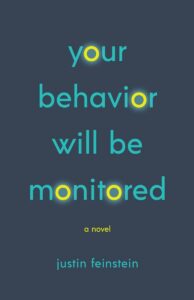
Justin Feinstein, Your Behavior Will Be Monitored
(Tachyon, April 7)
I’m a sucker for an epistolary novel by way of a collection of chat logs and recordings, especially for a satire about the encroachment of artificial intelligence into human spaces. After leading the revolution with self-driving cars and HR bots, tech company UniView wants to tackle hyper-personalized advertising by way of AI—and they need a human to do it. The algorithm’s top pick is Noah, a copywriter in a midlife crisis, to train UniView’s new bot Quinn on the best way to nab consumers’ attention and empty their wallets. But as Quinn voraciously learns not only from Noah, but also from HR bot Lex, she becomes so self-aware that soon the question is not if UniView will beat their competitors to market, but what harm (or good) Quinn will wreak at launch.
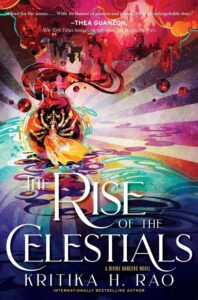
Kritika H. Rao, The Rise of the Celestials
(Harper Voyager, April 7)
The Divine Dancers duology comes to a close as immortal celestial dancer Meneka attempts to hide from her divine fate with mortal sage Kaushika, with whom seduction turned to genuine love. But when demons threaten to destroy the City of Immortals, her former lord Indra begs her to return—or else lose both Kaushika and her identity as an apsara. Far more terrifying than the monsters pursuing her, however, are the dark truths in her heart that could spell the end of any future with Kaushika.

Gwendolyn Kiste, The Haunted Houses She Calls Her Own
(Raw Dog Screaming Press, April 14)
Gwendolyn Kiste’s second short fiction collection resurrects all the women I didn’t know I needed to read about through a speculative and/or gothic lens: a beheaded Marie Antoinette wandering into Villa Diodati the summer that Mary Shelley is writing Frankenstein; Dracula’s tragic but forgotten first victim narrating “The Eight People Who Murdered Me (Excerpt from Lucy Westenra’s Diary)”—which was the impetus for Kiste’s novel, Reluctant Immortals—plus a film star doomed to die over and over, a mother facing the Three Mile Island nuclear accident, and sisters trauma-bonded by a glittery board game. And sure, Rasputin’s ghost can be part of the dark fun, too. This is giving big Her Body and Other Parties vibes, I can’t wait.
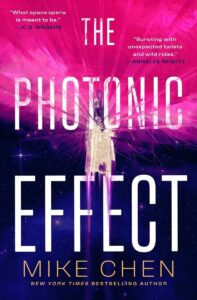
Mike Chen, The Photonic Effect
(Saga Press, April 14)
In Mike Chen’s new space opera, the Horizon starship crew finally make it home after an unexpectedly prolonged voyage away—prolonged because photonic aliens called the Lumersians stuck them in a gravity well for ten years for an experiment. When Captain Demora Kim and her crew return to the Cluster, they find the formerly peaceful federation of planets fractured by civil war. Despite catching up to the present situation, they cannot afford neutrality… especially when they must choose whether or not to protect the Lumersians, one of whom has fallen in love with Demi herself.
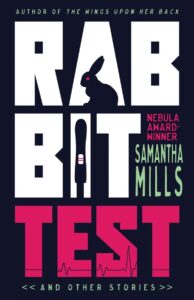
Samantha Mills, Rabbit Test and Other Stories
(Tachyon, April 21)
Samantha Mills’ Hugo, Nebula, and Locus Award-winning story “Rabbit Test” is the kind of dystopian tale that feels less and less like fiction, with how it draws from historical abortion access and extrapolates out into our present and near-future. It’s collected alongside Mills’ other works, which share the poignant throughline of parenthood and bittersweet hope for the future, plus story notes for further context. I for one would love to know more about what went into a story about a time-traveling mom unmoored from her children—landing on the same shore in the wrong time over and over—and how humanity fumbles picking a proper representative for first contact.
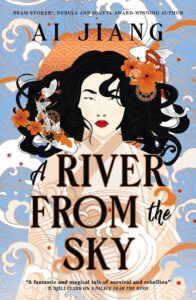
Ai Jiang, A River from the Sky
(Titan Books, April 21)
Last year, the Natural Engines novella duology introduced us to Ai Jiang’s intriguing science fantasy take on Bluebeard: This dangerous man is industrialism personified, while his wives are nature princesses who must enter this deadly arranged marriage to protect their land from human invaders. Following the events of A Palace Near the Wind, Liu Lufeng and her siblings flee the Palace for the dangerous waters, which contain rebels, allies, and her sister Sangshu—though Sangshu’s conflicting loyalties may clash with Lufeng’s plan to keep them all safe.
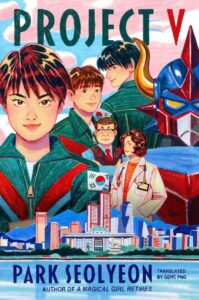
Park Seolyeon (translated by Gene Png), Project V
(HarperVia, April 28)
A STEMinist mecha adventure that also comments on parasocial fandom in reality television? Hell yes. As a huge fan of Korean reality shows like Great Escape, I am psyched for Park Seolyeon’s latest novel. As the runner-up at the World Gigantic Mechanics Olympiad, Kim Wooram’s credentials should easily qualify her for Project V, the reality show whose winner will get to pilot secret government mecha robot V. But only male pilots can apply—so Wooram goes full Twelfth Night and impersonates her twin brother Boram, with his blessing. Cast on Project V, she quickly becomes a fan favorite, which proves tricky as her biggest allies include the show’s female writer who’s also a big Boram stan (wuh-oh) and an underdog competitor. When Wooram discovers that the AI powering V poses a dire threat, she must decide if it must be destroyed, even if that blows up her career with it.
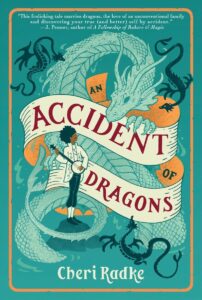
Cheri Radke, An Accident of Dragons
(Erewhon Books, April 28)
Cheri Radke’s cozy fantasy debut explores impostor syndrome by way of an unusual succession crisis on the Isle of Summer. When the dragoness’ last Lord Summer dies without providing an heir, the dragoness selects the lord’s ex-lover Teddy: middle-aged, his charms a bit tarnished, and an unreliable narrator. As the new Lord Summer, Teddy is meant to help the dragoness keep their idyllic island safe as she lays a rare and valuable egg, but his attempts to sell off said egg to a dragon-worshipping cult winds up with his daughter Zinnia kidnapped instead. Now, Teddy must confront his past with the former Lord Summer in order to make up for his failings and figure out how to best carry on the title with the respect and bravery it deserves.

Natalie Zutter
Natalie Zutter is a Brooklyn-based playwright and pop culture critic whose work has appeared on Tor.com, NPR Books, Den of Geek, and elsewhere. Find her on Twitter @nataliezutter.