







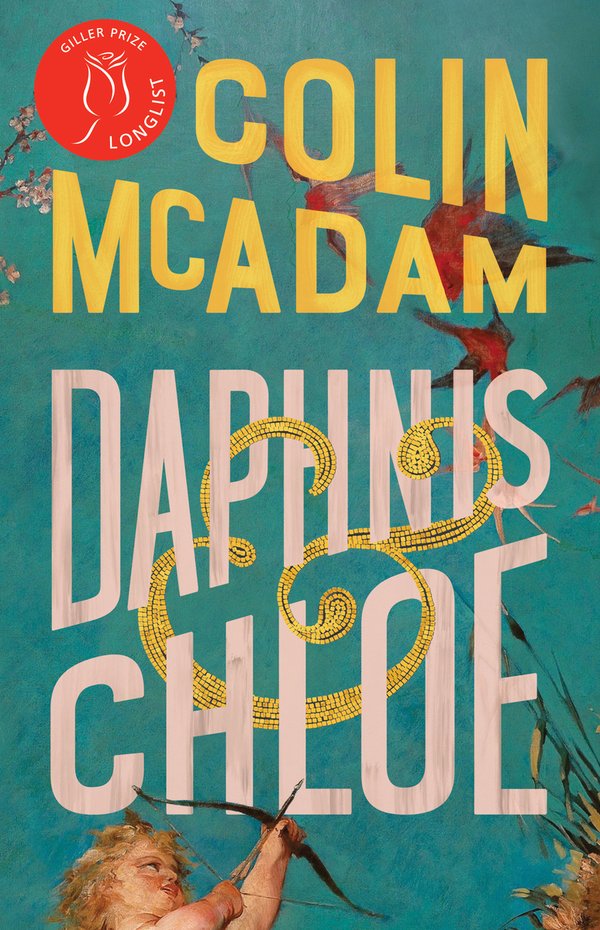
One of my favourite stories begins with a prayer that it will bring pleasure to many and comfort to the sad, and it was written by its author to refresh the memory of those who have been in love. No one, he says, has ever escaped the attack of Love and no one ever will as long as there is beauty and eyes to see it.
I work in a place for people near the end of their lives, where the beauty isn’t obvious, where some can no longer see. I set up games for them, organize their days, and best of all I tell them stories.
Most of these people are old, although some have come early to the end of their abilities. I myself, strangely, am older than all of them, but somehow I stay fairly rooted in summer. I can’t stop loving surprises.
People live here for years sometimes, others come soon after having a fall or a stroke and last no more than a day.
I don’t think of it as a place where people die, I think of it as a home for their final visions; whatever hope, mischief, love, and sadness remain to play out. Anger, too. A day won’t go by without someone screaming at a ghost, a child who betrayed her. Old men shouting at their bodies that will no longer do their bidding.
The best part of my job is learning about their lives. Ask yourself to picture a hero and you likely won’t see one of these hunched and shuffling characters, drooling old women with walkers, but these people are my heroes. I know what all of them have been through.
I sit with them at tables and listen.
Some remember very little and some can’t even speak, but a mute old man cutting pictures out of a magazine can tell me much about what he was or hoped to be. His scissors finding photos of trees and furniture, grandkids and women with brown hair.
Most of them remember reading. These letters, for whatever reason, are some of the only things they recall. And books can be a great comfort to them.
Among my tasks, I manage the little library over there at the back of the recreation room.
For over a year now I have come to know a certain couple. He is blind and she can no longer speak from a stroke. She can read but not out loud and he, of course, needs to be read to if he wants to learn a story.
They came to this place together and share a room. Husbands and wives will sometimes arrive here and forget each other, but these two seem to walk in the same skin. They help each other get dressed. She combs his remaining hair and pushes his wheelchair, she having learned to walk again and he unable on feet enfeebled from burns.
I don’t exactly read to them. I like to think that I am inspired by their stories and breathe them back into their days, their memories, just as my fellow god Ares might make a disheartened warrior brave in battle by whispering strong words.
The blind man has told me about some of their life, the business they had. He complains about taxes and insurance companies and the array of strangers who directed the movement of his hands and tongue, the array so vast and baffling that his growing dementia is no doubt attributable to the world being too entangled.
Holding his wife’s hand one day, he said to me, “This, you see, makes sense.”
And I know it.
I know it.
A long time ago a poet asserted that Love was the fourth of the gods to appear, before the universe became whole.
Chaos was first, then Earth, then Hell.
Only after the emergence of Love did things like Time and Space come about, because Love brings mischief and mystery.
The poet said it wasn’t until Night fell in love that Daylight first appeared, and of course once light was available and the gods could see lines and curves more clearly . . . well, we have thunder and oceans and eyes.
If I told you how long I have lived, you wouldn’t believe me. And if I said I am Love, you would wonder why I work here. There are more attractive jobs to have, those that don’t trade in tragedies and bedpans. That woman over there who hasn’t moved on her own in weeks— I know she will die tomorrow. And that man who moans with an open mouth while his friends hit a green balloon around the room . . . Surely Love should attend to the young, to the future.
We have a greenhouse here, and a chapel. A large space for line dancing and lawns for when the weather is good.
And this niche over here where the water fountain is—I made that golden mosaic.
I learn everyone’s story, you see. Either the things they have done in my name or the bitterness they endured without me. And I try to make things with what I learn from them.
Art provides the order and simplicity to me that the blind man gets from holding his wife’s hand. The same combination of understanding and wonder. I have seen so many murderers and depressives and others having naked lunches in the sun, squeezing lemon over their tongues, and I wonder how to attach this world to a sentence like a butterfly on a pin.
Not long ago the mute woman stared at my mosaic as she stood behind her husband in his wheelchair. She was moved by the scenes depicted—I could tell—and she came around beside her husband to get closer. She wanted to tell him what she saw.
“It’s an old story,” I said to them. “First told two thousand years ago, in a different form, about a couple named Daphnis and Chloe.”
My mosaic contained a sky of gold that arched and curved over the top of the niche. There were scenes of women giving birth, of strangers dressing the babies, the babies being left and raised by others.
Above the fountain was a depiction of young people pledging love as enemies gathered around them. Men and women wept and died, and a battle took place between all manner of predators and prey. Over here was a young woman crying, and beneath that a terrible fire.
There were too many bodies unmourned.
A darkness at the edge of every square made the brightness rich and deep, and the couple at the centre were involved in most of the scenes— often watched over by a dog with black ears.
I put a hand behind her back, gently, and suggested we walk towards their room.
“Do you want me to tell you the story?” I asked them.
The man was saying something and I leaned over to hear him better.
“I knew a bad man once,” he said.
__________________________________
From Daphnis and Chloe by Colin McAdam. Copyright © Colin McAdam, 2026. Reprinted with permission from Biblioasis.