Russ brought back a Coke Zero for Cherry and a beer for himself. And he kept his word—he stuck to her table. The opening act had started playing—a local band that never broke out, Sacagawea—but Russ and Cherry just huddled a little closer and kept talking. Cherry told him a bit more about her job. She’d started out as a graphic designer—he knew that—then she got promoted to team leader, then manager, and now she ran the railroad’s marketing department. The woman above her officially ran the department. But Cherry was the brains of the operation and frequently the mouth, and always the person who made sure that everything got done. (She was a little more self-effacing as she explained all this to Russ.)
Russ had been working in and around government since college. He was the mayor’s chief of staff now—even though the mayor was a Republican and Russ was a lifelong liberal. (His grandpa had been governor, back when Nebraska still elected Democrats.) And he was active in a bunch of civic groups. For voter turnout. Literacy. Arts programs in marginalized neighborhoods. He really did know half the people in the room—they kept stopping at the table to say hello. He kept introducing Cherry. (“Do you know my friend Cherry? We were practically roommates at Creighton.”) Russ still went to a lot of concerts. He still saw a lot of movies. He still ate dinner once a week with his parents. He was still really, really attractive.
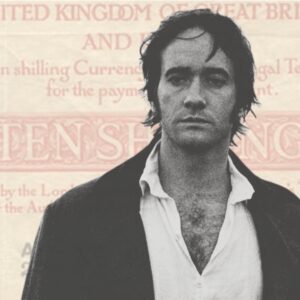
“Handsome” wasn’t the right word for Russ. He wasn’t especially tall or broad. His features were kind of sharp. He looked like the token Irish actor on a BBC drama—a little flintier than everyone else and a little more alive. His eyes were dark blue and set deep, and his color was high. When he was excited or drunk, he looked feverish.
He looked a little feverish tonight.
Russ had gotten married after law school to someone Cherry had never met—a Marian girl who worked at the Community Foundation. (Marian was one of the Omaha schools where rich Catholic girls went.) They had one kid, an eight-year-old boy named Liam—he was at Saint Margaret Mary now. Did Cherry want to see a photo? Yeah. She did. She looked at Russ’s phone and smiled. His son was a doll. She said so.
Cherry didn’t have any photos to show Russ. She wasn’t going to show him a picture of Stevie—that would be too sad. (. . . Even if Cherry did have a thousand of them on her phone.) And she didn’t want to talk about Tom. She couldn’t talk about Tom the way Russ talked about his ex-wife—like she was just another thing that had happened in the years since he and Cherry last talked.
“I can’t believe you work in management,” Russ said. The opening act had finished their set. Goldenrod would be starting soon. “You were always so creative.”
“I’m still creative,” Cherry said, affronted. She was chewing on ice. She swallowed it. “There aren’t very many people who can be creative and practical. It’s my magic power, actually. I can make sure the work is good, and I can make sure it gets done. And I can talk to the numbers and money people.”
“Huh.” Russ looked at her glass. “Do you want another Coke Zero?”
She shook her head.
“Don’t you miss being an artist?” he asked.
“I know I’m supposed to say yes, but . . . I think I’m a better executive. I don’t think I was ever much of an artist.”
“Sure you were.”
She rolled her eyes. “When did you ever see my art, Russ?”
He shrugged. “I just don’t think you would have been an art major if you were shitty at it.”
Well. That was true. “I got by,” Cherry conceded. “But I wasn’t an artist.” Not like the other people she went to school with. Not like Tom. “If I had to go back to design, I’d miss what I’m doing now.”
“I just can’t picture you at the railroad,” Russ said. “As an industrialist.”
“I’m not a robber baron.”
He laughed. “Do you still see Stacia and all those guys?”
Cherry nodded. Minimally. “Yeah. Same old crowd.”
Russ shook his head, like he was remembering something fondly. Cherry could imagine some of the details.
A guy walked past their table and waved at Russ. Russ waved back.
“Do you ever wish that you got out of Omaha?” Cherry asked.
He cut his eyes toward her. “What do you mean?”
Cherry looked up at him. He was a bit taller than her, standing by her chair. “Just . . . the same old faces,” she said. “The same old intersecting circles. Do you ever wish you’d gotten out?”
Russ smiled a little. His eyes looked extra alive. “Not tonight.”
Cherry ran to the bathroom before the show started, and when she came back, Russ was sitting in her seat. He smiled at her and got up. The band was walking onstage. Cherry climbed onto the chair, clapping. She was so excited for this show. Even more excited now that it was starting.
The first song began—and Cherry immediately felt herself sliding backwards. Back to her early twenties. To her senior year of college, when she’d had this CD on repeat. Goldenrod was the band that made “Omaha emo” a thing. Simple, pretty guitars. Whiny, breathy vocals. Base-level unhappiness. All of Goldenrod’s songs were about being lonely or feeling guilty. The lead singer was a famous depressive. He was wearing a paper crown tonight, playing the first few chords of the song on an acoustic guitar.
God, Cherry loved this song. She loved this feeling. She laughed a little, just for the joy of it. People around her were whooping.
Russ had moved to Cherry’s side of the table, to face the band. He turned to her, smiling, and sang the first lyric—“I was young, and I was tired, and I was splitting in three.”
Cherry grinned.
These concerts were all the rage now—bands playing their best-loved albums all the way through—and after a few songs, Cherry could see why. It was delightful. Hearing all the songs you wouldn’t usually hear at a concert, the not-even B-sides. Hearing the songs in the precise order that you knew them best.
Cherry kept smiling. She kept tearing up. She kept looking over at Russ—she still wasn’t over the shock of seeing him again, and there he was, standing right next to her. Standing so close that his arm brushed against hers every time he took a drink. Russ Sutton, as she lived and breathed.
There were songs on this first Goldenrod album that had always reminded Cherry of Russ, that she’d twisted to fit her hopeless crush on him—obviously she’d had a crush on him—and now he was right there beside her, singing along.
Maybe this was a message from the universe . . .
It had to be a message from the universe—it was too strange and specific for happenstance.
Cherry had gone out for the first time since Tom left to do something just for herself—she’d gone out by herself for maybe the first time ever—and this strangely perfect night was here waiting for her. A band she loved, an album she loved . . . and a boy she’d once liked an awful lot.
An awful, miserable lot.
Maybe the universe wasn’t on her side—would a benevolent god send Russ Sutton onto Cherry’s path? This ache in her stomach was familiar and delicious, but it had never led to satisfaction, not where Russ was concerned.
And yet . . .
There was satisfaction in feeling something, wasn’t there? In standing close to someone this attractive and exciting? It felt good to be attracted. To buzz a little.
Russ shifted his weight and rested his arm on the back of Cherry’s chair.
And Cherry let herself enjoy it.
__________________________________
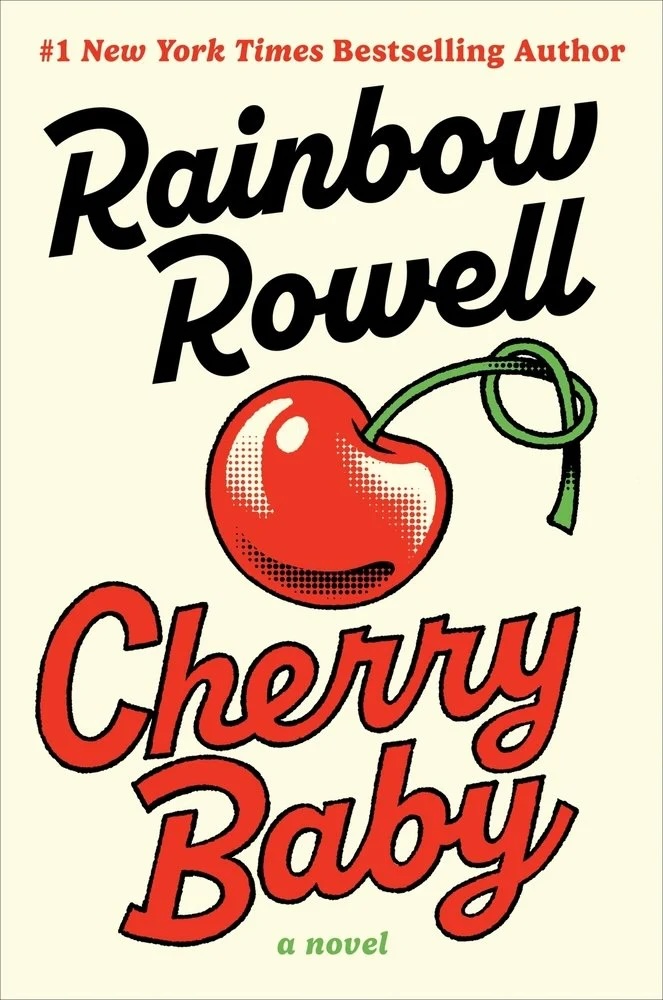
From Cherry Baby by Rainbow Rowell. Used with permission of the publisher, William Morrow. Copyright © 2026 by Rainbow Rowell.