Chantel Acevedo on Reimagining Her Father Through Fiction
“I think there’s some value in the kind of understanding fiction offers, whereby anything is possible.”
When I consider my father, who disappeared almost entirely from my life in my infancy, I think of what I don’t know. I don’t remember his hands, or his voice, how he formed arguments, whether he was a sore loser or told a good joke. All I ever had of him were brief encounters that I could count on one hand, but which burned flashbulb-bright in my mind. Everything I know about him came from other people’s thin anecdotes and contradictions. Silences, too.
I recall one of his rare visits during which a baby cousin of mine sat on a glass coffee table, shattering it. My father snatched her from the air before she could hit the floor, saving her from the shards of broken tabletop and porcelain figurines. Though I remember the moment vividly, I wonder sometimes if the coffee table incident really happened that way. After all, my father’s visits always made everyone tense, and it was possible that the table pulverized from the atmosphere alone.
In the final year of my MFA studies, someone called to say my father was dying. I was twenty-two. I went and sat by his deathbed for a little while, this stranger with my face. This would become another memory I would turn over infinitely, examined like an experiment with inconclusive results.
A fictive world began to grow out of truth, suggesting other characters, other narrative pressures, other landscapes.
Post-grad, I wrote a story about that afternoon at the hospital, draping a fictional me over the hard bones of reality. I cried tears of delayed grief through every revision and ultimately had a story that was mostly true. I sent it off. This was back when writers still sent out photocopies of their work in big, yellow envelopes. It was published in a good magazine, but this is the first time I’ve admitted that the story was mostly factual. Up until now, no one was the wiser.
In the years that followed, friends in whom I confided about my father urged me to write about him, and I would usually shake my head. Nonfiction demands facts, lots of them, which I didn’t have. So that was out. I had five significant memories of my father. Five total memories. Five points of light, with nobody to color in the shadows for me, to make sense of the shape of him. A short story had been no problem. After all, the timespan of the piece was one afternoon. But a novel? A novel required layers of detail and a host of other characters, and how could I do anything with five scant moments?
So, I wrote other stories in the meantime. I dug out tunnels’ worth of research, often writing into what history obscured. For example, because I could never really feel what it was like living in Cuba in 1893 while the war against Spain was being fought, I wrote a book about someone who could. This became my writerly philosophy: be led by curiosity, and when you come to something you can never know, when you’ve exhausted the research and asked all the questions, then you are allowed to invent the knowing.
I found myself drawn to places that concealed some private catastrophe. While exploring Primrose Hill on a visit to London, I came across Sylvia Plath’s home, nestled among other brightly colored terraced houses, the gardens blooming flowers. It startled me to think of her despair unfolding on such a picturesque street. What had she thought of this explosion of color, especially when there was relentless grayness within? Nearby, I spotted a zookeeper’s stone cottage, just outside the front gates of the London Zoo. The windows were dark and some were boarded, some boarded up. The place seemed lifeless, but it had been someone’s home once. There must have been such a riot of sound, with lions roaring at dawn, and elephants trumpeting at the moon. I wondered about it for the rest of the day. Weeks later, back in Miami, my mother told a story about the Cuban missile crisis one night, how she and her sister played hooky from school in Miami at the height of the crisis, and how everyone panicked. They’d gone missing at the worst time, blew off class to see Dr. No in a nice, cool theater, while outside, the world felt like it was on the brink of destruction. I tried to summon the fear of the moment. How did people in Cuba feel when a bird cast a shadow from up above that October. Would they think it was a plane sent to obliterate them?
I mentioned these things because most of my novels have been assembled from observations like these, layered over one another until their meaning became clear to me. Out of these impressions, a new book had begun to form, and a new character began to speak—Felix, the protagonist of Cages.
But he did not yet have much to do with my father.
The more I wrote about this character, however, a lover of music, a zookeeper, a husband and father, the more what I knew of my father came to mind. My father was queer and closeted. Magnetic, I’m told. From an old scrapbook, I’ve gathered he was also a poet and devoted to St. Anthony. For all my adult life he had felt unknowable, perpetually dying in my imagination. But now, those five memories I had of him from my childhood, once tyrannous in their inability to be written about, were winding their way into the work. There was the coffee table scene, yes, and others, and so a fictive world began to grow out of truth, suggesting other characters, other narrative pressures, other landscapes. This time, I found the memories more pliable, willing to transform in service of the story.
Sometimes, a person survives only in testimony, but someone must be willing to hear it.
But the structure of the novel wasn’t right yet. In the opening page of the first draft, Felix, a Cuban zookeeper, is dying, and someone has come to see him, to say goodbye, and to hear his story in his own words. But the self-revelation held me back. It didn’t seem fair to have Felix speak, to clear the air, to tell the characters in the book he loved them or hated them, when my own father’s voice was forever quiet. So, I decided that Felix would speak through others’ interpretations. That much, at least, felt true. Instead of a confession, the book would be more like a chorus. Five characters—Felix’s two lovers, his wife, brother-in-law, and one of his daughters—would tell his story.
Sometimes, a person survives only in testimony, but someone must be willing to hear it. This, then, became the final craft hurdle in Cages. To whom are the characters telling the story? The answer, when it came, was about both structure and a personal, emotional necessity. Eva, Felix’s eldest daughter, became that invisible presence to whom the other characters speak. As the listener, it is her job to gather the shards of Felix’s life, trying to make sense of him and his absence.
“What could have been” is Eva’s millstone, as has been mine. It’s not, in the end, a terribly unique story. There’s a limit to what we can know of one another, and that’s not always a failing. Has writing Cages helped me answer the questions I’ve had about my father all my life? No, of course not. It’s fiction, after all. But I think there’s some value in the kind of understanding fiction offers, whereby anything is possible. I want to believe that like Felix and Eva, my father and I would have opened the cages of our hearts for one another, if only we’d had the chance.
_______________________________
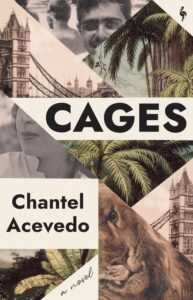
Cages by Chantel Acevedo is available from Europa Editions.

Chantel Acevedo
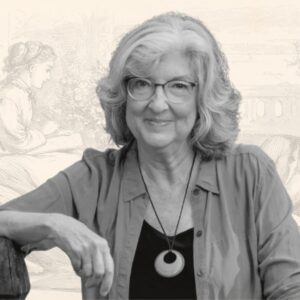
Chantel Acevedo was born in Miami to Cuban parents. She is the author of The Distant Marvels (Europa, 2015); The Living Infinite (Europa, 2017); A Falling Star (Carolina Wren Press, 2014); and Love and Ghost Letters (St. Martins, 2006), winner of the Latino International Book Award, as well as several novels for young readers. Acevedo is a professor of English and Creative Writing at the University of Miami.