Caro Claire Burke on Tradwives, the Performance of Selfhood, and “The Good Old Days”
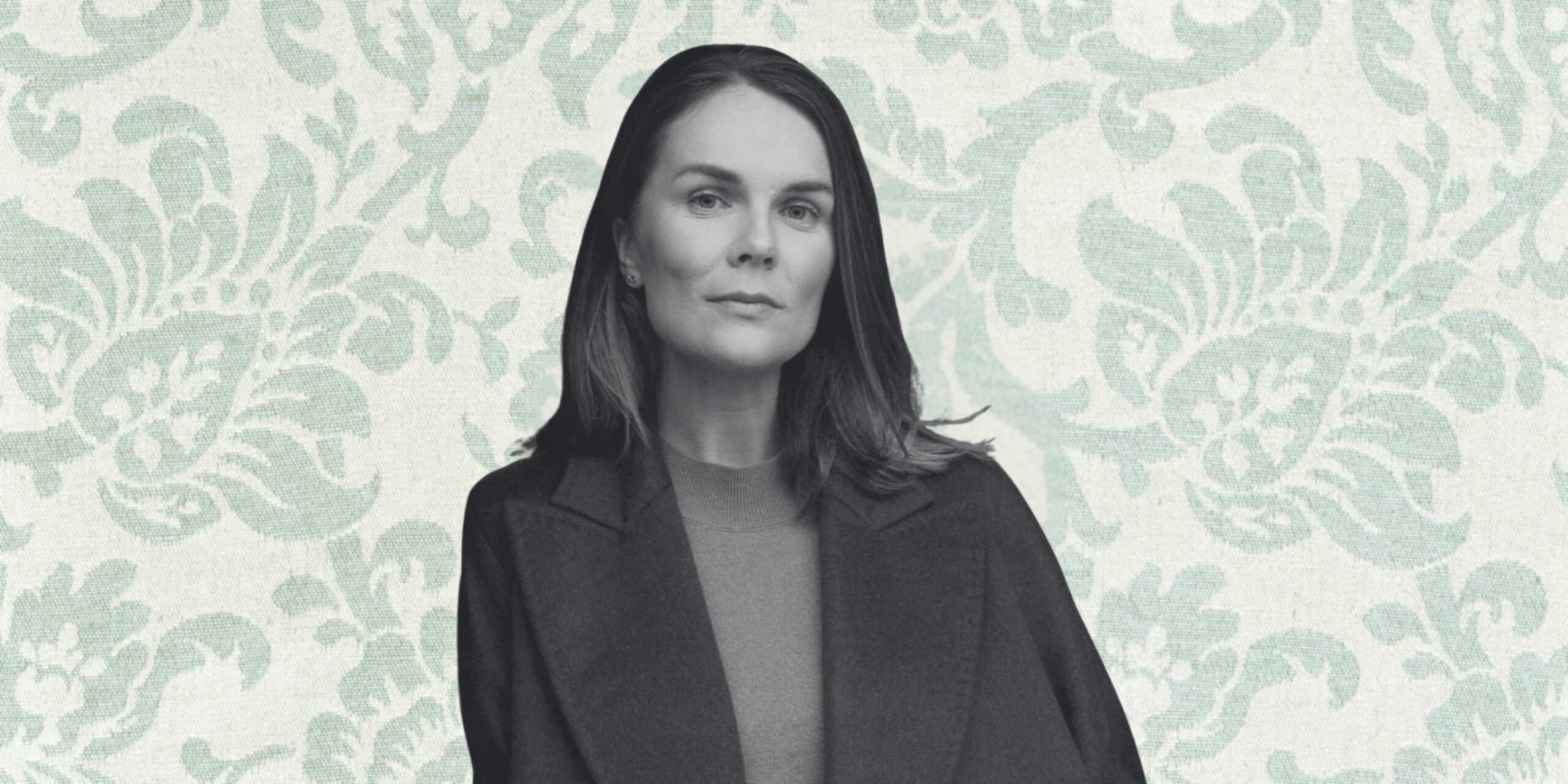
The Author of Yesteryear in Conversation with Sara Petersen
I (bravely!) consider myself a pioneer in tradwife studies. When I first started feeling inexplicably drawn to Ballerina Farm content, for example, Hannah Neeleman had roughly 150,000 followers. This was in 2021; Ballerina Farm now boasts 15 million followers across platforms and has exploded into a widely recognizable lifestyle brand. A lot has changed in five years. And, when it comes to the American appetite for romanticized models of ideal womanhood and motherhood, not much has changed at all. Since the 19th century, the iconography of submissive, beautiful, chaste, thin, white motherhood has reigned supreme in the cultural imagination. This impossible ideal has also critically informed gender, politics, and capitalism.
Caro Claire Burke’s work first came to my attention through her TikToks, where, a few years ago, she posted thoughtful, funny, and bitingly astute analysis of tradwives. She has always been unique in her ability to identify a particularly hard to reach itch in the cultural ether and scratch it. And she’s always understood that the rise of conservative ideals of womanhood isn’t simply a quirky social media trend designed to sell butter churners, milkmaid dresses, and beef tallow skincare (although it is that as well!). The tradwife reflects and refracts anxieties about who deserves personhood in America. Burke’s brilliant Yesteryear is what happens when we pursue the tradwife fantasy to its most extreme conclusion. If families, food systems, male power, and women’s ability to be happy within oppression were really so much better way back when, why not recreate a world in which the good old days return?
*
Sara Petersen: What initially pulled you into the trad-o-sphere? I’d love to hear about your entry point, particularly as someone without kids.
Caro Claire Burke: I think there’s something about the tradwife discourse that seems to intersect with every imaginable conversation about modern womanhood. What you choose to do with your career, when you decide to have kids (if at all), who you marry, what a marriage looks like…all of these questions are existential for even the most secular and independent people. I think the conversation about tradwives offers us a new door into the same discourse that’s been plaguing women for the last seven decades.
I know on a fundamental level that social media is a mass form of performative rot, and yet I stick around anyways. It’s quite a mindfuck.
SP: I know I started writing and thinking about this stuff from a personal place of bafflement. And my interest was obviously impacted by my own experience of motherhood and womanhood. Like, I was predestined to view any pretty, nostalgic, non-gritty illustration of motherhood and domesticity as bullshit, you know? And I love writing into my hazy feelings of bullshit.
CCB: Right. Yeah, I think I was also writing from a place of cynicism at the beginning—Natalie’s voice is quite cynical. But ironically, I think because I was writing from her perspective, I found myself becoming increasingly cynical of people like myself, if that makes sense, and that bled over into how I perceived influencer accounts online. I absolutely saw tradwife accounts on my feed, and was equal parts intoxicated with and disgusted by it—but I also started to experience those feelings with influencer accounts that were much more “liberal,” and also with the general idea of performance online. I think at this point I feel more critical of my own behavior online than I do of random tradwife influencer accounts, because it almost feels like I’m in a maze holding the map that will lead me out and for whatever reason I just…don’t…leave? I know on a fundamental level that social media is a mass form of performative rot, and yet I stick around anyways. It’s quite a mindfuck.
SP: I’m curious what you think about this very specific type of reactionary argument by women who label themselves progressive claiming that feminists are to blame for pushing conservative women away from “the cause.” It aligns a bit with Evie essays claiming that people like me (lol) are “tearing tradwives down” and feeling feelings because we don’t personally like these women’s life choices. This rhetoric neatly aligns with choice feminism, but the conversation feels similarly labyrinthine. It just seems like ANY time a woman has an opinion about another woman’s actions, she’s playing with fire if she voices them publicly. Thoughts?
CCB: Ahhh, yes, you and I have discussed this in the past. I think generally speaking we tend to warp pretty straightforward elements of feminist theory to fit a culture that prizes “freedom” and “individuality” above everything else which…makes any sort of collective liberatory ideology kind of tough to sell to people. I feel pretty comfortable disagreeing with the idea of choice feminism – but I do think this often boils down to a binary that serves no one, the binary in question being “lean-in-style modern working woman” vs. “lean-out tradwife” vibes. I saw a tweet once that really got me about this topic; it said in so many words, what are the solutions for someone who doesn’t want to be a girlboss or a tradwife?, and the answer was just marxist.
SP: Ok, this feels like a basic question, AND YET: What stroke of brilliance led you to the conceit of this book? It’s about a social-media-famous tradwife being plunged into the past. As soon as I read the deal announcement, I was just like – um this is delicious. It allows you to play with a scenario critics of trad culture often bring up. The fact that the “good old days” weren’t so great! For every marginalized person, but for the purposes of Yesteryear, a white, relatively impoverished woman living without close proximity to other women, allies, etc. So many of these “plucky homesteaders” were isolated as fuck and totally at the mercy of their male family members.
CCB: Yeah, I mean it’s all a totally fraudulent reimagining of American history. This is a bigger conversation for another day, but everything about our fetish for “wild west Americana” is also a complete wash of historical accuracy, let alone our obsession with homesteading; my favorite lil’ fact to drop with people who fixate on this vision of this American do-it-by-yourself individualist mentality is that ALL OF THESE HOMESTEADERS RECEIVED LAND VIA GOVERNMENT SUBSIDY. The whole thing was a goddamned government handout scheme! It’s laughable, really, and it made for an incredibly fun novel-writing process, because every little detail is a bit of nostalgic propaganda for me to warp however I wished. On the note of the idea, I wish I had some really interesting answer for this, but the true answer is that I was thinking about this world nonstop, and the idea popped into my head one morning, alone with the title. I was just immediately hooked.
SP: What a dream of an inspiration story, honestly. I recently read Caroline Fraser’s biography of Laura Ingalls Wilder, and was similarly struck by the government subsidy of it all. Nearly every step of westward expansion involved government assistance. And it was really interesting to see Wilder and her peers forming their own creation myth in close-to-real time. She gave a series of speeches about housewifely frugality and self-sufficiency through individual family farms (and often used examples from her own life), but in fact, at this point in (her 50s and afterwards), she and Almanzo did not make a living from their farming.
So this human urge to narrativize our lives—particularly when those lives are difficult (as Wilder’s was) is really interesting. And Natalie is a BIG self-narrativizer. Through every iteration of selfhood. It wasn’t just when she was personifying her most successful performance of womanhood. Can you talk about how you thought about this as you wrote Natalie? Her college years, for example, she was furiously working on a new story for herself.
There were elements of her behavior as a mother that I felt diametrically opposed to; I think parenting is a sacred act, but I also have a relationship to it that requires a level of intention and consent that I don’t think Natalie would relate to.
CCB: I think one of the great joys of writing Yesteryear was exploring this theme in particular: the performance of selfhood. Of course the most immediate and obvious example is the social media vs private life binary, but the farther into this story I ventured, the more layers I found. Natalie does eventually become a master performer for an internet audience, but the reason she’s so successful at this performance is really because she’s been training—he’s been performing—for decades.
She learns from a young age to accept and even expect a life of constant surveillance: from the Lord, from other patriarchs, and even from other women. Her entire moral framework of how to be in the world rests upon a foundation of external and transactional behavior, and once I really keyed into this, it added such a satisfying layer to every phase of her life, from her college years, to her period of time living with her in-laws, to the world she builds out at Yesteryear Ranch.
SP: YES. This was one of the richest themes in the book for me. We all perform our various selves every single day to multiple audiences, but women in particular are tasked with very distinct roles to master (or not) throughout their lives, so it was so gratifying to see this explored. We must talk about gender. Obviously we talk about harmful ideals of essentialist femininity when we talk about tradwives, but we don’t talk as often about masculinity, and you have two central male characters who represent very different forms of masculinity. Were Natalie’s husband and her father-in-law such important characters from the very beginning? And can you talk about any inspirations you drew upon?
CCB: This is totally random, but I will say the only character who I was able to visualize while I was writing the book was Doug, Natalie’s father-in-law, and I immediately saw a really sinister version of Woody Harrelson… When I was in the early, early phase of writing the first draft, before I discovered Natalie’s character, I imagined that she would be much more mindful, such demure, and I imagined her husband to be quite forceful. You know, standard gender norm representation. But I immediately located Natalie’s voice, and that changed everything, and I realized her husband had to contend with her domineering personality.
Since one of Natalie’s main frustrations in her life (according to her) is that she has too many masculine traits, I thought it would be really fun to give her a husband who (again, according to her) has too many feminine ones. They both are people who don’t naturally or comfortably fit into the traditional gender stereotypes, and this is an issue that plagues them increasingly throughout the book. Poor Caleb just wanted to become a kindergarten teacher! My toxic trait is loving him.
SP: Natalie’s motherhood is so interesting. She’s a prickly little pear, and makes some objectively terrible choices as a mother. And YET. I felt for her. How did you access Natalie’s motherhood for yourself?
CCB: Prickly little pear! Now I’m like, should I get a pear tattoo to honor the book…? (Readers, sound off in the comments.) Spending time with Natalie as it pertains to her role as a mother was equal parts claustrophobic and liberating, I would say. There were elements of her behavior as a mother that I felt diametrically opposed to; I think parenting is a sacred act, but I also have a relationship to it that requires a level of intention and consent that I don’t think Natalie would relate to, which ironically helped me empathize with her when she was behaving in frankly horrible ways to her children. For Natalie, having a child is not a choice she considered. There were no pros and cons. It was something she perceived as utterly inevitable, something she couldn’t avoid, akin to one’s relationship to their own death.
Of course no person is perfect, but women are absolutely expected to be.
Unfortunately, the fact of this perceived obligation doesn’t actually grant any maternal instinct or warmth to Natalie, and so she ends up being a pretty horrific parent, all things considered. She and Caleb are each in their own ways woefully ill-equipped to take care of a child—but it really wasn’t hard for me to sit in that space while I was writing the book, because I just felt so fully like Natalie was at the wheel. It wasn’t like I had to sit with each scene and decide how, exactly, she was going to treat her kids this time—each scene I wrote, I knew exactly how Natalie would behave, which was just a really unique creative experience for me that I’m sure I’ll never have again.
SP: She’s monstrous in many ways! And yet, as a mother, I didn’t find her to be unredeemable. She makes her own messes, but it’s sort of hard to be a woman understanding how another woman came to be and writing her off entirely. We’re all swimming in toxic seas before we’re even conscious of ourselves. Nearly every poorly behaving person has been shaped by their experiences, many of which are out of their control. I have my own thoughts about this, but why do you think Natalie’s iconic line “I was perfect at being alive” so neatly hits on so many of the themes we just talked about?
CCB: The book opens at this moment of precarity for Natalie: she has finally mastered the performance of her own life, in every sense of the word, and yet all of these performances are also on the verge of crumbling. As the book progresses, I personally found myself constantly at war with these two “wills,” Natalie’s will to hold her world together and the will of the world to rip her fraudulent display apart. Of course no person is perfect, but women are absolutely expected to be, and I think this irrational drive to attain a version of humanity that doesn’t exist is probably the most relatable element of Natalie for a reader, if I would guess. But I’m curious what your thoughts are on this!
SP: Yes! She’s doing something we ALL do—trying to feature the self she feels best about in as many situations/contexts as possible. And I don’t think she does enough mindful breathing or yoga (lol) to ever consciously desire to “embody” her fantasy self, but she actively wants to annihilate her shadow selves. Highly relatable content.
CCB: I am equal parts thrilled and horrified to hear this, Sara! I will be performing mental health checks on you more frequently now.

Sara Petersen
Sara Petersen is a writer based in New Hampshire. Her essays about feminism, domesticity, and motherhood have appeared in The New York Times, Harper’s Bazaar, The Washington Post, InStyle, Glamour, and elsewhere. She also writes a newsletter about the myth of the ideal mother, In Pursuit of Clean Countertops. You can find her at sara-petersen.com, and on Twitter and Instagram (@slouisepetersen).