Breakfast For Optimists: How to Make a Perfect Poached Egg
Ella Quittner Offers Some Tips To Help Hone Your Egg Poaching Skills
The following sentence will tell you everything you need to know about how many friends I had as a child.
When I was in elementary school, I spent two years fixated on poaching eggs in complete silence by using an As-Seen-On-TV device that some family member had purchased and immediately abandoned. It was a pot with a removable inset layer that consisted of four separate, insulated compartments into which the user could crack eggs. The top layer could then be nestled into boiling water, for four puck-shaped “poached” eggs. A quick perusal reveals that Williams Sonoma still sells a fancy version of this contraption, though I’ve moved past it for a few reasons. One is conceptual: It does not truly poach; the egg never directly touches hot water, which is the point of the cooking technique and is key to achieving delicate, tender whites. The second is that I am patently against equipment that has a single use, unless that single use occurs all the time, as with a rice cooker or martini shaker.
I have abandoned that instrument of As-Seen-On-TV sorcery in favor of the real, mercurial thing. A true poached egg is, by definition, somewhat fussy. Its name accurately implies the helicopter-cheffing required to maintain a simmer, rather than the hands-off approach of letting it (a pot of water) rip (I’m desperate to seem cool), at a full boil over high heat. A true poached egg is an exercise in freeform sculpture. Whereas a soft-boiled egg cooks in its own shell for shape insurance, a poached egg cannonballs unsheathed into a pot of hot water and firms up before one’s eyes, sometimes into a taut teardrop with a perfectly centered core of yolk, but more often assuming the form of a lopsided Frisbee wearing a Victorian nightgown.
It’s no wonder that the average poached egg fan is, apparently, an optimist. Some 1,500 years after the first poached egg entered the communal record in Marcus Gavius Apicius’s cookbook De Re Coquinaria, the British Egg Industry Council commissioned a report on a topic that has never once crossed my mind organically: gauging personalities by egg predilection. The BEIC had hired a consumer research firm to poll 1,010 adults on both their traits and their preferences in egg preparations. Then-chairman Andrew Jorêt was quoted in a publication called Farmers Weekly, calling the findings “the ‘eggs factor.’”
Some of their data is utterly irrelevant to an egg enthusiast who has little knowledge of the UK’s geographical sprawl. (“Scrambled egg-eaters are most likely to live south of Birmingham.”) But others are revealing: “The average poached egg-eater is likely to have two children and no more than one older brother or sister A taste for poached eggs increases as one
gets older….They may have a tendency to wear decorative clothing and prefer upbeat and lively music. They are also probably happier than most.”
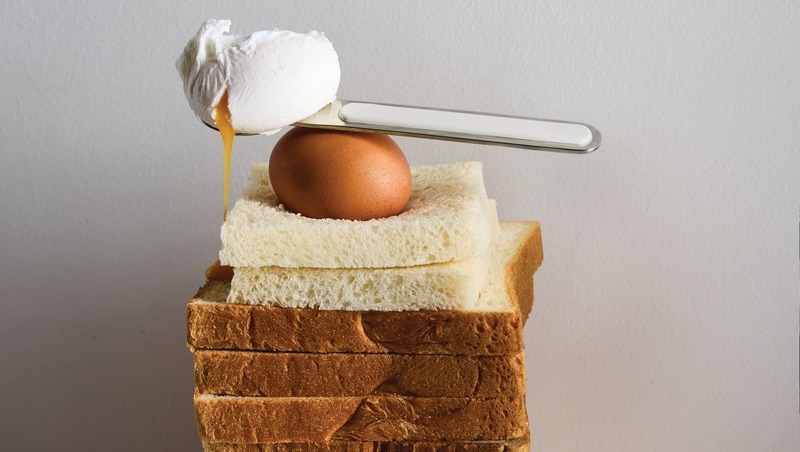
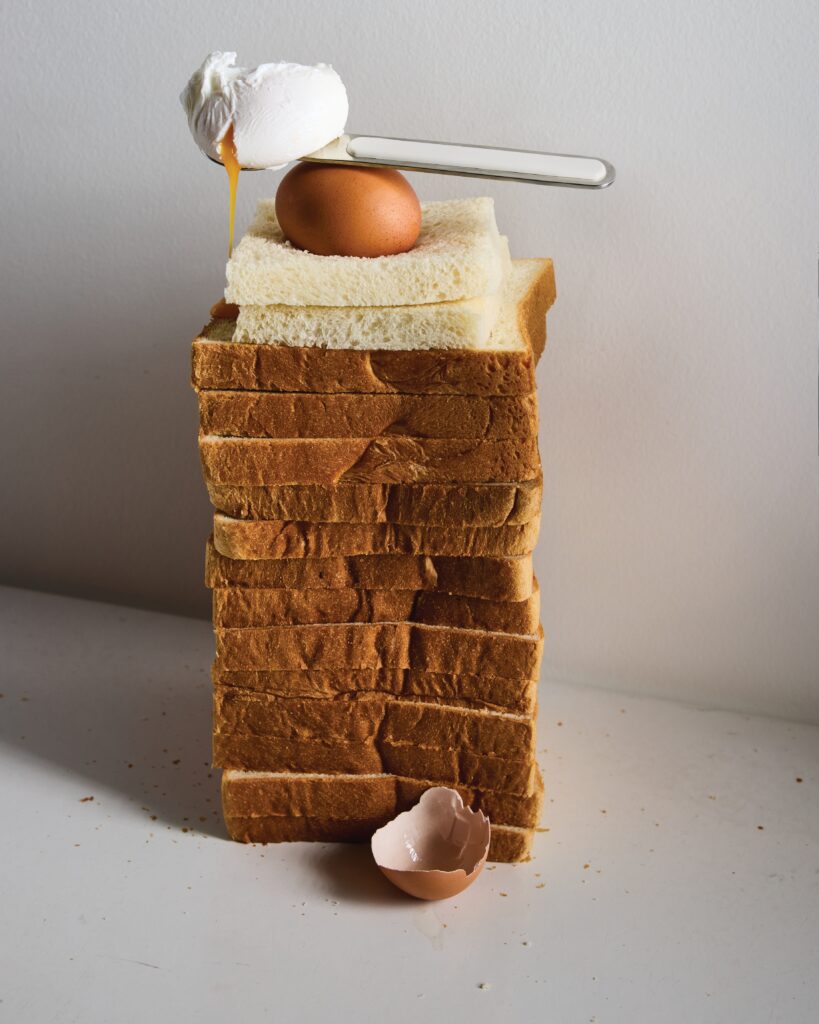
A poached egg cannonballs unsheathed into a pot of hot water and firms up before one’s eyes, sometimes into a taut teardrop with a perfectly centered core of yolk.
The kicker caught my eye. Compared with some of the BEIC’s other findings (“The average boiled egg-eater[s] have a tendency to be more disorganised, careless and impulsive. They may also run a greater risk of getting divorced”) the “eggs factor” for poached fans was downright cheerful. It makes sense, the bit about happiness and a preference for things upbeat. The poached egg is an inherently hopeful preparation: It requires quite a few more steps than, say, a soft scramble and relies on technique and expertise to produce an evenly cooked, silky result.
I am not an optimist (my “eggs factor” is that I have an eggsiety disorder), so learning to poach perfectly without the little compartments of my youth has been an uncomfortable, decades-long process that only really became easy over the last few months of testing Obsessed with the Best.
*
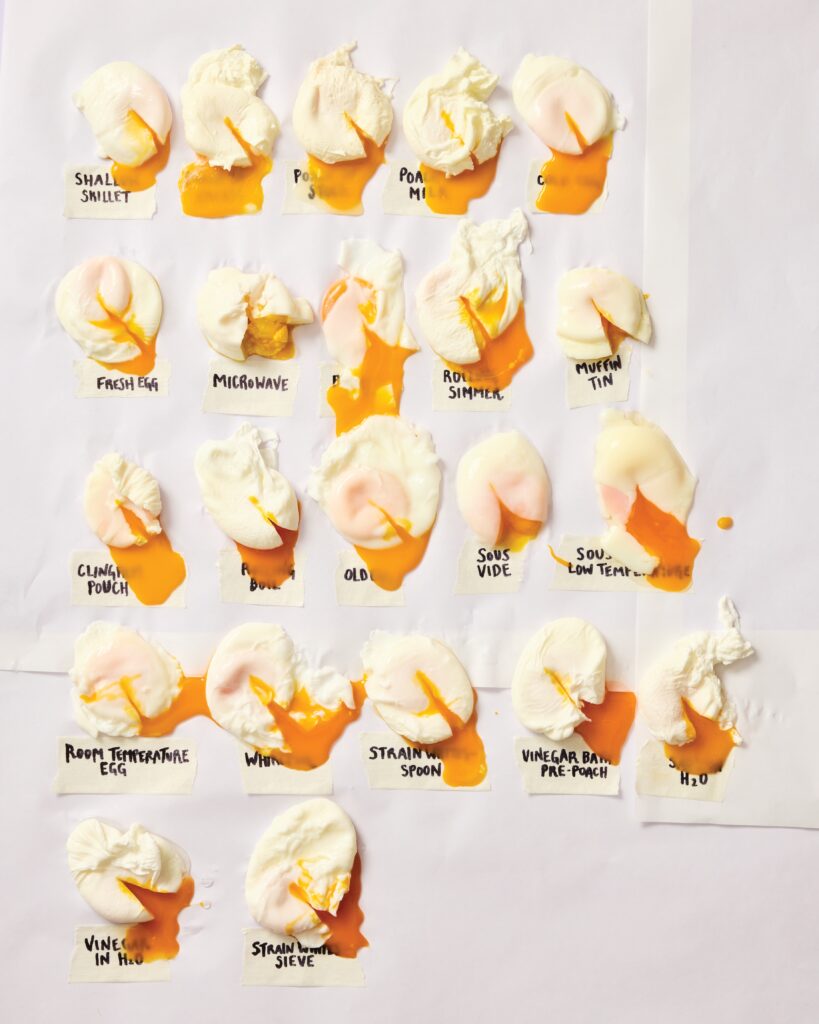
The Best Methods:
Best Mainstay Method: Crack your egg into a perforated spoon, soak it in vinegar for 5 to 10 minutes, and poach it at a rolling simmer, using the whirlpool method if you’re a beginner.
For Extra Yolk Insurance: There are two things you can do to ensure that you don’t accidentally cook through your yolk. Both might yield a slightly wonkier shape, but depending on your priorities, it may be worth it. The first is to use eggs straight from the refrigerator and the second is to poach eggs using the residual heat method instead of at a rolling simmer.
Best Upgrades: Poach in stock. Or poach in milk and make a ricotta-ish cheese from the poaching liquid, to serve as a downy comforter on which to rest your egg.
__________________________________
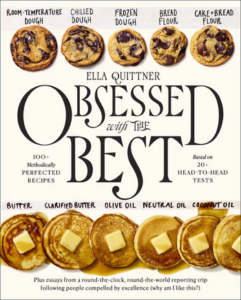
From Obsessed with the Best: 100+ Methodically Perfected Recipes Based on 20+ Head-to-Head Tests by Ella Quittner. Copyright © 2026. Available from William Morrow Cookbooks, an imprint of HarperCollins Publishers.

Ella Quittner
Ella Quittner is a journalist, screenwriter, and humorist who writes about obsession, culture and food. She has contributed to New York Magazine, The New York Times, The New Yorker, The Baffler, T Magazine, Food52, Bon Appétit, Saveur, Food & Wine, and many other publications. Ella grew up back and forth between the West Coast and East Coast. She has explored much of the United States and beyond, stopping to find the best bite every single place she goes (even La Guardia).