Beyond the Headlines: Five Essential Books For Understanding Afghanistan
Patmeena Sabit Recommends Khaled Hosseini, Parwana Fayyaz, Jamaluddin Aram and More
My novel Good People is the story of an Afghan family who come to the United States as refugees in pursuit of the American Dream, and of the destruction of that dream after a horrific tragedy strikes the family.
Good People is about the Afghan experience of displacement and exile, and about the fault lines in an immigrant community between an older generation that wishes to assimilate in America—but only on its own terms—and a younger generation rebelling against the culture and values their parents hold paramount. But it’s also about families and loss and identity and about the misconceptions that we all have about each other.
In creating the following list of books to be classed under the heading of essential Afghan reading, my aim was to highlight books that focus on the human.
These books are windows on significant moments in Afghan history, but more importantly they are windows on the lives of Afghan people at those moments. I have chosen them because I believe they illustrate, as simplistic as it may seem, that people are people everywhere, and that certainly Afghan people—despite what the dominating headlines would and do proclaim—are no exception to this rule.
*
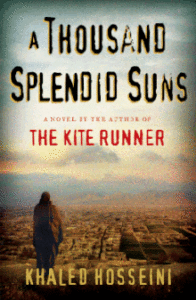
A Thousand Splendid Suns by Khaled Hosseini
A Thousand Splendid Suns tells the stories of two women, Mariam and Laila, who are born and grow up in very different circumstances, but whose fates ultimately intertwine through their marriages to the same man, Rasheed. Outside the home are the brutalities and horrors of war and the aftermath of war and of life under the Taliban’s first regime; inside are the brutalities and horrors of domestic violence at the hands of Rasheed. But though this is an unflinching and devastating portrayal of this external and internal trauma and violence, it is also a portrayal of how the humanity of individuals—as love and hope and self-sacrifice—survive these horrors and may ultimately prevail.

Forty Names by Parwana Fayyaz
In Forty Names, Parawana Fayyaz explores the lived experiences of Afghan women through a collection of haunting, melodic poems that are experienced by the reader like oral storytelling.
Fayyaz has written of the title: “This is a collection of poems that honours women’s names above all else, for in Afghanistan women go unnamed, known only in relation to the men in their families—Chaman’s wife, Sarwar’s mother in-law, Ali’s grandmother. Even their gravestones do not bear their names. To call a woman by her name is a prohibited act, considered disrespectful, and is even dangerous. This poetry challenges that taboo.”
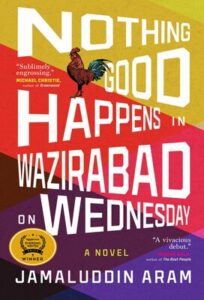
Nothing Good Happens in Wazirabad on Wednesday by Jamaluddin Aram
Nothing Good Happens in Wazirabad on Wednesday centers on the denizens of Wazirabad, a small hamlet in the environs of Kabul, during the civil war of the ’90s following the Soviet Occupation of Afghanistan.
This is a poignant comédie humaine, and though the effects of the war inevitably pervade their lives like a miasma, the stories of the men and women of Wazirabad—widows and electricians and calligraphers and barbers and militia men, among others—are the stories of all the anxieties and ambitions and greeds and hypocrisies of everyday life.
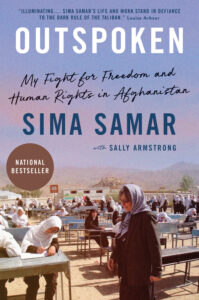
Outspoken: My Fight for Freedom and Human Rights in Afghanistan by Sima Samar
Outspoken is a deeply moving memoir told from Sima Samar’s perspective as a doctor, a human rights activist, a former Vice President, a Nobel Peace Prize nominee and a survivor of numerous assassination attempts. Through her personal story and experiences Samar tells the wider story of the Afghan people and underscores the steep price that they have had to pay during more than four decades of conflict.
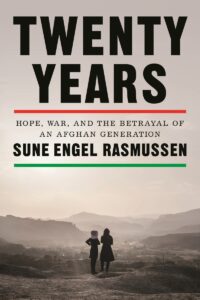
Twenty Years: Hope, War, and the Betrayal of an Afghan Generation by Sune Engel Rasmussen
Twenty Years is a fascinating journalistic account of the two decades in Afghanistan from the fall of Taliban rule in 2001 up to the American withdrawal in August of 2021. What sets it far apart from the countless other written histories about this period is that it’s told through the voices and stories of young Afghans from diverse backgrounds. Among them, Omari, who became a member of the Taliban as a boy, and Zahra, who at thirteen was married by her family to an abusive husband and who is determined to forge her own identity and create a better future for herself in this new Afghanistan. This is a raw, uncomfortable and important book.
__________________________________
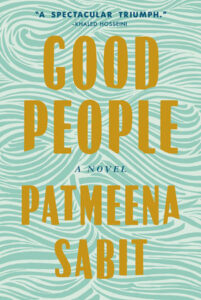
Good People by Patmeena Sabit is available from Crown, an imprint of Crown Publishing Group, a division of Penguin Random House, LLC.
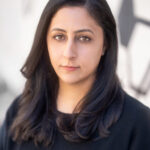
Patmeena Sabit
Patmeena Sabit was born in Kabul a few years after the Soviet invasion of Afghanistan. When she was a month old, her family fled the conflict and became refugees in Pakistan, joining the millions of other Afghans that had sought refuge there. They later moved to the United States and she grew up in Virginia. She currently lives in Toronto.