Becca Rea-Tucker on Why We Shouldn’t Feel Bad About Our Abortions
“Abortion is OK, we know. But how are our kids supposed to believe us if we whisper it under our breath?”
My second book, The Abortion Companion: An Affirming Handbook for Your Choice and Your Journey, is about to come out, and I’m feeling fussy. I’m scrolling through the long-finished page spreads, noting a .com where they should be a .org, an additional helpline I should have listed, a “definitely” where I could’ve written “absolutely.” The work is finished, but it’s never finished.
Later, on a break from that particular form of fussing, I’m sorting through an album in my phone titled “Repro Cakes.” I scroll past “Abortion. Any time. Any reason,” “Abortion Pills Forever,” and “No shame, no stigma” looking for one emblazoned with the phrase, “Abortion Isn’t A Bad Word” in Barney-purple script. I first posted an image of this cheerful little cake from the middle seat of a ride share sometime in 2018. I knew the not a bad word statement to be true then, but I certainly didn’t always.
Abortion stigma is everywhere—the kind of everywhere where you probably can’t even see it anymore unless you’re looking.
I grew up in various permutations of Midwestern suburbia. There, you are more than welcome to talk about pregnancy, but not if you end it. So, I wasn’t prepared when I found myself unexpectedly pregnant as a college student. I had an abortion, and I knew unequivocally that I made the right decision for my life. But I still spent several years taking care never to speak of it—I shrank from the word, from the experience, from myself. Now, I might as well introduce myself as Becca, “Ask me about my abortion”, Rea-Tucker—author, mother, reproductive justice advocate. I didn’t picture myself here, but plans can change.
*
I got pregnant on a road trip with a new boyfriend. We were driving through western Kansas, where there wasn’t much to look at except for billboards—lots and lots of them. Some offered services, like personal injury representation if you dial 444-4444, or necessities, like 3 AM snacks 6 miles ahead. But many were more sinister. Some people categorize these monuments to mythical purity as “pro-life” media, but they are simply and decidedly anti-abortion. I won’t transcribe their hateful stuff here, it’d be a waste of my words, but just know that if you coasted into eastern Colorado assuming that you were destined to hell, I wouldn’t be surprised. But maybe you wouldn’t even notice, because abortion stigma is everywhere—the kind of everywhere where you probably can’t even see it anymore unless you’re looking. It all just kind of blends into the background.
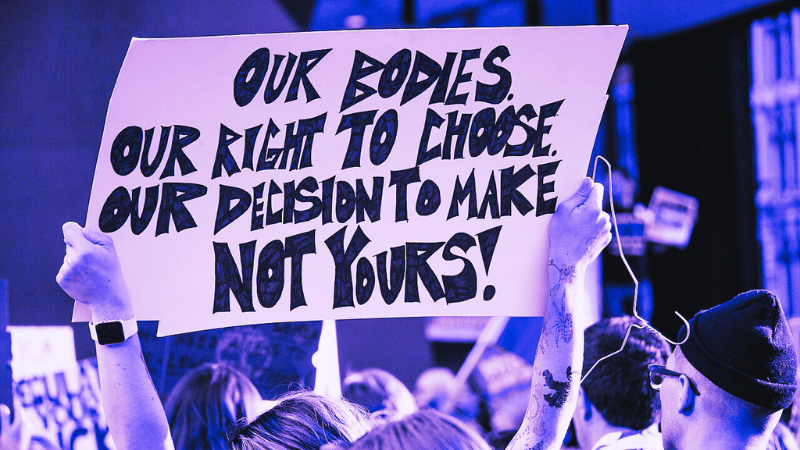
Despite being quite common (1 in 4 people who can get pregnant will have an abortion in their lifetime), abortion is incredibly stigmatized. We’re told that we must have a very specific reason, under a very specific set of circumstances, to deserve care. And it’s not just access itself they want to control, they want to control how we feel about it.
I wasn’t sure it was possible to have an abortion without drowning in regret or remorse before I had one. It is. Over time, it’s become obvious that this idea wasn’t ever actually my own. It’s just that the scripts we’re given about how to talk about abortion and the people who have them are terrible, and usually not based in reality. I’ve spoken with thousands of people about their abortions, and the most common feeling they describe to me is relief. Nearly all of them tell me they are certain they made the right decision for themselves. And this isn’t just anecdotal—it’s backed up by data (The Turnaway Study, 2020). But since abortion is constantly under attack, we aren’t allowed to feel that exquisite relief—at least not without shame or guilt chaperoning.
Abortion stigma and shame existed before I had my abortion, when I had my abortion, and now. Some of my favorite readers are in their 60s, 70s, and above. When they say “I wish I’d read something like this when I was younger,” I say, “I do too.” Some describe never having told their family members for fear of rejection or worse. Many tell me they’ve never told anyone at all. Others say they’ve been waiting decades for someone to say specifically that they’re not a murderer. We had our abortions decades apart, but we all know what society (still) says about people who have abortions. The unnecessary suffering is maddening.
*
Given this context, you might assume that our movement is all doom and gloom. But it’s not—you’re thinking of the anti-abortion crowd! It’s easy to say things are bad, much harder to imagine something better. But creativity and imagination are critical to our work as advocates. I’m inspired by abolitionist author Mariame Kaba’s assertion that dreaming is an unavoidable and essential element of organizing. My belief in the possibility of a better world is something I cultivate and nurture. And it’s not naivete: it takes work and resilience to be this optimistic! The reproductive rights and justice movements work by putting dreams into practice. We know what we deserve, and we go after it. There’s real beauty in how we care for each other, despite the roadblocks.
The reproductive rights and justice movements work by putting dreams into practice. We know what we deserve, and we go after it.
Sometimes I daydream about the improvements to be had by the time my daughter understands any of this. What if the first time you heard the word “abortion” wasn’t through either a whisper or an insult? Abortion care should be taught as part of comprehensive sex-ed, but it isn’t. We should talk about pleasure, autonomy, and options. There’s so much opportunity here, but unfortunately there’s also a lot of black and white thinking in how we’re taught about abortion: good/bad, right/wrong, virgin/whore, the kind of person who has abortions/the kind of person who doesn’t. These dichotomies don’t actually exist, so let’s stop pretending. Abortion is OK, we know. But how are our kids supposed to believe us if we whisper it under our breath?
*
My daughter will grow up knowing that sometimes people get pregnant when they don’t mean to, just like she will know that sometimes people get pregnant when they do mean to. I will tell her that sex is OK, pleasure is OK, and ending a pregnancy is OK. She will know that there are really, truly multiple options available and that I will support her no matter what. I’ll tell her how my decision to have her grew out of my decision to have an abortion.
I talk about abortion so much that I don’t remember a time when I didn’t talk about it, but there were many years like that. Now, I think of it as an experience I probably would rather not have had, but one that I’m ultimately at peace with—like the time I went whitewater rafting.
I want the 1 in 4 young people who will have an abortion to grow up confident in all of their reproductive options and decisions, without having to unravel all the internalized shame after the fact. They deserve to grow up knowing that while not everything will go according to plan, you are always allowed to make a new one.
__________________________________
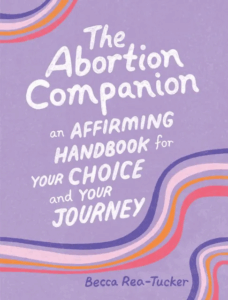
The Abortion Companion: An Affirming Handbook for Your Choice and Your Journey by Becca Rea-Tucker is available from Running Press, an imprint of Hachette Book Group.
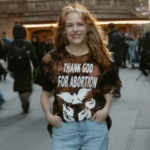
Becca Rea-Tucker
Becca Rea-Tucker is the author of two books, The Abortion Companion (Running Press, 2026) and Baking By Feel (Harper Wave, 2022). Her work explores bodily autonomy, food, and shame, has been featured in Vogue Italy, The Oxford Review of Books, NYT Style, and more. She’s the creator of @thesweetfeminist, a platform she built from the ground up to connect with readers directly. She publishes the newsletter A Little Something Sweet. She lives in Austin, TX with her husband, daughter, and incredibly handsome cattle dog.