Ashley Nelson Levy on Female Friendship, Disappointment, and Balancing Her Writing With Running a Press
The Author of The Riff Talks to Meara Sharma
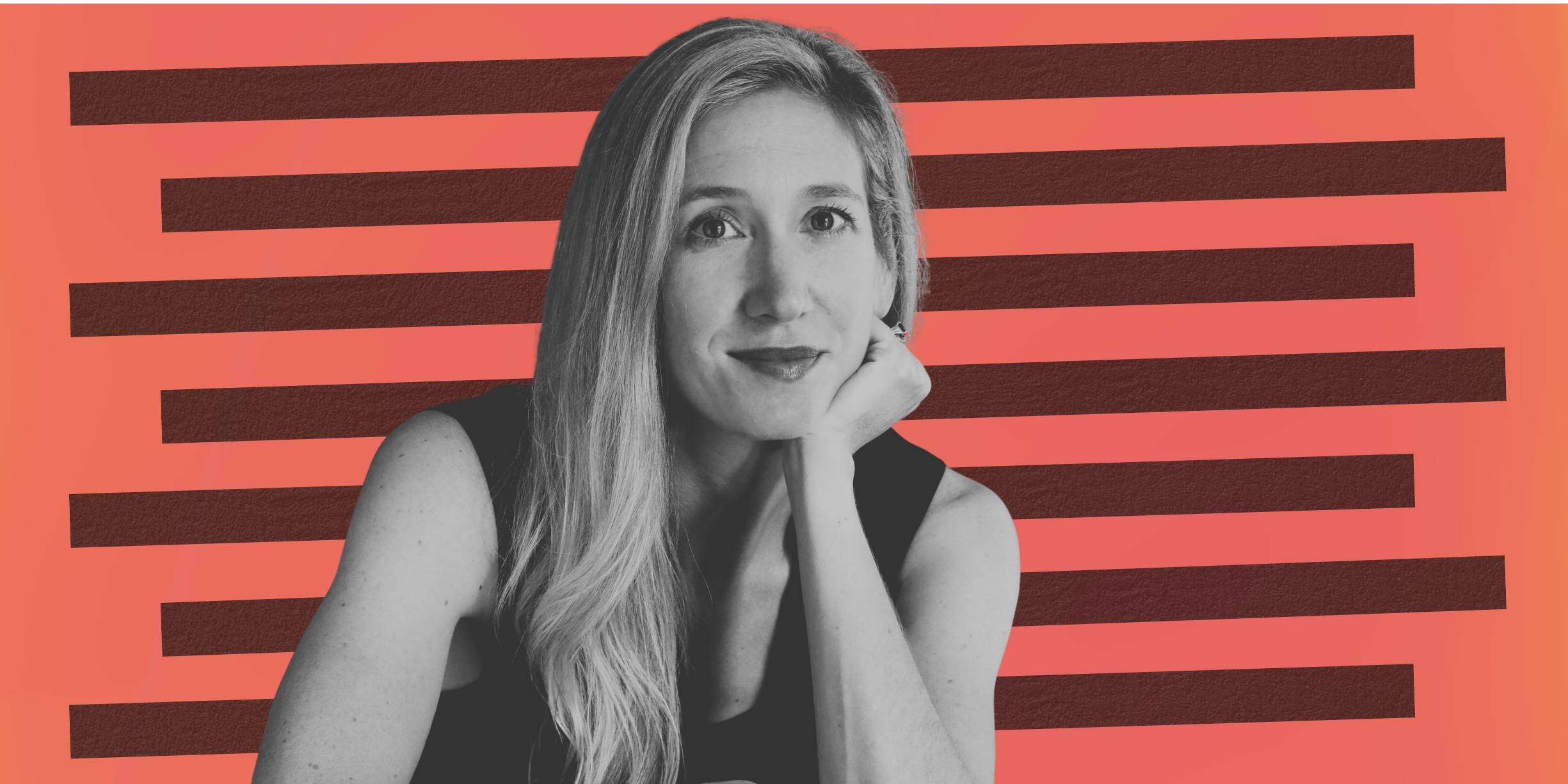
Ashley Nelson Levy is the author of the novel Immediate Family, published by FSG in 2021. Her new short story, “The Riff,” appears in the latest issue of McSweeney’s. Levy is also the co-founder of Transit Books, the publisher of award-winning international literature based in the San Francisco Bay area; she was recently named among the Washington Post’s “Next 50,” honoring fifty people actively reshaping culture in 2026.
*
Meara Sharma: Among the occasions for this interview are your story in McSweeney’s 81 and your recent recognition by the Washington Post. Congratulations! Let’s start with the story.
“The Riff” is about a successful middle-aged woman on a trip to Florence. She’s with her husband, though she’d prefer to be there with her old friend Deb, with whom she spent a wild year in the city in her twenties. As she strolls, the city oozes with vibrant, youthful memories, only heightening the woman’s marital restlessness and her sense of estrangement from Deb. It gets at big stuff—alienation, longing, nostalgia, desire—very economically and lightly. What was the initial seed of the story?
Ashley Nelson Levy: There’s this line toward the end where the narrator realizes that her happiness in that year had less to do with being young in a beautiful foreign city and everything to do with soaring at the height of female closeness. Female closeness was always the crux of the story but when I write I often have to go through several drafts to understand the itch I’m trying to scratch. So the first version of this story was about Deb and the narrator both returning to Florence decades later. But something wasn’t working in having their disappointment register together. The tension wasn’t as interesting to me as I’d thought.
I wrote a draft where Deb disappeared entirely from the narrative, and the story was just about the disintegration of the narrator’s marriage after a series of bad choices she makes on this trip to Florence. But that didn’t feel exactly right, either. Rita Bullwinkel, the editor at McSweeney’s, read a draft of that version and when we hopped on the phone to talk about it she asked me something to the effect of “what does this woman want?” And after I hung up I thought: She just wants Deb. This version came together after that. Once I realized that Deb really was the core of the story, and that her absence needed to be felt throughout this trip, then it felt like it started to work. She’s become a spectral figure in the narrator’s life.
There’s something extraordinarily powerful about female friendship during a certain time in your life when you have fewer people and responsibilities to answer to. An intensity much like falling in love. I wanted to explore how rewarding that can be and how grief-stricken you can feel when that intensity is lost to other demands.
MS: The narrator is repeatedly drawn into fantasies that almost have real consequences. She sees a group of college girls who remind her of herself and follows them into a club… She’s nearly seduced by a woman she meets at her hotel… She seems to be on the verge of taking a major risk or committing some sort of transgression, but each time she’s brought down to earth and doesn’t. Why was that important?
You know, the older I get, the more I need things to be funny.
ANL: These narrative choices were initially influenced by what wasn’t working in previous drafts, which was the narrator really flying off the handle. Once I became more focused on what was actually interesting to me—the narrator mourning the loss of a time in her life and time with a specific person—then I no longer needed such wild pyrotechnics on the page.
In the later drafts, the psychological consequences were what felt important—each fantasy surfaces another warped representation of her grief. I wanted Deb to be a ghostly presence in a way that made sense but was also surprising. And I wanted the trip to continue to have a doubling effect, the past layered over the present. The young girls at the restaurant are a distorted reflection of the narrator and Deb, the woman in the hotel is someone she mistakes for Deb when she first arrives, and so on.
MS: I enjoyed the low hum of disappointment across the story. The character’s reminiscences of Florence are romantic and vivid, while the present is decidedly average. It’s sad, but it’s also funny.
ANL: You know, the older I get, the more I need things to be funny. At least in the stuff that I write. Part of this has been realizing how humor is the only thing to carry all of us through the indignities of aging and caretaking.
I also think many of us can relate to trying to return to an old version of home, an old relationship, an old self. It’s pretty much a doomed enterprise because you can never really go back, as they say. But the old romantic in us still tries. Whenever I’ve returned to places I’ve once lived I’ve felt this kind of dizzying doubling that the narrator experiences. You see your old self and your current self papered over each other like flat little dolls. It has the strange effect of making neither version seem real. You think: Who am I really? When this would happen to me when I was younger I would cry about it. Now I try to laugh.
MS: Ultimately the character is grappling with a banal yet potent fact of life: some things endure and some things are fleeting. I wonder, by way of a segue, how you’d connect this idea to your other role, as the publisher of Transit Books. The word “enduring” is in your mission statement; at the same time, you’re publishing into the fragmented, fast-paced swirl of contemporary culture. How do you think about this when deciding what to publish? How do you weigh the demands of the now versus a sense of staying power?
ANL: That’s a really good question. Adam [Levy, my copublisher and partner] and I have never been interested in chasing the “demands of now.” That kind of chase feels like the antithesis of visionary publishing, of pushing the conversation forward. Becca Rothfeld recently wrote a fantastic piece in The New Yorker about the dissolution of book coverage in The Washington Post and why discovery and deep engagement are so important to criticism. She writes that a newspaper ought to be “the opposite of an algorithm, a bastion of enlightened generalism in an era of hyperspecialization and personalized marketing… Its mission is not to indulge existing tastes but to challenge them—to create a certain kind of person and, thereby, a certain kind of public.”
The books we gravitate toward are aware of the moment they’re in and writing toward, but find their staying power in the quality of their prose and new ways they’re pushing literature forward.
She goes on to say that this public can often exist as its own kind of fiction but the dream is always succeeding to some degree in cultivating the public it imagines. I think the same can be said for book publishing. At Transit we publish for the readership we know is out there, even if we can’t always see them. We’re okay to leave the business of algorithmic regurgitation to someone else.
The books we gravitate toward are aware of the moment they’re in and writing toward, but find their staying power in the quality of their prose and new ways they’re pushing literature forward. It’s honestly the best feeling in the world when, amid the worry that all fiction is starting to look the same, a book suddenly hits your desk that makes the novel feel like it was just invented.
Lauren Markham’s Immemorial, for example, part of our Undelivered Lectures series, searches for language amid the grief of climate catastrophe. This definitely speaks to the demands of now, the need for immediate action. But that book is also timeless in the way it investigates the search for language in times of grief, and how grief can be a portal for action rather than a terminus.
MS: The success of I Who Have Never Known Men might just be an example of this binary between longevity and transience collapsing. It was a largely forgotten dystopian French novel from 1995; when you republished it in 2022, it went viral on TikTok and has sold some 500,000 copies. Why do you think it took off—and did you have a feeling it might when you decided to republish it?
ANL: It has been a complete surprise to see the book go viral, mostly because it doesn’t fit the typical formula for the books that often have that kind of traction. It’s a literary translation from a deceased Belgian author that was originally published thirty years ago, reissued by an indie.
Having said that, I think about your last question. I think about the terrors of now, versus its demands. I Who Have Never Known Men resonated first with a Gen Z readership, before starting to balloon out to wider audiences. And who is this readership? A generation that has come of age under two Trump presidencies, the dissolution of Roe, #MeToo, pussyhats, Epstein, the list goes on. This book touches on a reality that every woman is familiar with, even if it takes place in a bunker underground, maybe even because it does.
When I first read it, I devoured it in two sittings. The writing was so strong, the story propulsive—I loved what it chose to withhold. I loved that it insisted on preserving a woman’s humanity in spite of the shit world she was given. So I guess in this way I’m also not surprised. It deserves the attention it’s received. I only wish Harpman had been alive to see it. Since our U.S. edition has taken off, the book is now selling all over the world and has been translated into many more languages.
MS: I’m guessing you get asked a lot about that book—what’s another book on your list that you’re excited about?
ANL: I hope later this year everyone is asking me about a book we’re publishing this summer called On the Other Side Is March, by Sólrún Michelsen, translated by Marita Thomsen. It’s the first novel to be published in English from a woman from the Faroe Islands, a territory between Scotland and Iceland with 56,000 people.
The novel has a great opening: I’m a woman in my early sixties. Somewhere between late and never. No longer the career woman, mother, housewife, and lover doing it all . . . Now I’m wife, mother, grandmother, and my mother’s mother. But I still have to satisfy all the demands placed on me.
The cognitive health of the narrator’s mother is declining and she must become a new kind of caregiver while also figuring out how a daughter says goodbye to a mother. What is this strange remaining leg of life’s journey? she wonders. The voice travels across generations. Those who know the invisible labor of caretaking, labor that women in particular inherit, will recognize themselves in some, if not all, of the novel’s questions. There is awe, and sadness, and regret, and wry humor. I love it.
These days, balancing the press with writing is honestly a gift.
MS: Does what you publish reflect your taste as a reader or inclinations as a writer—or both?
ANL: It’s become a kind of joke in our house, how predictable someone’s reading tendencies can become. It’s like a literary Achilles heel or something. I can spot Adam’s books from a mile away, the ones I know he’ll love before he picks them up. And he knows mine, which is typically some kind of confessional from a wry and slightly withholding woman, which might sound vaguely familiar in the context of the first part of this conversation.
Transit often takes me outside of myself, offering new forms, curiosities, psychogeographies. Patagonian ghost towns left behind by the oil boom, for example. The dead body of a young saint. Tokyo’s red-light district. An underground cage filled with women. I think reading widely is a critical practice as an editor and a writer.
MS: Many literary couples threaten to start a press together. You actually did it. How would you describe what that level of collaboration is like?
ANL: It sounds like an impossibly big question but the answer is relatively simple. This is just the way Adam and I have always worked. We have different strengths but a complementary aesthetic. And we trust each other’s taste. If Adam is really behind something, I know it will be good. It’s a hard business and there have been hard times. There still will be, I’m sure. But the worst times have been when I felt furthest from him in terms of collaboration; in previous years, for instance, when I would have to step away to meet the demands of another full-time job while we were getting the press off the ground. Our output is best when we’ve both had our hands in it in some way.
MS: How do you balance your own creative writing with the work of running a press? On a practical level, and also on a more psychic level—being inside your own characters and language versus the worlds and words of others?
ANL: Well, as I’m sitting here writing this the windows are dark, my kids are asleep, and it’s too early for anyone to expect me to answer an email. I’ve always worked very hard to find these pockets of the day, however small, where I can give myself the kind of silence writing requires. Even before my kids and the press, I always had a nine-to-five. So my pocket has been 5am to 7/7:30am for the last fifteen years or so. Plus a fairly routine Saturday morning block when Adam takes the kids out. My younger self—since we’ve been talking about past and present—would probably be horrified to know that this will be her situation, since I’ve never been a morning person. But sadly I can’t write at night after a day of life. I’ve tried. So mornings are it.
These days, balancing the press with writing is honestly a gift. For many years I was working another full-time job for financial reasons, plus Transit, plus writing, to say nothing of the rest of life’s requirements. I would use my vacation days to run around the Frankfurt Book Fair and co-present our titles with Adam at sales conferences and pitch nights. It was thrilling but exhausting. So balancing now feels relatively simpler.
On a spiritual level, it’s a relief to spend time in the worlds of others. My own fictional worlds are always made better because of them.
__________________________________
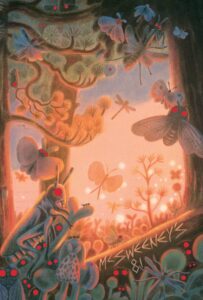
Ashley Nelson Levy’s short story “The Riff” appears in the latest issue of McSweeney’s.

Meara Sharma
Meara Sharma is a writer and artist. She is the senior editor of Elastic, a new magazine of psychedelic art and literature. With roots in Massachusetts and India, she currently lives in Scotland.