Arundhati Roy quits this year’s Berlinale over “jaw-dropping” jury remarks against political art and Gaza.
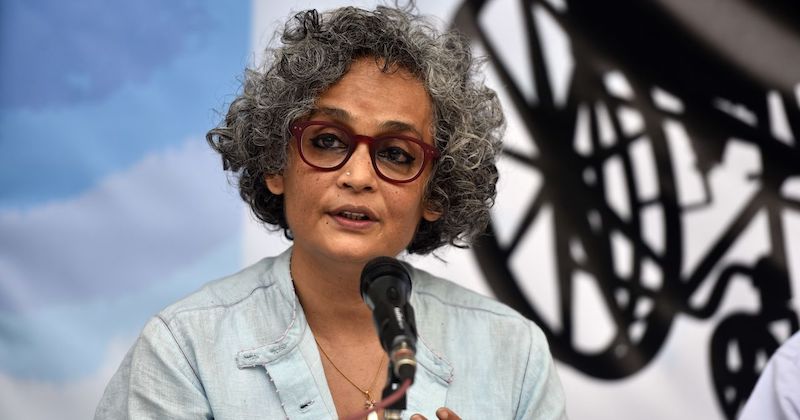
In a statement to The Wire, author Arundhati Roy announced she will no longer participate in the 2026 Berlinale film festival. The author of Mother Mary Comes to Me and The God of Small Things was invited to a screening of the film In Which Annie Gives It Those Ones, which she wrote and acted in, but withdrew after the festival’s jury directly avoided commenting on Gaza and the ongoing genocide.
“This morning, like millions of people across the world, I heard the unconscionable statements made by members of the jury of the Berlin film festival when they were asked to comment about the genocide in Gaza,” Roy wrote.
To hear them say that art should not be political is jaw-dropping. It is a way of shutting down a conversation about a crime against humanity even as it unfolds before us in real time—when artists, writers and film makers should be doing everything in their power to stop it.
Let me say this clearly: what has happened in Gaza, what continues to happen, is a genocide of the Palestinian people by the State of Israel. It is supported and funded by the governments of the United States and Germany, as well as several other countries in Europe, which makes them complicit in the crime.
If the greatest film makers and artists of our time cannot stand up and say so, they should know that history will judge them. I am shocked and disgusted.
This is a direct response to the all-timer of a bad take from Wim Wenders, film director and this year’s Berlinale jury president, who was asked about the genocide in Gaza and support for Israel by the German government, which is the festival’s funder, and if art can affect political change. Wenders replied that “movies can change the world,” but “not in a political way.”
“We have to stay out of politics because if we make movies that are dedicatedly political, we enter the field of politics,” the filmmaker continued, “But we are the counterweight of politics, we are the opposite of politics. We have to do the work of people, not the work of politicians.”
Roy’s response to this is not only principled and morally clear-eyed, but also a rejection of this shockingly naive idea that art must—or even can!—steer clear of politics. Bravo to Roy for standing against this head in the sand fence-sitting, especially in the face of genocide.

James Folta
James Folta is a writer and the managing editor of Points in Case. He co-writes the weekly Newsletter of Humorous Writing. More at www.jamesfolta.com or at jfolta[at]lithub[dot]com.