Alcohol: The Oldest (and Most Popular) Drug in the World
Dr. Charles Knowles Explores the Ancient History and Evolutionary Science Behind Intoxication
I had my first encounter with alcohol at the age of thirteen in Munich, Germany. I was on a school trip to Innsbruck, Austria, and about thirty of us had come by coach to Munich for the day. A splinter group, led by a couple of older students, had dragged a few of us to visit one of the famous beerhouses—the Hofbräuhaus. Egged on by the senior boys, I quickly drank a one-liter stein of German lager and was halfway through a second one when we were found and extricated by some teachers.
I remember this experience very well; I was even able to find the table we sat at when I was in Munich only a couple of years ago. It felt quite meaningful to revisit the very place where I started something that would change my life for almost thirty years. However, my initial experience with alcohol also illustrates a point I have heard time and time again, namely that many later-life problem drinkers describe how they got stuck from their very first drink. Many describe being “competitive” drinkers from a young age.
In my first encounter, I had drunk three pints of strong beer in less than one hour. When I stopped drinking completely and came to reflect on my early drinking, I thought I must have misremembered. But I am sure now that my recollection was correct. I simply loved the effect, from the first moment that stein met my lips, even with the predictable teenage vomiting that followed.
Despite its cost, and everything we know about its effects on health, alcohol remains the world’s favorite and most enduring drug.
If you are reading this book and you drink alcohol, you are not alone. In 2018, across the world, the average adult drank the equivalent of 6.2 liters (just over 1.5 US gallons) of pure ethanol—the equivalent of 155 pints of beer. And this is the global average—in Europe and the United States, the average is just under 10 liters. This works out to an annual global consumption of 37.7 billion liters (approx. 10 billion US gallons) of pure alcohol—enough to fill fifteen thousand Olympic swimming pools. Despite its cost, and everything we know about its effects on health, alcohol remains the world’s favorite and most enduring drug.
Alcohol is ethanol, an organic compound with the chemical formula C2H5OH. Ethanol is used as a fuel and a solvent, and it has medical applications even today as an antiseptic and disinfectant. It is best known, however, as an ingredient in drinks, where its tiny molecular weight makes it one of the smallest molecules ingested by mammalian species. Only water trumps it for simplicity. For the purposes of this book, I will use the term alcohol rather than ethanol.
Alcohol is formed naturally by the process of fermentation, a chemical reaction caused by the action of yeast on sugars; it can also be produced via petrochemical processes from oil (its main source for fuel). Yeast was first seen under a microscope in the seventeenth century; our modern understanding of chemical fermentation came later, when Louis Pasteur described it in his 1857 paper “Mémoire sur la fermatation alcoolique.” Consumption of alcohol, however, goes back much further. It predates humanity itself.
If you happen to be on holiday on the Dutch Caribbean island of St. Kitts, you should watch your drink. Vervet monkeys were introduced by man in these islands in the seventeenth century from their native habitat of East and South Africa. They are noticeable for their black faces and grey bodies and can grow up to about 50cm in height. Being rather short on natural predators, the monkey population has expanded to the tens of thousands to such an extent that they mingle with urban populations and are considered a nuisance. This is especially true if you fancy having a bit of a snooze by the pool whilst leaving your cocktail unattended; vervet monkeys are notorious for stealing alcoholic drinks and will do so even when other soft drinks and other food sources are readily available.
What’s more, it appears that vervets have a natural within-species variability in their taste for alcohol. Some don’t like it—they will test an alcoholic drink, spit it out, and move on to a soft drink; most drink in moderation (favoring sweet-tasting drinks) and 12 percent are steady drinkers. However, 5 percent not only drink to the last drop but also drink strong spirit-based drinks in preference to sweet-tasting alternatives. They are frequently drunk and may show some dependency behaviors. In short, the proportions of vervets who are teetotal, regular, and heavy drinkers are quite similar to those seen in humans.
The vervet monkey is not an anomaly. The more general proclivity of monkeys for alcohol was noted by Charles Darwin in The Descent of Man, who documented their “strong taste for spirituous liquors and beer.” Black-handed spider monkeys in Panama will drink until they vomit and fall out of trees. And such behavior is not limited to monkeys. With some species variations, all sorts of wild animals, from small rodents to elephants, will consume alcohol, even to the point of drunkenness. Examples vary, from our close relative the chimpanzee to a diverse range of rodents, marsupials, and birds. The Bohemian waxwing even takes its name from its notorious penchant for booze. Such observations can be replicated in the lab. There are several breeds of laboratory mice that display varying tolerance and preference for alcohol, and these can be studied to help us understand human behavior.
Over ten million years ago, long before the human species existed, our hominid ancestors adapted to metabolize alcohol. A 2015 study mapped the genetic tree for an important gene required to produce one of the main enzymes for alcohol breakdown in the liver. By studying modern primates that can fully metabolize alcohol (e.g., gorillas, chimps, bonobos) and those that can’t (e.g., orangutans and gibbons), scientists re-created and tested ancestral versions of the enzymes to see at what point the genetic divergence occurred. Our ancestral subfamily split from its family about twelve to fourteen million years ago, losing the orangutan in the process and thus giving us a rough date stamp.
Aside from telling us which ape we should choose as a drinking partner, the study provides a window on evolution. Alcohol metabolism coincided with a major global climate disruption that fragmented East African forest ecosystems and left food scarce. Out of necessity, our knuckle-dragging ancestors may have started eating more fruit they found on the ground, rather than in the trees. Such rotting fruit from the forest floor contained higher concentrations of fermenting yeast and alcohol than the fruits hanging from trees. Many hominids went extinct during this period, and being able to consume alcohol without adverse and/or toxic effects would have conferred a survival advantage. In a related phenomenon, many people in East Asia have an intolerance to alcohol caused by a genetic variation that came about relatively recently during the period of rice domestication. Such variations can serve to protect against development of alcohol-related problems.
While our ape ancestors might well have been consuming naturally fermented alcohol for millions of years, only humans, with our powers of logical inference, have been able to refine the process. About fifty thousand years ago, Homo sapiens achieved some degree of what is known as behavioral modernity. This included the development of language, clothes, and cave painting. This was the starting point of the human cognitive revolution in tool making. At some point along this path, at around the time of the transition from the Bronze Age to the Iron Age, some bright spark came upon the idea of fermenting alcohol.
Our taste for alcohol has some form of fundamental basis, one that has been present a very long time, and one that we share with our primate relatives and many other species.
Quite how this happened is a mystery, but early evidence of the deliberate production of alcoholic beverages for human consumption comes from stones in a cave in Haifa, Israel, showing traces of fermentation products dating back to 13,000 BC, a time when humans were watching the last glaciers of the Ice Age recede. This coincides with the very start of human agricultural development. Agriculture enabled people to live in larger groups. Also, it provided people with free time. That fermentation followed agriculture makes perfect sense, but it is worth considering just how quickly we prioritized the task. To add a bowel surgeon’s perspective, fermentation precedes the development of the first toilet (Mesopotamia) by some five thousand years. The ability to socialize is a critical skill to living in groups (seemingly more critical than the toilet is) and a basic pre-requisite of civilization. Alcohol even today fulfills an important function to provide what some people describe as social fitness.
Deliberate fermentation followed across every ancient civilization: in China (7000 BC), Georgia (6000 BC), ancient Egypt (3400 BC), and ancient Greece (2000 BC). Alcohol is repeatedly referred to in the Bible in both the Old and New Testaments and was well established in Rome and her territories, from the vineyards of Italy to the cider orchards of Britain.
Distillation came later. In fact, the word alcohol derives from early distillation methods from the Arabic al-kuhul, a word for an ancient Egyptian dark eyeliner that was made using an early distillation technology in Alexandria. The science of fractional distillation was established in the twelfth century in the School of Salermo and written up as a scientific method in the fifteenth century by the German alchemist Hieronymus Braunschwig in his book Liber de arte destillandi de simplicibus (The Book of the Art of Distillation). The Englishman John French developed a scalable industrial method of production in 1651, although other peoples were already well on their way with production before this—for example, the Irish were distilling whiskey in 1405.
In the twenty-first century, and in most parts of the world, alcohol is freely available almost everywhere. Even in the desert of Saudi Arabia, a country where alcohol is strictly illegal, I had friends working in the oil industry who would add tape-head cleaning fluid to their coffee to keep up with their drinking habit. The sudden increase in purchase orders for this fluid led to one of them having to provide a justification to their Saudi employers: “It’s the sand—it gets in everything.” I have heard more than one person in AA say that to avoid alcohol and stay dry, they would have to go to the Moon.
And alcohol is big business. In 2023, the global alcoholic beverage market grew to $1.62 trillion and is projected to grow to $2 trillion by 2030. This spending is comparable to the tobacco industry in all its forms and all illicit drugs combined. In the UK in 2017, about eight out of ten adults drink alcohol, compared to only one in eight who continue to smoke (from the Office for National Statistics). By comparison, in the United States (based on 2018 data), about two-thirds (66 percent) of the adult population had consumed alcohol in the past year. Other countries vary greatly. The countries with the highest alcohol consumption fall mostly in Northern and Eastern Europe (the Czech Republic tops the list, using 2023 World Health Organization data). In the UK, habits are changing, especially in younger adults, where 26 percent of sixteen- to twenty-four-year-olds are now teetotal. This figure has fairly recently increased from 20 to 28 percent in the United States.
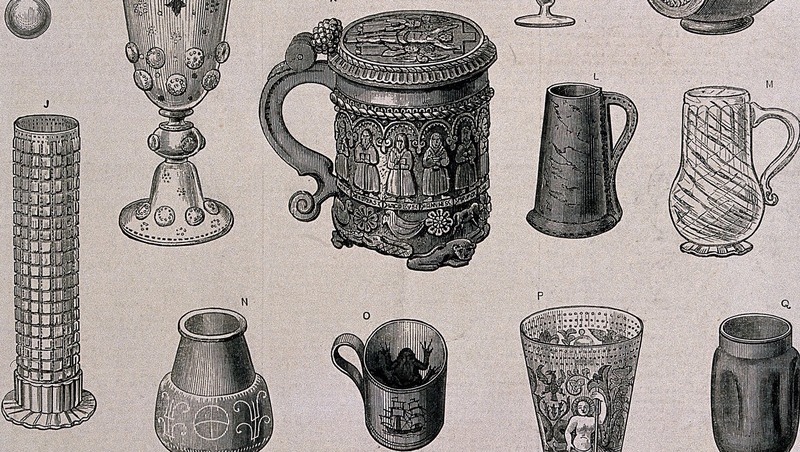
Similar to adults in most other countries, we are more likely to drink alcohol than not. Our human ancestors may have chanced upon fermentation in the first place as a nutritional necessity, but we now go to great lengths to manufacture alcohol in thousands of drinkable forms that serve no obvious survival advantage—and, as we will see, to convey several disadvantages. It is unlikely that multiple cultures independently chanced on the idea of fermentation for the taste. Excavations have discovered jars containing the remnants of wine that are seven thousand years old. Such jars of moldy fruit were probably fairly hideous to consume. So, it seems likely that our predecessors had already noted that alcohol had an effect beyond satisfying their calorific requirements. This effect long preceded the influence of modern advertising and it has continued to exert a hold on us ever since.
In summary, our taste for alcohol has some form of fundamental basis, one that has been present a very long time, and one that we share with our primate relatives and many other species. This proclivity is learned, and it starts with our very first drink.
__________________________________
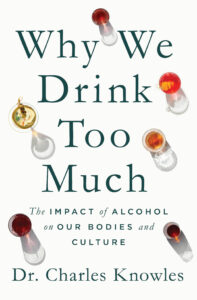
From Why We Drink Too Much: The Impact of Alcohol on Our Bodies and Culture by Dr. Charles Knowles. Copyright © 2026 by the author and reprinted with permission of Celadon Books, a division of Macmillan Publishing Group, LLC.

Charles Knowles
Dr. Charles Knowles, MA, PhD, FRCS, FASCRS, is Professor of Surgery at Queen Mary University of London and Chief Academic Officer at the Cleveland Clinic London. Qualifying as a doctor from the University of Cambridge, he continues to practice as a consultant colorectal surgeon. Knowles has authored more than three hundred peer-reviewed publications and contributed to several major international surgical textbooks. Why We Drink Too Much is his first popular science book with his own journey providing the impetus to explore a subject that almost cost him his life. He now champions the idea that problematic drinking is not a problem of weak will or low moral integrity and believes that the term alcoholic should no longer be seen as a dirty word that can be revealed only anonymously.