A Practice of Speculative Imaginings: On Sam Cooke and the Art of Utopia
Rinaldo Walcott Explores the Concepts of Power, Connection and Promise in Black Music
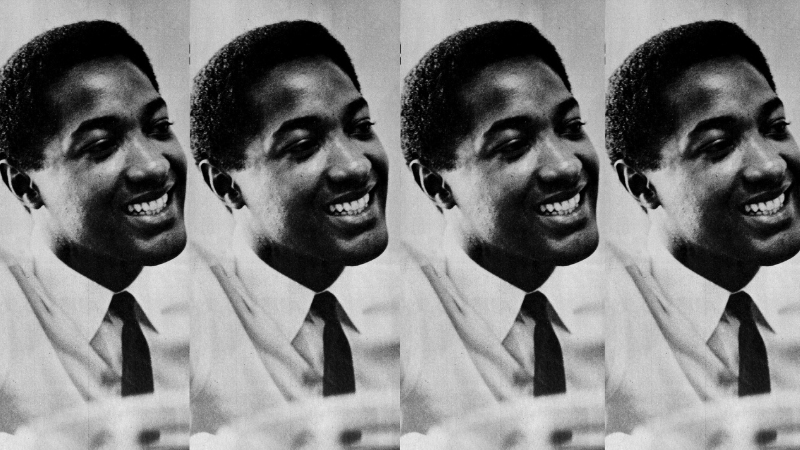
Sometimes in a moment of overwhelming emotion you hear a song. You finally hear it. You don’t just get the meaning of the lyrics, or feel the beats and the rhythm, but you hear the unutterable in the song. You hear the deep recesses of musical allure, the places where language breaks down for the singer and musician, and in that, you finally share in the full meaning. Heartbreak songs can do that. But so can political or social-consciousness songs. Sometime in March 2025 I began to play Sam Cooke’s “A Change Is Gonna Come” over and over and over again. “A Change Is Gonna Come” became my buttress against a feeling of dystopia engulfing. After so many years of listening to a song recorded in 1964, a year prior to my birth, a song I had played countless times, I finally really heard it.
Black musics are, generally speaking, utopian. They hold in them a yearning, an emotional dimension that references an ineffable yet clearly articulated sound of what we need now. Sam Cooke’s “A Change Is Gonna Come” is a profound assertion of pain and the belief that it can and will be overcome. Between the lyrics and the notes is an articulation of a different mode of life that defies grammatical and syntactical language. What interests me is the song’s endurance and the way it seems to call emotionally to singers and listeners alike.
“A Change is Gonna Come” calls the communal into formation. Its understanding of racism as something that breaches the personal makes it an enduring Black utopian artwork.
Some say Cooke wrote the song after he and his entourage were refused lodging by a whites-only motel in Shreveport, Louisiana. It’s also said that Cooke did not go gently, that he was arrested in the next town for disturbing the peace. In 2019, the town of Shreveport apologized to Cooke’s family and posthumously awarded him the key to the city, an attempt to make amends for his treatment back then. Others claim the song stems from multiple incidents, including Cooke’s participation in student sit-ins and performances for segregated audiences at venues where management and police spatially enforced this segregation. Whatever the collated history for the song’s impetus, it is one of tremendous power, connection, and promise. “A Change is Gonna Come” calls the communal into formation. Its understanding of racism as something that breaches the personal makes it an enduring Black utopian artwork.
*
In Black Utopias: Speculative Life and the Music of Other Worlds, Jayna Brown defines the Black utopic as “the moments when those of us untethered from the hope of rights, recognition, or redress here on earth celebrate ourselves as elements in a cosmic effluvium.” Brown tells us the Black utopic has nothing to do with hope because “hope yearns for a future”—a contention I agree with. Rather, a practice of “speculative imaginings,” as Brown terms her father’s writings, is at the heart of her utopian paradigm. Brown’s father, a formerly exiled and incarcerated Black Panther Party radical, “became a clairvoyant” following his experiences of imprisonment. His self-published works envision the end of days as the condition for new days to come—the dystopian as the route toward the utopian. Such speculative imaginings bypass idealistic, otherworldly longings; they are meant to shift things now so that different futures become available, though without guarantee. For Brown, utopia is an acknowledgment that we, in our current moment, “cannot fully know anything.” What we do know is that the present is, to put it mildly, wholly unsatisfactory. Utopia, then, is driven and desired by the present, and it is deeply dependent on the present—the ground on which a different present (what some call the future) is built.
Brown shows us the ways utopian imaginings are often dismissed: “Utopian thinking” is marked as a pejorative; as a failure of imagination, appearing to arrive at the state of perfection too quickly; as anti-humanist; as not worthy of being taken seriously. And yet, the utopic exists across multiple realms: in politics, culture, religion, music, art, literature, film, social organization, economics, and on and on. It functions as another important interpretation of what life could be. And when another account is available to us in consciousness, it becomes available to us in desire, giving us the wherewithal to make action for a different world possible.
*
Utopia is commonly understood as a kind of arrival at the perfect place. It’s something we work toward, and once the necessary work is completed, we are in a space of beauty, certainty, and peace, all dreams finally fulfilled. Many types of utopias have been articulated in late-modern culture, each one a distillation of some community’s desire for relief from the strictures and curtailments of life’s possibilities. From techno-utopias to egalitarian utopias to religious and spiritual utopias to feminist, queer, socialist, and environmental utopias, these dreamscapes point to the need for new ways of imagining community, an inherent and necessary element of our species’ life and a condition for better living. Nothing captures this imperative so well as the dreadful context of transatlantic slavery and its ultimate defeat by the enslaved and their allies. Black utopia is the ur-text of utopian dreams and desires, but it is also utopia’s fuller history and evidence of its powerful motives for changing worlds. Black utopia is a capacious and wildly vast project that enfolds within it many of the other types of utopias.
In the Black register of utopia, there is no place of arrival, but there is a demand made on behavior, on practices, or on ruling orders. Immediately, a Black account of utopia centers the now rather than a distant time ahead. The importance of the Black utopic approach is not its fanciful desires but its real-world applications. Black ideas like emancipation, abolition, liberation, freedom, reparations, autonomy, sovereignty—yes, I call them Black ideas because they are incomplete without Black people saying they have been achieved—get their fullest meaning and their most potent possibilities from what those words have come to mean for Black subjection and a globe organized through domination. The Black utopic is a reminder of what we can do together—and not a desire to escape what we ought to collectively struggle to share.
Often Black utopia appears under the category of Afrofuturism, which gathers beneath its heading science fiction, speculative arts, and forms of the supernatural. But I would argue Afrofuturist accounts that flee Earth and/or fetishize outer space are more akin to normative fantasy genres. While Afrofuturism shares in the Black utopian ideal, the Black utopic ultimately exceeds it because of its rude demand for the possibilities of the here and now. For me, Black song is the first home of the Black utopic, and “A Change Is Gonna Come” is a prime example of its expression. The song has been lauded as one of the greatest of the twentieth century and selected for preservation in the United States Library of Congress. Rolling Stone named it one of the one hundred greatest protest songs. However, during Sam Cooke’s short and tragic life, it did not bring him the kind of acclaim his other musical contributions did.
Many of the greats have covered the song—Otis Redding in 1965, Aretha Franklin in 1967, Céline Dion in 2019 in a tribute to Franklin, Patti LaBelle in 2004 at the Nobel Peace Prize Concert, to name but a few. Rob Bowman, historian of Stax Records, wrote of Redding’s cover: “It’s hard to imagine anyone cutting Cooke on his song, but Otis and the Stax house band do just that.” Bowman concludes that Redding’s rendition is one where “emotion is the governing aesthetic throughout.”
“A Change Is Gonna Come” has also been covered by reggae artists such as Chaka Demus & Pliers, who add dancehall rhythmic chanting to their version. Pinky Dread does a more conventional reggae cover; Richie Stephens does a “Tak-Z dub” cover (a paean to Tak-Z, the famed Japanese dub music producer). Reggae, with its own utopian foundation in Rastafari and as a music with a social conscience, has found “A Change Is Gonna Come” a perfect vehicle to articulate its ideas. I often think that Bob Marley’s “Three Little Birds (Don’t Worry About a Thing)” is a companion song to “A Change Is Gonna Come.” But “Redemption Song” could be as well. It has been long established that reggae also has a foundation in and indebtedness to soul music.
Jac Ross’s rendition of “A Change Is Gonna Come” has over three million views on YouTube. His cover is voice and piano only. Stripped of orchestral arrangement, the emotion in Ross’s voice provokes that unutterable connection that makes singer and listener one in a desire to act in the present for the present. Other notable versions of the song take it in directions equally surprising and delightful. A cappella versions, like the one by Kings Return, a Black four-man group, remind us of the sacred underpinning of the song. T-Pain does a cover in which he repeats and lyrically stresses the word change—its repetition holding us in abeyance to making change happen now.
*
The song’s collective call to witness rises above metaphor to reference both actual events and their ongoingness and seeks transcendence to another dimension of sorts. Spike Lee featured the song in his film Malcolm X; Barack Obama cited it in his 2008 presidential victory speech: “It’s been a long time coming, but tonight…change has come to America.” In Obama’s words Black utopia comes alive as his achievement that night. The song has been covered and sampled for so many reasons and by so many singers, from pop stars to rappers, that one can only ask, Why this song?
Cooke’s “A Change Is Gonna Come” lives in the tradition of Black song. It is a secular spiritual, not one of despair but one that allows for a form of momentary overcoming. The song has always felt like a balm for now—not tomorrow, not next week, but now. Though it contains doubt too. Lyrics about being knocked back down suggest the struggle is sustained; Black suffering and the desire for relief is a shared emotion. The unspeakable spoken feeling is of a call to arms from the river, by which the singer was born, to some place else, a lyrical movement that demands and commands both individual and collective recognition of injustice and its coming amelioration. The song’s collectivity is most acutely felt in the lush orchestral arrangement. The plea to a brother for help is no longer singular. The timbre of Cooke’s voice asks us to participate in a collective Black utopic structure of life.
The Black utopic is a reminder of what we can do together—and not a desire to escape what we ought to collectively struggle to share.
As W. E. B. Du Bois, the leading scholar of twentieth-century Black life, taught us, the sorrow songs of the enslaved and formerly enslaved provided hope for another life in their wailing refusal of the idea that their suffering was simply ordained to them. The mournful melodies of the songs, in both lyrics and rhythms, produced a desire for freedom, release from pain, and most importantly an enduring spiritual bond to life and living. The sorrow songs are also a record of their time, a commentary on their present so as to shape another coming present. They are not merely about the good by and by that is life after death, as they have often been characterized, but they are an important document of the time of terror, unfreedom, and the struggles to surpass that time into another time. These songs gave Cooke a framework for how to articulate suffering without being entirely captured by it.
The transition from sacred to secular is heavily discussed in Black music criticism and studies. It has long been understood that Black popular musics, from the blues to soul to rhythm and blues, take their template from what are usually called the spirituals. While rap might be thought to break with this tradition, as the likely more profane of Black musics, so much of its sampling draws from the soul and R & B of another era that it still has a tie to the spirituals. And of course, it has a strong tie to the Black utopic, a desire, in its best renditions, to change the present of its present too. To fight the power, right now.
While Black musics can be the easiest route to the Black utopic, they are not the only route or root. Black musics accomplish a profound structure of connectivity, a diasporic reach and recognition that is turned into spectacle in the music, its performance, and its performers. Black diaspora musics forge a model for radical transformation for collective living. Spirituals, blues, mento, jazz, calypso, and reggae are meant to create emotive ruptures of common feeling and bondedness. These songs are not just for dancing; they show up as a resonance in the body.
This March when I began to play “A Change Is Gonna Come” on repeat, I would often find myself wailing along with Cooke as my body experienced an ecstatic feeling that I instinctively knew others shared. This sort of encounter is captured in Steve McQueen’s short film Lovers Rock from the Small Axe anthology. Once the music gets going at the house party, a “spiritual” feeling descends. As the camera moves around the room and bodies sway to the music, the barrier between creators and audience is broken; the viewer is pulled into the atmosphere of the music and dance, and the experience of Black musics as community expression is laid bare in the most stunning, intimate, and elative sense.
*
A clip of James Baldwin began to make the rounds online after the murder of Trayvon Martin in 2012 (as many clips of Baldwin have since), a testament to how long Black people have been dealing with, and speaking to, the contradictions and brutalities of late-modern life. Responding to a question from a TV presenter, he says, “How much time do you want for your progress?” Baldwin is rebutting the idea that it takes time for change to occur and that Black people should give white people time to catch up. This twenty-two-second clip demonstrates that Black people—though we might say all oppressed people—and their dominators do not share the same clock. Indeed, for Baldwin to see and articulate so clearly his rebuttal reveals the simple truth that he is already living a present others have yet to meet. In Baldwin’s question we hear a clear-eyed criticism of a present that refuses to match his. With this, Baldwin is not articulating a future to come. He is insisting on a present that can be immediately different, a present grounded in the Black utopic attitude of a change is gonna come.
__________________________________

“One Thesis on Utopia” by Rinaldo Walcott appears in the latest issue of Brick.

Rinaldo Walcott
Rinaldo Walcott is Professor and chair of the Department of Africana and American Studies at the University at Buffalo.