Nur Mahdi al-Shahdi wasn’t born just once, but several times throughout the years of his life in the alleys.
The first was on April 1, 1991, when he lived and his mother Noura died, along with her twenty years of age, her golden curls, and the sun of Al-Lydd, which was eclipsed when his father was arrested just weeks after his wedding only to return from captivity five years later broken, betrayed, and bewildered, silent and silenced.
Nur was born a second time from his father’s silence and his tea and coffee cart, and he took refuge in his grandmother Sumayyah, who raised and nurtured him on stories of Al-Lydd and his mother Noura. That was until Sumayyah died or, rather, decided to die on the fiftieth anniversary of the Nakba, her efforts to produce descendants and strengthen her family tree having failed. Mahdi and Khadija had been struck by drought, and their bed was dry and desiccated, waterless down to its depths.
Nur was born the third time when his grandmother died and he was trained, whisper by whisper, in his father’s silence in the still house where, some nights, he would awake to sobs and whimpers spilling from either his father or his father’s wife.
*
Arabic was the language of his heart, English the language of his mind, and Hebrew the language of his shadow side and his Ashkenazi features. Thus his face became a mask he put on when he sold his labor in Zionist marketplaces and squares, feeling the fatigue of earning a good wage, which he wouldn’t have gotten around Ramallah. He didn’t feel the enormous contradiction between his grandmother’s stories about Al-Lydd and his work there as a laborer, rather than a returning refugee.
The first time he discovered the advantages of his features was when a Zionist police force raided a construction site he was working on with Murad and some others in the Rishon LeZion settlement north of Tel Aviv, the largest Zionist colonial settlement. The police were there to check the workers’ permits and IDs and apprehend anyone working illegally, and Nur was among those unfortunate Palestinians denied work permits for the Zionist market, either due to previous arrests for resisting the Occupation or because a relative had been arrested. In Nur’s case, he was held accountable for his father’s offense. That day, however, he had a rare stroke of luck. He was relieving himself in a far-off corner of the site when the commotion started, and he saw the police surrounding the site and checking the workers’ IDs. A wave of confused indecision washed over him as he looked around for some life raft that would protect him from the officers’ blows and the several days of detention at the station, followed by being tossed out on his head at the nearest border checkpoint between the occupied West Bank and the center of the Zionist world. But Nur couldn’t see a way out, so he headed to turn himself in to the police, who were absorbed in their security duties. He walked up to them with what remained of his calm, confidence, and composure. He was about to stop and surrender himself to their fists when a policeman turned toward him at random, briefly examined his face, then greeted him in Hebrew and turned to check another laborer’s work permit, not suspecting for a second that Nur was classified as a refugee, an “illegal,” or a “laborer from the Palestinian territories.” No sooner had Nur put some distance between himself and the construction site and police custody than he took off like the wind. He didn’t return east, where the road led to Ramallah, but instead went west, toward the sea, toward Jaffa, the Bride of Palestine, and paced the shore as her groom, intoxicated by his small, wily victory over the police.
It was the features, then.
His features were a mask. He whooped. Danced. Dove into the sea. He was alone on the beach at Jaffa, and it was winter, and by the time Nur got back to Ramallah that evening, and then to his camp, he could no longer remember—had he been shouting in Arabic or Hebrew? The question lingered in his mind as he and Murad celebrated his lucky escape from the police.
The labor pains of this final, definitive birth had become more violent one autumn day three years ago as he wandered through Jaffa’s famous flea maret. He was immersed in contemplating the wares displayed on the carts and in the shops—old, dilapidated antiques; paintings; outdated appliances; and more—fascinated by the past and their accumulated history, trying to imagine the fates of their previous owners. Then, in the hustle and bustle of the souq, his gaze fell on a dark brown leather jacket hanging on a rack of used clothing in front of a shop. He crossed over to it quickly, drawn by how handsome it was. He examined it with the skill and expertise of someone with a weakness for stylish things and confirmed that it was real leather. He took it off the hanger and tried it on, studying his appearance in the shop mirror and admiring the leather. He decided to buy it. He went to the shopkeeper and began bargaining for the jacket in his Ashkenazi-accented Hebrew, finally reaching the reasonable price of fifty dollars. Then he left the souq in the jacket, happy in all his leather-clad Ashkenazi glory.
He stuck his hands in the jacket pockets as he made his way toward the central bus station to head back to Jerusalem, where his tour agency was headquartered. Then he began to rummage through the other pockets, and when he reached into the inner chest pocket over his heart, his fingers brushed against something. He pulled it out with eager curiosity. It was a blue Israeli ID card, intact, which the jacket’s owner had apparently forgotten about when he sold the jacket at the market. Nur stopped in his tracks, looking around nervously—the knee-jerk reaction of an Arab refugee, despite the features protecting him from the scorching sun of Zionist Tel Aviv. There were some people passing nearby, so he walked slowly toward a wooden bench by the sidewalk, shaded from the sun and prying eyes by the thick foliage of a tree. He looked around again; everything was calm, life proceeding as usual, nothing to worry about. He took the card out of his pocket and flipped open the plastic casing, looking at the owner’s information and picture, from which a handsome young man gazed back at him.
FIRST NAME: OR
LAST NAME: SHAPIRA
MOTHER’S NAME: LITAL
FATHER’S NAME: NITZAN
BIRTH DATE: 15/8/1985
PLACE OF RESIDENCE: TEL AVIV
The owner of the card was five years older than he was. Or Shapira…
He was struck by the name: in Hebrew, or meant “light,” just like nur in Arabic. A slight smile spread over Nur’s face as he gazed at the ID; then he tucked it back into his inner jacket pocket, resting against his heart. And turned his steps back toward the camp.
__________________________________
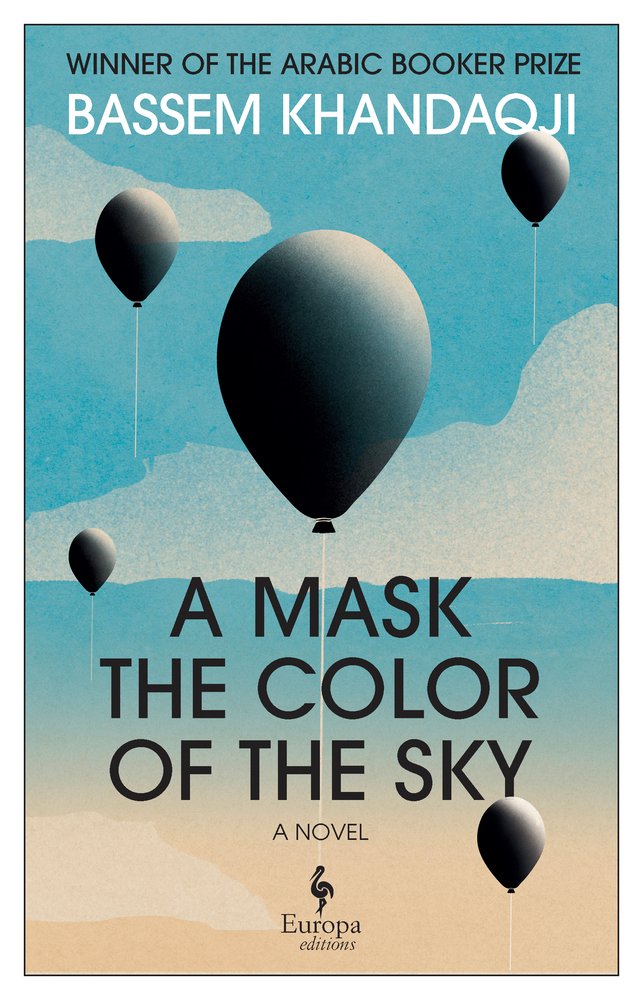
From A Mask the Color of the Sky by Bassem Khandaqji. Used with permission of the publisher, Europa Editions. Copyright © 2026 by Bassem Khandaqji, translation copyright © 2026 by Addie Leak.