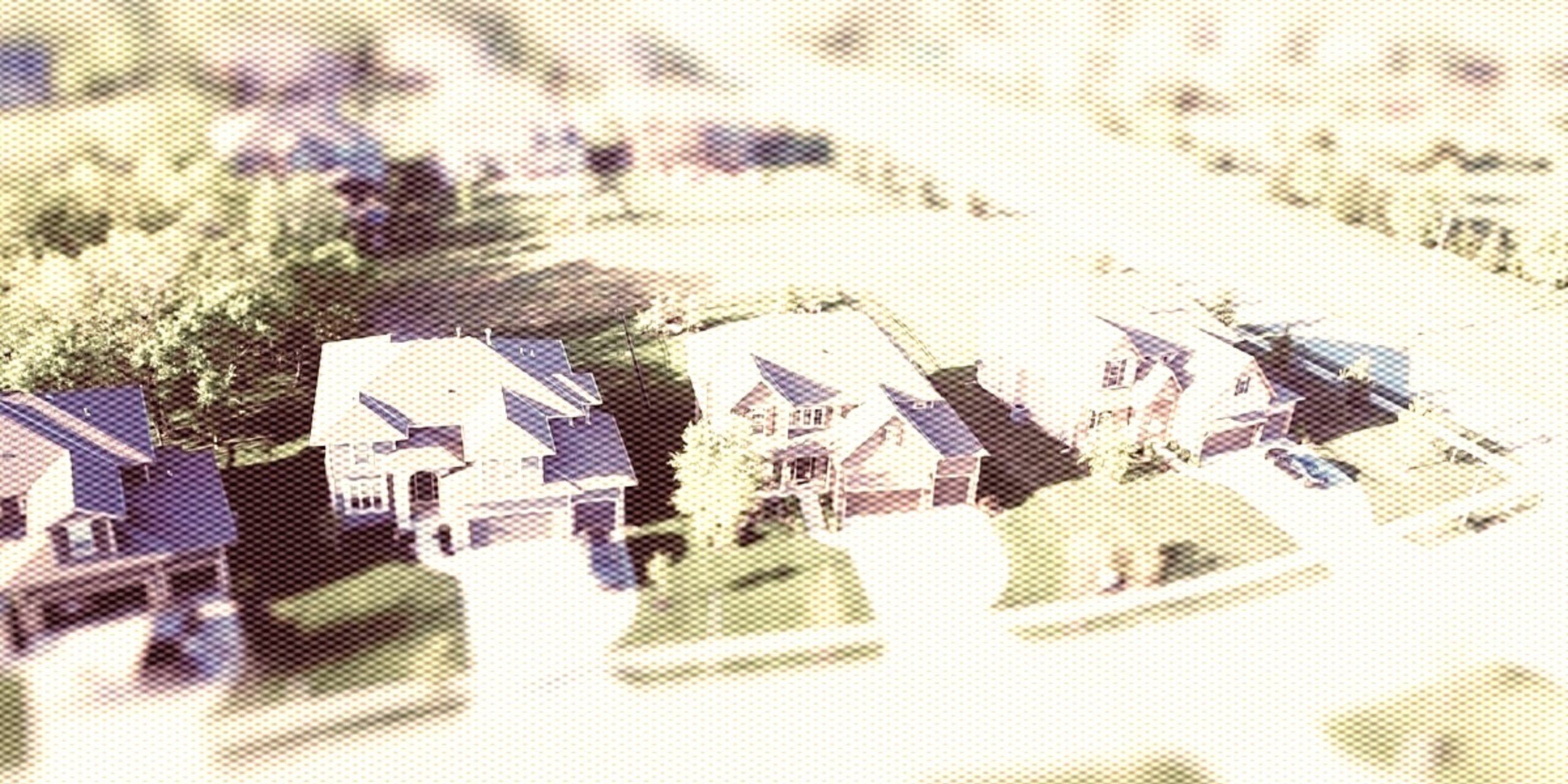
A Day in the Life of an American Paperboy, c. 1974
James Martin on Navigating the Pitfalls of His First Real Job
I’m not sure why I agreed to take a job without the promise of being paid. But when you’re thirteen, you don’t have much bargaining power.
A modest income was promised to young boys (occasionally girls) by the publishers of The Conshohocken Recorder and The Weekly Advertiser, two minuscule newspapers published in the Philadelphia suburbs, probably not that different from many other local papers at the time. The way the income was earned by those who delivered it, however, was unusual.
It’s hard to imagine a time when anyone would want to read these weekly ten-page tabloids. As its name suggests, The Advertiser was crammed with ads for local businesses, next to brief articles about local doings. The Recorder, I guess, recorded local news, but like its competitor, supported itself by advertising the same pizzerias, barbershops, and insurance agencies that placed identical ads in our local church bulletin.
Decades before the internet, there were far fewer places to get news, and decades before cable and streaming, there was far less to watch on TV. In the Philadelphia area we had the Holy Trinity of Channels 3, 6, and 10 (NBC, ABC, and CBS) plus whatever you could find on UHF: Channels 17, 29, and 48, whose fare ran heavily to Gilligan’s Island and The Flying Nun reruns, 1960s Japanese anime cartoons like Astro Boy and Marine Boy, and black-and-white movies from the 1950s and earlier. In that entertainment wasteland, why not peruse the papers to see what The Advertiser was advertising and The Recorder was recording?
Delivering papers at a young age would be good for me, said my dad. When you were a kid, things that sounded frankly awful were always good for you.
The two papers published enough local tidbits to pique anyone’s interest. Often enough you’d spy a photo of a classmate or neighbor, spotlighted for bringing in the most cans to a food drive sponsored by a school or church. Some sort of canned food drive always seemed to be going on. You’d turn a page and see your next-door neighbor posed next to a precariously tall tower of cans of peas, peaches, and stewed tomatoes, the last of which I was forever urging our family to donate, so miserable was I when my mother served it. I had a hard time imagining anyone eating the slimy red mess, no matter how poor, hungry, or desperate.
Our neighbor across the street recommended to my parents the paperboy job for me. Delivering papers at a young age would be good for me, said my dad. When you were a kid, things that sounded frankly awful were always good for you. Like stewed tomatoes.
My dad meant “good for me” in terms of “building character.” I, however, was interested not in building character, or learning any moral lessons, but in building my bank account.
My parents gave me a weekly allowance of five dollars to compensate me for my house chores: taking out the trash on Wednesdays, drying dishes every night, mowing the lawn during the spring and summer, raking leaves in the fall, shoveling the walk in the winter, and vacuuming our rugs every weekend. In the 1970s, that last task was harder than one would suppose: Our orange-yellow-and-red wall-to-wall shag carpet in our faux-wood paneled recreation room came with a plastic yellow rake so you could make sure the high shag pile was “standing up” so the vacuum could suck up cookie crumbs from late-night snacks and pine needles from when we were dumb enough to set up a Christmas tree on a shag carpet. “Did you rake the rug?” was a common question from my mom.
Delivering The Recorder was the first time I would get paid for a job outside the house.
Every week a green pickup truck pulled into our driveway and dumped onto the blacktop a stack of flattened newspapers, which landed with a loud thwack, along with a box of about a million powdery, dry, green rubber bands.
Then, in our garage, often with my dad and sometimes my sister, I would roll several hundred papers, encircle them with the rubber bands (which often snapped and, wasplike, stung your fingers), jam them into a green cloth sack emblazoned with the words “The Recorder,” and stuff the bag into the wire basket perched on the handlebars of my blue Schwinn Speedster bike. There was no question of carrying the bag through the neighborhood on foot because, filled with papers, it weighed fifty pounds, probably half as much as I did at the time.
The sack, crammed into my bike basket and straining at its canvas seams, was absurdly heavy, which made steering nearly impossible, especially at the beginning of the route when the bag was full. The slightest turn of the handlebars meant the bike lurched violently to the side as the weight of the papers took control of the steering. I cycled through the neighborhood and flung papers on the lawns (or porches and steps, if my aim was good) of every house, since everyone got a paper, whether they wanted one or not.
You didn’t subscribe to The Recorder. It just appeared on your doorstep every week, unbidden, to be read, tossed away, used to line a birdcage, or left on the lawn to disintegrate in the rain or snow or slush. I delivered it to everyone. That meant a two-hour bike ride through our neighborhood, rain or shine.
That bizarre business model made the weekly collections an exercise in frustration, since no one was obliged to pay. Every month, I would dutifully clip my metal money changer on my belt and soldier out to accost every householder in our neighborhood, a task that took several hours. My income was whatever I could collect, less the cost of the papers and rubber bands, which I paid the publisher. Sometimes my neighbors gave me nothing except a cold stare.
Usually I did collections after dinner, which made it not only frustrating, but frightening. I was worried not so much about the dark or being mugged (if that happened I could scream and someone would come to my aid, I figured optimistically) or being kidnapped (a common fear among my friends despite our knowing a total of zero kids who had been kidnapped) or seeing a “flasher” (which I didn’t understand, though I knew it had to do with a naked man opening his raincoat, which I could never see the point of), but about something more ordinary: dogs.
*
An unaccountably high number of large, menacing dogs prowled around unleashed in our neighborhood, which I found incredible. German shepherds seemed to patrol every yard, as if guarding some suburban stalag.
One cool fall afternoon I was coasting down Kings Road, under the red and orange leaves of the maple trees that lined the sidewalks, my bike basket jammed with newspapers. Suddenly from someone’s backyard an enormous German shepherd, tan with a black snout, spied me and began barking furiously. He gave chase for four or five houses, trying to bite my legs with his surprisingly white teeth, and I can still remember my heart racing as I sped downhill, worried that I would flip over my handlebars. Everyone knew that flipping over your handlebars was the worst thing that could happen on your bike because, as our mothers told us over and over, “You’ll break your neck!” I had never pedaled so hard going downhill and was going faster than I thought possible.
Even in my fearful exertion I thought angrily: Who would let their stupid dog off the leash? What if I were walking? I’d probably be dead!
As I pedaled, the dog snapped at my heels while I remonstrated interiorly with the offending family, fury fueling my adrenaline. Fortunately, I escaped, though I was too frightened for an hour to return to that street. It took almost that long for my heart to stop pounding. When I finally did return, it was so dark that I could barely see, and so each house was a potential trap, as I imagined the same dog lying in wait for me, along with his mean dog friends.
This was one of many times when I imagined what would happen if a dog attacked me. What was the best way to confront a dog? I wondered as I walked up to each house. The only solution, I thought, was a gun, though a thirteen-year-old paperboy with a loaded weapon was not something people would want to see when opening their front doors. Maybe I should buy mace, which I had heard about but wasn’t sure what it was: a spray? Early on I brought a big stick, which I found in the woods across the street from our house, but pedaling a bike, balancing the handlebars, throwing papers, and carrying a stick proved impossible.
“They only attack you if they smell fear,” said one of my friends, but that made no sense at all. Since dogs could attack you, I was frightened. I was doomed.
The other time I was “attacked” on my paper route, a dog raced up to me, probably out of curiosity. I was so startled that I turned immediately, and my basket was so filled with papers that the bike swerved and I lost my balance and landed on the street. The dog sniffed at me contentedly until the owner came out and said what all dog owners say: “Don’t worry! He doesn’t bite!” Once, my friend Joyce’s German shepherd leaped out of the front door when I was dropping off some homework and took a bite out of my yellow windbreaker, leaving behind its dog saliva. The hole was there for as long as I had the jacket.
After I completed the paper route, whether delivering or collecting, I was grateful to return to our house, often in the dark, where my mom, without fail, would have dinner on the table precisely at 6 PM. My family was a loving one, not perfect of course, but breakfast, lunch, and dinner were unfailingly on time, with near military precision. My favorite dinner at the time was canned crab, with cream of celery soup and peas, all served over rice, with toast, which we ate a lot on Fridays, being Catholic. Another Friday standby was Mrs. Paul’s Fish Sticks (or, if we were splurging, crab cakes) and Kraft’s macaroni and cheese. And Saturdays were for cheesesteaks.
As the daughter of Sicilian immigrants, my mom was justly proud of her spaghetti and meatballs and her peerless chicken soup, served with a Sicilian egg-and-chicken frittata we called froscia (pronounced FRAW-sha), which we ate with Heinz’s sweet relish. My sister and I would sometimes take to school leftover froscia sandwiched between two slices of Wonder Bread, to the horror of our classmates in the cafeteria: “What’s that?” Her Sicilian meat stuffing for Thanksgiving turkeys (ground beef, raisins, chopped boiled egg whites, along with celery and onions and plenty of sage and poultry seasoning: Try it!) was also tops. On the other hand, my mom’s experimental meals were not always successful: Meatloaf stuffed with melted mozzarella cheese was a memorably bad, gooey mess.
My mom was also assiduous about what we would today call food safety, avoiding anything that could possibly cause illness, especially raw meat: “Well done” was the norm for everything, and anything that could possibly go bad was kept in the fridge. The only exception was Nature Valley Granola, a breakfast cereal that debuted the year before, in 1973, and famously contained no preservatives. I begged my mom to buy it after I saw so many TV commercials. It seemed so healthy! So moral! So noble! Like I was helping the environment by eating cereal with no added chemicals.
Unfortunately, one morning in our kitchen, while listening to “Kodachrome,” Paul Simon’s song that was in heavy rotation on the radio, I ate a bowl of old granola. A few hours later, in Mrs. Donnelly’s eighth-grade English class, when we were reading Jack London’s short story “To Build a Fire,” I was spectacularly sick, vomiting all over my book. “Oh no, Jimmy threw up!” said one girl, somewhat superfluously. Mrs. Donnelly gamely put her hand on my shoulder and tried to lead me to the boys’ room, but I ralphed on her too. My friends returned the book to my house the next day, and I had to open it up to “To Build a Fire” and hose it off in our backyard. For our English class, it was the undisputed highlight of the week. A few years later, in our junior high school yearbook, the theme of most of my friends’ farewell messages ran heavily toward, “Remember when you threw up in Mrs. Donnelly’s class?”
Apart from not tossing away that one spoiled box of granola, a clean, healthy, and well-ordered household was one way that my mom showed her love. Not simply verbally (she often said “I love you”) and physically (she often hugged and kissed my sister and me) but by making sure the household was well run. That meant cleaning the house, washing our clothes, driving us to doctors’ appointments (and to school when it rained), and, above all, making sure meals were precisely on time. So when I returned from my paper route in the dark, dinner was always, unfailingly, there.
I also felt like an idiot collecting money for The Recorder, a paper no one subscribed to. I wanted the money, but this was an odd way of earning it. Or not earning it.
Darkness was a common theme in 1974, when the energy crisis, caused by the oil embargo from OPEC (Organization of the Petroleum Exporting Countries) in the Middle East, prompted the US government to make daylight saving time permanent. Fuel consumption, it was explained, would decrease as Americans used the extra evening sunshine for heat and light. That meant that for several months, clocks would “spring forward” but not “fall back.” Thus, on the East Coast the sun didn’t rise until 8:30 AM.
On school days, that meant waking up in pitch-dark and walking to the bus stop with a flashlight. There we’d stand in the dark and talk and try to act cool and complain about school and spit on the sidewalk every few minutes. (Spitting, a regular pastime of many boys in our neighborhood, showed how cool and/or tough you were.) Between going to school in the dark and doing my collections after school in the dark, I started to feel like a bat.
Despite my parents commending my industriousness, I also felt like an idiot collecting money for The Recorder, a paper no one subscribed to. I wanted the money, but this was an odd way of earning it. Or not earning it.
At every door I thought: Why am I delivering papers that no one wants? I should be delivering a real paper, one that I’d get paid for. And was that barking I just heard?
Someone would come to the door, occasionally holding a dog back, which started barking as soon as I rang the doorbell. I could hear the owner shouting, “SHUT UP!” I wondered why dogs barked at the doorbell. They’ve heard it before, I thought, silently reproaching the dog. It’s a person at the door, where they always are. How dumb can you be?
I always took a step back, remembering Joyce’s German shepherd and absentmindedly touching the bite hole in my jacket.
The rest of the conversation always fell into the same pattern, with as much numbing regularity as the old films we watched in French class:
Me: Hi. I’m collecting for The Recorder.
Homeowner (holding back a snarling dog): The what?
Me: The Recorder. The newspaper?
Homeowner: Don’t worry. He doesn’t bite.
Me (looking at the dog’s remarkably white teeth): Uh…
Homeowner: We don’t get it.
Me: Uh, yeah, you do. I deliver it here every week.
Homeowner (pointing to rolled-up paper on the lawn): Oh, that rag? We throw those out.
Me: Oh. Well, you only have to pay if you want to.
Homeowner: How much?
Me: A dollar fifteen.
Homeowner: A dollar fifteen for a paper that I don’t read and didn’t ask for?
Me: Yes. I guess. Sorry.
Homeowner: Hold on. (Disappears while the dog eyes me, then reappears with coins.) Here.
Me: Thanks. (Joyfully places four quarters, one dime, and one nickel into my money changer.)
Homeowner: By the way, your aim stinks. If I’m going to pay for it, throw it on my steps, not on the lawn, which is where I usually see it.
Me: Okay.
Homeowner: Do you play baseball?
Me: I’m in Little League in the summer.
Homeowner: Well, you should practice your throwing. I hope you’re not a pitcher. Hahaha.
Me: I’m not. I play right field. (Dog barks, door closes, dog continues barking.)
Repeat about two hundred times. The job was door-to-door begging. I hated it.
When I told my father that I would say “sorry” to the homeowners, he said, “What are you apologizing for? You haven’t done anything wrong.” I was forever apologizing for things I hadn’t done, just to avoid conflict. I didn’t want to offend anyone or cause conflict. Even then, at thirteen, I wanted everyone to like me.
“Keep at it,” said my dad. “It’s good for you. It builds character.”
__________________________________
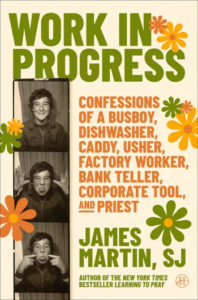
Excerpted from Work in Progress: Confessions of a busboy, dishwasher, caddy, usher, factory worker, bank teller, corporate tool, and priest by James Martin. Reprinted with the permission of the publisher, HarperOne, an imprint of HarperCollins. Copyrighted © 2026 by James Martin.

James Martin
Rev. James Martin, SJ, is a Jesuit priest, editor at large of America magazine, consultor to the Vatican’s Dicastery for Communication, and author of the New York Times bestsellers Learning to Pray, Jesus: A Pilgrimage, and The Jesuit Guide to (Almost) Everything. Father Martin is a frequent commentator in the national and international media, having appeared on all the major networks and outlets, like The Colbert Report, NPR’s Fresh Air, The New York Times, and the Wall Street Journal.