A Butch Black Swan: On Horror, Transformation, and Writing a Queer Midwestern Gothic
Melissa Faliveno Explores the Diverse Sources of Inspiration For Her Debut Novel
When the copy came in, I read it with something like dread. Historically, and probably like many writers, I have complicated feelings about copy—that punchy paragraph or two meant to grab the attention of readers and make a book more marketable. I worked in publishing for years, so I’ve been on both sides of this process and understand its necessity, but there’s something about that attempt to distill, in order to sell, a work of art that took years to make into a few snappy words that never feels quite right. You could even say it makes my skin crawl.
But I had just sold my debut novel, Hemlock, to a dream press, and my agents had put together the Publishers Lunch announcement—that hallowed screen shot writers wait years to pin to their Instagram profiles. So alongside the dread I was excited too, a giddy combination of feelings not unlike that moment in a horror movie just before the jump scare.
“A rural, butch Black Swan,” it said.
I sat at my kitchen table, pulse pounding harder than it should have been, strange visions of Natalie Portman in a tutu pirouetting through my head.
I took a breath. Then I read the words again.
*
I love horror. Books, films, indie and bestseller, b-movie and blockbuster. It’s a weird thing, in our nightmare of a world, to enjoy being scared for fun, but it’s one of my favorite pastimes. Something about being frightened from the comfort of my own home, reading or watching movies about imaginary monsters I know don’t exist, offers a strange kind of solace. Not least in this political moment, when real-life monsters keep stepping out of the shadows; when queer bodies like mine and those of many people I love are increasingly scrutinized, politicized, and terrorized; when I walk into public bathrooms and wonder not if but when someone will scowl or spit again, when they might feel emboldened to do worse. Horror is a space where I can lean into the adrenaline of the unknown, of the monstrous, and feel safe.
I thought about how queerness intersects so well with horror: our bodies and desires uncanny, like the very word we reclaim—indecipherable, inarticulable, strange.
I grew up watching monster movies with my parents, who observe Svengoolie night on Saturdays like church and have replicas of old film posters—Bela Lugosi in Dracula and The Corpse Vanishes, Lon Chaney’s Wolf Man and Boris Karloff’s Frankenstein and The Mummy—hanging in the wood-paneled Wisconsin basement of my youth. On the bookshelves in the same room sit my father’s collection of monster figurines, which he built and painted when he was young. The rest of those shelves are filled with my mother’s library—an entire wall of Stephen King, Dean Koontz and James Patterson, Anne Rice and V. C. Andrews and Margaret Atwood. I pulled books from these shelves when I was a kid, reading IT way too early, learning like so many children of the 80s that Flowers in the Attic was not, in fact, a children’s book.
As a teenager, my friends and I hosted horror-movie nights in that basement and others like it, watching Scream and I Know What You Did Last Summer, Candyman and Children of the Corn. The movies, rented on VHS from the local Blockbuster in our small town, were the feature; but when I think back to that time, those Midwestern basements and the kids scattered around them—sprawled on shag carpet and pullout couches, surrounded by store-brand frozen pizza and two-liters of pop, hiding under aunt-made Afghans and screaming together—are even more important than the movies. When I recall those memories, the place is the main character.
One of the first essays I published was in the literary magazine Midwestern Gothic. I spotted their table at AWP as a grad student, and holding a copy in my hands realized it was something I’d been waiting for without ever realizing it. The magazine, and the small press attached to it, have since sadly folded, but the idea of the Midwestern Gothic has never left me. I think it lives in everything I write. There’s something dark that ebbs beneath the surface of the landscapes of my past, which I keep returning to in my work.
And that’s part of what it means to be of the Midwest—where the land is beautiful but brutal; where the summers are lush and alive, but the winters are cold and barren. Where, in the springtime, sudden storms send tornadoes tearing through towns, destroying everything in their wake. Where we love to tell ghost stories but rarely talk about the real things that haunt us. To be Midwestern, for me, is to be deeply in love with the place that made you and deeply wary of it. Maybe like God, and natural world: to both respect and fear it.
As I began working on my novel, I knew I wanted to write something that drew from those conflicting feelings, and from those Midwestern basements of my past—from the stories we watched, and told, within them. I wanted to write my own Midwestern Gothic: uncanny and creepy, a psychological story rooted in the ecologies and mythologies of a Midwestern place I knew well: in this case, the Northwoods of an unnamed Wisconsin, and the interior of an altered mind, where dreams and reality blur like the edge of the woods at dusk.
*
I don’t remember where I was, or who I was with, when I first saw Black Swan. It came out in late 2010, so it’s possible I saw it with my grad-school roommate, a beautiful, androgynous dancer whose body I watched move across New York stages in strange and unsettling ways, her performances making me cry, though I could never articulate why. It might have been alone in my room, where I wrote and drank whiskey, watched pirated movies in bed on my laptop and drank more whiskey, a bottle of which I kept on a shelf in my nightstand.
It might have been in Brooklyn—where I moved the following summer and where some of Hemlock takes place—at Nighthawk Cinemas, where I saw most movies back then. It’s more likely, though, that I rented it from our neighborhood’s beloved video store, Photoplay, one of the last of its kind in the city, and which I would mourn long after it closed, passing the empty storefront that haunted the block like a ghost. In the first few years of the decade I lived in Greenpoint, my partner and I spent our Friday nights there. Mike, the owner, who had an encyclopedic knowledge of movies and excellent taste, would ask what we were in the mood for. It was often horror, or independent or foreign or all of the above, and we’d carry a DVD or two back to our apartment with takeout and six-pack. We might have picked up Black Swan there.
I don’t remember that first viewing, like I don’t remember much of those days—my memory is dark, like the black mouth of backstage. But I remember threads of the film: Portman’s disturbing portrayal of a dancer losing her mind, her horrific transformation, of course the sapphic sex scene with Mila Kunis. I know that I was excited for it: A few years earlier I’d been obsessed with director Darren Aronofsky’s Requiem for a Dream, with its depiction of addiction as horror, the ways a life can so quickly disintegrate into something unrecognizable, monstrous, gone.
I was just starting to experiment with my own stories back then—writing, abstractly, about addiction while binge-drinking most nights, doing coke off cracked mirrors on coffee tables in houses that should have been condemned, smoking so much weed before bed that I began to have night terrors, waking up remembering nothing. It would be a long time before I looked directly into those mirrors, the crack in the glass splitting my own face in two.
Recently, I watched Black Swan again. I was alone, and it was terrifying. I was struck by the fine line between body horror (like the moment Nina pulls a black feather from her back, and all those bloody fingernails) and beauty, the way that boundary is often blurred: how the dancers move across the stage, their bodies contorting into something stunning or horrific; the fast, frenetic movement of the camera as it follows.
Mostly, I was struck by the uncertainty—the way Nina is dissolving at the edges, her life a waking nightmare. Something always seems to be lurking in the periphery, glinting off the edges of mirrors, flickering across those black wings offstage. The threat might be a man, Nina’s abusive choreographer; it might be a monster, the sinister sorcerer—depicted as ghastly part-animal, part-man creature—casting his spell; it might be Nina’s mother, disturbed and controlling; or her double, Lily, coming for her role. More likely, it’s Nina herself—her own mind taking her down a dark path from which she won’t return. Throughout the story, she’s turning into the black swan—a kind of shadow self, and the role that has thus far eluded her—but we, and she, don’t know what’s real or imagined. The borders are murky, and we’re stuck at the threshold, wondering what might happen if she, and we, were to step past the boundary into oblivion. This is where Hemlock takes us too.
*
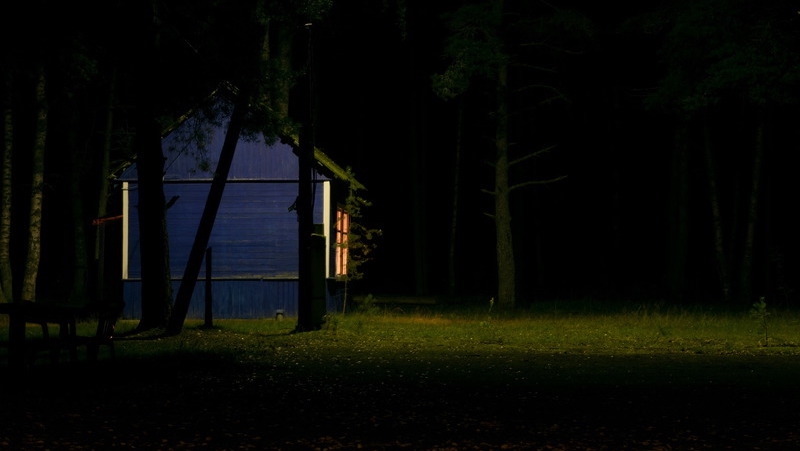
Hemlock began where its story does, at a remote cabin in the Northwoods of Wisconsin. I was there alone for five weeks in late spring, finishing my first book, Tomboyland. There was no Wi-Fi and very little cell service—what few bars I had during the day would disappear completely at night. Those nights were long, and very dark, the words No one will hear you scream on maniacal loop in my head. I started re-reading The Shining, to which Hemlock pays some homage, and then quickly had to stop, choosing instead a box set of Northern Exposure DVDs, which I watched on an old tube TV.
Immersed in the idiosyncrasies of small-town Alaskan life, I thought about similar small towns of the Northwoods, like the one I drove to every few days for coffee and milk and beer, to get corn from the hardware store to feed the deer. I thought of how I’d watched that town, and many like it, thrive in the 80s and 90s and then suffer after the financial crisis, some never fully recovering. This, too, is a kind of Midwest Gothic—the Northwoods tourist town, once bustling and alive, turned to ghost town: the boarded-up shops, the empty streets, the single bar holding on, its neon light blinking in the dark like a beacon.
One night, there was a storm—sudden and powerful, the kind that, up in the middle of nowhere, can knock out the power for days. The lights flickered. There was no generator. I was terrified I’d be stuck in darkness, without electricity or water. I gathered all the flashlights, candles, and kerosene lamps, and piled them on the counter. I remembered that, living alone in the woods, anything could happen—not least to a woman, or a queer body like mine. I often slept with a light on, listening to the wind as it blew through the trees, to the cracks and howls of the forest at night, wondering what might be out there.
*
I recently learned the term black swan event. A “high-profile, hard-to-predict, and rare event beyond the realm of normal expectations,” the theory was popularized by Lebanese-American statistician Naseem Nicholas Taleb in his 2007 book The Black Swan: The Impact of the Highly Improbable, which explores the human tendency to oversimplify, and rationalize, such events after they occur.
The first known reference to a black swan comes not from Tchaikovsky’s Swan Lake, but from the second-century Roman poet Juvenal, in his Satire VI, who wrote of rara avis in terris nigroque simillima cygno—“a bird as rare upon the earth as a black swan. ” That is, a creature once believed impossible, to not exist at all.
As I sat at my kitchen table, reading the copy again—the words rural and butch flickering like that bar-sign beacon in some dark distance—I saw my work in a new light.
Black swans do exist, it turns out. But they are rare, and like many rare and inexplicable things, they tend to become mythological.
Hemlock takes as much inspiration from horror as from folklore and mythology. The Beast of Bray Road, the Hodag, the Wendigo—those Midwestern monsters that lurk in the woods, stories told to children as warnings across a flickering summer fire. Serial killers like Ed Gein and Jeffrey Dahmer—a different kind of monster, and very real, who haunt my home state just the same. Myths like the Paulding Light, a mysterious glowing orb that hovers over the train tracks just across the border. These things that cannot be explained, which may as well not exist—but that still, somehow, we know to be true.
*
Hemlock isn’t about ballet. Though the city does loom in the protagonist’s rearview, it’s not a story about New York. But it is about a woman transforming—maybe into an animal, maybe into man, maybe into a monster. It’s about the murky boundaries of body and mind, of reality and imagination, and those borders breaking down. It’s about madness, and disappearance, and stepping across the threshold to become something else.
As I wrote it, I thought of all the stories I loved about transformation—specifically, of a body turning into something monstrous. So many of those stories are about men, or, like Black Swan, about traditionally feminine, beautiful women, mostly in cities. There are still so few stories about butch women, transmasculine, genderqueer, or nonbinary bodies—the kind of bodies that have been called monstrous all our lives.
I thought of books like Leslie Feinberg’s Stone Butch Blues and Dorothy Allison’s Bastard Out of Carolina, those rare stories of body and place that felt, when I first read them, like looking in a mirror that wasn’t cracked. I thought about how queerness intersects so well with horror: our bodies and desires uncanny, like the very word we reclaim—indecipherable, inarticulable, strange. I had written a story about a woman, or something like it, in many ways a lot like me: with a queer body in a rural place, from a working-class Midwestern family; who as a girl was called beast; who’s shedding parts of herself she constructed in the city and returning to a place, and a form, she was always meant to inhabit.
*
A secret I tell my students is that I don’t know what I’m writing until I’ve written it. If I know where I’m going, it’s usually not a path worth taking. Instead, I like to wander on the page, as through some dark wood, no idea where I’m headed or how to get out of the weeds and vines and branches as they bend in. But I keep going, trusting the process will lead me to the tree line, and the sun-lit clearing beyond it. It’s only then I can see the path that led me there.
Sometimes, we also don’t know what we’ve made until someone names it for us. It’s one of the beautiful parts of a writing workshop—when one student sees a thread of connection in a draft that the author didn’t even realize was there, and it all clicks. It’s also true that we rarely have control over how our work is described, marketed, or sold. Once we put a book into the world, the mechanisms of the industry, and capitalism at large, click and whirr. Readers and critics make of it what they will.
Sometimes, they get it right. I hadn’t thought to compare my book to Black Swan, but when someone else did, it made a lot of sense. As I sat at my kitchen table, reading the copy again—the words rural and butch flickering like that bar-sign beacon in some dark distance—I saw my work in a new light.
I no longer live in New York, or the Midwest, but in the South, where the Gothic tradition is as old as Anne Rice’s vampires; where such stories, like the heavy sky and loblolly pines in summer, drip with it. The political climate here is much like that of my home state—some days I feel safe, and other days I don’t. I still watch a lot of horror movies. I live in a small house in the woods, where it’s easy to shed the last remnants of city—or at least the kind of feminine I held onto there—like an old coat or a skin.
I recently learned how to use a chainsaw. The word butch was one I’d turned away from for a while, but feel myself continually returning to, and finding myself at home in. In Hemlock, my protagonist Sam takes on this shape even more. A kind of shadow self, both fantasy and omen, she became my own black swan: all the things I was teetering between as I stood at the edge of my own dark wood; all the things I both feared and desired. All the things I’m still shedding, and all the things I’m still becoming.
__________________________________
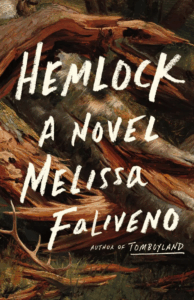
Hemlock by Melissa Faliveno is available from Little, Brown and Company, a division of Hachette Book Group.

Melissa Faliveno
Melissa Faliveno is the author of the debut essay collection Tomboyland, named a Best Book of 2020 by NPR, New York Public Library, Oprah Magazine, Electric Literature, and Debutiful, and recipient of a 2021 Award for Outstanding Literary Achievement from the Wisconsin Library Association. Her writing has appeared in Esquire, The Paris Review, Kenyon Review, Literary Hub, Ms. magazine, Bitch magazine, and Brooklyn Rail, among others, and in the anthologies Sex and the Single Woman and the forthcoming Hit Repeat Until I Hate Music. Born and raised in small-town Wisconsin and a longtime resident of Greenpoint, Brooklyn, she teaches creative writing at the University of North Carolina and lives in the woods outside Chapel Hill.