A Brief and Essential History of the Most Important Food Ever Invented: The Pickle
Paul van Ravestein and Monique Mulder Explore the Evolution of Fermentation Across the Ages
Pickling vegetables began in Mesopotamia around 2400 BCE, where brining cucumbers addressed the challenge of preserving food in a hot climate. Brine, a mixture of water and salt, proved effective at inhibiting spoilage while enhancing the flavor of food. This innovation quickly spread to neighboring civilizations, embedding itself in the culinary practices of ancient Egypt, Greece, and Rome.
Cleopatra, one of Egypt’s most iconic figures, believed that pickles contributed to her legendary beauty. This association between pickles and vitality reflected a broader cultural fascination with preserved foods. Julius Caesar ensured that his soldiers carried pickles on their campaigns, claiming that the preserved vegetables fortified their strength and stamina. This notion of pickles as both nourishment and tonic was echoed by Greek philosophers like Aristotle, who praised their medicinal properties.
The culinary sophistication of ancient Rome brought pickling into sharper focus. The Roman cookbook attributed to the Roman merchant and epicure Apicius, De Re Coquinaria, included numerous references to preserved vegetables, particularly olives and cucumbers. Apicius wrote of the importance of balance in brining, using spices like dill, mustard seed, and coriander seed to create complex flavors that complemented meals. The ability to elevate simple ingredients through preservation became a hallmark of Roman gastronomy, showcasing pickling as both art and science.
In modern-day America, pickles have transcended their role as a simple side dish or sandwich topping to become a cultural phenomenon.
The spread of pickling innovations along trade routes like the Silk Road and the Spice Route highlights its significance in cultural exchange. Roman traders, for example, likely encountered Asian pickling techniques through the Silk Road’s bustling networks of goods and ideas. Spices such as cinnamon, peppercorns, and cumin—integral to pickling recipes—traveled vast distances, linking the culinary practices of the Mediterranean, India, and China.
In Asia, pickling developed independently but with striking parallels. Chinese records from the Zhou Dynasty (1046-256 BCE) mention fermented vegetables, including pickled radishes and cabbages, which were essential for sustenance during harsh winters. Similarly, Indian achar evolved as a culinary treasure, incorporating local spices like turmeric, fenugreek, and mustard to enhance preservation and flavor. Japanese pickling methods, such as nukazuke (fermentation in rice bran), emphasized minimalism and balance, reflecting the cultural values of harmony and simplicity.
The maritime trade routes of Southeast Asia and the Indian Ocean allowed pickling traditions to travel across vast regions, influencing cuisines from the Malay Archipelago to the Arabian Peninsula. The Indian Ocean trade ensured that spices like cloves and nutmeg became integral to pickling recipes worldwide, enriching their flavor profiles and preserving their cultural legacies.
Cultural and Religious Significance
Pickling’s role extended beyond culinary practices, becoming intertwined with religious and cultural rituals. In Jewish tradition, the Talmud makes numerous references to pickled vegetables, particularly turnips, which symbolize abundance and endurance. Pickled foods often accompanied bread during blessings, emphasizing their role as both sustenance and spiritual connection.
Their transformation through pickling—turning a simple, earthy root into a tangy, vibrant dish—was often seen as a metaphor for renewal and the endurance of the Jewish people through adversity. During the springtime Jewish holiday of Purim, which commemorates the triumph of the Jewish people over oppression in ancient Persia, the giving of food gifts (mishloach manot) occasionally included pickled vegetables, reflecting the value of sharing preserved foods that sustained communities through lean times. And colorful Yiddish sayings like er drayt sich arum vie a forts in roosl (he wanders around like a fart in a pickle barrel) highlight the humorous associations with pickling, eating, and bodily functions.
Hindu culture imbued pickles with sacred meaning. The balance of flavors in achar—salty, sour, sweet, and spicy—was seen as a reflection of life’s harmony. Pickles were often prepared as offerings during religious festivals, symbolizing prosperity and the nurturing of the human spirit.
Christian monastic traditions adopted pickling during the Middle Ages as a way to sustain communities through long fasting periods. Pickled fish and vegetables became essential components of monastic diets, reflecting the intersection of faith, practicality, and culinary ingenuity.
In Islamic cultures, pickles played a central role in Ramadan feasts, their tangy flavors providing refreshment after a day of fasting. Preserved lemons, a staple in Moroccan cuisine, became symbolic of hospitality and were often served to honored guests. Ancient Chinese rituals also celebrated the cultural significance of pickling, with fermented vegetables used in ancestor worship as symbols of continuity and filial piety.
Trade routes such as the Silk Road and those across the Sahara were pivotal in spreading pickling techniques and ingredients across diverse cultures. These routes facilitated the exchange of goods like salt and vinegar, essential to pickling, along with the culinary knowledge that transformed them into staples of global cuisine.
Medieval and Early Modern Innovations
By the medieval period, pickling techniques had become deeply integrated into European culinary traditions. Monasteries, often centers of agricultural and culinary innovation, played a key role in refining pickling methods. Vinegar, which became widely available during this era, was used alongside salt brines to preserve vegetables, fruits, and fish. Monastic records from the twelfth century document the production of pickled onions and beets, which were stored in large earthenware jars to sustain communities through winter.
Cookbooks from the period provide rich insights into evolving pickling practices. The Forme of Cury (circa 1390), compiled by Richard II’s royal chefs, included recipes for pickled herring and onions, using spices like saffron to enhance flavor. These recipes reflected the growing influence of the spice trade, which brought exotic ingredients into European kitchens.
The expansion of trade routes, particularly the Hanseatic League’s networks across Northern Europe, facilitated the widespread availability of pickling ingredients like vinegar and spices. Salt, a cornerstone of pickling, was transported in bulk from regions such as the North Sea and the salt mines of Poland, reaching markets across Europe. This accessibility enhanced the prominence of pickling as both a culinary art and a practical necessity.
Navigators like Christopher Columbus and Vasco da Gama relied heavily on pickled foods to sustain their crews during long voyages. Sauerkraut in particular became indispensable for preventing scurvy, a testament to the nutritional value of fermented vegetables. Captain James Cook famously credited the health of his sailors to their daily ration of pickled cabbage, a practice that exemplified pickling’s life-saving potential.
Eighteenth and Nineteenth Centuries: Pickling Evolves
The transatlantic trade routes of the colonial period profoundly reshaped American pickling practices. The influx of sugar from Caribbean plantations into Europe and North America introduced sweet-and-sour pickling variations, while the triangular trade ensured that pickling traditions from Europe were carried to the New World.
The eighteenth century ushered in a golden age of domestic pickling. In America, where access to fresh produce was seasonal, pickling became a vital means of food preservation. Recipes for pickled cucumbers, peaches, and even watermelon rinds filled the pages of early American cookbooks. Hannah Glasse’s The Art of Cookery Made Plain and Easy (1747) included detailed instructions for pickling, emphasizing the importance of achieving the perfect balance of crispness and flavor.
The nineteenth century brought technological advancements that revolutionized pickling. Nicolas Appert’s invention of canning in glass jars paved the way for mass production, while the Mason jar, patented by John Mason in 1858, made home preservation safer and more accessible. These innovations democratized pickling, allowing households across Europe and North America to preserve seasonal produce with ease.
Victorian cookbooks like Eliza Acton’s Modern Cookery for Private Families (1845) showcased vinegar-based pickling recipes that catered to refined tastes. Acton described pickling as a “delightful science,” celebrating its ability to enhance the natural flavors of fruits and vegetables. Eastern European immigrants brought their cherished pickling traditions to the United States during this period, popularizing kosher dill pickles and transforming New York’s Lower East Side into a hub of pickling culture.
Industrialization and Modern Culinary Renaissance
Before the eighteenth and nineteenth centuries, pickling was a labor-intensive process carried out in households or small-scale operations, often using seasonal produce to sustain families through harsh winters.
The Industrial Revolution transformed pickling from a primarily domestic activity into a large-scale commercial enterprise, significantly altering how pickles were produced, distributed, and consumed. The integration of global transportation networks, including railroads and shipping lanes, enabled the large-scale distribution of pickles, ensuring that they became a ubiquitous part of diets worldwide. These logistical innovations allowed for the efficient transport of vinegar, spices, and pickled goods, bridging the gap between traditional practices and modern convenience.
As these changes made pickles more accessible to the general public, they also introduced new levels of standardization and consistency that appealed to a rapidly urbanizing society. By the mid-twentieth century, pickles had become a wartime staple. During World War II, 40 percent of US pickle production was allocated to the military, underscoring their importance as portable, nutritious staples. The creation of International Pickle Week in 1948 celebrated pickles’ cultural and economic contributions, cementing their status as an enduring culinary icon.
One of the most celebrated modern uses of pickles occurred during an NFL game in 2000 when the Philadelphia Eagles faced off against the Dallas Cowboys on a day when the temperature was a blistering 109 degrees Fahrenheit. The Eagles credited their stamina in their 41 to 14 victory to drinking pickle juice, which helped prevent dehydration and muscle cramps. This claim was later supported by research from Brigham Young University, which found that pickle juice relieved muscle cramps 45 percent faster than drinking no fluids and 37 percent faster than water. The high sodium content and its effect on nerve signaling likely contributed to this success.
In the twenty-first century, pickling has experienced a renaissance. Fermented pickles, celebrated for their probiotic properties, are at the forefront of the modern wellness movement. Chefs and home cooks alike have embraced the art of pickling, experimenting with unconventional ingredients like fiddlehead ferns and green strawberries. Sandor Ellix Katz’s The Art of Fermentation (2012) celebrates pickling as a “bridge between the ancient and the modern,” while contemporary chefs like David Chang of Momofuku view pickling as a transformative craft that elevates humble ingredients.
Pickles in Pop Culture
In modern-day America, pickles have transcended their role as a simple side dish or sandwich topping to become a cultural phenomenon. Pickle-flavored snacks, from potato chips to popcorn, have surged in popularity, reflecting the American palate’s love for bold, tangy flavors. Pickle festivals, such as the annual Picklesburgh in Pittsburgh, celebrate the pickle’s culinary versatility with events featuring everything from pickle cocktails to deep-fried pickle creations. Social media has further amplified pickle fandom, with viral trends showcasing recipes like pickle pizzas and pickle-infused desserts, demonstrating the creative ways people embrace this iconic food. Additionally, craft pickle producers have emerged nationwide, offering small-batch, artisanal varieties that cater to a growing demand for unique, locally sourced products.
Whether it’s through jokes, viral trends, or tongue-in-cheek pickle merchandise, pickles have become a lighthearted emblem of American wit and whimsy.
This modern pickle renaissance reflects a broader trend of culinary exploration, combining nostalgia with innovation to solidify pickles as a beloved staple of contemporary American culture. The modern pickle obsession in America extends beyond the culinary world into a full-blown lifestyle trend. Pickle-inspired merchandise, such as clothing, accessories, and home décor, has gained traction, with slogans like “in a pickle” and pickle-shaped items becoming quirky staples.
Restaurants and bars have embraced pickles in creative and unexpected ways, offering pickleback shots (whiskey followed by pickle juice) and even entire menus centered around pickled ingredients. One popular trend involves soaking chicken in pickle brine before frying it. This imparts a tangy flavor and tenderizes the meat, offering a unique twist on classic fried chicken.
The health-conscious crowd has also fueled pickle popularity, as fermented pickles are praised for their gut-boosting probiotics, making them a darling of the wellness movement. This vibrant pickle-centric culture, blending health, fun, and innovation, underscores how pickles have become a dynamic and enduring symbol of American creativity, taste, and innovation. Pickles are increasingly incorporated into plant-based and vegetarian recipes. They can be paired with dishes like Mediterranean falafel burgers, smoky grilled eggplant hot dogs, or even served as a topping for avocado toast or vegan sandwiches.
The growing trend of pickling vegetables such as carrots, onions, and fennel is another way in which pickles have found a place in modern healthy fare. Moreover, pickled vegetables, beyond cucumbers, are being featured in dishes for their vibrant colors and bold flavors, which complement other plant-based ingredients. Finally, pickles have also found a unique niche in American humor, becoming a symbol of quirky, lighthearted fun. The phrase “in a pickle,” derived from William Shakespeare’s The Tempest, initially meant being in a difficult situation but has since evolved into a playful idiom. Pickles frequently appear in comedic settings, from cartoon characters struggling with oversized jars to absurd internet memes celebrating the eccentricity of pickle enthusiasts.
The 1988 romantic comedy Crossing Delancey featured pickles prominently, as the protagonist wrestles with her Jewish heritage and her feelings for a charming pickle vendor, highlighting how pickles can serve as both a cultural touchstone and a source of humor. An American Pickle (2020), starring Seth Rogen as Herschel Greenbaum, follows a man from the early 1900s who is preserved in a vat of pickles and wakes up in modern-day Brooklyn.
In children’s media, Curious George has an episode where the beloved monkey hilariously attempts to make his own pickles, creating chaos and delighting young viewers with his silly pickle-centric antics, while SpongeBob SquarePants features an episode entitled “Pickles,” where Sponge-Bob struggles to remember how to make the perfect Krabby Patty after a customer claims he forgot to add pickles. The episode exaggerates SpongeBob’s pickle-related panic for comedic effect, turning the small green condiment into a source of existential dread and slapstick humor.
Humor about the pickle often stems from its distinctiveness—its tangy, assertive flavor and odd appearance lend themselves to exaggerated, whimsical depictions. Pickles are also often the subject of phallic humor due to their shape and appearance. The comedy often leans on innuendo, turning the pickle into a stand-in for something risqué. Whether it’s through jokes, viral trends, or tongue-in-cheek pickle merchandise, pickles have become a lighthearted emblem of American wit and whimsy, adding a flavorful twist to the cultural landscape.
__________________________________
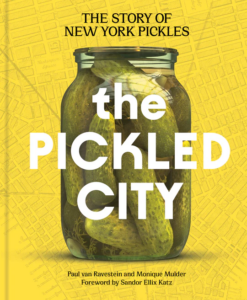
Excerpted from The Pickled City: The Story of New York Pickles by Paul van Ravestein and Monique Mulder. Copyright © 2026. Published by Chronicle Books.

Paul van Ravestein and Monique Mulder
Paul van Ravestein and Monique Mulder are the principals of Mattmo Creative, a branding agency in Amsterdam specializing in culinary history. Their work is driven by the philosophy of “the interconnectedness of things,” which also inspired their cofounding of Dutch Cuisine, a movement dedicated to preserving Dutch food culture. Through their projects, Monique and Paul use food as a powerful symbol of resilience, cultural identity, and human connection, celebrating the enduring legacy of culinary traditions. They have given talks on food history around the world, including Helsinki, Shanghai, Cape Town, Istanbul, New York, Nova Scotia, and at the Slow Food Academy in Pollenzo, Italy. Paul and Monique are part of the concept team behind the current exhibit Street Food City, which opened at Brooklyn’s Museum of Food and Drink in December 2025.