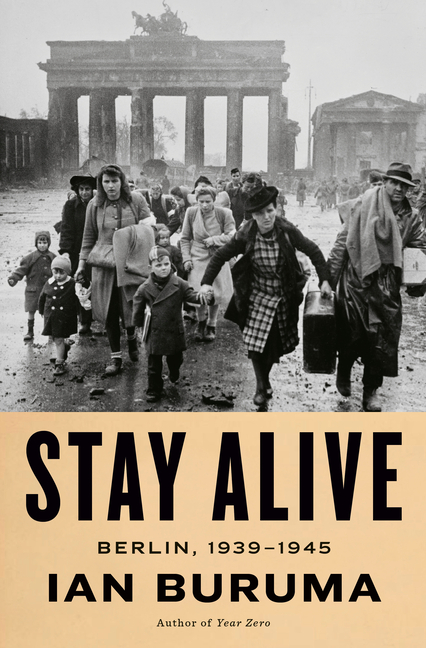
5 Book Reviews You Need to Read This Week
“An instant classic of that svelte form: no longer than a rattlesnake’s body and just as explosive.”
Our murder’s row of magnificent reviews this week includes Ron Charles on Jonathan Miles’s Eradication, Karan Mahajan on Daniyal Mueenuddin’s This Is Where the Serpent Lives, Alexandra Jacobs on Lionel Shriver’s A Better Life, Hamilton Cain on Namwali Serpell’s On Morrison, and Brian Dillon on Helle Helle’s they.
Brought to you by Book Marks, Lit Hub’s home for book reviews.
*
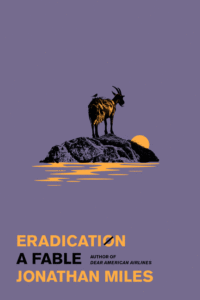
“Eradication is an instant classic of that svelte form: no longer than a rattlesnake’s body and just as explosive. The moment I finished, I was reminded of Emily Dickinson’s description of true poetry: ‘I feel physically as if the top of my head were taken off.’
…
“Adi is no Robinson Crusoe, but Miles proves himself a clever improviser with just the measly elements that this place and plot provide: an incompetent man alone with thousands of billies, nannies and kids. Almost immediately, the mechanics of staying busy and sane become a challenge. Although Adi wields the gun, his fate begins to seem more imperiled than the animals’.
…
“The great genius of Eradication is how deftly Miles reveals the dimensions of Adi’s pain. For many pages, the calming mechanics of setting up camp and exploring the terrain keep Adi and us busy. The breadcrumbs of tragedy feel almost accidentally scattered along the way, but eventually they mark a ragged trail back to a shattering moment. In a revelation both illuminating and blinding, we begin to understand why he accepted this ghastly job and why he now finds it so difficult to carry it out. Careless summary risks spoiling your experience with this story, but it’s safe to say that it’s a brilliant melding of environmental mourning and personal grief.
…
“There’s something almost too intimate about watching this shattered man try to reclaim his purpose through an act of mass murder for which he has no capacity. Give yourself a day to take in the full effect of Eradication. By the time you realize what could happen, there’s no getting off this island or escaping the reckoning at its very last page.”
–Ron Charles on Jonathan Miles’s Eradication (The Washington Post)
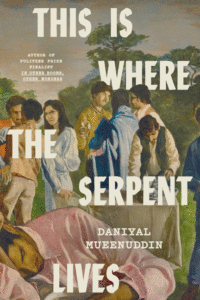
“Books about masters and servants tend to come with an inborn flaw: They are written largely by those from the moneyed class, individuals who have seen the poor from above and must now, in their writing, illuminate their lives from within. This gap can sometimes be breached through immersive journalism of the kind championed by George Orwell in Down and Out in Paris and London or Barbara Ehrenreich in Nickel and Dimed. But such instances are rare, and even harder to achieve in countries like India or Pakistan—places with large domestic-worker populations where socioeconomic differences are so harshly inscribed that one can, more often than not, immediately infer a person’s status from their mannerisms and language.
This is what makes the work of the Pakistani American writer Daniyal Mueenuddin so special and surprising. Mueenuddin is a U.S.-educated descendant of a Pakistani feudal family; he spent years running an estate in rural Punjab. In his prize-winning fiction, though, he is somehow able to enter the lives of the servant class with the same gentleness and attention that he lavishes on the ultrarich. The concerns of drivers, retainers, maids, and cooks exist alongside the romantic problems of Paris-hopping Pakistanis with cocaine addictions in his justly acclaimed debut collection, In Other Rooms, Other Wonders, from 2009. Small details shine. Reading about, say, the family life of Nawabdin, an electrician ‘who flourished on a signature ability, a technique for cheating the electric company by slowing down the revolutions of electric meters,’ one wonders: How does he know so much? How does he re-create the lives of those immured within a feudal system without reinforcing his own position through condescending, morose social realism?
…
“Mueenuddin’s novel suggests that there are moral costs to both the rich and the poor for living in a system that allows such little mobility. Wealthy characters verge on making reforms, then pull back at the slightest complication. In the process, they remain stuck within their ‘ordered purposeless’ lives, as Mueenuddin wrote in his collection. The servants, meanwhile, who are ‘more fed than paid,’ recognize that only the most brazen cheating and corruption can break them out of their squalid circumstances—the sort of corruption, of course, that has enabled the elite to thrive in a country where meaningful land reform never occurred and ancient inequalities persist. A novelist depicting both these classes must find an elegant way to integrate stories of inherited ennui and desperate striving. If Mueeneddin doesn’t entirely succeed, this is in part because the unyielding feudal order of Pakistan means that the lives of servants and masters rarely intersect in meaningful ways.”
–Karan Mahajan on Daniyal Mueenuddin’s This Is Where the Serpent Lives (The Atlantic)
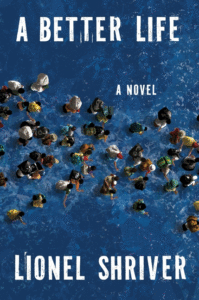
“Melania Trump has her Hamburglar hat. Lionel Shriver is sticking to the sombrero. A decade after the author clapped on foreign headwear for a controversial talk about cultural appropriation, she has written a sour and hectoring novel, A Better Life, about southern border control. It portrays migrants as canny, opportunistic invaders and their well-meaning sponsors as suckers.
Shriver’s breakout book, We Need to Talk About Kevin, which included a school massacre, remains depressingly relevant. But the trouble with much else of her ever more topical fiction is that the topics are changing so quickly. (My favorite of her novels remains the time-bending 2007 snooker story The Post-Birthday World.) GLP-1 drugs have transformed American obesity, the subject of Big Brother. And A Better Life arrives with a louder screech since two American citizens protesting immigration raids were shot to death by federal agents in Minneapolis last month.
…
“Shriver’s vision of guilty limousine (or Lyft) liberals is cousin to Portlandia, Northeast edition. Toys & Trinkets’ top-selling product is a hand-knit cashmere ‘packer’ to pad out the underwear of trans boys. Carlin takes Nico to a deconstructed Thanksgiving dinner at a ‘chichi Upper West Side restaurant’—oxymoron alert—called Autopsy. Bike lanes hum perilously with electric vehicles steered by Hispanic riders, less so ‘the pale-skinned variety keen to get their precious exercise.’
…
“A Better Life is not a heavy lift, and there is cringing amusement in seeing how far its author is willing to go to pierce leftist pieties under the protective tent of fiction, but it’s more playground taunt than brave truth.
One prepublication reviewer compared the book to Jean Raspail’s racist 1973 immigration novel The Camp of the Saints, an adjacency Shriver seemed to anticipate (‘I don’t want to sound like some paranoid French reactionary …,’ Carlin says at one point). But A Better Life, for better and worse, is not that ambitious, a handbook for no one. It’s less dystopian than dyspeptic, a faintly stale corner-store sandwich dripping with corrosively sarcastic italics. Pass the Pepto.”
–Alexandra Jacobs on Lionel Shriver’s A Better Life (The New York Times)
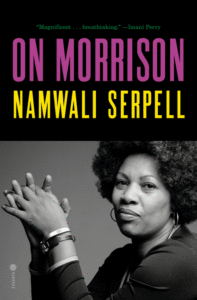
“After Toni Morrison died in 2019, amid eulogies and encomia from celebrities and cultural figures, her friend Fran Leibowitz offered a candid comment: ‘I know it sounds like a crazy thing to say, but I always thought Toni’s writing was underappreciated. Because people looked at it through the prism of her being black and being a woman. But Toni was a very experimental writer. There were a lot of things Toni did through her writing that just went unremarked upon.’ The Zambian author and critic Namwali Serpell recounts this anecdote in her graceful, exhilarating On Morrison, announcing her intention to remark upon—to excavate—the strata of the Nobel laureate’s career, a wonder to behold as it emerges like the contours of an ancient Greek temple, Serpell measuring it from all angles, an array of tools on hand.
…
“The act of writing is many things: a baptism by fire, an exorcism of demons, a waltz, a wrenching confession, a hall of mirrors, a fake-out. Perhaps Morrison summed it best: ‘Writing is to me an advanced and slow form of reading.’ Which teases the questions at the heart of On Morrison: can she be read or only misread? And what does it mean to be a reader? Serpell cites the critic Elaine Scarry’s argument that reading is a manual of ‘procedures for reproducing the deep structure of perception’; she affirms Morrison’s body of work as a profound philosophical investigation. Now, amid breakthroughs in neurobiology and the science of consciousness, does reading transcend the scope of the humanities, a cortical function encoded in the folds and neurons of our brains? AI is already impacting literacy rates—what does Serpell make of that?
For raising these questions, Serpell deserves consideration for a major prize. Mostly she deserves our gratitude and admiration: On Morrison gives us, in precise yet supple prose, a close reading in action and an exemplar of literary criticism (distinct from book criticism, a journalistic form). This book will spur you to pore overt the master’s achievements. As Serpell observes of Morrison, ‘reading was more than a happy meeting of minds; it was what she called “the dance of an open mind when it engages another equally open one,” which I’ve always read as a twining of the wills, or a commingling of them, an epiphanic union of literary and human relation—all at once.’”
–Hamilton Cain on Namwali Serpell’s On Morrison (On the Seawall)
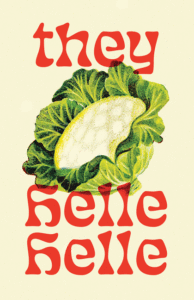
“For the teenage child of a dying parent, the knowing and not knowing occupy together a mind at once anxious and oblivious. There are hints and insinuations, disasters on the way to larger disaster, revelations you would like to run away from, but if you are lucky you inhabit, for a while, a muted universe of consolation and distraction. In her new novel, they, translated by Martin Aitken, the Danish writer Helle Helle captures with uncanny grace the relationship between an unnamed mother and her sixteen-year-old daughter following the former’s cancer diagnosis. The disease too is unnamed, and the mother’s terminal outlook never exactly confirmed—but both are clear to the reader. If she dies, warns the mother one night as they make dinner, her daughter must not use the ‘contemptible’ local undertaker who gives away free wine. ‘It’s a good thing you’re not going to die, then,’ says the girl, and turns back to the frying pan. Life carries on: they is a book overwhelmingly devoted to mundane detail, but all of it is fraught with feeling.
…
“Such attention to the rituals of family life is one way for Helle to depict the self-involved presentism of adolescence, which becomes laden with pathos the moment the daughter tries to keep it all going on her own. Outside of life with her mother, the nameless girl does normal teenage things, which Helle describes with casual intensity. She is quite brilliant on the sheer stoicism of teenage experience, the long hours waiting for something to happen, the way one is at the mercy of logistics (a broken bicycle, the wrong bus ticket) and absence of money, the endless anxiety about whether anyone is looking at you, which overwhelms any childish or adult ability to look, say, at the light or water in a fjord.
…
“In its minimal fashion, they is a kind of Künstlerroman in which the tireless delineation of minor incidents, the enumeration of meals and snacks, the concentration on gestures and sensations, and the sensibility that voices all of this really belongs to the daughter, who will one day be able to tell it in a frozen but expansive present tense. She is already a writer of sorts, careful to scribble down recipes found or invented, and keen to start speaking in longer sentences. (Nothing says sixteen like telling yourself this is how I should start speaking.) And she has a book in mind: “She envisages the novel Sidewalk Thoughts as a brick of a book based on the observations she’s made on her way to and from school over the years. It’s been a work in progress ever since fourth grade, though as yet she’s written nothing down.” She gets a pen and pad out at home, but does not know how or where to start. One answer might be: start right in the midst of the most banal parts of your extravagant and perilous existence. The opening sentence of they is: ‘Later she goes over the fields with a cauliflower.’ And a world of loss and lyricism follows.”

Book Marks
Visit Book Marks, Lit Hub's home for book reviews, at https://bookmarks.reviews/ or on social media at @bookmarksreads.