100 Notable Small Press Books of 2025
An Addition and a Correction
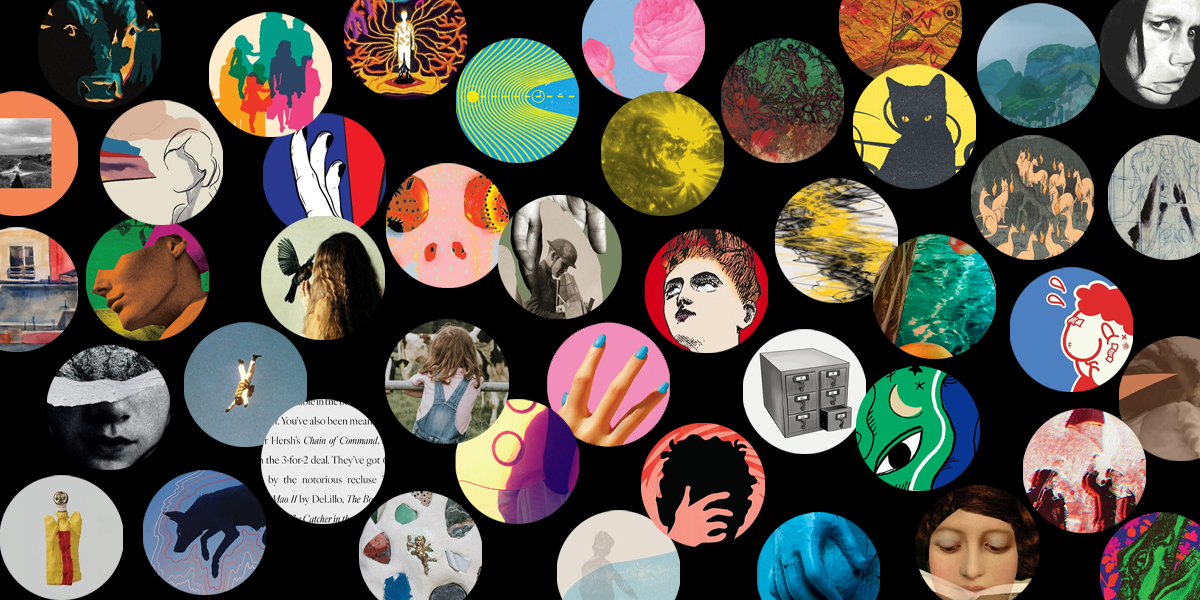
The idea of 100 Notable Small Press Books was born November 2024, after The New York Times’s annual 100 Notable Books list featured eighty-two books from the Big Five publishing houses (Penguin-Random House, Hachette, Harper Collins, Simon & Schuster, and Macmillan) and their imprints. Many of these books had the marketing might of these publishers behind them and had already made their way onto the front tables of chain bookstores and the front pages of dwindling book review sections in print and online. The Notable list then, with all its esteem and future marketing power, served largely as a retrospective of the year’s biggest literary books.
Of the eighteen independently published books on the 2024 list, nearly a third were released by Grove/Atlantic, a mid-sized indie that publishes around 100 combined frontlist and paperback books per year, or W.W. Norton, which publishes even more than that. This meant only 11% of the New York Times‘s “notable books” were released by small, independent publishers, which we are defining here as independently owned US publishers with roughly 50 or fewer titles per year, and not imprints of the Big Five publishing houses. A thriving ecosystem of books from publishers taking risks, publishing from the margins, operating on few resources, with small distribution and even smaller marketing budgets, were largely being ignored.
For 2025, The New York Times Notable list tipped slightly toward the indies, featuring 14 books published by small, independent publishers. Hurrah for those publishers and authors! In the meantime, forty reviewers across thirteen genres spent the year reading small press books. Our efforts, like small presses themselves, were low on resources but high on resourcefulness. Reviewers had to search out, request, and read at least nine books across a chosen genre from small publishers before making their recommendations. We limited ourselves to books published in December 2024 through November 2025.
Our guiding principles were “read a lot, recommend a few” and “seek out a diverse array of authors and publishers.” We were especially interested in BIPOC and LGBTQ authors and publishers, who have an even steeper climb to mainstream recognition.
Within these guidelines, our reviewers were free to read any small press books they chose, and as a result you’ll find this list dappled with well-known presses, such as Tin House and Europa Editions. But for every Graywolf, we feature presses that are not household names, like LittlePuss and Publication Studio and Kallisto Gaia.
There were times our definition of “small press” was tested. Was Tin House still a small press after it was acquired by Zando in March? Yes, we decided, since Zando was not a big five publisher. Were university presses that published well over 50 books yearly small presses? We decided they were so long as their creative offerings fell under that number. We tried to stay nimble and responsive, while sticking to the project’s principles.
There are a few important things this list is not: This is not a best of list. This is not a comprehensive survey of all small presses. This is not a juried selection of books. This is instead the product of a group of enthusiastic, committed reviewers reading hundreds of small press books from the past year and choosing the few they heartily recommend.
Ours is not the first list to highlight small press books. One of the joys of this project was finding the many other venues already doing this work. If our list interests you, find more small press books highlighted at CLMP, Foreword Reviews, and Necessary Fiction, to name a few.
Without further ado, 100 Notable Small Press Books of 2025:
*
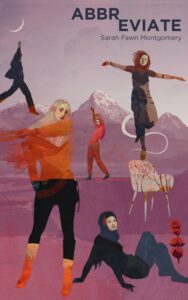
Abbreviate by Sarah Fawn Montgomery
Small Harbor Publishing
Creative Nonfiction. Abbreviate is for every girl who felt underestimated in the classroom or on the playground, for anyone who felt something like magic when playing light as a feather, stiff as a board at a sleepover. In this collection of flash essays, Montgomery has built tiny containers that somehow hold all the rage, love, fear, and longing that come with the experience of growing up as a girl. What impressed me most was how powerfully Montgomery conveys how women’s power will always expand beyond our culture’s attempts to contain, reduce, and curtail. (Ash Trebisacci)
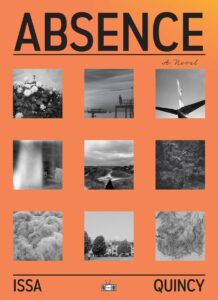
Absence by Issa Quincy
Two Dollar Radio
Literary Fiction. Issa Quincy’s debut is an inspired one: there is no denying the sheer inventiveness and detail of his architecture, one that builds upon itself, much like our own memories, thereby allowing the novel to enact the very thing that pulses at its core, less through description than with construction. Much of the book centers on the ways in which the slippery workings of memory might be wrestled down into the linguistic real. It is, probably, impossible—but that shouldn’t stop us. Nor does it stop Absence, ultimately winding its way to a debut that is, in a word, memorable. Full review here. (D.W. White)
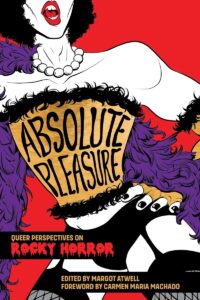
Absolute Pleasure: Queer Perspectives on Rocky Horror, ed. Margot Atwell
Feminist Press
Creative Nonfiction. Absolute Pleasure: Queer Perspectives on Rocky Horror collects essays on the cult movie from a diverse spectrum of queer authors. For many, Rocky Horror offered a lifesaving glimpse of a glittering world where people who fall outside of society’s norms might thrive. But these writers don’t shy away from the troubling aspects of the movie, its audience participation rituals, and its creator. With each piece forming one small fraction of the main attraction, the anthology presents a glorious, complex celebration of those who figure out how to be what they once might only have dreamed. (Jenny Hayes)
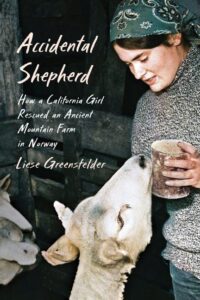
Accidental Shepherd by Liesl Greensfelder
University of Minnesota Press
Creative Nonfiction. The charm of this book is evidenced by the three people I lent it to once I’d finished reading. Two immediately ordered copies for friends, the other is seriously considering it. This is a familiar folk tale, freshly told: a young woman lands in a strange place (a sheep farm in Norway) with few skills and high expectations for a rich learning experience, only to discover that her plans are dashed and she must discover in herself the strength, the resolve, the just-plain guts to take on a job (a whole world) that seems impossible. Her loneliness is visceral, as are her periods of dismay, but her successes soar and it’s deliciously satisfying to root for her. (Debra Gwartney)
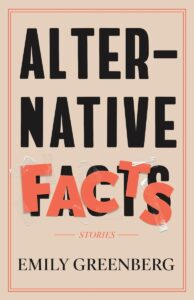
Alternative Facts by Emily Greenberg
Kallisto Gaia Press
Short Story Collection. Alternative Facts is an extraordinary collection of short stories that take risks which invariably pay off. They ask questions like: what is fact and what is fiction? What is real and what is not? Many stories feature historical figures and offer glimpses into the character’s minds in a convincing way that is also thought-provoking. The writing is reminiscent of Richard Powers or Jim Shepherd, yet it is utterly its own. All of the writing is controlled, but, as with Skinner’s Black Box, human emotion leaks out in powerful and unexpected ways. These unique stories have staying power. Full review here. (Jamey Gallager)
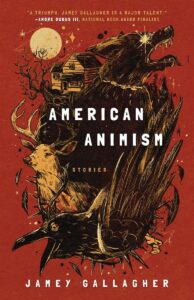
American Animism by Jamey Gallagher
Cornerstone Press
Short Story Collection. The characters in these compelling stories inhabit worlds of danger, darkness, and dreams. The titular “Kavita” is an orphan haunted by her dead father. In “Monster Girl Survives Close Call,” the narrator struggles with violence and loss. In the wonderful “A Wolf at the Door,” a woman tries to save her ne’er-do-well brother and clunker car, while, nightly, wolves come knocking. Although my heart was often pounding as I read these tense explorations of fear, grief, and loneliness, I was also touched by Gallagher’s compassion for his characters who are often beautifully rendered girls and women. (Judith Mitchell)

Anarchy in the Big Easy: A History of Revolt, Rebellion, and Resurgence by Max Cafard and Vulpes
PM Press
Graphic Nonfiction. Cafard and Vulpes have brought to life the incredible, tumultuous history of a town paradoxically known as “The Big Easy.” From its indigenous origins and maroon communities to the work of modern mutual aid organizations in the face of COVID, time seamlessly rolls from one revolutionary act to another, painting an engaging saga, one rich in progressive thought, organization, and rebellion. (Jesi Bender)
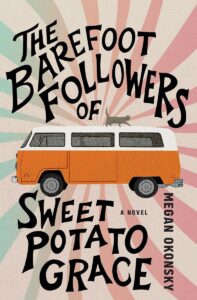
The Barefoot Followers of Sweet Potato Grace by Megan Okonsky
Lanternfish Press
Fiction. Pinky Elizabeth Swear, a closeted what-am-I-doing-with-my-life twenty-something, meets a group of barefooted strangers who are about to shake up her small southern town to frothing. This is gay Bridget Jones meets Chocolat…in Texas. Add a dash of dead-cat-grief and some communal post-pandemic scarring to the mix, and you’ve got a funny, voicey, vulnerable romp that manages to stay light and bubbly, championing queer joy even as it confronts some all too familiar societal conflicts. (Roz Ray)
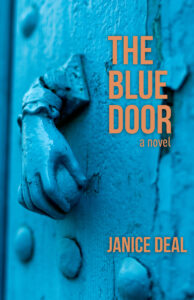
The Blue Door by Janice Deal
New Door Books
Literary Fiction. Fairy tales and other stories Flo has been told are woven through Flo’s anxious search for her Dog, while she waits for her daughter, Teddy, to come back. Teddy’s juvenile manslaughter conviction structures Flo’s life. The search for Dog mirrors her search for her place in the world. Well crafted and paced, this is a beautifully told story of loss and escape. Describing effect before cause pulls the reader in neatly. The theme of blue is used inventively, and the final reveal of the full note from Teddy is a satisfying closing of the door. (Shamana Ali)
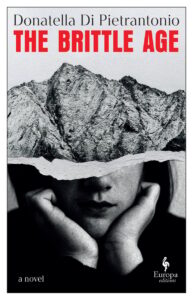
The Brittle Age by Donatalle Di Pietrantonio, tr. Ann Goldstein
Europa Editions
Literature in Translation. A powerful examination of memory, resilience, reckoning, and acceptance, The Brittle Age by Donatella Di Pietrantonio marries fact with fiction to create a novel driven by secrets that must be relinquished and failings that must be acknowledged. It’s about honesty and truth. Full review here. (Catherine Parnell)
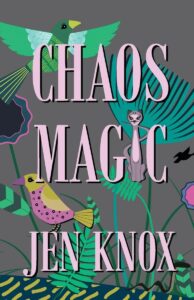
Chaos Magic by Jen Knox
Kallisto Gaia Press
Literary Fiction. In her beautifully spare-but-synthesized book Chaos Magic, Jen Knox carries readers on her bare back through a tangled feminist-forward tale of life gone wrong and love gone right. Lissa and a motley crew of wizened women take us on a wild ride of spiritual reconnoitering and grace. This newest work from a wise and generous wordsmith charms with its well-drawn characters, its playful language, and its overarching theme of harmony in the midst of universal challenge. I loved the witchy inter-generational quality of this book. (Nancy Townsley)
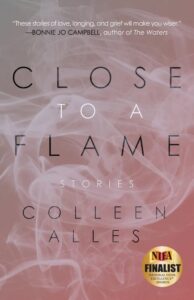
Close to a Flame: Stories by Colleen Alles
Cornerstone Press
Short Story Collection. A casual reader might say that nothing significant happens in the stories of Colleen Alles’s collection. But that perspective would imply that love, grief, friendship, survival, family, marriage, pregnancy, motherhood, disappointment, hope, and regret fall into the category of “nothing significant.” Alles shows us that “real life” can carry real drama. Her stories develop the significance of moments that seem routine but are, in fact, the moments that imbue life with deep meaning. Without sensationalism or sentimentality, Alles builds dramatic stories that consistently sneak up on a reader, tunnel into our consciousness, and stay with us. (John Sheirer)
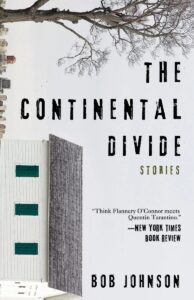
The Continental Divide: Stories by Bob Johnson
Cornerstone Press
Short Story Collection. When I finished the first story in Bob Johnson’s collection, The Continental Divide, I said “whoa!” under my breath. The same thing happened after the second story. And the third. By the fourth story, the response intensified to “holy sh*t!” Every story leaves an indelible mark, and about a quarter of them are deeply haunting and powerful. The characters move through various levels of hell, often enduring a fate of their own making. Johnson’s greatest accomplishment in this excellent collection is that he wields a rusty blade of empathy to render a wound of inevitable doom. (John Sheirer)
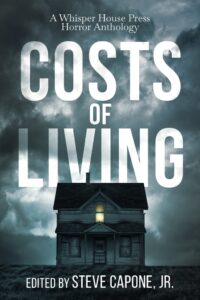
Costs of Living: A Whisper House Press Horror Anthology, ed. Steve Capone Jr.
Whisper House Press
Horror. As someone who once received a $20 fine per individual weed, I have long believed that HOA’s are more terrifying than any monster. Costs of Living is an anthology of short-form horror that is at times sinister, suspenseful, shocking, and even silly. I found myself wanting to read these stories aloud around a campfire, or, better yet, a propane fire pit table. A fine return to the scary story genre that acknowledges that just as many horrors can inhabit a McMansion in the burbs as a manor on the moor. (Rachel Rochester)
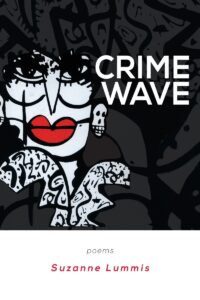
Crime Wave by Suzanne Lummis
Giant Claw
Poetry. Crime Wave begins as nostalgic rhapsody for film noir, for dangers that are a kind of quickening: of the pulse, of the primal feeling of aliveness that only a threat can invoke. But then it shatters the screen and comes at us with crimes against the person, against the republic, against our very assumption of shared humanity. Savvy, robust, and relentless, this collection holds up entertainment and spectacle next to a deeply credible chiaroscuro whisper of subtext, a “snow beneath the snow, / deep, white like the black of deep space.” (Angela Chaidez Vincent)
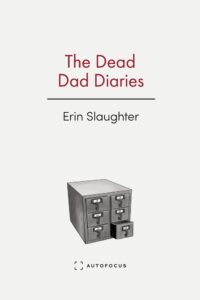
The Dead Dad Diaries by Erin Slaughter
Autofocus Books
Creative Nonfiction. The Dead Dad Diaries is an exploration of a daughter’s grief after her father was murdered by her stepmother. So, there is a sort of sensational element to this book, which is what pulls you in, but Slaughter holds you tight the entire way. She is a young woman deeply invested in reconciling who she is, who she was, and who she wants to become. This is a quick, wild read you can knock out in one or two sittings and feel like you’re just hanging with her voice. (Stephanie Austin)
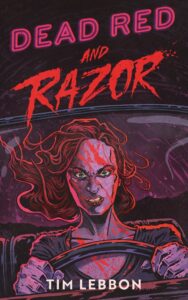
Dead Red and Razor by Tim Lebbon
Bad Hand Books
Horror. Dead Red and Razor is a fast-paced, cinematic revenge fantasy peopled with bizarro, compulsively watchable characters. By giving the reader just enough of the protagonist Dead Red’s backstory, Tim Lebbon’s compact novella transmutes a collection of violent antiheroes (drawn in their dark, delicious glory by artist HagCult) into a gang of protagonists. By the book’s surprising end, readers will find themselves rooting for Dead Red, despite the deadly havoc she wreaks. (Jenny Noyce)
Demons of Eminence by Joshua Escobar
Publication Studio
Literary Fiction. Written in vivid unapologetic tones Escobar’s novel is set against the backdrop of the early days of Covid and narrated by a travel nurse whose own lack of self-protection borders on alarming. The novel is refreshingly open about sexuality, hookup culture, modern loneliness all set in Inland Empire as the virus rages on in the background. (Rebecca Hirsch Garcia)
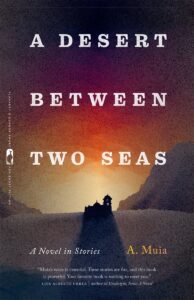
A Desert Between Two Seas by A. Muia
The University of Georgia Press
Short Story Collection. This Flannery O’Connor Award-winning collection opens in 1820 Baja California, where a mission priest bedecks a Virgin Mary statue with pearls his adopted Cohchimí son has plucked from the sea. The fate of the priest, the boy, and the last, resplendent pearl kicks off a century’s worth of interconnected stories that illuminate this fascinating setting and elemental human themes: love, jealousy, penitence, warfare, greed, fidelity, and faith. We meet a mescalera, a fierce, beautiful earless woman, and a miraculous donkey born from a mule. Muia writes incantatory prose that taps into folklore and history to deliver its surprises, joys, and wisdom. (Jenny Shank)
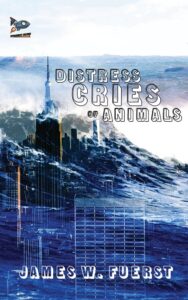
Distress Cries of Animals by James A. Fuerst
Spaceboy Books
Mystery. Lazaro Mato lives in a dystopian New York City defined by sea-level rise and compulsory social media engagement. As the Haves pursue extreme body enhancements and the Have-Nots trade away their mental health to survive, Laz follows a noir-ish mystery that will peel back the onion layers of his own life. The main draw of this book is the maximalist, dizzying-yet-undeniably-familiar Gen-Z-inspired patois. Fuerst tests the tensile strength of the English Language in the same way Anthony Burgess does in A Clockwork Orange; the result is poetic, prescient, and terrifying. (Roz Ray)
Don’t Take This the Wrong Way by Kim Magowan and Michelle Ross
Eastover Press
Short Story Collection. The first story of this collaborative collection includes two unlikable coworkers. One is so cloyingly upbeat that her emails alternate font colors to resemble rainbows while the other smokes so much that even her emails seem to stink. These characters are emblematic of the people who populate these stories. Most might benefit from a hug but elicit behind-their-back eyerolls instead. Readers are simultaneously absorbed and repulsed (but always fascinated) by their cringelarious dilemmas almost too real for fiction. The authors alternated composing sections as the stories developed, leading to the many unpredictable, powerfully off-balance moments that propel these excellent tales. (John Sheirer)
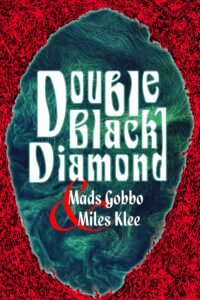
Double Black Diamond by Mads Gobbo and Miles Klee
Double Negative
Short Story Collection. Set in a world that is almost, if not quite, our own, these stories feature giant Bosch-like birds who run corporate America, teenagers who long for their crushes not to kiss them but kill them, and ponds full of the only remaining food source: radioactive shrimp (though some have their eyes on their cats). “Oh, Phil,” one character tells another, “You aren’t responsible for the times.” But this irreverent and provocative story collection reminds us that we are all Phil, very much responsible for the depravities of our times, and it delivers its unsettling message with style and wit. (Judith Mitchell)
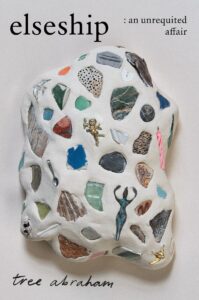
elseship: an unrequited affair by Tree Abraham
Soft Skull
Creative Nonfiction. Poetic and propulsive, elseship: an unrequited affair is a genre-defying mixed media exploration of one-sided queer love that consumes and beguiles its narrator. I inhaled this book in a wave of feeling, as Abraham explores the contours of a pivotal relationship/obsession with a combination of rigor and earnestness. By combining wide-ranging references with her own clear, curious voice, Abraham has made visible the inner workings of both her individual elseship and that of every queer person who has had that one more-than friendship they couldn’t let go. (Ash Trebisacci)
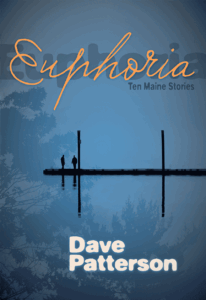
Euphoria: Ten Maine Stories by Dave Patterson
Littoral Books
Short Story Collection. Dave Patterson’s Euphoria: Ten Maine Stories inspires favorable comparisons to Raymond Carver and Sherwood Anderson. But Patterson brings more subtle hope than Carver, and Euphoria, Maine, may be even harder to escape than Winesburg, Ohio. Euphoria’s residents range from wealthy newcomers in a hillside mansion to long-suffering natives huddled in a valley trailer. Patterson deftly creates vivid pain, loss, and weakness for everyone, but he also brings courage, humor, and light. Patterson never misses here. Every story is powerfully memorable. The best one (“Midnight Burn”) is so affirming that it defies a dry eye even to the most jaded reader. (John Sheirer)
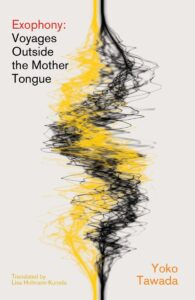
Exophony: Voyages Outside the Mother Tongue by Yoko Tawada, tr. Lisa Hofmann-Kuroda
New Directions
Creative Nonfiction. In Exophony: Voyages Outside the Mother Tongue, Yoko Tawada (a Japanese native who now lives in Germany) explores the experience of living and writing in languages learned later in life. Tawada shows what an act of creativity this can be: proficiency is less important than uncovering “some latent potential existing in the language.” Personal anecdotes are mixed with broader observations on language’s intersections with status, colonization, and migration. A second section explores how words in the German and Japanese languages reveal aspects of their cultures and how language shapes not just the way we speak, but how we think. (Jenny Hayes)
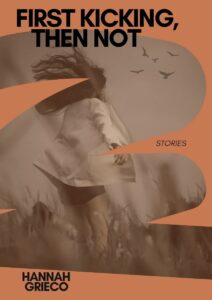
First Kicking, Then Not by Hannah Grieco
Stanchion Books
Short Story Collection. Mostly flash fiction, the stories in First Kicking, Then Not by Hannah Grieco, all do what flash fiction does best: offer short, strange, resonant takes on the world. In this case, a suburban world filled with women who bristle against constraints. There are very odd stories, like the one in which a mother escapes with The Rock, as well as starkly realistic stories, but they all are effective at de-familiarizing, often with humor. Each one of the stories is like a little amuse bouche, but they add up to something that is powerful, drawing us into deeper darker waters. (Jamey Gallagher)
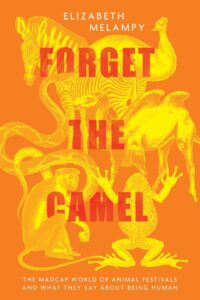
Forget the Camel by Elizabeth MeLampy
Apollo Publishers
Creative Nonfiction. “Have humans no shame?” asks lawyer and animal advocate MeLampy. Together with her wife and in the footsteps of her anthropologist grandmother, MeLampy attends a gory rattlesnake roundup, a ludicrous camel race, a supposedly harmless jumping frog jubilee, and other bizarre events. In lucid and haunted prose, she sharply questions our animal narratives, making us feel what we’re too embarrassed to admit. Read when you want to meet your fellow creatures and your own animal self. (Claire Polders)

Frontier: A Memoir & A Ghost Story by Erica Stern
Barrelhouse Books
Hybrid: Memoir/Fiction. Erica Stern’s birth memoir, Frontier, contains both a researched history of birth’s industrialization and a second, fictional birth story set in the Wild West that asks: What if there had been no doctors? The genius of Frontier is the way Stern masterfully wields genre tropes—ghost story, gothic, horror, western—to go where a more straightforward birth memoir couldn’t, revealing how a traumatic birth is like a haunting and that the same hubris behind the project of the American West is what the fathers of modern gynecology brought to the sublime wilderness of birth. (Shayne Terry)
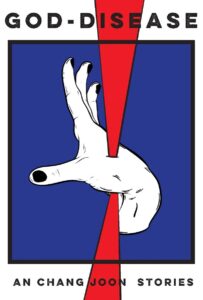
God-Disease by an chang joon
Sarabande
Literary Fiction. “I was ten when a god entered my mother.” Sun-bin, the protagonist of the title story, brings us into this distinctive short story collection; she preserves beetle specimens, seeks her mother’s mudang, meditates on emptiness as Korea’s national identity. As a collection, God-Disease coheres through motifs of rot, mold, mental illness. Through the grotesque (a bug dissection, an abdominal abscess, a pit of dead pigs, a puppy mill), author an chang joon creates a delicately creepy atmosphere in which his characters must confront their sense of guilt and loss of identity. When you want to be unsettled, rearranged, try God-Disease. (Danielle Zaccagnino)
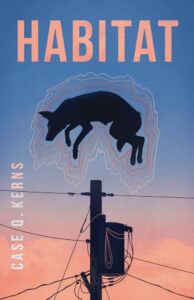
Habitat by Case Q. Kerns
Black Lawrence Press
Literary Fiction. In this delectably creepy novel-in-stories, set slightly in the future, late-stage capitalism plays itself out in the worst possible ways. Corporations are fully in charge with an enormous divide between the haves and have-nots. Education requires a corporate sponsorship (read: indenture), and those who aren’t sponsored have only their bodies to sell, for sex or parts. But since the sex industry is controlled by corporations, freelance tricks are considered “an act of conspiracy against the state.” The punishment is extreme, as decorative transplants are all the rage. Full review here. (Joeann Hart)
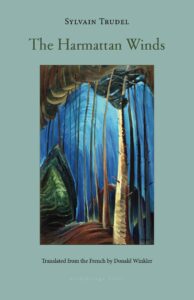
The Harmattan Winds by Sylvain Trudel, tr. Donald Winkler
Archipelago
Literature in Translation. In this dreamlike novel, two adopted kids—Hugues, discovered in a nearby marsh, and Habéké, a refugee from famine-stricken Ethiopia—form an intense friendship to defend against the racism of their neighbors and the dullness of their town in 1970s Québec. Together they dream up a fantastical homeland they dub Ityopia, patching it together from fragments of their wide, if idiosyncratic, reading of real and made-up texts. Narrated by Hugues, whose limitless slippery grasp of idiom leaves both author and translator plenty of scope for linguistic hijinks, their adventures take them ever further afield, into situations of ever greater risk. (Diane Josefowicz)
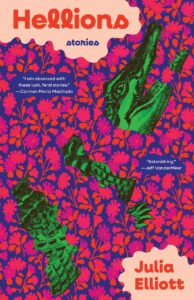
Hellions: Stories by Julia Elliot
Tin House
Short Story Collection. Hellions poses burning questions about humanity’s place in nature and connection to ancient rituals amid the environmental degradation and tech distractions of the modern world. But it’s way more fun than that makes it sound. In these funny, feminist tales, laced with magic, rule breakers raid hoards, soar to uncanny trampoline heights, visit prehistory through magic dating apps, and follow primal urges. Elliott writes sensory, sensual prose turned up to 11, with descriptions that practically explode. These rich and surprising stories, grounded in archetypal imagery, linger after reading the way a spent firework shimmers in the night sky before fading. (Jenny Shank)
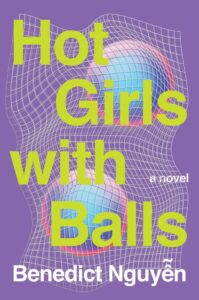
Hot Girls with Balls by Benedict Nguyen
Catapult
Romance. Hot Girls with Balls is a romance in the most satirical sense of the word. No tropes or predetermined ending. This is a book for the cynical romance reader, for someone who wants to see characters’ obsessive and jealous tendencies and how we tear each other apart online for likes. With its addictive social media lingo, you won’t be able to stop reading about the relationship between Six and Green, two trans women playing in the competitive and ruthless male volleyball league. Through a revolving POV, you’ll piece together the intricacies of the trans community in competitive sports. (Robin Van Impe)
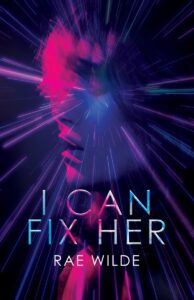
I Can Fix Her by Rae Wilde
Clash Books
Horror. How to depict obsession? Rae Wilde’s strange, racy novel I Can Fix Her invites readers to explore love’s dark side. The protagonist, Johnny, is in love with Alice. As they rekindle their relationship, the novel’s world is knocked askew, its rules increasingly unclear. As Wilde slyly reveals that Johnny’s love may tilt toward obsession, the couple’s world becomes bizarre and threatening. The book’s unseen narrator offers Johnny an escape from the torturous emotional push-and-pull of this relationship. But Johnny’s response (and the revelation of the narrator’s identity) provokes a compelling quandary: does being in love call off our better angels? (Jenny Noyce)
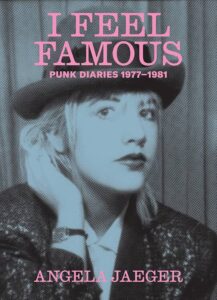
I Feel Famous by Angela Jaeger
Hat & Beard Press
Creative Nonfiction. I Feel Famous presents Angela Jaeger’s teenage diary, written in the late ‘70s in New York City (and occasionally London) as the punk scene was exploding. It’s full of crushes, yearnings, complaints, and detailed accounts of nights spent running around with friends—ones with names like Iggy, Lux, Sid, and Lydia. Jaeger documented her adventures in words, drawings, and saved mementos, resulting in a mind-blowing artifact. Occasional commentary and footnotes help connect dots for the reader, but the book mostly lets Jaeger’s wildly enthusiastic youthful ruminations speak, quite charmingly, for themselves. (Jenny Hayes)
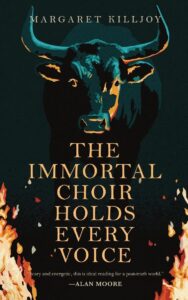
The Immortal Choir Holds Every Voice by Margaret Killjoy
Strangers in a Tangled Wilderness
Science Fiction/Fantasy. In this third book of the Danielle Cain series, punk anarchists are on the run in a near future where dark magic is real. Stranded in Idaho at Samhain, hoping that a ritual is throwing the feds off their trail, they tell stories about their dead friends, their activism, and the very weird magics they’ve run across. After the last story, the “probably not a cow” they’ve heard all night shows up as a massive bull. Danielle says, “I couldn’t tell if I was meeting the eyes of a god or a beast, or if there was any difference.” Gut-truth reading for our times. (Nancy Jane Moore)
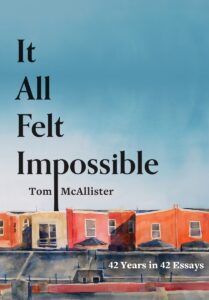
It All Felt Impossible: 42 Years in 42 Essays by Tom McAllister
Rose Metal Press
Creative Nonfiction. From start to finish, Tom McAllister’s new book of essays—one for each year of his life up to now—vibrates like a master cellist’s bow across the strings of his favorite instrument. Reminiscent of David Sedaris’ dry insight and wit, full of hard-won lessons and unwavering verve, the author draws few conclusions but leaves the reader with wheelbarrow loads of material to consider, encouraging self-examination and appreciation for the ways humans walk through the world. It All Felt Impossible is a triumph of joy over sorrow and peace over pain. (Nancy Townsley)
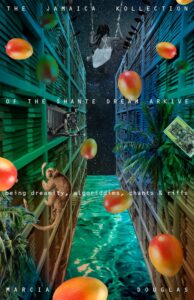
The Jamaica Kollection of the Shante Dream Arkive by Marcia Douglas
New Directions
Literary Fiction. In 1936, Zora Neale Hurston lost her camera in Jamaica. This detail, intriguing yet mundane, propels The Jamaica Kollection of the Shante Dream Arkive, Marcia Douglas’s lyrical novel, the follow-up to her extraordinary The Marvelous Equations of the Dread (2016). With these books, Douglas has undertaken a “speculative ancestral project,” threading stories of the island into a tapestry of “Caribbean migration and fugitivity.” Paramount is Douglas’s concern for storytelling—its difficulty, its power, and its long hold on her attention: “Years later and I stand in wonda of how our stories layer and where and how we come to find them.” Full review here. (Diane Josefowicz)
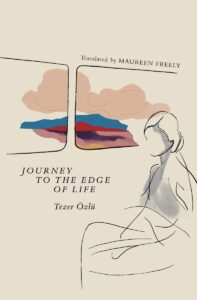
Journey to the Edge of Life by Tezer Özlü, tr. Maureen Freely
Transit Books
Literature in Translation. At once a road novel, a meditation on literary influence, and a mash note to off-the-beaten-path Europe, this book—published originally in Turkish in 1982—was among my favorites this year. Özlü’s unnamed narrator, a young Turkish woman writer not dissimilar from herself, embarks on a literary pilgrimage across Europe, visiting the sacred haunts of her literary heroes: Franz Kafka, Italo Svevo, and above all, the poet Cesare Pavese. Of these, she feels the deepest kinship with Pavese; haunted by his suicide, she paces the streets of Turin, his hometown, finding everywhere intimations of the melancholy to which he finally succumbed. (Diane Josefowicz)
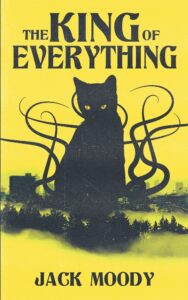
The King of Everything by Jack Moody
Timber Ghost Press
Horror. Finally, an apocalypse novel for the misanthropes. The world order has been catastrophically upended, leaving the last man on Earth to wander through a landscape that is undeniably, horrifyingly, more peaceful and harmonious in humanity’s wake. Moody juxtaposes gorgeous meditations on nature and collapse with urgent, terrifying confrontations with the detritus of civilization. The result is a novel that’s truly unique: simultaneously a salve for the soul and a heart-pumping thriller. (Rachel Rochester)

A Labor of Hate (Smitten in the Mitten Book 2) by Brianne Ritchie Cordova
Conquest Publishing
Romance. This sweet rom/com reads like a standalone. Lex and Colt are undercover FBI agents who have to be pretend-married—and she has to be pretend-pregnant—to get close to their drug-dealer targets in a Lamaze class. However, they hate each other, and their ongoing prank war does not hide their underlying attraction from anyone but themselves. The thriller sub-plot is twisty and satisfying, and the characters are entertaining and full of heart. There is a happily-ever-after, but the question is when (and how) they get over themselves so they can fall in love without blowing their cover. (Maren Anderson)
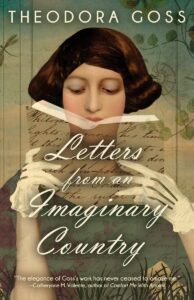
Letters From an Imaginary Country by Theodora Goss
Tachyon Publications
Science Fiction/Fantasy. Imaginary countries, begun as school projects, come to life. Vampires aren’t evil and the women they supposedly stalked no victims. An immigrant meets the version of herself who never left home. “Beautiful boys” are, as we have always suspected, space aliens. In these lyrical stories from the past fifteen years, ones that turn Victorian fantasy on its head and make you wonder what the present is actually about, Theodora Goss demonstrates the truth of the explanation she provides at the end of “To Budapest, with Love.” “Someone asks why I write … [s]tories that could be classified as science fiction. I answer, because I’m a realist.” (Nancy Jane Moore)
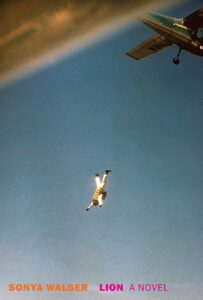
Lion by Sonya Walger
New York Review Books
Literary Fiction. Sonya Walger’s Lion, like (in varying ways) Rachel Cusk’s Parade or Lucy Ives’ Life is Everywhere, is a consummate novel of our current “moment,” staring into and then smashing to pieces, as it does, the ornate mirror constructed out of that cracked and cloudy glass, criticism. Autofiction is a term of near-unbelievable controversy; this novel succeeds because its author is a skilled, daring, and intuitive artist. Walger commands narrational mode in inventive and surprising ways, she writes with a style and verve that excites and propels, she commands the speed and tempo of her narrative with precision and grace. Full review here. (D.W. White)

Living in Your Light by Abdellah Taïa, tr. Emma Ramadan
Seven Stories Press
Literature in Translation. This novel is French-Moroccan gay writer Abdellah Taïa’s unforgettable portrait of an indomitable woman modeled on his mother. Visiting a souk in the 1950s, seventeen-year-old Malika falls in love with Allal, the bisexual son of a relative. Her father leaves them to get acquainted over donuts. “I eat the donuts very slowly,” she remembers. “I take my time. I let you look at me all you want. […] I am strong. That is what you will love about me. A strong woman who engulfs you entirely.” Malika shines in Ramadan’s gorgeous translation, while the narrative opens a window onto mid-century Morocco. Full review here. (Diane Josefowicz)
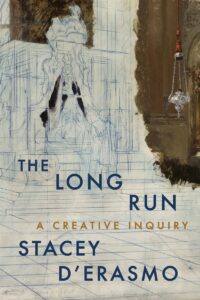
The Long Run: A Creative Inquiry by Stacey D’Erasmo
Graywolf
Creative Nonfiction. The aim of this book-length essay is to discover how artists in various fields continue to work creatively in the “long run” of their lives. While each experience is unique, the ultimate “answer” seems fairly obvious to those who have lived a life: will, openness to the new, ongoing self-inquiry, integrity, which here means not selling out for fame or status. The real pleasure of the book, though, is the almost childlike sense of wonder with which the author roots around in the lives of these fascinating others. (Diane Simmons)
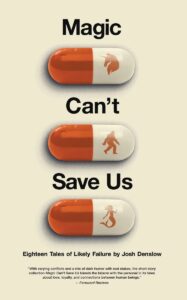
Magic Can’t Save Us by Josh Denslow
University of New Orleans Press
Short Story Collection. Eighteen tales of weirdness that feel familiar. The stories are quick, easy reads of assorted mythological creatures, light-hearted ghouls, and the just plain odd. These unusual characters become metaphors for unattainable, healthy relationships, but also, weirdly, therapists, tests, and even romantic rivals. There is a fresh originality to the humor, an irreverence that mocks the usual relationship goals, while acknowledging inevitable failure. This book is a curious interplay of real and surreal, and thoroughly enjoyable. (Shamana Ali)

Making Amends by Nisi Shawl
Aqueduct Press
Science Fiction/Fantasy. Not quite a novel, but more than a collection, these nine connected stories about a prison planet and the people banished to it for unspecified crimes give us the truth of right now. The AI overseeing the trip to the planet can upload people into digital format and download them into bodies that belie who they are, but it cannot keep them from creating a new very human reality. As Nisi Shawl writes in the opening story/essay, the purpose of these stories is to help us “break out of that oppressive categorization”—of people who could be classified as criminals—“and into the deliciously wild unknown.” Full review here. (Nancy Jane Moore)
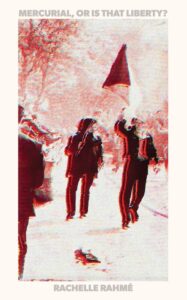
Mercurial, or Is That Liberty? by Rachelle Rahme
Fonograf Editions
Poetry. Rachelle Rahme is a Lebanese-American balanced between dualities, which is a theme of this collection: this and that are both true. This is a delightful return to the “obscure” poetics of 20 years ago in a way that feels fresh and refreshing. The poetry is brazenly lustful, playful, thoughtful, challenging, and celebratory of life itself. As Rahme writes: “life is the transition between showtimes.” (Sabne Raznik)
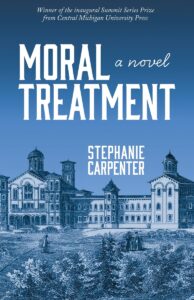
Moral Treatment by Stephanie Carpenter
Central Michigan University Press, Summit Series Prize
Literary Fiction. On what basis can a young girl’s behavior be judged insane? Can her unsuitable conduct be reasoned away by moral treatment? Stephanie Carpenter’s absorbing novel deftly depicts the state of mental institutions at a point of inflection in the late 1800s when new approaches are on the horizon and old ways are being questioned. The head doctor, old and near the end of his career, must reevaluate his vision. A young teenager rages in the confines of the hospital and wavers between plotting her freedom and resigning herself to a limited existence. Carpenter beautifully orchestrates the dual points of view and their opposing perceptions and desires in constructing a fully realized narrative. (Donna Miscolta)
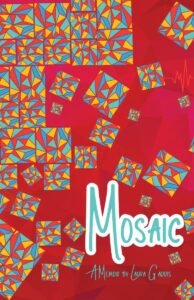
Mosaic by Laura Gaddis
Unsolicited Press
Creative Nonfiction. The heart of Mosaic is a grappling with infertility and loss, but it also shines a light on a broader part of the human condition, which is that sometimes, in our one wild and precious life, we cannot and will not get (or get back) what we want the most. We will often have to find ways to move forward, no matter how painful and terrible it may feel. Laura Gaddis offers a hand to help us out. (Stephanie Austin)
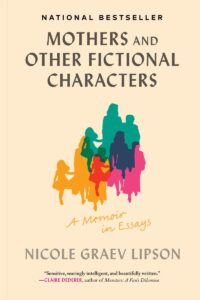
Mothers and Other Fictional Characters by Nicole Graev Lipson
Chronicle Prism
Creative Nonfiction. I once read a line by a famous writer about what defines meaningful literature: how the narrative grapples with ambivalence. In Nicole Graev Lipson’s Mothers and Other Fictional Characters, she seems to take this literary koan to heart. Lipson bores into the truest of human conditions: the ways in which we are walking contradictions, how we want/don’t want in the same moment, how we say one thing and mean another, and so on. This recognition, which rings with authenticity through every essay, pits no characters against another, but instead allows the “I” on the page an opportunity for self-excavation and dose of self-reckoning that feels scarily familiar, not just to mothers but to every human who’s muddled through a relationship. (Debra Gwartney)
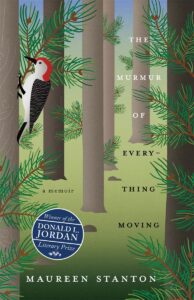
The Murmur of Everything Moving by Maureen Stanton
Columbus State University Press
Creative Nonfiction. This vivid, melancholy memoir begins when Stanton, a recent college graduate, falls for Steve, a 27-year-old, separated father of three. Steve’s terminal cancer diagnosis shortly after they meet intensifies their intimacy. Stanton throws herself into caring for him, confronting the end of life at an age when most people are still reckoning with how to begin to live. Stanton writes with authenticity and candor, sharing insights she and Steve should have had a lifetime to learn: “‘Water is taught by thirst,’ Emily Dickinson wrote. Compassion is taught by grief, I learned. Our hearts are made tender by pain.” (Jenny Shank)
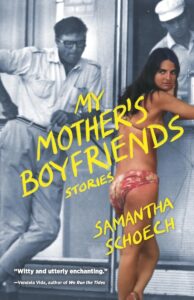
My Mother’s Boyfriends by Samantha Schoech
7.13 Books
Short Story Collection. True to the title, many of Schoech’s stories focus on the intimacy of mother-daughter relationships. In a deeply felt debut Schoech mines the intimate for drama focusing on imperfect mothers, disillusioned daughters, and the bad boyfriends that haunt their lives. Sharp and well-plotted these stories reveal Schoech at home with her craft. (Rebecca Hirsch Garcia)
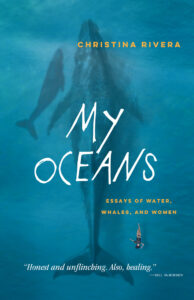
My Oceans: Essays of Water, Whales, and Women by Christina Rivera
Curbstone Books
Creative Nonfiction. In gorgeous, insistent, and expansive prose, Christina Rivera’s essay collection uses motherhood as a lens through which to understand the call to nurture and protect all life, from land to ocean. Rivera writes about climate science with such heart, beautifully capturing the full range of joy to despair that comes with inhabiting a body that relates so deeply to other bodies in a world on fire. Part meditation, part call-to-action, Rivera’s work is exquisitely moving; I would plunge into the depths any day with her as my guide. (Ash Trebisacci)
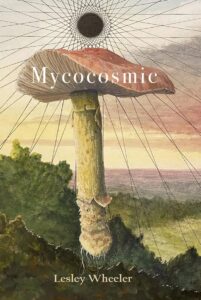
Mycocosmic by Lesley Wheeler
Tupelo Press
Poetry. Mycocosmic wins a blue ribbon for most elegant handling of death to the underworld of mushrooms, the living beings that turn death into sustenance, and into new life again. From a palpable position of accumulated grief thinly masked by scientific curiosity, these poems sift through the earth in search of connection, closure, variants of peace, and the emotional alchemical knowledge of turning loss into its next inevitable iteration. “Maybe what seemed haunted / is involuted,” Wheeler conjectures. Maybe there is a thread that connects us, the living and the dead. The lost and the afraid. Maybe “we could be mycelial.” (Angela Chaidez Vincent)
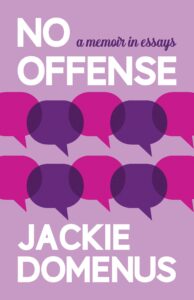
No Offense by Jackie Domenus
ELJ Editions
Creative Nonfiction. Jackie Domenus takes readers on an anti-apology tour in No Offense, their memoir in essays about living as a queer person in today’s America. From the minefield moments of planning a gay wedding to convincing a car dealership salesman that they’re the one buying a vehicle (and not their father), No Offense takes a microscope and a skewer to the many awkward assumptions and outright hostilities endured by LGBTQ+ folks. ‘Identities evolve,’ Domenus writes and makes that case honestly, convincingly, humorously, and with their whole heart. (Nancy Townsley)
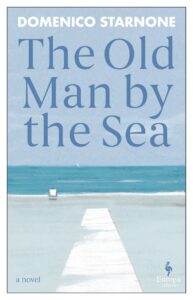
The Old Man by the Sea by Domenico Starnone, tr. Oonagh Stransky
Europa Editions
Literature in Translation. Domenico Starnone’s slim novel, The Old Man by the Sea, translated from the Italian by Oonagh Stransky, follows the protagonist’s pursuit of something elusive, seen out of the corner of his eye, gold and shimmering, and filled with promise. Eighty-something years old, Nicola takes up residence by the sea and chronicles his observations in his ever-present notebook, for he can no more stop writing than stop breathing. Caught up in the intrigues of small-town life south of Rome, Nicola ponders and conflates the memory of his unconventional mother and her influence and the town’s cabalistic doings, only to strike out on his own in a dangerous adventure. (Catherine Parnell)
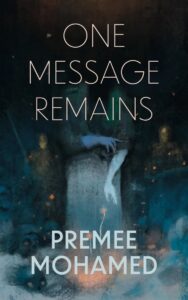
One Message Remains by Premee Mohamed
Psychopomp
Science Fiction/Fantasy. One Message Remains explores the impact of colonialism on those who are colonized, and the complicity of those involved in colonization. Through four connected stories set in the same world—about soldiers exhuming the souls of dead enemies, a family that builds bone gallows to execute prisoners, a soldier that deserts his unit, and a deadly ancient ceremony—readers are introduced to the cruelties and demands of an empire and the people trapped within it. Dark, eerie and thought-provoking, these stories show the importance of even the smallest acts of resistance. (Helena Ramsaroop)
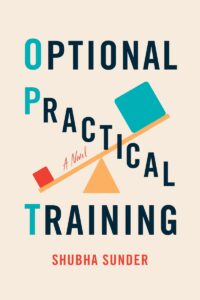
Optional Practical Training by Shubha Sunder
Graywolf
Literary Fiction. We meet the protagonist as she begins her first year of OPT, a U.S. employer-sponsored work-experience visa for recent international student grads. An aspiring writer, Pavitra observes the contrasts between her own experiences and those of others in the private school where she teaches science and math. Drawn to her difference, neighbors and coworkers treat Pavitra as a confessor and sounding board for their own preoccupations. Optional Practical Training underscores the precarity of Pavitra’s provisional status while creating an intimate, finely-detailed collage of voices and perspectives on difference, privilege, and belonging in contemporary America. (Anne Rasmussen)
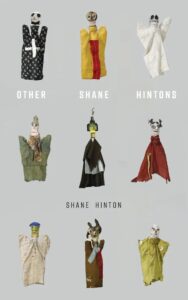
Other Shane Hintons by Shane Hinton
Burrow Press
Literary Fiction. A playmate’s deadbeat father who may or may not be Satan. An abusive stepdad reincarnated as an undercooked turkey carcass. The ghost of a pet goat who gives surprisingly sage advice. The grotesque and memorable characters that inhabit Shane Hinton’s darkly funny new collection feel perfectly suited to the otherworldly Florida they call home. In each story we meet a new Shane Hinton, sometimes a wide-eyed child absorbing the evangelical teachings of menacing grownups, sometimes a grownup Shane seeking communion in unexpected places. Hinton’s finely-crafted stories disarm the reader while turning the very concept of autofiction on its head. (Anne Rasmussen)
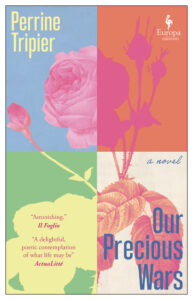
Our Precious Wars by Perrine Tripier, tr. Alison Anderson
Europa Editions
Literature in Translation. In Our Precious Wars, Perrine Tripier writes powerfully about family and memory, and the contentious space they inhabit in our hearts and albums. This debut novel, translated from the French by Alison Anderson, ponders the enigmas of the time-tested self in our shrinking world as Isadora, in hospice, chronicles life at a beloved family home season by season—only to find her perspective differs radically from that of her family. (Catherine Parnell)
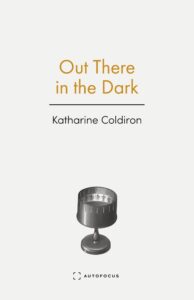
Out There in the Dark by Katharine Coldiron
Autofocus Books
Creative Nonfiction. You might want to bring a highlighter to Katharine Coldiron’s Out There in The Dark—the essays in this quirky collection are rife with fresh, clever insights about everything from wrenching dental procedures to the best way to fold a shirt. Coldiron’s dry wit and intellect transform ordinary moments into observations about culture, art, women’s bodies, and, mostly, the layered meaning of film. The way she bobs and weaves between her personal experience and a movie (Mildred Pierce, The Sound of Music, Last Tango in Paris, Singing in the Rain, etc) seems untenable at times, but then Coldiron moves in with one deft connection after another. (Debra Gwartney)

Paletas by Aaron Bowersock
Li’l Libros
Board Book. From BIPOC publisher Li’l Libros comes Paletas, a bilingual board book that celebrates the iconic Mexican frozen treat. Hot pink, bright yellow, and sky blue, on a black background, portray the flavors, from fresa (strawberry) to chicle (bubblegum), while giving the vibe of a chalkboard menu. Fun touches include a visit from some hopeful ants and a bottle of chili-lime seasoning adding zing. This unique high-contrast book is as bright and sweet as its namesake and should be just as popular. (Kit Ward-Crixell)

Paradoxx by Kate Colby
Essay Press
Creative Nonfiction. Poets, man. Even when not writing poetry, they get words to do incredible things, revealing new dimensions of language and meaning. Kate Colby does this dazzlingly in Paradoxx, a ruminative chronicle of 100 days in 2020, whose title hints at some of her obsessions: words that can mean their own opposites, how writing about one’s life can be a form of self-doxxing. Whether pondering the philosophies of poets or recounting a childhood dream about the Hamburglar, Colby struggles with the impossibility of completely representing one’s self in words while finding it equally impossible not to keep trying. (Jenny Hayes)
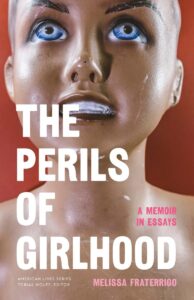
The Perils of Girlhood by Melissa Fraterrigo
University of Nebraska Press
Creative Nonfiction. Melissa Fraterrigo’s book might be re-titled The Perils of Living in the Patriarchy. Not one bit whiny, certainly never self-pitying, these essays are more like cautionary tales. How do we raise girls into women when they (we) must constantly dodge the salacious swim coach, steel for the entitled date who feels free to rip off a dress, or learn to deal with a father whose temper flares out of nowhere? Fraterrigo begins her excavations with her own early years of training-to-be-a-woman and continues through parenting her own twin daughters, with plenty of challenges on both ends. There’s such a tone of genuine vulnerability in this book—it makes you want to give young Melissa, as well as adult Melissa, a big warm hug. (Debra Gwartney)
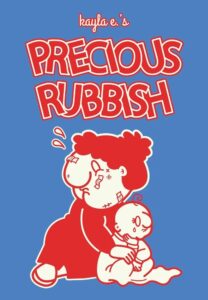
Precious Rubbish by Kayla E.
Fantagraphics
Graphic novel. Precious Rubbish is a beautiful but devastating debut from artist Kayla E., who uses bright, nostalgic graphics to juxtapose the harsh realities of its protagonist. An exploration of a young girl’s turbulent childhood, this book reads like an open wound, something beatific, at once holy and haunting. Full review here. (Jesi Bender)
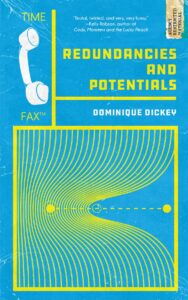
Redundancies and Potentials by Dominique Dickey
Neon Hemlock Press
Science Fiction/Fantasy. Two sisters are given an important mission: stop an insurrection from happening decades in the future to save the world. Clever and captivating, Redundancies and Potentials uses time travel and clones to question authority and systems of power. This is a defiant story about sisterhood and justice, and the characters must reconcile with their role in upholding the status quo and decide whether their world is worth saving. (Helena Ramsaroop)
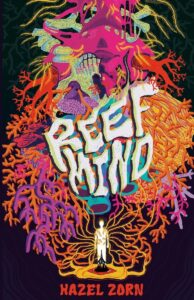
Reef Mind by Hazel Zorn
Tenebrous Press
Horror. Hazel Zorn’s quick, compact novel ends at the precipice of a dark, uncharted future. Earth’s coral is growing out of control, wreaking havoc on the natural world and dethroning humans from their position at the top of the evolutionary pyramid. Worse: the coral is sentient. Narrated in first person by multiple characters, Zorn’s story explores, in compelling and gory detail, the chaos wrought by climate catastrophe. Reef Mind suggests that everything, from institutions to infrastructure to relationships, can be destroyed. But consciousness remains. Zorn leaves the reader with a compelling final question: “What are we supposed to do with this?” (Jenny Noyce)
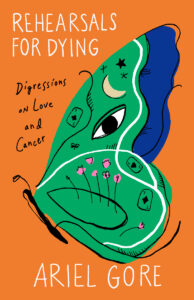
Rehearsals for Dying by Ariel Gore
Feminist Press
Creative Nonfiction. In Rehearsals For Dying: Digressions On Love And Cancer, Ariel Gore drags us by our hair through a minefield of diagnosis, reckoning, and hoped-for recovery. By turns hilariously funny and heartbreakingly stark, her relentless, gorgeous prose gives readers the inside scoop on an age-old healthcare story, inviting them to become an essential part of a shared journey with her wife’s breast cancer, caregiving, the medical-complex maze, and fate. Fortunately and remarkably, there is no escape from this book’s contemporary relevance and its surprising oh-shit honesty. (Nancy Townsley)
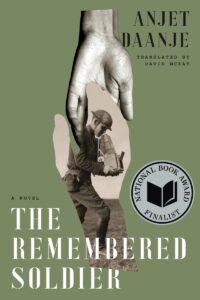
The Remembered Soldier by Anjet Daanje, tr. David McKay
New Vessel Press
Literature in Translation. An absorbing, suspenseful, closely-observed portrayal of a WWI soldier with no memory of his past or identity, who is taken from an asylum, years after the war’s end, by a woman who recognizes him as her husband. Translated from Dutch, the sentences are beautiful and detailed, perfectly balanced; the momentum holds the reader’s attention even when, in big event terms, not much is happening. Character insights creep up on you and ring absolutely true, while the tightly focused narrative opens broader questions of memory, authenticity, and intimacy. A long novel, definitely worth the ride. (Amalia Gladhart)
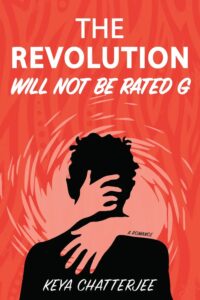
The Revolution Will Not Be Rated G by Keya Chatterjee
Green Writers Press
Romance. If you longingly look back to the 2010s dystopian craze, you’ll be glad to know it’s back. For those who were teenagers during this time and are looking for something more adult with an emphasis on romance, this is the perfect read. A queer Romeo-and-Juliet tale set in 2042 Upland and Lowland US, where segregation is back, and hurricane Eamon is set to destroy all with the help of the richest. As Aria and Neil find themselves in the eye of the storm—literally—you’ll find yourself captivated by both the romance and the many plot twists this book holds. (Robin Van Impe)
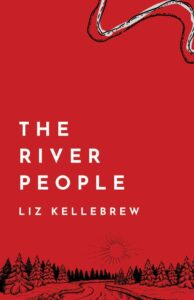
The River People by Liz Kellebrew
Unsolicited Press
Literary Fiction. In this hybrid novel, Kellebrew imagines the lives of her westward-migrating ancestors, including her third great grandmother, Marilla, who came west on the Oregon Trail. Like a chef who deconstructs a dish at a Michelin-starred restaurant, Kellebrew takes the ingredients that go into the making of a traditional historical novel—stories, journal excerpts, historical texts—and reassembles them into something poetic, dramatic, and surprising at every turn. (Alison Green)
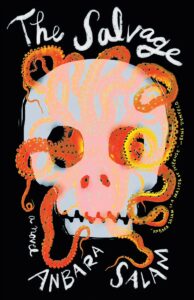
The Salvage by Anbara Salam
Tin House
Mystery. In The Salvage, Anbara Salam creates a slow-burn gothic thriller following marine archeologist Marta Khoury, who is haunted by her past, and also, perhaps, haunted by something else entirely. As Marta searches for missing artifacts from a shipwreck on a remote, icy Scottish island in 1962, she must contend with suspicious locals, a record-setting blizzard, and the knock-on effects of the Cuban Missile Crisis. This book will appeal to any reader looking for an intricately detailed, deftly researched historical novel with a hint of intrigue, a hint of romance, and plenty of shadowy corners where anything might be lurking. (Roz Ray)
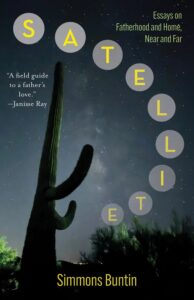
Satellite: Essays of Fatherhood and Home, Near and Far by Simmons Buntin
Terra Firma Books, Trinity University Press
Creative Nonfiction. The landscape of this fine essay collection is the American Southwest, where Simmons Buntin is a keen observer. When his ten-year old daughter catches a whiptail lizard and is determined to keep it, Buntin relents, believing the inter-species relationship will help “establish her sense of connection to the natural world.” And there-in lies the beauty of the book, as he continues to invite his children into a community of all living things. Full review here. (Joeann Hart)
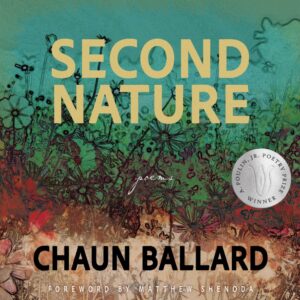
Second Nature by Chaun Ballard
BOA Editions
Poetry. This is a collection rich with experimentation, like a poem about Michael Brown built from passages of a mechanical engineering textbook, for example. Ballard likes long titles, sometimes uses multiple titles for the same poem, at other times uses the same title for multiple poems. His many references to nature, Black history, basketball, and R&B build a biography of his family—his grandmother’s work as a field hand, his parent’s divorce, his father’s dementia. Second Nature is an ode to survival, evoking pride of accomplishment for simply being alive. (John Loonam)
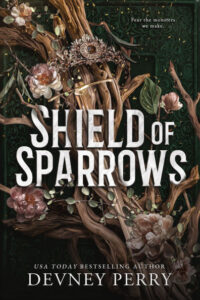
Shield of Sparrows by Devney Perry
Entangled: Red Tower Books
Romance. In this medieval romantasy, Odessa, an unfavored princess is married off to a prince and taken across the sea where she is entangled in a world of mystery and magic and monsters. I liked Odessa because of her pluck and determination to do the right thing. Also, she tames a baby tiger monster. The Guardian is a medieval superhero whom Odessa hates with a passion…at first. The slow burn enemies-to-lovers plot is spicy, satisfying, and has some surprising twists. This is the first in the series, and I am awaiting book two, partly because I need more baby tiger monster. (Maren Anderson)
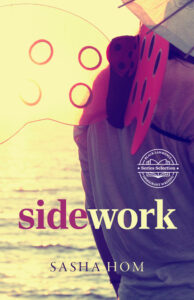
Sidework by Sasha Hom
Black Lawrence Press Immigrant Writing Series
Literary Fiction. It’s the morning shift at a California wine-country restaurant. The waitress pours coffee, serves up eggs, and delivers laconic, deadpan observations of the daily trudge and schlep; the nitpicks from lurking owners about the endless sidework of restocking condiments and straws; and the customers who try to guess the waitress’s ethnicity. She’s a Korean American adoptee, and a married mother of four. The entire family, displaced following a wildfire, lives out of their van parked near a megastore, not for convenient consumption of goods but for the bathroom. Sasha Hom’s wry, crackling intelligence marks every page of this novella that deftly punches and asks how does one survive fire, homelessness, and an economy that favors the rich and hastens climate change. (Donna Miscolta)
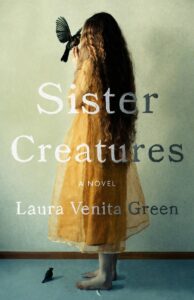
Sister Creatures by Laura Venita Green
The Unnamed Press
Literary Fiction. Sister Creatures is a coming-of-age novel turned on its side. It follows the lives of several young women raised in rural Louisiana, including a wild and somewhat horrifying mythical creature, Thea, who connects these women’s stories long after they leave Louisiana. The characters all struggle with the idea of being the “correct” version of a woman. Every detail of this stunningly written novel is delivered with precision and purpose, following a unique narrative structure. Like the women in the novel, the book’s perfection exists in its refusal to conform to traditional structures and in its unpredictability. (Tonja Matney Reynolds)
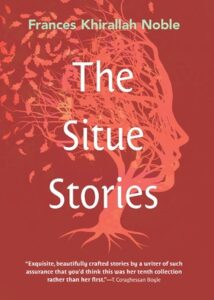
The Situe Stories by Frances Kirahllah Noble
Syracuse University Press
Short Story Collection. This debut collection offers 11 stories, each of which features a “Situe” or Arab grandmother. From early-twentieth century Syria to modern-day Los Angeles and many points in between, Noble’s stories honor her characters while relating their adventures and foibles with clear, unsentimental prose. It’s a pleasure to read stories that feature complex older women and examine their histories with such care. The Situe Stories leave the reader with a sense of fullness. Though many pieces are not directly linked, the opening and closing stories introduce and return to the same family in a poignant coda. (Anne Rasmussen)
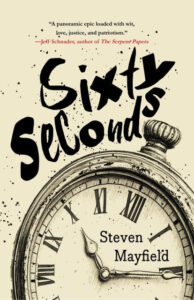
Sixty Seconds by Steven Mayfield
Regal House
Literary Fiction. This kaleidoscopic novel takes place in the course of one minute as the lives of nine characters intersect the day before the end of the Second World War in Europe. A girl sings the national anthem on the radio as a soldier listens from a base in Germany, a refugee gives birth, a death camp survivor translates for a commandant in his jail cell. Reading the novel is like watching a highwire act: Can Mayfield do it? Can a novel span only sixty seconds? Yes and yes. (Alison Green)
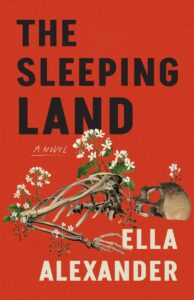
The Sleeping Land by Ella Alexander
The Unnamed Press
Literary Fiction. The Sleeping Land is about three archaeology graduate students vying for the attention and admiration of their charismatic advisor as they travel to Siberia shortly after the collapse of the Soviet Union. The novel is delivered in a controlled third-person rotating point of view, each student given a voice. The story quickly morphs into a fever dream as the students struggle with unrelenting sunlight and expeditions in pitch-black caves and begin to see their adviser as a devious figure with far too much power. This story is controlled and deliberate in its delivery yet also wildly imagined and unhinged. (Tonja Matney Reynolds)
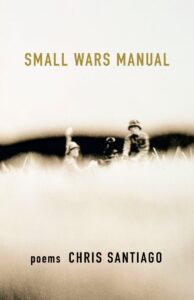
Small Wars Manual by Chris Santiago
Milkweed Editions
Poetry. The entire book is a single (long) poem—a meditation on the history of American wars, from the invasion of the Philippines through Afghanistan and the January 6 insurrection. Much of the collection is made up of “erasure” poems from the United States Marines Corps Small Wars Manual, leaving only the words and letters desired, often saving only syllables and individual letters to form words that tumble down the page, as if revealing secret messages. (John Loonam)
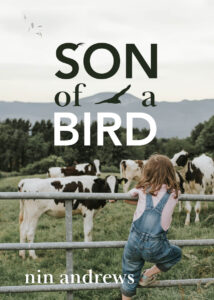
Son of a Bird by Nin Andrews
Etruscan Press
Poetry. Nin Andrews’ memoir in prose poems chronicles her feral childhood among farm animals, miscellaneous siblings, and eccentric parents. As the “last daughter of a gay man and an autistic woman,” she is raised mostly by a Black nanny (the memorable Miss Mary, who nicknames her “Son of a Bird”), along with cranky farmhands and the land itself. I was swept up in the poet’s exhilaration, confusion, and awe as she digs up and lyrically configures her past. Heart-breaking, revelatory, and devastatingly funny, these are brilliant vignettes. (Charles Goodrich)

The Sound of Exile: European Jewish Refugees in Shanghai 1938-1941 by Tang Yating
Syracuse University Press
Nonfiction. After Kristallnacht, Jews fleeing Germany found Shanghai to be the only major city not requiring a visa, and the thousands who made their way there settled in international enclaves. During the war years, these refugees established a remarkably vibrant musical community, with performances of everything from classical to jazz, show tunes to operetta, the latter a nostalgic favorite. Synagogues were built, newspapers established and—in this telling—music was constant. The early history of this remarkable movement is fascinating. (Diane Simmons)
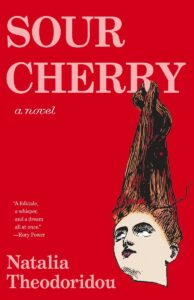
Sour Cherry by Natalia Theodoridou
Tin House
Literary Fiction. Mythical, cyclical, and Gothic, this retelling of Bluebeard, an exploration of domestic violence, is as soft and lyrical as it is devastating. Natalia Theodoridou’s writing is both enchanting and jolting in turns. We root for both the living and the dead, wanting to hear their truth. If you’re a fan of Helen Oyeyemi’s Gingerbread, you’ll savor Sour Cherry. (Danielle Zaccagnino)
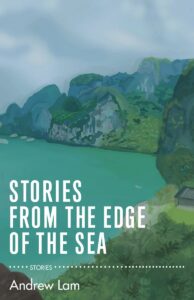
Stories from the Edge of the Sea by Andrew Lam
Red Hen Press
Short Story Collection. Each of these fourteen stories pulses with a rhythm—jazzy or contemplative, staccato or silky, intricate or straightforward—that matches the histories, desires, even the geographies of the characters. From the allegory-like first story to the eulogy that is the final one, the collection beautifully and often painfully renders the multiplicity of the Vietnam diaspora experience. One story, “A Good Broth Takes its Time,” is an exquisite summary of that diaspora, with phở and its patiently rendered aroma permeating the far reaches of the world. All the stories haunt with longing, loss, and the ghosts that follow war, displacement, and family separation. (Donna Miscolta)
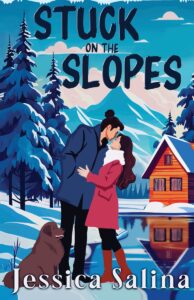
Stuck on the Slopes by Jessica Salina
Conquest Publishing
Romance. Stuck on the Slopes makes you want to cozy up in a ski lodge by a crackling fire. This is for lovers of classic romance novels with lovable side characters—including an adorable service dog. As someone with chronic pain, the disability representation made me feel seen—though I am no former Olympian like the male main character. Told from the dual POVs of Juniper, a former snowboarder, and Rachel, a marketeer looking to escape her toxic job, you get to see this pair fall in love while evading paparazzi and blowing new life into a Colorado ski lodge. (Robin Van Impe)
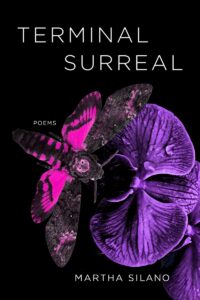
Terminal Surreal by Martha Silano
Acre Books
Poetry. Exuberant stoicism. Sober slapstick. I’ve always loved poetry that holds up the indubitable crap of reality then blasts it with factual miraculousness. In these world-embracing poems, Martha Silano turns her terminal ALS diagnosis into a vessel for cooking fear and bitterness into irony and delight, because “lighting a Bunsen burner is the first step in creating an altar.” Her energetic, jam-packed lines buzz with the music and beauty of mushrooms and hummingbirds, paddleboards and Xanax. Her incredible register ranges from goofy to grim, from scientific to awestruck. We’re all terminal, right? But Silano’s poems seize the moments. (Charles Goodrich)
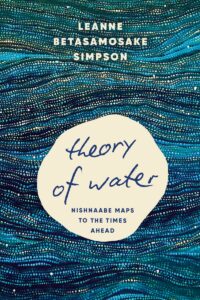
Theory of Water: Nishnaabe Maps to the Times Ahead by Leanne Betasamosake Simpson
Haymarket Books
Creative Nonfiction. “What does it mean to listen to water? What does it mean to believe in water?” Leanne Betasamosake Simpson expertly leads readers through the practice of living with water as our guide, casting waterways and their shores as places where we can track our changing selves and our relationships to each other and the world. The experience of reading this book is like floating down a river, as science, storytelling, and Indigenous knowledge carry you along on a journey that, by the end, will leave you feeling more grounded, connected, and prepared to face what lies before us. (Ash Trebisacci)
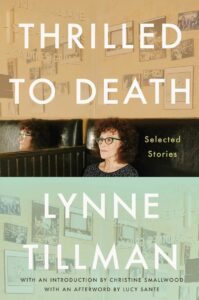
Thrilled to Death: Selected Stories by Lynne Tillman
Soft Skull
Short Story Collection. It speaks to the importance of our small presses that a writer of Lynne Tillman’s stature might not have found a home for her collected short works without them. Those unfamiliar with Tillman’s four decade career might start with “Playing Hurt,” a story about marriage that emphasizes interiority, then dive into the language-driven “Future Prosthetic @?” to get a sense of how she refuses to limit her approach to narrative. Tillman says she’s presented these stories in a kind of thematic order, but jumping around is a fine way to enjoy—and constantly be surprised by—Tillman’s range. (Judith Mitchell)
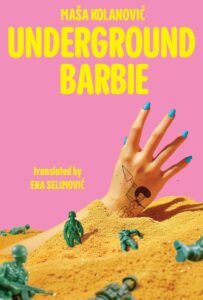
Underground Barbie by Masa Kolanovic, tr. Ena Selimovic
Sandorf Passage
Literature in Translation. An entertaining, haunting read, first published in Croatian, complemented by delightful small illustrations. Readers may miss some historical/political allusions to the 1990s Balkan wars, but any child who has navigated the world of desirable and not-quite-as-desirable toys can understand the narrator and her friends with their Barbies and Barbie knock-offs. The kids devise homes, hotels, vehicles, and weather effects out of shoes, fabric scraps, and broken appliances, playing on the sewer vent or, more often, in the basement air raid shelter. The war is a backdrop, a constraint on imaginative play. That stark contrast is one of the most lingering aspects of the book. (Amalia Gladhart)
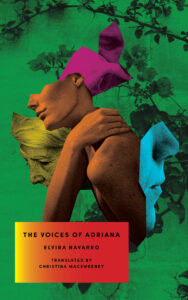
The Voices of Adriana by Elvira Navarro, tr. Christina MacSweeney
Two Lines Press
Literature in Translation. The reach and rustle of voice is inescapable, but the question is, how many voices temper personal and world views as the multitudes warp-speed across cyberspace and throughout real and imagined life? And what of the battling voices in our heads? These questions and the question of sanity permeate The Voices of Adriana by Elvira Navarro, translated from the Spanish by Christina MacSweeney. Divided into three sections, each with mini-chapters or narratives, the novel wends its way through Adriana’s life as she struggles with Lady Death and Lady Manipulator—the death, that of her mother and maternal grandmother, and the manipulator? Who’s to say. Full review here. (Catherine Parnell)
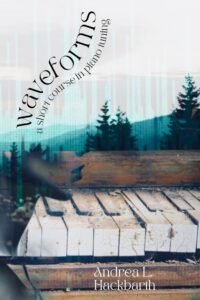
waveforms: a short course in piano tuning by Andrea L. Hackbarth
Small Harbor Publishing
Poetry. Hackbarth tunes pianos as her day job and writes poetry as her passion. Here, they marry and have a child. This collection feels quite metapoetic in nature, using music as a metaphor for poetry. But is music a metaphor for poetry, or are music and poetry the exact same thing, using different instruments, Hackbarth’s piano standing in for language? The boundaries blur, beautifully and divinely. Favorite line: “Spend hours in service of each singular note, then see if they hold.” (Sabne Raznik)
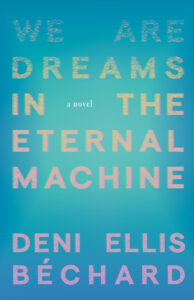
We Are Dreams in the Eternal Machine by Deni Ellis Béchard
Milkweed Editions
Literary Fiction. Melding politics and technology, Béchard illustrates an all too plausible techno-future in which distressed humans are at the mercy of a benevolent, yet indifferent, AI whose sole purpose is to keep them unharmed. In solid prose Béchard slowly weaves together this family saga, told from multiple points of view. Heartbreakingly honest the novel is surprising, yet each revelation feels both earned and necessary. (Rebecca Hirsch Garcia)
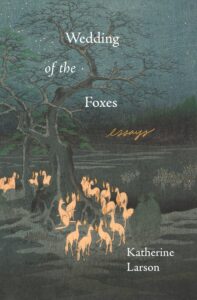
Wedding of the Foxes by Katherine Larson
Milkweed Editions
Creative Nonfiction. “How are we supposed to live alongside the backdrop of all that’s awash in flame?” asks poet and ecologist Larson. She imagines non-binary alternatives to despair in nineteen gorgeous lyrical essays that are powerfully intimate and tenderly universal. We can observe leafy sea dragons, invite ghosts, converse with Japanese authors, apologize to foxes, open doors to monster dreams, crush blossoms into perfume, play collaborative surrealist games, and bleed into one another. Read in dappled light to get lost and reconnect with the natural world. (Claire Polders)
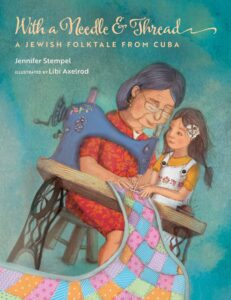
With A Needle and Thread by Jennifer Stemple and Libi Axelrod
Kalaniot Press
Children’s Literature. This book is a loving, sun-drenched visit to the Jewish community of Santiago de Cuba. The story is a version of the folktale “the clever tailor,” in which the hero repeatedly turns a worn-out item of clothing into something else. Here. turning dress into prayer shawl into chuppah mirrors the cycles of life in this close-knit community. Warm pastel illustrations depict celebrations as babies are born and children grow up. An afterword gives background (and a recipe). (Kit Ward-Crixell)
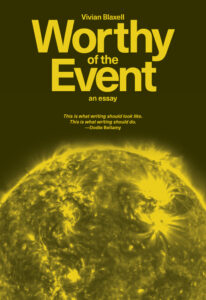
Worthy of the Event: An Essay by Vivian Blaxell
LittlePuss Press
Creative Nonfiction. In Worthy of the Event: An Essay, Vivian Blaxell—a 70-something trans woman from Australia—mixes observations and thoughts (what a mind!) with stories from her past (what a life!). “My vagina disappoints me,” the book begins. “There, I’ve said it now.” The next section considers Spinoza’s concept of God. From there, Blaxell careens across decades, continents, and subjects: disasters, human and animal consciousness, the general concept of becoming, love and sex in many permutations, bodily emissions, art, beauty, life, death. Sublime, shocking, witty, tender, crude, candid, and always smart as hell, this book is one wild and glorious ride. (Jenny Hayes)
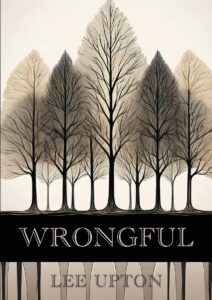
Wrongful by Lee Upton
Sagging Meniscus
Mystery. In this smart romp, celebrated mystery novelist Mira Wallacz disappears from a conference held in her honor—but when she’s found dead, no one is especially broken up about it. On the contrary: Schadenfreude abounds. A decade later, one of Wallacz’s fans, Geneva Finch, decides to re-open this cold case. With the help of an apparently sympathetic former priest, Finch revisits the scene of the crime, excavates her own memories, and interviews former conference attendees, all of whom had at least the means and the motive, if not the opportunity, to bump off Mira—and by the end, I was rooting for them too. (Diane Josefowicz)
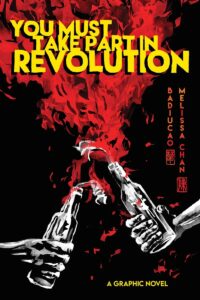
You Must Take Part in Revolution by Badiucao and Melissa Chan
Street Noise Books
Graphic Novel. In the near or alternate future(s), China and the U.S. are at war and people are taking to the street to protest authoritarian regimes. Timely and astute, fans of Children of Men or Blade Runner will enjoy this dark, visually stunning book that asks how we can stay human in inhumane times. Full review here. (Jesi Bender)
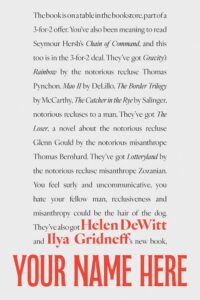
Your Name Here by Helen DeWitt and Ilya Gridneff
Dalkey Archive Press
Literary Fiction. Your Name Here is, by a large margin, the most intensely metafictional novel I’ve ever encountered: it not only compares itself explicitly to Calvino’s If on a winter’s night a traveler, but wonders whether such a self-referential structure has any purpose. DeWitt and her fictional analogue, reclusive author Rachel Zozanian, plan to write a book with tabloid journalist Ilya Gridneff, but can’t quite seem to settle on what, exactly, it should be. The ever-present and repeatedly remarked-upon financial pressures of having to produce the book cause its value as a product to overtake its actual content. The reader witnesses, in real time, capital overtaking art. (Jacob Moore)
*
Contributors:
Shamana Ali is a voracious reader, having been entranced by the music of words since childhood. She has worked in the publishing industry, edited professionally, is a published and performing poet, and enjoys reviewing books with a view to encouraging authors to be their best.
Maren Bradley Anderson is a novelist, playwright, editor, and alpaca rancher in Oregon. She is the President of Willamette Writers, Editor Emerita of the Timberline Review, and playwright and Executive Producer for the Apple Box Children’s Theater. Her book Toil and Trouble, a look at witches and the patriarchy in literature, will be out in September 2027.
Stephanie Austin is the author of Something I Might Say, a cnf chapbook about grief out from WTAW Press. Her debut novel, Burn, will be out on 2.3.26 with Cowboy Jamboree Press.
Jesi Bender is an artist from Upstate New York. She is the author of the novel Child of Light (Whiskey Tit 2025), the chapbook Dangerous Women (dancing girl press 2022), the play Kinderkrankenhaus (Sagging Meniscus 2021), and the novel The Book of the Last Word (Whiskey Tit 2019).
Jamey Gallagher’s writing has been published in more than seventy venues, including Punk Noir Magazine, Poverty House, Shotgun Honey, Pembroke Magazine, Bull Fiction, and LIT Magazine. His debut collection, American Animism, is out from Cornerstone Press.
Rebecca Hirsch Garcia is an O. Henry award winning author whose debut short story collection, The Girl Who Cried Diamonds, was shortlisted for the Danuta Gleed Award. Her debut novel, Other Evolutions is out now. You can find her on Instagram, bluesky and elsewhere @rhirschgarcia.
Amalia Gladhart’s short fiction has appeared in The Common, Leon Literary Review, Portland Review, Cordella Magazine, and other journals. Published translations include “Jaguars’ Tomb” (by Angélica Gorodischer) and “The Potbellied Virgin” (by Alicia Yánez Cossío).
Charles Goodrich is the author of four volumes of poetry—Watering the Rhubarb; A Scripture of Crows; Going to Seed: Dispatches from the Garden; and Insects of South Corvallis—a book of narrative essays, The Practice of Home, and a novel Weave Me a Crooked Basket. He writes and gardens near the confluence of the Marys and Willamette Rivers in the traditional homeland of the Ampinefu Band of the Kalapuya in Corvallis, Oregon.
Allison Green is the author of a novel, Half-Moon Scar (St. Martin’s), a memoir, The Ghosts Who Travel with Me (Ooligan), and essays that have appeared in publications such as The Gettysburg Review, Calyx, and Utne Reader. She lives in Portland OR.
Debra Gwartney is the author of two book-length memoirs and many essays. Her work was included in Best American Essays in 2022 and 2023, and she’s been awarded two Pushcart Prizes. She lives in Western Oregon.
JoeAnn Hart, the author of Arroyo Circle, writes about the pervasive and widespread effects of the climate crisis on the natural world and the human psyche. She is a regular reviewer of environmental fiction and non-fiction for EcoLit, as well as Terrain.org.
Jenny Hayes lives in Seattle and has an MFA from the low-residency program at U.C. Riverside – Palm Desert. Her writing has appeared in the Coachella Review, Seattle Review of Books, Had, Spartan, Litro NY, and other interesting places.
Diane Josefowicz is books editor at Necessary Fiction and the author of Ready, Set, Oh: A Novel and L’Air du Temps (1985). A story collection, Guardians & Saints, is coming in October 2025 from Cornerstone Press.
Kalen Landow is the sales director for Microcosm Publishing and an evangelist for all things books and reading. She lives in Denver, CO.
John P. Loonam has been publishing fiction, reviews and essays for over 30 years. His novel, Music the World Makes will be published by Frayed Edge Press in 2025 and his short story collection The Price of their Toys is forthcoming from Cornerstone Press.
Donna Miscolta is the author of three books of fiction, with a fourth forthcoming from Regal House Publishinh in 2026. Her stories, essays, and book reviews have appeared in various literary journals, including Hypertext Magazine, Museum of Americana, Split Lip Magazine, Los Angeles Review, and Cha.
Judith Claire Mitchell is a novelist (The Last Day of the War, A Reunion of Ghosts) and essayist whose most recent work appears in The Sun, The New England Review, The Sewanee Review, and similar literary journals. She lives in Madison, Wisconsin, where she is a professor emerita in the University of Wisconsin-Madison’s Creative Writing Program.
Jacob Weber Moore is a writer, professor, and amateur curler. He lives in Austin, Texas with his wife and their two cats, Critter and Squirt.
Nancy Jane Moore is the author of the novels The Weave and For the Good of the Realm, both from Aqueduct Press, as well as several other books, lots of short fiction, and occasional poems.
Jenny Noyce is a novelist, editor, public education advocate, and parent. She can be found at word-clinic.com.
Catherine Parnell is the author of the memoir The Kingdom of His Will, and her fiction, nonfiction, and reviews have appeared in numerous literary journals.
Claire Polders is the author of 6 books and 100+ essays, stories, and book reviews. Read more about her latest project Woman of the Hour: Fifty Tales of Longing and Rebellion (Vine Leaves Press, 2025) at www.clairepolders.com or sign up for her Substack newsletter Wander, Wonder, Write to follow her on her journeys.
Helena Ramsaroop (she/her) is an Indo-Guyanese Canadian freelance editor and bioarchaeologist. She is an assistant editor for Augur Society, and her reviews and essays have appeared in Strange Horizons, the Ancillary Review of Books, Canthius, and The Fiddlehead.
Anne Rasmussen‘s writing appears in Blood Orange Review, Little Fiction, Barren Magazine, and The Southeast Review, among others. She is an Assistant Fiction Editor for Split Lip Magazine and Pithead Chapel and previously coordinated Late Night Library’s Late Night Interview column.
Roz Ray is a Seattle writer whose work has appeared in Hobart, Tahoma Literary Review, Easy Street Magazine, and others. When she’s not writing, she’s building houses, teaching writing grade school through grad school, and loitering around the boxing gym.
Sabne Raznik is a disabled poet and an award-winning artist with eight books who founded and co-edits AvantAppal(achia) ezine. She writes book reviews on her blog “A Muted Blue Star Muses”.
Tonja Matney Reynolds writes woman-centric literary and historical fiction, both short stories and novels. Her stories have appeared in various journals, including Streetlight Magazine, Still: The Journal, and 100 Word Story. Her craft article is featured in the July/August 2025 print issue of Writer’s Digest.
Rachel Rochester, PhD, is a writer, professor, and lover of all things that go bump in the night. She is also the proud proprietor of the original Little Ghost Library, which can be enjoyed on TikTok (@littleghostlibrary) and Instagram (@littleghostlibrarypdx).
Catherine Rockwood has reviewed books and occasionally TV for Strange Horizons since 2015. She/they is also a poet, and a member of the editorial staff of Reckoning Magazine.
Jenny Shank‘s story collection, Mixed Company, won the George Garrett Fiction Prize and the Colorado Book Award, and her novel, The Ringer, won the High Plains Book Award. A member of the NBCC, her stories, essays, articles and reviews have appeared in The Atlantic, The Washington Post, McSweeney’s, the Los Angeles Times and The Guardian.
John Sheirer edits Freshwater Literary Journal. His recent books include Stumbling Through Adulthood: Linked Stories; For Now: One Hundred 100-Word Stories; and First-Person American: Personal Essays About Our Nation’s Public Issues.
Diane Simmons is the author of numerous prize-winning works of fiction and non-fiction. Her latest novel, Dreams Like Thunder, is out from Red Hen Press.
Shayne Terry‘s work has appeared in CRAFT, Electric Literature, TriQuarterly, Vol. 1 Brooklyn, and elsewhere and has been supported by workshops and residencies at Bread Loaf, CRIT, Tin House, and the Vermont Studio Center. Her first book is Leave: A Postpartum Account (Autofocus Books, 2025).
Nancy Townsley‘s debut novel, Sunshine Girl (Heliotrope Press, April 2025), was inspired by her long career as a newspaper journalist. Her work has appeared in Newsweek, Hippocampus, The Big Smoke, Nailed magazine, the Timberline Review, Elephant Journal, Mountain Bluebird Magazine, and several anthologies.
Ash Trebisacci (they, them) is a writer and education abroad professional based in the Boston area. Their creative nonfiction has recently appeared in Cleaver Magazine, Off Assignment, and Hunger Mountain, among other places.
Robin Van Impe is a queer Belgian writer with an MFA Creative Writing from Emerson College, where she served as the Fiction Editor for Redivider. She was a 2024 finalist of the Arts & Letters Unclassifiable Contest and was shortlisted for the Smokelong Grand Micro Contest.
Angela Chaidez Vincent is a poet and fiction writer with a background of livelihoods in engineering, mathematics, and computer science. She’s the author of Arena Glow (Tourane Poetry Press, 2024) and lives in Fresno, CA with her wife, Lisa.
Kit Ward-Crixell (she/her) is a children’s librarian who is always up for doing an experiment, building a robot or reading in a blanket fort. She believes that reading makes us free.
D. W. White serves as Founding Editor of L’Esprit Literary Review, Prose Editor for West Trade Review, and Publisher of Indirect Books, a new independent press launched this year. A Ph.D. in the Program for Writers at the University of Illinois–Chicago, his writing appears in 3:AM, The Florida Review, Anotherr Chicago Magazine, Necessary Fiction, and Chicago Review of Books, among others.
Danielle Zaccagnino is a teacher, writer, new mother, and editor of Fast Flesh Literary Journal. Her first book, Suppose Muscle, Suppose Night, Suppose This In August, is available from Mason Jar Press.
Miriam Gershow
Miriam Gershow is the award-winning author of three books, Closer, Survival Tips: Stories, and The Local News. She is exceedingly proud that two of those are small press books. She is the recipient of a Fiction Fellowship from the Wisconsin Institute for Creative Writing, an Oregon Literary Fellowship, and is a two-time finalist for the Oregon Book Award.