







A Syllabus for Attention: Megan Mayhew on John Elder’s Reading Life
What will I read? What ideas will I live beside? What deserves rereading? What will I memorize? What will I allow to alter me?
Twenty years ago, when I first came to the Bread Loaf Writers’ Conference in Vermont, we let our cell phones die. There was no signal. We were moving off-radar.
I remember the feeling of immersion almost physically. There was nowhere else I was supposed to be. It still feels that way, refreshingly so, but I miss the completeness of the off-radar version.
Around the same time, I was completing an MFA at Bennington College. In the evenings, faculty and visiting writers gave readings. During winter residencies they read and lectured in VAPA, a stark and somehow architecturally intimate space. Finding a seat felt tense. I cannot emphasize enough the way it felt like something was truly at stake during these evening readings, and how intensely I listened. I felt astounded by how much art, life, and knowledge moved within these writers.
In those days as a student, I wanted to publish good books. But I also wanted to possess what produces a good book—a good mind.
I know it’s dangerous to romanticize the past, particularly one’s own coming of age. People were still profoundly distracted twenty years ago. We wasted time. We avoided difficult books. And I have spent much of my adult life teaching young writers whose seriousness and curiosity humble me.
But I have also watched—felt—my own attention change. I read less. My attention feels fractal, constantly radiating in other directions. Increasingly, it feels as if we live in proximity to enormous stores of knowledge without necessarily carrying that knowledge inside ourselves.
My friend Rebecca Schinsky and I were talking recently about Zora Neale Hurston, and then Steinbeck, and somehow the conversation turned to what we began calling “analog minds”: minds formed before our current condition of constant access and interruption. Minds nourished differently. Minds that had spent decades absorbing books, music, scripture, poems, names of plants, stories told by other people, and had made idiosyncratic and imitable art from them.
When I think of analog minds, I think of the environmental writer and longtime Middlebury professor, John Elder, whom I invited to speak during my “Landscape and Memory” advanced non-fiction course. He gave a stunning lecture with casual elegance, moving seamlessly between philosophy, literature, ecology, and Chinese poetry. He offered us the idea of “tact” and staying in “contact” with others and their ideas. The class was rapt, then moved.
John’s references weren’t ornamental. He wasn’t demonstrating what he knew. The books seemed simply to live there, available to him, one idea touching another.
I remember watching him teach and having an uncomfortable thought: This feels out of reach. It’s the same feeling I used to have every semester teaching Vladimir Nabokov’s Speak, Memory, when I have to admit that I have not been learning or paying attention anywhere close to this degree. Ideas are not compounding and composting within me the way they might have in a different decade.
Months later, when filmmaker Corey Hendrickson and I were filming John and his wife Rita, and discussing their reading practice, we were looking at the accumulated richness of lives spent feeding the mind. There was no shortcut, and no search engine could produce the end effect. John and Rita had built their interior worlds slowly, over decades, through what they had chosen to read and reread, listen to, learn, practice, remember. Their individual lives seemed richer for it, and this late chapter of their togetherness did, too.
Making the film made me think differently about the concept of a syllabus.
We usually encounter a syllabus when we’re young. Someone older decides what we should put into our minds. Here are the books. Here are the questions. Here is the sequence in which we will encounter them. For a few months, someone else assumes responsibility for directing our attention. Eventually, we must do the same for ourselves.
What will I read? What ideas will I live beside? Which voices will I return to? What deserves rereading? What will I memorize? What will I allow to alter me?
John is well-traveled, though his physical world is now rooted in Vermont. Even though he and Rita spend their days in their thoughtfully-designed home, their interior geography extends much further: through poetry and theology, natural history and literature, across centuries and continents. Deep reading seems to have created a particular kind of associative richness. A bird can call up a poem. A mountain, a remembered passage. Grief can suddenly illuminate something read forty years before.
We tend to talk about reading as a way of acquiring knowledge. Listening to John made me think that a lifetime of reading leaves us accompanied.
Perhaps this is what I miss when I remember those early mornings at Bread Loaf or during a reading at Bennington: not an era before smartphones, exactly, but the sensation that my attention belonged entirely to me, and that what I did with it mattered. I could decide what entered my mind. I could stay with something long enough that it might become part of me.
A syllabus is, in that sense, an expression of faith in ideas and their power to alter and deepen lives. I offer John Elder’s as instructive, and in the film, a glimpse of his life with Rita as an intentional practice, a life and relationship enlivened by good books.
*
John Elder’s Reading Life: A Syllabus
For John Elder, reading is not simply a private intellectual pursuit. It is a daily practice shared with his wife, Rita, a return to books that have accompanied him for decades, and a way of moving among literature, scripture, philosophy, poetry, conversation, and music.
“Rita’s discerning listening and our lengthy conversations about what we’ve just heard together,” Elder says of their daily reading aloud, “makes this activity an essential fact of every day for us.”
Here are some of the books and writers occupying that life now.
John and Rita’s most recent read-alouds include:
• Elizabeth Strout, The Things We Never Say
• Ann Patchett, Whistler
• Virginia Evans, The Correspondent
• Maggie O’Farrell, Land
• Charles Frazier, Cold Mountain
Of these, John says The Things We Never Say, Whistler, and Land affected them most powerfully. At this stage, John does the reading aloud, while Rita listens, and the reading continues into the conversations they have afterward. The ritual has become, in his words, “an essential fact of every day for us.”
The books worth spending three months with:
Every year, John and Rita devote the better part of three months to rereading a monumental novel. Their two most recent choices were:
• George Eliot, Middlemarch
• Herman Melville, Moby-Dick
• Fyodor Dostoevsky, The Brothers Karamazov
The point is not simply to finish these books but to live inside them again, slowly, together.
Returning to the Bible:
After taking online courses on the Bible taught by Marilynne Robinson, John has begun returning to books of the King James Bible that “presided over my Southern Baptist upbringing.”
It is a particularly interesting kind of rereading, he says—returning later in life to texts first encountered through childhood and faith, now carrying decades of other reading with him.
Philosophy and spiritual practice:
John is also reading Buddhist writers, particularly Stephen Batchelor, alongside works of classical Western philosophy, with a special interest in Stoicism.
These books belong to another strand of his reading life: literature as a practice for thinking about how to live.
Du Fu, Li Bai, and the music of memorization:
John continues to work deliberately on the Chinese poets Du Fu and Li Bai. That work has become intertwined with another daily practice: playing the uilleann pipes.
“Playing the uilleann pipes daily feels akin to reading and memorizing poetry,” he writes, “especially that of Du Fu.”

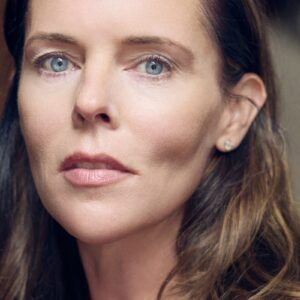
Megan Mayhew
Megan Mayhew Bergman is a visiting professor and Director of Middlebury's Bread Loaf Environmental Writers' Conference. She's currently a senior fellow at the Conservation Law Foundation and recently wrote a column on climate change for The Guardian. She is the author of two collections, Birds of a Lesser Paradise and Almost Famous Women, with a novel forthcoming.