








Why you should be reading Helen Garner (and where to start).
Last week, The Paris Review announced the winners of its annual literary awards. In 2027, Australian author Helen Garner will be feted with the Hadada, a prize that recognizes a writer’s lifelong literary contributions. I am here as an independent body to hype this choice.
Garner—a novelist, journalist, and diarist—writes big-hearted heroines who are often on the edge of a crisis. Her other fans include Lauren Groff, Lily King, Rumaan Alam, and Ben Lerner, but we are legion. Why, you ask?
In a recent piece for The Guardian, Emma Brockes also praised Garner’s “ability to combine insight and erudition of the highest literary order with a style that is at times comically down to earth.” And it’s true—that earthiness is what makes her work indelible. But it’s also just the tip of an iceberg.
Here are three of Garner’s best known books (and why you should make like the Parisians and pick them up, stat).
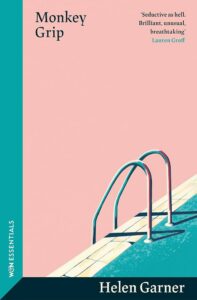
Monkey Grip, Garner’s 1977 debut, sent a shockwave through Australia. This novel chronicles a woman’s doomed-from-the-jump situationship with a heroin addict who charms her intermittently as they orbit a communal living situation.
A little like Susie Boyt’s sleeper hit, Loved and Missed, this book beautifully captures the recurring heartbreak involved in loving an addict. But it’s never saccharine, or sanctimonious.
Following a bohemian Melbourne milieu that echoes the author’s own set at the time, Garner’s non-judgmental portrait of freewheeling radicals brought out the moralizers on publication. Nora, our heroine, ruffled feathers for depicting ambivalent parenthood administered with a very loose latchkey. All adults in this book are libidinally motivated. Drugs and sex are world-structuring forces.
But what’s most exciting is how naked the prose is about all of that want. In Garner’s matter-of-fact voice, Nora’s thirst for the grifting Javo is rendered tender, abject, holy, and pathetic by turns. She feels like a real and vulnerable person with a mighty human flaw. The best kind of protagonist.
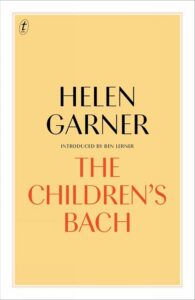
My favorite of Garner’s novels is The Children’s Bach. Another tale of domestic upheaval ignited by a charismatic chaos agent, this book traces the happily partnered Athena Fox’s infatuation with a blast from the past. Against reason, she leaves her partner and two small children for… a rock star.
What follows is a little predictable, but as with Monkey Grip the pleasure is in experiencing that slow road to ruin. (Or is it ecstasy?)
The third person POV serves this book, which manages to texturize everyone affected by Athena’s choices. She feels like a modern Nora, in the Ibsen sense.
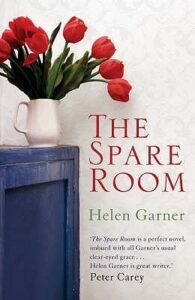
The Spare Room is a cool, slim, spiky book. I find this Garner still gnaws at me. Following two semi-estranged old friends who fall back together when one seeks harbor following a terminal diagnosis, this novel depicts the unpleasant side of caretaking and the indignity of illness.
This book asks some truly itchy questions. Such as, what do you do when your patient is delusional—and/or, you want them out of your house?
As in the other novels, our protagonist chafes against conventionality and obligatory mutual obligation. And her extreme honesty hits you like a glass of cold water. As always, there’s a nakedness to a Garner subject. She doesn’t flinch from depicting those ugly emotions or unwanted thoughts.
In a review for the Times, Daphne Merkin once compared Garner to other “laconic and wayward,” ladies who specialize in the “art of artlessness, like Jean Rhys, Jane Bowles and Paula Fox.”
I agree with wayward, but I think that artful eye is in a class all its own. Do yourself a favor and join the Helen hive. Today.

Brittany Allen
Brittany K. Allen is a writer and actor living in Brooklyn.