What It Means to Go From School Drop Out to Writing Tutor
Djamel White on Teaching Kids How to Write
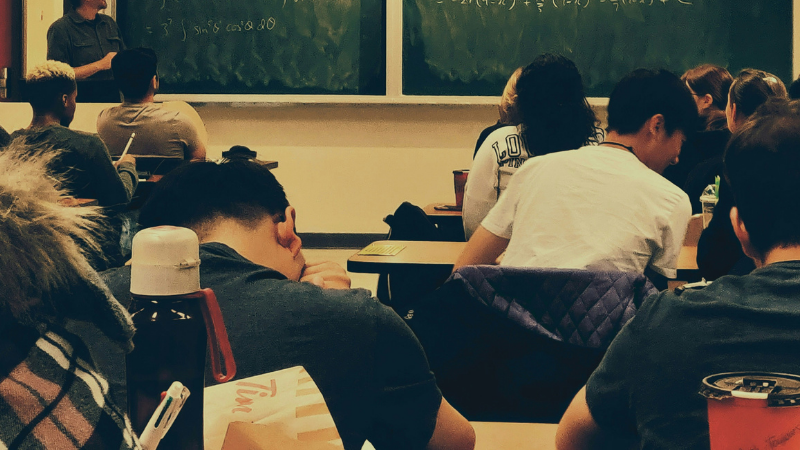
When I was seventeen I dropped out of school. I was about six months out from my Leaving Cert, which in Ireland is the final set of exams that determine whether or not you’ll get to go to study the course you want to in college. The alternatives are few and far between, and they aren’t signposted. If anything, they feel deliberately hidden. The conventional view on dropping out of secondary school is that you’re throwing your life away. There’s an entire future riding on a set of exams at the end of your final year, and you can quickly start to determine your value to society based on your projected performance.
Never mind that you’re a teenager. That you’re the full spectrum of sad, horny, angry, potentially on drugs, potentially depressed, anxious. That you have no sense of perspective or patience for adult advice, especially when all of the adult advice sounds the exact same.
By my final year of school I was waking up every morning wanting to scream.
This pressure was doubled, I felt, by the crash of 2008. When the bubble burst on a booming trades industry, it looked like a college education was the only way to survive and you should ride out the wave of joblessness by staying in the education system for as long as possible.
But I dropped out anyway, because once I’ve decided I want out of something it’s hard to turn me back around on it. I’m not sure what the root of it was, whether it was neurological or a generational lack of backbone that meant I couldn’t endure the hardship of having to be in school. For sure, a lot was going on with me. Family life was tumultuous, and I didn’t feel like I belonged anywhere.
By my final year of school I was waking up every morning wanting to scream. I can feel a knot of frustration and dread still in my body now as I recollect it. It was a suffocating feeling. I had fallen far behind on my studies, to the point where I couldn’t fathom where to start to get back on track. I hated every second of being in school. I had little in the way of productive extracurriculars, and what I felt most severely was a complete lack of control over any facet of my life outside of loafing around streets and parks, getting high.
And it was a feeling I’d honestly thought would stay with me for good. In many respects I thought I wasn’t cut out for normal life. For whatever reason, I was just unable to connect to the ether of the every day. I didn’t know if there was something wrong with me or not. I felt abnormal. I was ashamed to tell people I was an early school leaver and when I did I was told in a very ho-hum sort of way that ‘school wasn’t for everyone.’ Which made me feel terrible, because it was, as we all knew, perfectly fine for most people.
And I was by many accounts a capable kid, in that I didn’t struggle with comprehending any of what was being taught to me. It’s just that I couldn’t summon up the effort, where most people endured. Of course, the fact I believed that the majority of life was something that needed to be endured rather than experienced was the main issue. Soon after leaving school, the organization Fighting Words changed that for me.
When Roddy Doyle and Sean Love set Fighting Words up in 2009, they were inspired by the work of Dave Egger’s 826 Valencia. In Dublin, they developed a program for primary and secondary school students who would visit on a trip during school hours and engage in creative writing workshops. The idea was to provide a chance for students to experience writing as something other than the doldrum chore they practiced in the classroom.
I joined as a volunteer in 2016, on a linked work placement with the early-school leavers program I had enrolled in soon after dropping out. The aim of the program was to equip the learner with employment skills, but it also can create some backdoor routes into smaller courses, known as PLCs (Post-Leaving Cert Courses), who themselves offer backdoor routes into some full-blown university degrees. PLC’s themselves were looked down on as being something for people who messed up in their Leaving Cert and didn’t succeed to get into the college they wanted. The stigma might be compared to how community college is sometimes viewed in the US. My plan was to use the school leavers course to gain access to a PLC, to in turn get into a university. This was very much the long way around, and the start and end dates of these courses didn’t meet, and it was during the limbo of the training course and my PLC that I first set foot in Fighting Words.
So, even though I was only eighteen, and a school drop out, I was now somehow assuming the role of a tutor. I was also meeting people from all over. The volunteer team was a diverse group of people, at different stages in their lives, and from various social and cultural backgrounds. Whereas previously, the spaces I had occupied out of obligation had been places where I hadn’t felt fully a part of, I was no somewhere where everyone shared a common love of stories.
I felt valued and a part of something valuable. I no longer woke up wanting to scream. I was going to bed happy.
And in beautiful contrast to that, I found that no two people were alike, but we were all happy to be there for the exact same reasons. Being present in one of these workshops, you see a group of young people transition from one state to another in just a couple of hours, as they become engaged in the process of story making. Be it from the giddiness of the youngest kids to the insecurity or disinterest of the older, teen groups, you get to participate in capturing and nurturing a collective imagination that yields deeply rewarding results, as the students slowly realize that all bets are off, anything goes, and a true sense of freedom is brought into the room.
Fighting Words not only allows their students to grow, but they nurture their volunteers as well. There was a huge number of us, new and regular, and I quickly felt part of a team while also looking forward to whoever new person I was about to meet in the mornings. While treated as part of the team, I was also recognized as a young person in a period of growth, and my enthusiasm was often met with increased trust and responsibilities, until I was leading the workshops myself. At eighteen years of age, this was enormous for me. It was a sense of purpose and identity that solidified a fragmented sense of self, instilled belonging in a way that made me proud to be doing what I was doing. When people my own age asked what I did, I was no longer embarrassed to tell them. I felt valued and a part of something valuable. I no longer woke up wanting to scream. I was going to bed happy.
I took this feeling into the writing life. I went on to study creative writing at undergraduate and eventually MFA level, where I developed my debut novel All Them Dogs. There were plenty of knocks along the way, but I think there was a crucial foundation laid in Fighting Words that got me well equipped to face those challenges. It’s the bedrock of support, the people cheering you on, the relationships that last a life time, that become the life line.
__________________________________

All Them Dogs by Djamel White is available from Riverhead.

Djamel White
Djamel White is an Irish writer and editor. He earned an MFA in creative writing from University College Dublin and was fiction editor for the inaugural issue of the literary and art journal Profiles. He has worked as an assistant for New Island Books and has managed one of Ireland’s leading tattoo shops. He lives in Dublin.