What I Learned from a Close Read of All of Colson Whitehead’s Work
Jane Ciabattari on the Prizewinning Chronicler of New York City’s Journey Through Genre
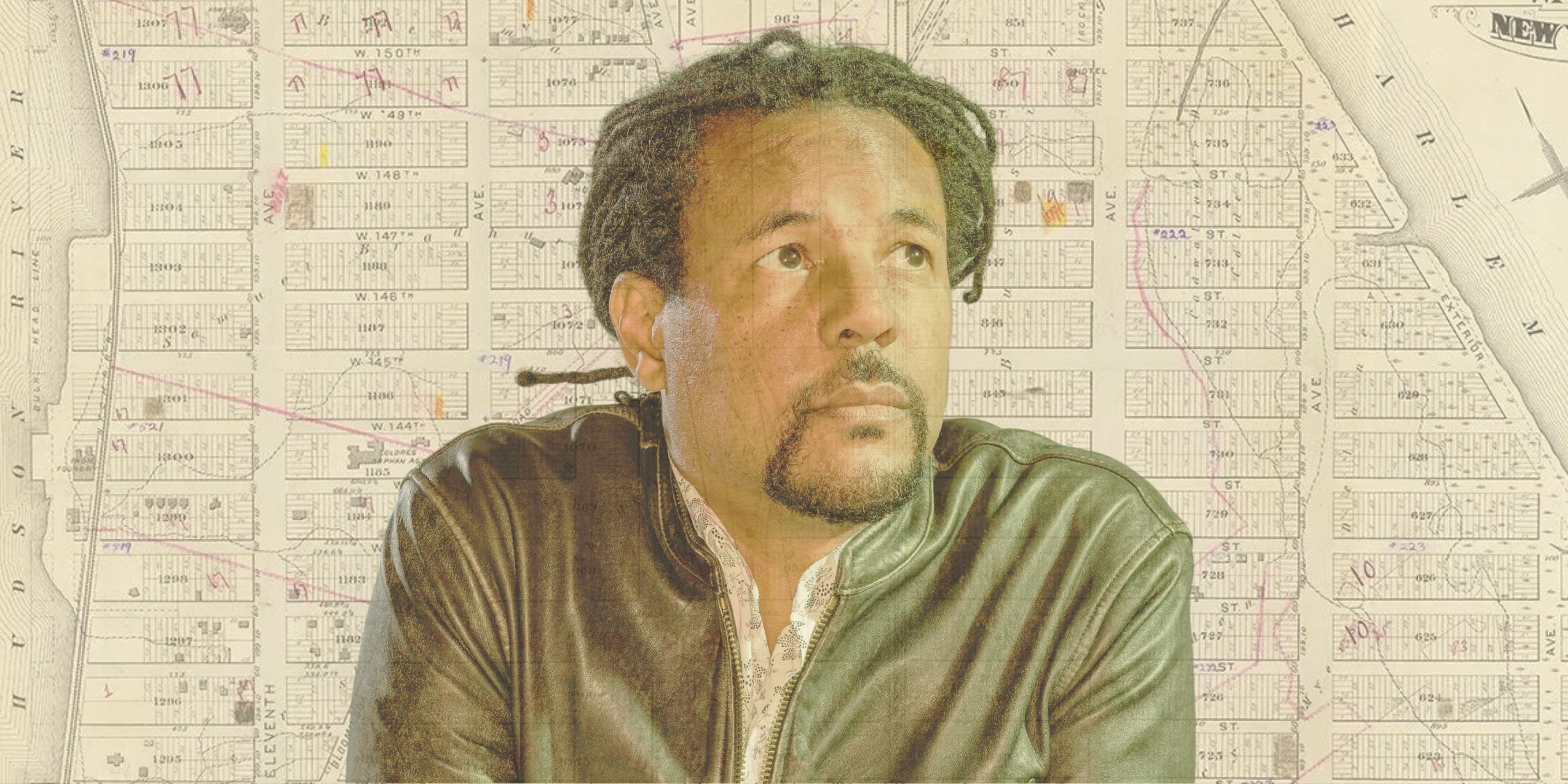
Colson Whitehead is a transitional figure in literary history, one of the literati of the post-Toni Morrison era, trained at elite schools (Trinity School, Harvard), highly attuned to nuances of race and gender bias. He is gifted with a wild imagination and a maverick impulse to be free to use any form for any particular project. He’s a Gen Xer schooled in video games, early Marvel comics, horror movies, D&D, punk, funk, electronic and hip-hop, attuned to the radical political, tech and mechanical changes reshaping the culture. He has a skeptical, ironic postmodern sensibility (sharpened in part as a cultural critic for the Village Voice), and has mastered a wide range of styles—satire, parody, noir, awkwardly adolescent, deadly serious business, all underscored by a continuous throbbing beat. (Check out his playlists, especially “Music for the First 100 Pages of Writing a Book.”)
Above it all, he’s a chronicler of New York City, crafting rhapsodies to that near magical machine that chugs and churns along despite everything, through a mire of impossibility. “They were completely hopeless out there, and unstoppable,” he writes in his newest novel, Cool Machine. “Broke-ass, chasing jackpots, cooking schemes, pushing through. The nameless heroes of an asphalt romance.”
I’ve spent the last month down a Colson Whitehead rabbit hole, tracing his evolving literary genius. His first novel, The Intuitionist, published in 1999, was a philosophical mystery about the first female elevator inspector in a place not unlike New York City (he has said he started out to write a fake detective novel, and that Stephen King was an early inspiration). The Intuitionist drew raves for originality and comparisons to Ellison, Morrison, Orwell, and Pynchon. It introduced elements that recur in his work, from the “unsettling darkness” of the elevator wells (forecasting his literal underground railroad and scenes of a private track beneath Grand Central station in Cool Machine), to Lila Mae’s childhood fascination with Fanny Briggs, the slave who taught herself to read and escaped North (also an underground railroad inspiration). The Intuitionist set him up as a young writer to watch (he won a Whiting Award the following year).
Whitehead came back in 2001 with John Henry Days, an extended riff on the legendary steel driving folk hero yoked to a pop-culture set piece in which a twenty-something press junketeer visits a West Virginia burg where John Henry is being honored with a stamp and a festival. John Henry Days poked fun at press junkets while asking serious questions about the man behind the myth. That novel was a finalist for the Pulitzer Prize and the National Book Critics Circle award. Whitehead’s MacArthur “genius grant” was awarded the following year.
He’s a chronicler of New York City, crafting rhapsodies to that near magical machine that chugs and churns along despite everything, through a mire of impossibility.
Apex Hides the Hurt, his satiric 2006 third novel, concerned a “nomenclature consultant” hired to rebrand a town (his claim to fame is concocting the name “Apex” for a Band-Aid competitor that comes in various skin shades).
These first three Colson Whitehead novels were ironic, postmodern, with varying flavors of satiric humor. “I think there are different kinds of humor in my books, and whatever fits the job at hand is the one I go with,” he told me in at 2009 Daily Beast interview. “When you’re writing about former slaves who work themselves to death on the railroad, you’re working with a different brand of yuks than when you’re writing about corny hip hop lyrics.”
After a decade of sophisticated postmodern risk taking, Whitehead’s work turned autofictional in Sag Harbor (2009). “I try to keep each book different from the ones that went before,” he told me. “The protagonists of my first three novels are ‘writers’ in different ways—so I was drawing from my life in that way, but I’d avoided borrowing from my own experiences so directly. It seemed a bit tacky or something. Why dilly-dally with teenage angst when you can bring on the Giant Robots, that was my motto. But one weekend I had some friends out to Sag Harbor for the weekend and as I tried to explain the community to them, I realized that I had a lot of good material to use. Material that was too good not to use. I find the thing that you are avoiding writing about, what you are shying away from, is probably a good avenue to explore in the end.”
Whitehead opens with fifteen-year-old Benji’s thoughts upon arrival on Memorial Day weekend. “Same sun wrapped in shiny paper, same soft benevolent sky, same gravel road that sooner or later skinned you,” he writes. “We were grateful to be standing there in that heat after such a long bleak year in the city.”
Sag Habor drew upon Whitehead’s family’s summers in the Hamptons. “Part of growing up there is you don’t appreciate there aren’t a lot of black enclaves like Azurest around the country,” he explained. “You don’t appreciate that Sag Harbor was a stop on the underground railroad, and its earlier whaling history. Part of the challenge of the novel was getting the history down and the atmosphere right, in ‘85—what it was like to be out there before what we know as the Hamptons encroached upon the place, and to preserve that quaint era. I brainstormed with my younger brother Clark to remember all the stores I used to go to, how quiet it used to be.”
In Sag Harbor Whitehead dialed back to 1985 (era of Run-D.M.C., Miami Vice, The Cosby Show, and Stouffer frozen dinners). He peppered the novel with chapter titles like “Notions of Roller Rink Infinity,” “Breathing Tips of Great American Beatboxers” and “If I Could Pay You Less, I Would,” an extended riff on Benji’s summer job at Jonni Waffle, an ice cream shop on the wharf with a “waffle-cone aroma” and a stomach-turning “all you can eat” ice cream option for employees.
With its the warm glow of nostalgia, Sag Harbor revealed his most affectionate tone to date. “You use the right tool for the job.,” he explained. “I don’t think Tone Setting: Kinda Wistful would work for a mystery about intrigue in the Department of Elevator Inspectors. And Tone Setting: American Panorama wouldn’t be appropriate for a book about some kids hanging out in the summer of 1985, although it might work for a book about steel-driving legend John Henry.”
Not that he didn’t include the inevitable darker undercurrents. Benji avoids a corner where a truck with a Confederate flag is parked. Standing on the lip of the Atlantic, he muses, “It was the Edge of Things, and the Edge like to grab at you, pull you in. I wasn’t even toe-deep when I heard my mother’s warning in my ears, ‘Watch out for the undertow!,’ which wasn’t a bad philosophy, really, applicable to most situations in a metaphorical sense….”
Whitehead plumbed his boyhood fondness for horror movies in Zone One (2011), a zombie apocalypse novel set in a post-9/11 lower Manhattan in the wake of a pandemic. It’s an Isaac Asimov/Stephen King blend framed as a satiric take on “post-racial” America. Whitehead linked Zone One to his next novel, The Underground Railroad, in an interview with John Freeman. “Both novels are animated by people who, despite everything being stacked against them—the apocalypse and the vast machinery of slavery—believe somehow that there is a place of safety and work to make it happen. I think we’re still working on it now in our country.” In 2013 he won a Guggenheim fellowship.
Whitehead nailed his place in literary history with back-to-back Pulitzer Prizes for two profound, grimly revelatory explorations of America’s brutal foundational racism. The Underground Railroad (2016), which also won a National Book Award, focused on slavery, reimagining the historic abolitionist movement as a literal railroad with engines, tracks, tunnels, and secret entry points. Each state it passes through has different rules—a “different state of American possibilities.” A courageous young slave named Cora escapes from a plantation in Georgia with her friend Caesar, to be tracked by the hulking Ridgeway in a scorching saga that wiped the slave narrative of its sentimentality. (The novel was drawn in part from oral histories of former slaves collected by the Federal Writers’ Project in the 1930s, actual runaway slave ads, Harriet Jacobs’ Life of a Slave Girl and Frederick Douglass’s autobiographies.)
His 2019 novel, The Nickel Boys was inspired by a notorious Jim Crow-era Florida reform school and its “secret graveyard” where young black inmates, reported as runaways, are buried. Elwood, a young man raised proper by his grandmother, who gives him Martin Luther King at Zion Hill for Christmas in 1962, and cheers the passage of Brown v. Board of Education in 1963, is hitchhiking to his first year at college when he’s picked up by a guy driving a stolen car, and that’s all it takes. He’s incarcerated at Nickel.
“If you choose to write about institutionalized racism and our capacity for evil,” Whitehead told The Guardian, “you could write about 1850 or 1963 or 2020 and it all applies unfortunately. It’s ongoing and it will be ongoing for many years.”
And then came the Harlem trilogy, Whitehead’s transformation of crime fiction, inspired in part by the subway hijacking film The Taking of Pelham One Two Three (1974), shaped as nine novellas, three per book: Harlem Shuffle (2021), Crook Manifesto (2023) and Cool Machine, out this month.
The Harlem novels are steeped in Whitehead’s sophisticated knowledge of his hometown. “No matter how long you have been here, you are a New Yorker the first time you say, That used to be Munsey’s, or That used to be the Tic Toc Lounge,” Whitehead wrote in The Colossus of New York (2003). “That before the internet cafe plugged itself in, you got your shoes resoled in the mom-and-pop operation that used to be there. You are a New Yorker when what was there before is more real and solid than what is here now.”
The Harlem trilogy is laced with nostalgic details so specific they serve as a scrapbook to a now-gone time: H&H bagels and Barney Greengrass, a dive bar “with a décor inspired by an old leather shoe that lived in a drainage pipe,” the New York Telephone Company Building with its art deco splendor, “a graceful, granite rebuke to the steel-and-glass upstarts around it,” the billboard for “Escape from New York.”
And then there’s the World Trade Center. “The twin towers still stand because we saw them, moved in and out of their long shadows, were lucky enough to know them for a time,” Whitehead wrote two months after 9/11 in the New York Times as New Yorkers grieved. “They are a part of the city we carry around.” His homage continued in the Harlem novels.
Whitehead…is at his ironic best, offering a portrait of a more innocent time when viewed from the sadistic chaos of today.
At the end of Harlem Shuffle in 1964, Carney scanned the World Trade Center site. “The neighborhood was gone, razed….The buildings of the old city loomed over the broken spot, this wound in itself.” By the last section of Cool Machine, set in 1984, Carney and his wife Elizabeth shared a dinner at Windows on the World for the first time. “They gave us a white-person table,” he chuckled after they were seated. “From the 106th floor, the teeming boroughs and all those who lived and bled in them were turned into a vast, scrabbling miniature—insignificant, pitiable even—and ennobled at the same time, because you could make out the true breadth of their striving, extending as far as you could see.”
Centerpieces of each Harlem novel derive from real events. Harlem Shuffle is set during the Donald Manes era in Queens, with prosecutor Rudy Giuliani as U.S. Attorney investigating corruption by tracing the networks of the Mafia families and indicting the top bosses using the RICO statute. It also includes the 1959 Hotel Theresa theft and ’64 riot in Harlem.
Carney’s motive for picking up extra cash in Crook Manifesto, set in the 1970s, is a Jackson 5 concert his daughter yearns to attend. Walter Mosley called Crook Manifesto “a dazzling treatise, a glorious and intricate anatomy of the heist, the con and the slow game” in his New York Times review. “The presence of the Black Panthers and the Black Liberation Army has set a new edge to the age-old battle between the neighborhood and the white policemen riding roughshod down its streets. From behind his store’s plate-glass window Carney takes it all in: the thump of car engines, the shouts and taunts, the stand-downs of Black men being pushed against walls and searched by white police officers, the news headlines of police officers killed. Sirens cut through conversations; people traverse the powerful river of the sounds and smells that are Harlem.”
Crook Manifesto traced the corrupt network exploiting urban renewal funding and the wave of arson in the 1970s. By the end, Carney’s shop burned down. “Well, [arson] was a big part of New York history at that time, especially in poor communities: the Bronx, parts of Harlem,” Whitehead told Dwyer Murphy.
The final novel in the trilogy, Cool Machine, published this month, is a methodical reenactment of the moral and literal decline of New York’s infrastructure in the 1980s, after the election of Ronald Reagan. The opening lines distill the first two books and serve as a masterful plot setup : “In all of Ray Carney’s years as a fence—he had been a reluctant fence and a ruthless fence, at times imperiled by his choices and at others the embodiment of crooked intelligence—there was only one occasion where he participated in the theft itself, and that was in the summer of 1981, when Uncle Rich came back to town.”
Carney is living on Strivers’ Row, where his in-laws lived in Harlem Shuffle. His two kids are grown up, out of the house now. He is proud to be profiled as Sterling Furniture’s “Northeast Regional Dealer of the Month (August).” He’s sold their products since opening his furniture store at 125th and Morningside. “Its shopwindow had showcased thirty years of culture, capturing fashion, economic weather, and mercurial human desire.”
As for his side gig, Carney has his own assessment. “An outside observer might get the idea that Carney trafficked quite frequently in stolen goods, but that’s not how he saw it,” Whitehead writes in Harlem Shuffle. “There was a natural flow of goods in and out and through people’s lives, from here to there, a churn of property, and Ray Carney facilitated that churn. As a middleman. Legit.” In Cool Machine, Carney notes that development is city hall’s “cure for the fiscal crisis.” “It worked. Development brought in fresh players and motivated the old parasites, the new ventures attracted workers and generated tax revenues to pay for yet more development. Churn, baby churn.”
Carney’s wife is setting up her own travel business, and needs money the banks won’t loan her. He can’t resist the temptation. Uncle Rich ropes him into one last heist. The Hotel Theresa, the “Waldorf Astoria of Harlem,” was the target in Harlem Shuffle: This time it’s “the Waldorf Astoria of the world.” The motive is not money. “I aim to right a historical wrong,” says Uncle Rich. His goal: To recover the Olympic gold medal Jesse Owens won at the 1936 Berlin Olympics. The team can find the medal in a store in the luxury retail corridor at the Waldorf because it’s featured in a fall auction of sports memorabilia. They can use a special private track in Grand Central, which goes straight to the Waldorf, to access the medal. The secret substation is surrounded by an encampment of the unhoused, who figure as heroes in the action.
In this series finale, Whitehead presents his New York City as an urbanscape rife with brutality, cronyism and corruption, increasingly fed by unbridled capitalism. He is at his ironic best, offering a portrait of a more innocent time when viewed from the sadistic chaos of today.
Coming to the end of Cool Machine, and the Harlem trilogy, is like reaching that sense of “radiant calm” Uncle Rich describes, “basking in the afterglow of a heist.” It’s also recognizing the heist that is stealing New York City from the people. Sensing the thief that is just around the corner. Understanding that it’s just a matter of time. And still loving the city despite all that is happening. Lucky for us, Whitehead is back at work on a new novel, capturing it all, telling truth through fiction.

Jane Ciabattari
Jane Ciabattari, author of the short story collection Stealing the Fire, is a former National Book Critics Circle president (currently on the Advisory Board ) and a member of the Writers Grotto and Page Street. Her reviews, interviews and cultural criticism have appeared in NPR, BBC Culture, the New York Times Book Review, the Guardian, Bookforum, Paris Review, the Washington Post, Boston Globe, and the Los Angeles Times, among other publications.