The Powerful Freedom of BDSM
Angela Jones on the Important Communities Surrounding Kink
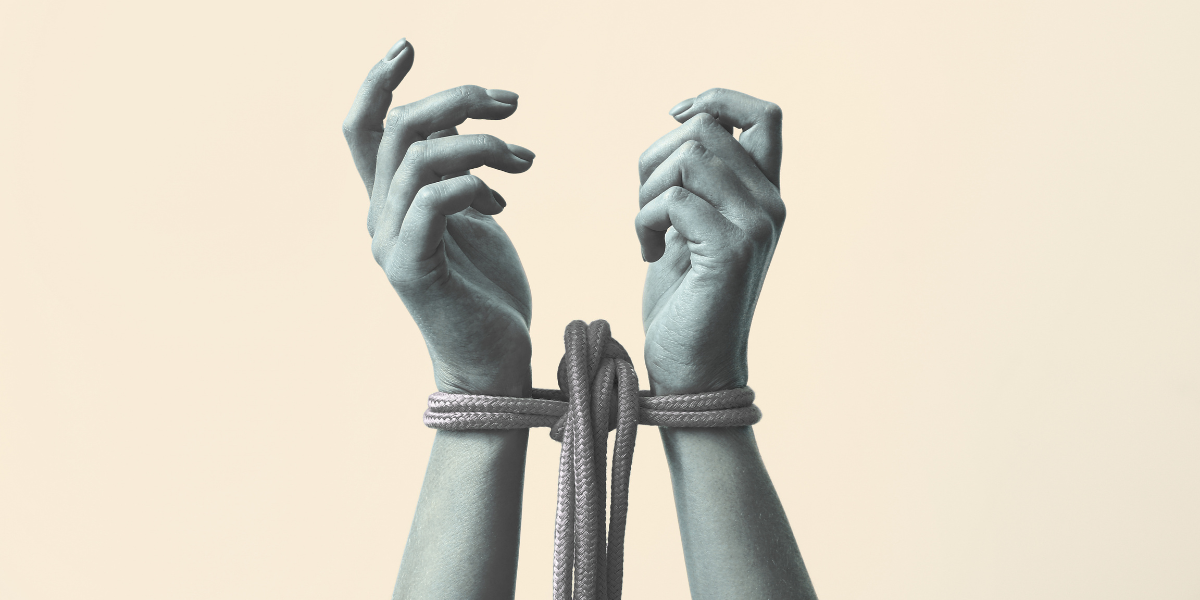
The specific terminology varies across the world, but generally, BDSM is an umbrella term that reflects a wide range of erotic desires, behaviors, identities, relationships, and communities related to bondage and discipline, dominance and submission (D/s), and sadism and masochism.
BDSM involves consensual exchanges of power, but keep in mind that power shapes all erotic and sexual encounters. Most sexual relationships involve social scripts around who is the so-called top, or dominant partner, and who is the bottom, or submissive partner. These assumptions reflect positions of power. People who practice BDSM are just more intentional and imaginative than non-kinky folks about how they play with power in erotic encounters.
Like our sexualities, BDSM contains multitudes. It does not just reflect a set of practices performed in a dungeon by a black latex–wearing, spike leather–booted, whip-holding dominatrix with a menacing smile—as enticing as she sounds.
BDSM also reflects each component of our sexualities. D/s could refer to specific erotic role-playing desires, actual behaviors or practices, identities (e.g., people identifying as a Dom or a sub), or a specific relationship (e.g., a collared or committed relationship between a sub and Dom). It can also refer to a community of Doms and subs.
Relinquishing power to a Dom and trusting that they will care for my body feels vulnerable, but doing so with consent feels cathartic.
As part of my research to understand how the various identities of BDSM intertwine in the community, I visited many kinky spaces in different countries. On one such trip, I went to the Happy Kitten Portal at the Prive in New Orleans, in the United States. The Prive is a members-only lifestyle community. The space itself is gorgeous, with an inviting outdoor private courtyard space with a pool and hot tub—reminiscent of a high-class boutique resort. Inside are a bar, spaces for erotic play, and the BDSM portal, where I spent most of my time. I hung out with the owner one evening and booked a rope session, an erotic practice that combines aspects of bondage, dominance and submission, and masochism.
Before my rope top started tying any knots, we talked. We talked about this book. We discussed the members-only space, the sex parties they host, the features of the BDSM playroom space, the various BDSM and nonmonogamous communities in the area, and local strip clubs. Somewhere in between all this chatter about sex, we shared a few personal stories. This rapport building was important.
And before we even had these conversations, we had already discussed stylizing the space, since the session would be photographed. Shibari, or Japanese rope bondage, is a beautiful art form, blending technique and creativity, where knots are carefully designed, and the bounded body is the canvas. I firmly believe co-curated fantasies are a form of artistic expression.
My rope top and I talked about my past experiences with BDSM, especially since I’d never been suspended before. We talked about my tolerance for pain and corporeal discomfort. He explained possible sensations, and we discussed how I would articulate when and if I was nearing my limits or felt unenjoyable pain. Finally, he confirmed that I had not been drinking or taking any drugs. With all of this necessary conversation out of the way, it was time to begin.
He laid out a copious pile of yellow, green, and red ropes on a set of black pads on top of the long puppy kennel on the far side of the room. He took his time, making creative choices about which colors to use and how to design them. With a yellow rope in his hand, he asked if I was ready. Once I had offered my eager affirmation, he began attending to my right thigh.
Rustle, crackle—he pulled the rope. At first, the friction of the fibers was all I heard. Then, a baritone voice. As he wrapped and knotted: “Are you okay?”
“Yes!”
“How are you doing?”
“Great!”
Rustle—crackle. “Too tight?”
“No, it feels like a hug.”
Hoist—clank—clang. “Too much?”
“No, just right.”
Given my sexual history and socialization, entrusting another person with my body isn’t something I do capriciously. Allowing another human, especially a cisgender man, to have control over my body, tying me up—this is difficult. Relinquishing power to a Dom and trusting that they will care for my body feels vulnerable, but doing so with consent feels cathartic. It turns out that this kind of exchange also builds human connection. Engaging in what sociologist Staci Newmahr calls edgework, or risky behavior that transgresses social boundaries with another human, produces intimacy.
During my flight, as each lithe limb was bound and hoisted, my unflappable captain checked in. I reiterated consent. In this scene, my relation to my own body was restored through my rearticulation of consent and this man’s respect for my boundaries. I felt in control of my body and, thus, empowered. I know I am not alone in this experience.
Research has shown that BDSM practitioners who are survivors of sexual assault often find the practices healing, particularly so for bondage. As Ariane Cruz notes in The Color of Kink, many people find pleasures and healing in kink. This is especially the case for Black women, given the global legacies of violence against us. Acknowledging the relationship between past trauma and present pleasure, however, opens up critiques of BDSM as psychopathology. A political reluctance to explore how trauma is imbricated in our sexualities, especially non-normative sexualities, is understandable, but silence harms just the same. Silence can reinforce shame and hinder healing.
Still, in this ephemeral bound moment, I did not have to worry, knowing I was cared for and safe, which was freeing.
I understand the incredulous reactions I sometimes get when I tell someone that being bound feels like tasting freedom: “Free? You are quite literally shackled!” How can someone feel in control when they’re in such a vulnerable and subservient position? Legitimate question. Yes, the rigger, or rope top, is seemingly in control, and I am the submissive as the rope bottom. Throughout the process, however, I continually reauthorized the rigger’s dominance and control. I, too, derived much power and pleasure from this erotic exchange of consent.
The rope around my left thigh pinched and clawed at the butterflies inked on my skin. Still, no pressure, no diamonds! Once I was suspended, endorphins exploded like fireworks. My body felt euphoric and light—transported and suspended in a temporal plane.
As researcher and journalist Leigh Cowart explored in their book Hurts So Good, people across time and cultures deliberately choose “to feel bad, to feel better” and “to feel pain on purpose” to hack and enjoy the body’s physiological responses to pain. When I hike twelve miles up a mountain’s brutal course and my quadriceps burn like hellfire, I also know the pleasures of an apex view, the grounded feeling when
I am connected to the Earth, and what the feeling of strength in my body does for my self-esteem.
I also loved the quieting of my mind when I focused on the sensations of the ropes. As Amber Jamilla Musser argues in Sensational Flesh, in masochism, “sensation resides at the border of reality and consciousness.” My garrulous inner narrator never stops, and my body can’t keep still. I am part manta ray: If I stop moving, I’m not breathing. Or at least that’s how it has sometimes felt to live in my skin. Still, in this ephemeral bound moment, I did not have to worry, knowing I was cared for and safe, which was freeing.
Each feeling of restricted skin was a pleasurable reminder of my safety. Being bound tightly, anchored to a pole, my chest immovable, ropes forcing me to hug myself—it felt like I was in a chrysalis. I was almost naked, but my body felt like womb warmth. Safety felt like home.
Once I told my rigger I’d reached my limits, he took me down. Then, we slowly unraveled my body. He asked me how I felt, and I responded truthfully. Wonderful, but tired. We ventured downstairs to the outdoor pool and hot tub, decompressing, drinking water, and talking as the bubble jets soothed and replenished my body. All of this formed part of our aftercare.
BDSM increases bodily awareness and strengthens people’s relationships with their bodies, positively impacting various social experiences.
In BDSM, aftercare is a ritual of caring for a partner after a scene. But while the practice comes from the BDSM community, it can be helpful to everyone, even in so-called vanilla forms of eroticism. The more ways we find to communicate about our erotic needs and experiences with our partners, and the more we do to ensure our partners feel supported and seen, the better. How do you communicate consent, needs, pleasures, and displeasures with partners before, during, and after erotic play beyond the cliché “Was that good for you?” or “Did you cum?”
Now, people are bound to have different embodied experiences of kinky play. Our sexual socialization and our identity kaleidoscopes shape how each of us feels when we transgress boundaries through BDSM practices. Still, research shows that many people, across demographics, share similar experiences.
First and foremost, the erotic interactions involved in BDSM play and the intentional re-scripting of power provide much of the pleasure. Researchers have documented positive mental health outcomes associated with participating in BDSM play, including decreasing levels of cortisol, often called our stress hormone. Some participants even characterize their experiences as transcendental, ecstatic, or spiritual.
BDSM increases bodily awareness and strengthens people’s relationships with their bodies, positively impacting various social experiences. The vulnerability and communication skills involved in BDSM play and relationships strengthen human intimacy and emotional literacy. BDSM involves learning specialized information and techniques that increase people’s sexual education. All of these outcomes have a favorable impact on overall sexual health.
Even if people have no interest in exploring BDSM practices themselves, there is so much to be learned about sexuality from these erotic communities. Look, we don’t have to choreograph every sexual encounter, but I suspect lots of folks’ erotic and sex lives would benefit from more open communication about their desires and more intentional eroticism with their partners. Even if people have zero interest in joining any BDSM communities, from them we learn that there is much pleasure in playing with power, and, for example, flipping gendered and racialized sexual scripts in the bedroom. Consider role-playing, even of the cheesiest variety. I get it; this might even feel a little goofy, but roll with it—sex is supposed to be fun!
Despite the efforts of conservative pundits to depict queer and kinky eroticism, identities, and communities as recent sinful phenomena, they have a really long history. And over time, as politicians and religious leaders have pushed for the regulation and public condemnation of those who practice BDSM, people have formed communities to support one another and create spaces for pleasure. BDSM communities illuminate the essential role of cultures in shaping our sexuality, the necessity of having supportive communities, and the pleasures of finding new communities when the ones we were raised in and live in reject and shame us and force us into dark closets.
__________________________________

From Sex in Public. Used with the permission of the publisher, Seal Press. Copyright © 2026 by Angela Jones

Angela Jones
Angela Jones is a professor of women, gender, and sexuality studies at Stony Brook University. Their work focuses on gender, sexuality, race, feminist theory, sex work, and African American political thought and protest. Jones has written or edited ten books, including Sex Work Today, Black Lives Matter, and Camming. They live in New York.