







George Washington Carver Technical High School was dedicated in 1943, the year its namesake died. Several administrative offices and a few class-rooms had since been renovated. Anthony was in one such classroom: there was a ceiling fan. It was last period, and he sat near the window watching the shadow of the statue of George Washington Carver that stood in the front yard, a drab olive figure, shoulders mottled eggshell and tan. Carver’s left hand clasped a book to his breast, his outstretched right hand was empty. According to the engraving on the pedestal, Carver was inviting others to join him on the quest for knowledge. Anthony thought it looked like he was reaching out for more and asking, “Is this it?” The statue was Anthony’s sundial. In the fall, the school day ended just before the shadow of Carver’s right hand reached the base of the flagpole.
All day Anthony had been in a fugue. There was nothing he could do except wait. He didn’t have anything worth pawning and, more importantly, nothing to sell. He couldn’t understand how he had been singled out and robbed. No one at Carver knew what he did. He kept to himself, never dealt near school. Except Uncle Frank, no one could enter the apartment without Knuckles barking like mad. Anthony kept coming back to the obvious answer, but he didn’t want to believe his mom would steal from him. And he certainly didn’t want to believe that she was using again.
After the bell rang, Mr. Travers, also his homeroom teacher, asked him to stay behind. Anthony looked down to avoid the smirks of the other students. He bore no resemblance to the book-thin Mr. Travers, who had bushy brown hair like Einstein and bushy eyebrows, but Mr. Travers was one of the few white teachers at Carver High, so most of his classmates referred to him as “Anthony’s daddy.” When someone needed a hall pass, they said, “Anthony, go ask your daddy.” As everyone else trooped out, Anthony pretended not to see 2-Cent giving him needle eyes. Until he squared with Pepper, he didn’t officially have protection.
Mr. Travers pointed to the seat beside his desk. Anthony sank into the chair, slouching. He shifted to catch some of the air from the fan on Mr. Travers’s desk. Noises from the varsity squad scrimmage drifted through the barred windows, basketballs against naked rims, bricks and buckets distinguished only by jeers and cheers.
“Glad to see you’re here.”
Anthony hoped a pep talk wasn’t on the way. But he took in the sweat along Mr. Travers’s brow and the dark line on the rim of his shirt collar and knew he would listen. Sometimes Anthony felt bad for the teacher. The arm-pits of his shirts were thin and yellowed, his black dress sneakers scuffed, and he wore corny ties, even when it was so humid that tape peeled off the wall like snakeskin. Many mornings Anthony came in to find Mr. Travers making the same joke about atomic weight as he rehung the warped periodic chart. Why would anyone go to college to come here? Anthony would graduate, and Mr. Travers would still be here. Anthony didn’t understand teachers.
Mr. Travers said, “You seem distant today, Anthony, fatigued.” “Everything’s cool, you know how it be, it’s just like—”
The caterpillars over Mr. Travers’s eyes jumped. He said, “It be just like we have an agreement.”
Anthony sat up. “Sorry, Mr. T.”
Mr. Travers grinned, as he did whenever anyone called him ”Mr. T,” even if they were being sarcastic, like he couldn’t tell the difference. Anthony had promised Mr. Travers that he wouldn’t perform. He tried to remember to be “himself” and talk “the right way” for Mr. Travers, though most times he didn’t know when he was being himself and when he wasn’t. “I’m probably just feeling senior-year pressure.” The eternal excuse. Anthony had heard it invoked to explain everything from truancy to depression to last fall’s shootout between two seniors vying for the position of starting center. Mr. Travers nodded knowingly. “We need to bolster your confidence.
When you get to college, you’ll ascertain that most people there aren’t half as smart as you.”
“Yeah.” Anthony didn’t believe that and didn’t plan on ascertaining the validity of the statement. He couldn’t wait to get out of high school, let alone commit to another four-year sentence. On the other hand, he didn’t want to disappoint Mr. Travers. No matter how much people teased Anthony, he enjoyed attention from teachers. So, he smiled.
“Are you reading those books I gave you?” asked Mr. Travers.
“The word one.” The career guide was boring, a dull list of jobs and required skills. The word guide was interesting.
Mr. Travers nodded slowly. “The word one?”
“Diurnally.”
“Huh!” exclaimed Mr. Travers.
“Tenacious?”
“Persistent.”
“Intrepid?”
“Fearless.”
Mr. Travers leaned back in his chair. “Good. You’ve earned your wings,” he said, smiling broadly as he rooted through his desk, and then his duffle bag, the smile growing wider as he handed over an envelope. “As promised, your one-way ticket out of town.”
Anthony ripped open the short end and slid out the letter. It was a registration form for the SAT II preparation course. Mr. Travers had guaranteed Anthony a scholarship slot if he didn’t miss any more classes. That’s what Anthony appreciated most about Mr. Travers; he didn’t just tell him he could be somebody, he told him how to do it. Anthony felt buoyed by a chord of accomplishment, the pleasure of having reached a goal. For a moment he was happy to have come to school.
“You’ll attend every session, right?”
“Yes, sir.” The course met at Riverview High from 6 to 8 p.m. for three days starting that evening: Tuesday, Wednesday, and Thursday. He could still make the fight, which didn’t start until 10 p.m. or later, although the more he thought about it, the less he wanted to go. Everyone knew what happened to the loser of a dogfight. He sank deeper into the chair.
Mr. Travers leaned back and launched into his usual speech. “Anthony, an education is the only hope for you and your mom. At your income level, the government will pay for all of it. That’s if you don’t get a scholarship.” He snorted and shook his head as if amazed, his bushy hair swaying back and forth. Eyes large, he pointed to the ceiling and asked, “What’s the best revenge?”
Anthony grinned. Mr. Travers was white but always talked about sticking it to the man. “The best revenge is an education on Uncle Sam’s dime.”
“Correct! Remember, Anthony, in a year there will be no more here.” Anthony ran his fingers over the names carved into the edge of Mr.
T’s desk. One read, “George Washington Jonson 1988.” Another, “Mustafa Kennedy 1996.”
Mr. Travers mouthed the words, “There will be no more Pepper.” Anthony looked down in shame.
Mr. Travers patted his shoulder. “You don’t have to know what you want to do for the rest of your life. That will come. Today, we dream about your perfect SAT score.” Pressing his hair into a mohawk, he leaned close and added in a deep voice, “I pity the fool who doesn’t go to college.”
“Loud and clear, Mr. T.” Mr. Travers always told him to hold on to this college dream, hold it tight, hold it ’til it hurt. Anthony liked turning that on his tongue, loved the alliteration, even though it didn’t seem true. Someone was rolling bones near the window. He heard the dice chattering and felt himself slouching even lower. He glanced toward the door, but his teacher was rubbing his jaw in a way that meant he had more to say.
Mr. Travers leaned forward, the corners of his mouth turning down, and said, “You have youth’s greatest blessing.”
“Yeah?”
“Being good at things you don’t care about.”
“Yeah,” said Anthony, but he didn’t understand. He leaned toward the door and when Mr. Travers nodded, he rose, opened it, and merged into the stream of traffic in the dim hall, losing himself in the sounds, cream in the coffee.
*
Riverview High was in Dawnswood, a suburb three buses away. The #5 took him away from the Korean corner stores to the northern edge of downtown. The #142 traveled MidCity, where package stores gave way to wine shops, and pebbled glass replaced Plexiglas. The #12 cruised wide and smooth streets, and, as the houses came farther apart, yards grew into lawns. He had arrived. The bus stop closest to the school was on Peachtree Street, one half mile away. The road to Riverview High was a slick blacktop ribbon speckled by sunlight sneaking through a canopy of red oak trees. The street ran through a quiet residential area, then along a high-walled golf course. Other than the black nannies waiting at the school-bus stops, Anthony had the thin strip of grass that passed for a sidewalk to himself. No one else traveled by foot, except Mexican laborers and joggers, both of whom used the street. A deeply tanned blonde with a ponytail jogged toward him, flicking her stray hair behind her ears. He caught a breath of perfume as she passed and turned to see her run through a column of sunlight, the sweat on her back momentarily golden. His eyes bounced in concert to her footfalls, following the contoured spandex shorts and matching athletic bra. Habit took over, and he snapped his head back around. He usually paid more attention to where people were running from. No one ran without a reason in The Bricks.
Riverview High was a low sparkling building tucked into a shallow vale crowned by evergreens. A curved drive bordered a neat bib of fescue, in the center of which stood the flagpole, boxed in by azaleas and, in front of those, a flowerbed that spelled RIVERVIEW in marigolds and carnations. With its large expanses of glass, it looked more like a fancy office building than a school. The parking lot added to the impression of wealth, crowded with cars whose names were numbers. From the front steps, he could see a few skyscrapers above the tops of distant trees. It felt like downtown was an isolated outpost, and Riverview the center of civilization. He transferred keys and coins to his book bag, but saw no guards or metal detectors, so he hooked the bag over his shoulder to cover the wet spot on his back. When he opened the door, a wall of refrigerated air stung his skin. Where he had been sweating, goose bumps grew. Students milled around unchecked in the sunny two-story lobby. On the floor under the skylight was a red-and-white tile mosaic of the school mascot, Max E. Muss, a centaur with an unruly mane and a thick red beard erupting from a football helmet, charging full stride with a basketball in one hand and a lacrosse stick in the other.
Smiling greeters sat behind folding tables skirted with red-and-white fabric and piled high with manila folders. The J–M queue was empty. Still, when asked his name, Anthony whispered as he handed over his letter. The grey-haired man’s eyes went from Anthony to the roster, and back again a few times before speaking. Anthony flinched at the stab of sympathy in the man’s voice. He pocketed his name tag and headed down the hall, stopping at a bulletin board with a picture of the volleyball team: perky blondes and brunettes in long sleeves and tight shorts. Beneath it, a news rack held the latest issue of the Riverview Rag. The glossy magazine was flush with color photographs and schedules for groups like the Japanese Club and the Greek Club and the Ski Club. At Carver, physical education was canceled due to budget cuts. He flooded with resentment. For the first time, Anthony wanted to do well on the SAT, to do George Washington Carver proud.
His assigned classroom had computer stations instead of desks, one for each student. There were three black students. Anthony was glad to see Leon Williams, a classmate who looked as out of place as Anthony felt. While they weren’t friends, over the years they’d shared the same sparsely populated honors classes: always English, the only gifted courses their school offered. Some students at Carver accused Leon of acting white because he always sat in the front row and carried paper clips plus a mini-stapler. Anthony always sat in the back, but he respected Leon for trying so hard, for being so serious, and for openly disparaging dealers as traitors to their race. Leon saw him and tipped his head in the direction of the computer on his desk as if to say, Check this out! and pointed to the empty workstation beside him. Anthony started in that direction, but when he saw Lawrence Berg at the end of Leon’s row, Anthony turned away. He eyed the back door. If he left, he’d never be able to face Mr. Travers, so he chose a spot in the rear of the classroom, far beyond Lawrence’s line of sight. Leon gave Anthony a quizzical look that melted into a blank stare when Anthony shrugged. Leon turned to face the front of the room, tapping the heels of his oversized grey sneakers. Anthony again counted the black faces; one-fifteenth or less than seven percent. He told himself that Leon, with his button-down shirts and staples, fit in more than he did anyway.
When the student next to him asked, “Where are you from?” Anthony said, “Grady,” without hesitation.
Grady was the best public school downtown. It had an IB program and Anthony had heard people brag about its media center and Ivy League alumni. To avoid further conversation, he put his head on the desk like he was tired and stayed that way until roll was called. Lawrence Berg’s real last name was Lawman, which drew a few giggles, and there was a student named Phat Lai, but Anthony’s name drew the most snickers, especially after the instructor murmured it a few times as if trying to recall why it was familiar. Even students who had not seen Scarface knew the film from the many rap songs that sang its praises. Did he want to be called Tony? Or T?
Anthony, forehead in hand to block his face, said, “Anthony is fine.
Thank you.”
“Whatever you say,” said the instructor with a wink. “We wouldn’t want to upset you.”
After the giggling subsided, the instructor explained that the first test was a diagnostic with a ninety-minute time limit. They would be placed in a study group according to their scores, which would be available online by midnight. The sound of everyone around him scribbling down the internet address jolted Anthony into action. He noted the “URL.” After the test began, the only sound was keyboards clicking. Once he adjusted to the computer, Anthony eased through the test in only fifty minutes. He was the first person finished, and sidestepped out, keeping his back to the side of the classroom where Lawrence and Leon were seated.
__________________________________
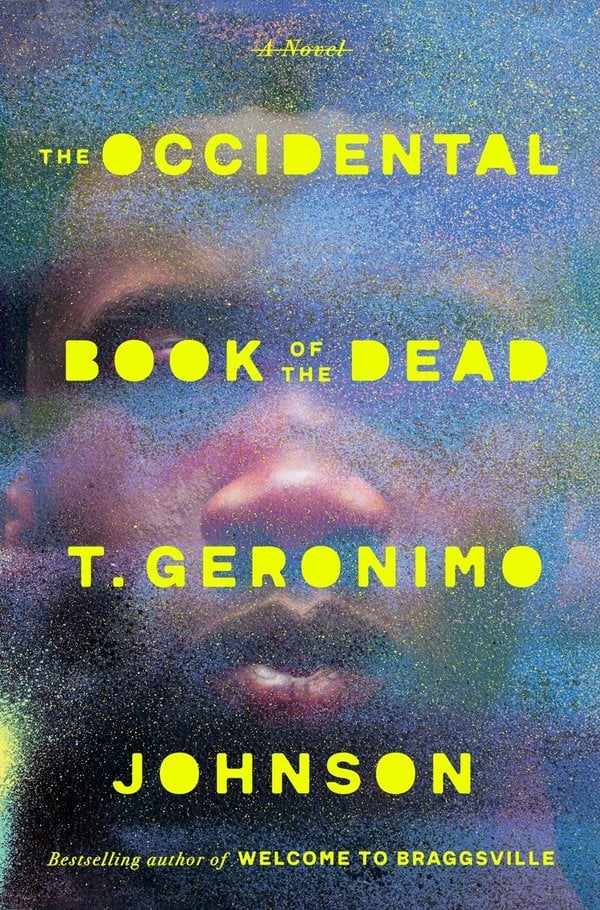
From The Occidental Book of the Dead by T. Geronimo Johnson. Copyright © 2026 by T. Geronimo Johnson. Excerpted by permission from William Morrow, an imprint of HarperCollins Publishers.