The Annotated Nightstand: What Victoria Chang is Reading Now, and Next
Featuring Amina Cain, Karen Solie, Cecily Parks, and More
Attending a reading from Victoria Chang a few years ago, I remember her cheerful comment about how her new poems were a concerted effort to be about nothing, really. She then proceeded to read a piece that left a smoldering crater in the place of my heart. “Nothing, right?” she said with a smile. What makes Chang a remarkable poet is how, rather than lobbing missiles, her devastating existential bombshells seem to merely slip from her pocket while she leans forward to get a closer look at something we have given little more than a glance.
The death sentence for a eucalyptus on Chang’s block is her jumping off point for Tree of Knowledge. For Chang, the doomed eucalyptus and the eventual hole where it stood—a loss simultaneously random and brutal—is a portal through which to consider life, parenting, grief, menopause, depression, mortality, and so much else. With the initial loss of a massive branch: “It swayed like a woman // hanging from a gallows.” In another poem that follows, Chang describes the ways one dies from hanging, and the height by which she herself would need to fall to die cleanly on a rope. “The tree had a knife against its throat,” she writes early on, and the stakes of such a loss and how it is something a human can comprehend through scrutiny and empathy is much of these poems’ work.
Humming throughout is Chang’s engagement with visual art. Artists’ works, particularly Picasso and his “Blue Period,” often serve as poem titles and inspiration. Chang also includes scans of archival photos, an extension of her work in Dear Memory, here predominantly of Chinese and Chinese-Americans in the U.S. doing intense manual labor, with embroidery done by her own hand. One photo shows a man in 1900 working in Puget Sound, hauling fish from a deck thick with them. Red thread gives geometric support to his body, with a fan of red rays shooting from an eye onto fish bodies also latticed with thread. First-person poems in red ink sit on the opposite page in spare found-text verse from newspaper clippings and the Chinese Exclusion Act of 1882.
While Chang’s visual work is a means to consider the harm exacted on Chinese communities in early US history, so is the poem at the heart of the book. After a stray bullet kills a white councilman in Eureka, California in 1885, all of the Chinese people in the town are expelled by boat to San Francisco. In a long, unpunctuated poem, Chang describes a drive to Eureka to witness the remnants of this bigoted violence, as well as its trees and landscape, to meditate on the central concerns of the book—what people dismiss as less-than, unimportant, forgettable, brutalizable. “it’s possible we are forgetful that / history can be held out in front of / us like dropping a toddler down a slide,” she writes.
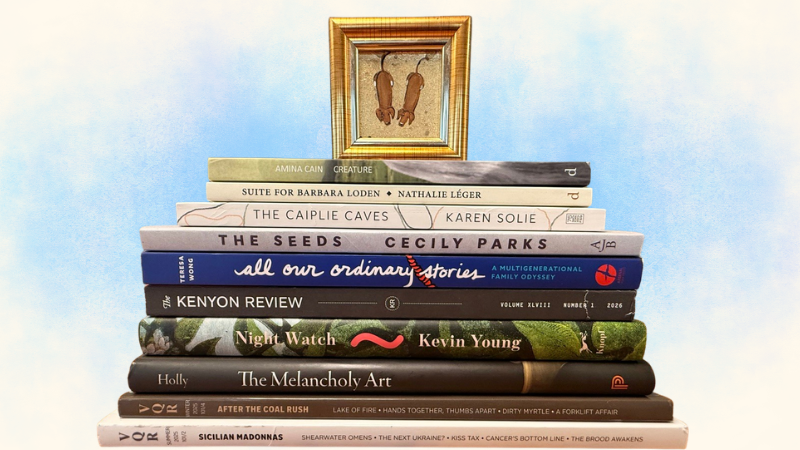
Before diving into her annotations of each title, Chang says of her to-read pile: “I typically have many books lying around and here’s a small selection of what I plan to read next, or have recently started reading. My reading interests parallel my general interests—poetry, genre-defying prose, contemporary philosophy, and art criticism. The small gold frame with two dachshunds was a gift from my friend, Liz. I’ve been looking at it more since one of my three dachshunds, Mustard, recently passed away unexpectedly. He was eleven years old and a wonderful companion during some of the most challenging times in my life.”
*
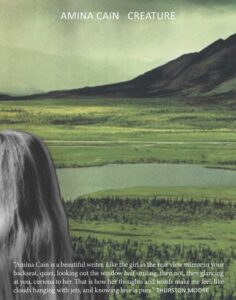
Amina Cain, Creature
I read Cain’s A Horse at Night: On Writing and really loved the patience and quiet tone of the book. Then I read Indecency and also loved the short fiction form. I thought I’d keep reading Cain’s work because I enjoy her tight, lyrical, patient, and perceptive prose.

Nathalie Léger, Suite for Barbara Loden (tr. Natasha Lehrer and Cécile Menon)
This is a book I’ve wanted to read for a while, published by Dorothy Project. I really enjoy books that deeply ruminate on an author’s interest and this book seems to be one of those hard-to-describe, genre-crossing books—the perfect kind for me. This book also has a beautiful and arresting cover.
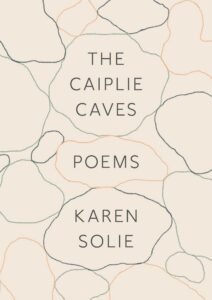
Karen Solie, The Caiplie Caves
I’ve been curious about Karen Solie’s work for a while so I thought this might be a good place to start. I’m interested in the Caiplie Caves as an actual physical place in Scotland and curious to see how Solie’s poems interact with place, history, and the personal.
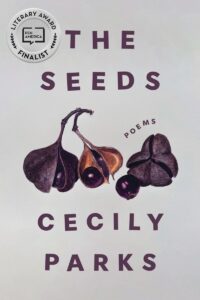
Cecily Parks, The Seeds
I’ve read all of Parks’ books and look forward to seeing how these poems might navigate natural themes that intersect with life. Parks poems have a quiet and meditative tone that I always appreciate.
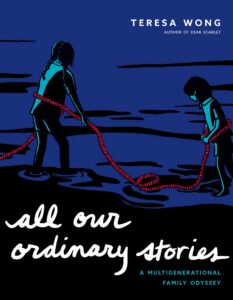
Teresa Wong, All our Ordinary Stories
I was on a panel at AWP with Teresa Wong a few years ago called “When Words Are Not Enough: Graphic Literature and Diasporic Histories.” I wanted to read this graphic memoir before the panel but ran out of time. I look forward to reading it now.
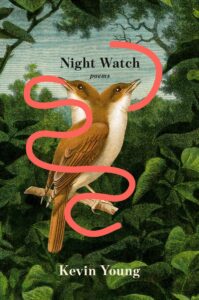
Kevin Young, Night Watch
I’ve read all of Young’s poems and still remember first encountering his wonderful book Jelly Roll decades ago. Young’s poems pay attention to the line and rhythm and are always a pleasure to read sonically.
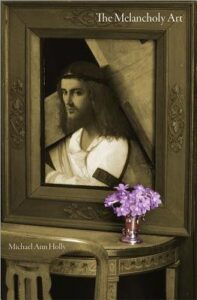
Michael Ann Holly, The Melancholy Art
I came across this book randomly. It’s a scholarly book by an art historian about the intersections between melancholy and art history, two subjects that I love ruminating about.
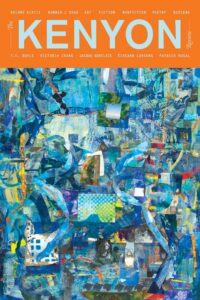
Kenyon Review, Volume XLVIII, Number 1, 2026
The Kenyon Review is one of my favorite literary journals. Whenever I receive an issue, I read all the poems from cover to cover.
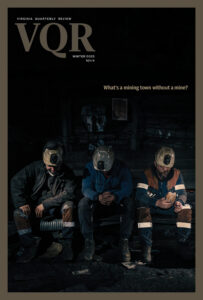
Virginia Quarterly Review, Winter 2025, 101/4
On the cover of this VQR, there’s a photo of miners but you can’t really see their faces or much else. The provocative Caravaggio-like cover has a chiaroscuro effect with the text, “What’s a mining town without a mine?” VQR is one of my favorite journals and I always love the pieces, especially the prose in the magazine.
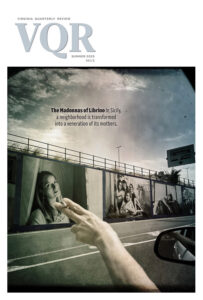
Virginia Quarterly Review, Summer 2025, 101/2
This issue also looks provocative and I’m particularly interested in reading an essay by Saskia Beudel because the accompanying photographs of dead birds by Mandy Barker are both terrifying and beautiful.
Diana Arterian
Diana Arterian is the author of the recent poetry collection Agrippina the Younger (Northwestern UP, 2025), which received the 2026 William Carlos Williams Award from the Poetry Society of America. She is also editor and co-translator of Smoke Drifts (World Poetry Books, 2025), a collection of Nadia Anjuman's poetry. A Poetry Editor at Noemi Press, Diana has received fellowships from the Banff Centre, Millay Arts, and Yaddo. She writes “The Annotated Nightstand” column at Lit Hub and lives in Los Angeles.