There had been many hotel rooms for the adulterers, currently peacefully asleep in a large white bed. Enough to qualify them as experts, connoisseurs. Some of these rooms had been modern, with contours hard-planed and sterile. Others were tired or even sordid, designed not for trysts but for airport stopovers, to grant a portion of hurried, adequate sleep. Most often they were luxurious or something close, rooms of starched sheets and creamy stationery and tiny shampoos. And so while Clara didn’t recognize the room when they woke up, or, in fact, possess any recollection of the day before, she was not overly surprised to open her eyes and see Francis there, asleep on the unfamiliar pillow next to hers. She blinked. She said his name out loud. He remained asleep, as if drugged.
She observed him in the lucid morning light, noting how he slept with one arm flung above his head and how his chest – finely muscled, scattered with dark, silvering hair – moved with his breathing. She registered the line of his cheekbone, the hollow of his throat, the fringe of his eyelashes against his skin. The longer she looked, the more awed she felt, and the more removed, as if she were a scientist and he under her microscope, wondrous and strange and newly discovered.
Her attention moved to the room itself. Yes, it was a hotel bed, unmistakably, with pristine sheets and a blue velvet throw rumpled at its foot. A polished cabinet next to the bed, clear of any objects. Parquet floor, French windows opening on to a narrow iron balcony, framed by gauzy curtains. She recognized these things, dimly, but could not place them. There was no minibar, no telephone on which to call for room service.
Clara got up and walked towards the first of two white doors, opened it to discover a second room. No bed in this one. Instead, her gaze landed on a small blue velvet sofa facing shelves that sat empty except for two books. A novel she and Francis loved, and a study on Flemish still lives, both bound in red cloth. She hesitated before reaching for the novel, flicking through its pages, putting it back. It was the same edition as her own. Turning round she noted a kitchenette with wooden counters set across the opposite wall, and another window through which she could see building facades, stucco with red carnations crowding their own iron balconies.
She opened all the cupboards and drawers, found a battered pot identical to the one she had at home, and started to make coffee on the hotplate. Slower than usual, she became so absorbed in the task that, for a moment, she forgot that Francis was there. When she remembered he was only meters away, it was a delicious physical blow – the air knocked right out of her.
She had never woken up next to him before.
A tiny white cup she had just taken from the cupboard slipped from her hold and shattered on the floor. She froze. Something was returning to her.
She heard his movements in the bedroom. As she knelt to gather the pieces of cup, she felt a startling panic.
Francis, she whispered.
He was there in the doorway then, his face pale. He recoiled to see her. He held out his hands.
Clara and Francis faced each other as if dueling. A faint breeze came through the window over the sink, slightly ajar, carrying with it the sounds of a city waking up.
They went back to bed. It seemed, instinctively, the only thing to do. Clara had spent their relationship loving Francis mostly in absence, and yet she believed in the body as the truest site of proof. How sweet it felt to touch his skin, even in her disorientation, knowing it like a map. The relief in thinking only of the immediate, the physical, letting everything else recede.
Afterwards they discovered their favorite clothes in the wardrobe. Clara opened the bedroom’s second door to find a bathroom, a cast-iron tub with her usual shampoo waiting beside it, next to the jasmine-scented soap that Francis favored. A sprightly fern. Don’t think about it, she told herself. Don’t look too closely. Francis frowned but did not say anything. He was very quiet.
They washed and dressed in the clothes that were there for them. They paced the rooms together. Discovering another door, Francis opened it with some trepidation to find a vaulting, deserted stairwell of limewash and marble. He closed it.
Scared to be seen with me? Clara asked, lightly.
Francis shook himself almost imperceptibly. Sorry, he said. He took her hand as if in consolation, though only for a moment. Together they walked out of the apartment, walked down the old-fashioned, slippery steps one by one. Their footsteps seemed impossibly loud.
Out on the sunny street, bewildered, they started to walk. They seemed to be in a residential area, the street lined with tall, grand buildings, each one the same as the last. Turning a corner, they found themselves in a square of restaurants and bars, cobbled, with a white stone fountain at its center.
Here they saw other people for the first time: people strolling across the cobbles, people sitting outside at café tables, relaxed and happy. The light was golden. The sky was uncannily blue. Violin music swooped through the air. Francis walked quickly through the square, turning off into a side street, Clara lagging behind and enraptured by everything she saw.
Look, she exclaimed as they passed a stall selling mysterious fried things inside paper cones, and one of the two smiling men behind the fryer passed a cone to her without asking for money, without asking for anything. They sat together on a step and ate, suddenly ravenous, what turned out to be salty parcels of courgette flower. A spot of grease on Clara’s summer dress, white cotton tied at the waist. It was warm. Francis kissed her on the cheek with a faintly oily mouth and she laughed in relief and scrubbed at her face with her hand, and then kissed him properly to let him know that she didn’t mean it. She was dreaming, she thought, or perhaps she was dead, and so in heaven. The happy, brightly dressed crowds moved past them, the buildings old, narrow, with people looking down and smiling at them, waving to each other. She dug her nails hard into her palms, then stopped at once in the fear that she would wake herself up. They carried on walking, discovering a pair of young women playing violins, sentimental love songs that Clara recognized but couldn’t name. When Francis reached his hand into his pocket he found unfamiliar gold coins, and he dropped one into their open instrument case.
They walked for an hour, perhaps, until, on turning a corner, they found themselves back in the first square, the one with the fountain. It appeared that the city was a small one, after all.
Let’s get a coffee, suggested Clara.
Francis nodded. Sunlight sheened off the white parasols and the checked cloth covering the table they chose.
A red-haired woman was crying at the next table, her fingers at her temples. Clara was amazed at how freely she did it, the uncomprehending sobs of a child. The woman sitting opposite her – small, mouse-like, dressed in green – seemed helpless, but then she started to distract the crying woman by building a fragile tower of sugar cubes. Look! she ordered, over the crying. The red-haired woman lowered her hands, cheeks tear-stained, watching its careful construction. Soon the tower fell in a graceful, brittle arc. At this, both women started laughing. The cubes were all over the table, all over the floor.
Clara looked and looked, fascinated, her eyes darting from one thing to another. A couple sitting on the edge of the fountain and splashing each other. Another couple with armfuls of roses, walking around the square and offering them out, petals falling behind them. Everybody was paired up, she realized. Two by two.
Nobody’s here alone, Clara said, gesturing at the people surrounding them. Everyone’s in a couple.
Francis craned around. Not everyone, surely, he protested, surveying the scene for himself. She took a brown sugar cube and crunched it quickly between her teeth. When Francis finally turned back, he stared at her as though he had never seen her before in his life. Taking up his hand, worn from activities she hadn’t witnessed, she kissed it, quickly, bashfully. It was heavy. She did not let go.
Where are we? Francis asked.
I don’t know, she said. But I have the feeling that it’s all right not to know. That everything is fine and will continue to be fine. Don’t you feel it?
It was true, Clara felt this very strongly, though she knew nothing else; that they were safe and well and there was no need to worry about anything anymore, that nothing could touch them or discover them or steal them away. The warm air on her skin felt wonderful. Francis didn’t answer her. She held his hand tighter. She was hurting him, but he didn’t mind. If anything, the discomfort was grounding. This world was vibrantly physical. His cappuccino was hot, the best coffee he had ever tasted. He could still feel Clara’s lips against his skin from earlier, pleasure’s echo shimmering through his nerves.
When she went to the bathroom Francis checked his wallet surreptitiously. It was his usual one, but the photographs he kept of his wife and daughter were not there, only more of the heavy gold coins. He patted down every pocket of his jacket and trousers, remembering he owned such a thing as a phone – a sudden thought, like waking from sleep– and was irritated, puzzled, to discover that was gone too.
On the table next to them someone had left behind a slim newspaper, bearing the headline True Love Persists! over a photo of a square crowded with couples. Francis flicked through its pages, but it seemed to contain nothing but romantic poems. It didn’t even give the date. He abandoned it.
*
I’m sorry if this is a strange question, but where are we? he asked the tall waiter who came to take their order. But he only looked at Francis and shrugged.
Clara was right: it was a city of couples. Some old, some young, some well-matched and some ill matched, some monogamous, some less so, some ecstatic, some desperately unhappy, some pale and drawn, some who had been there a long time and some who were new. Couples eating and cooking and fucking and arguing and sleeping and dancing and fighting and swimming and drinking and reading, sitting and lying sprawled on floors and sofas and soft surfaces, couples at each other’s knees, at each other’s throats, hair pooling on laps and pillows, couples with eyes wide and eyes tearful and eyes shut.
In the city there was time for all of this, and more. Time for the ordinary, to which we normally give little value: the arm snaked around the waist as the other cooks, the choreography of vegetables chopped, the name called from another room (Francis, could you come here a second, Clara had always dreamed of calling), the magazine picked up and flicked through and discarded on a table, the crumbs in the toaster, the kiss on the side of the mouth, the coffee made and brought to bed.
Time for life beyond the domestic too. Life beyond the internal and the accumulated and protected, life which did not need to be contained. The couples could do anything and could go anywhere they wanted, within the city’s limits. It was the only place they could do so.
__________________________________
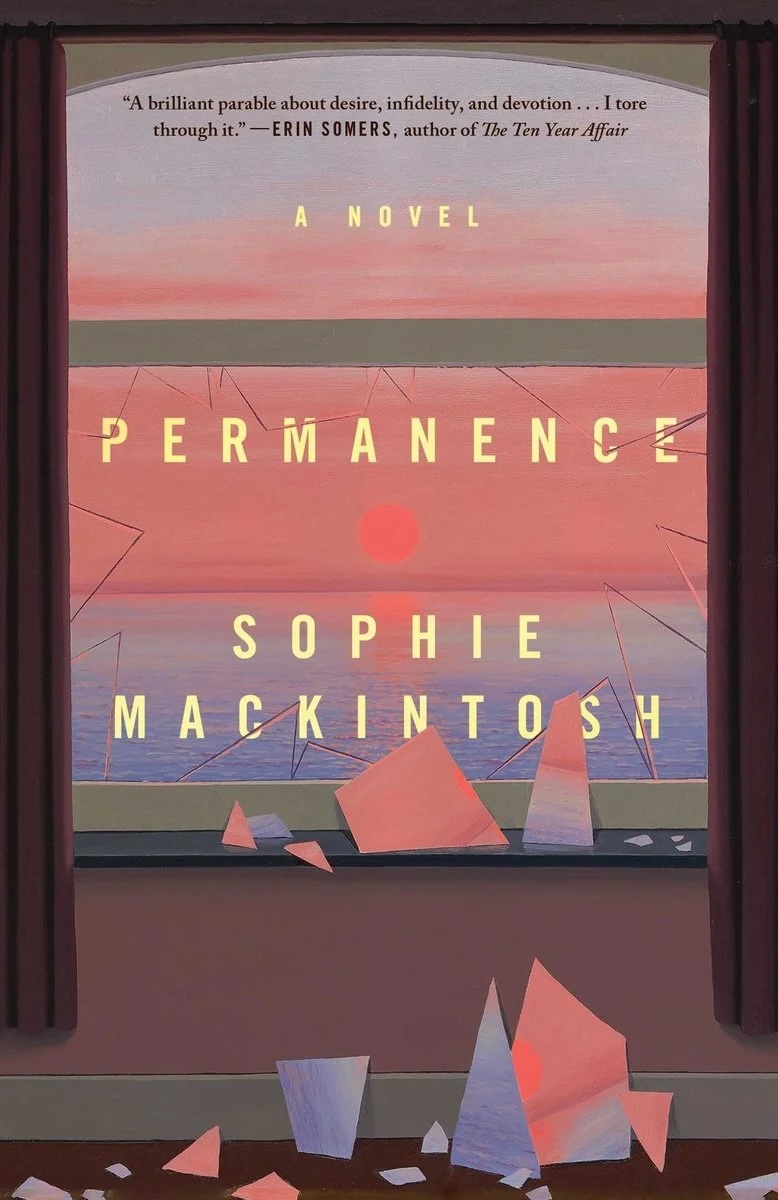
From Permanence by Sophie Mackintosh. Used with permission of the publisher, Avid Reader Press/Simon & Schuster. Copyright © 2026 by Sophie Mackintosh.