Nina Schuyler on Personifying a River in Craft and Creative Voice
Jane Ciabattari Talks to the Author of Open the Floodgates
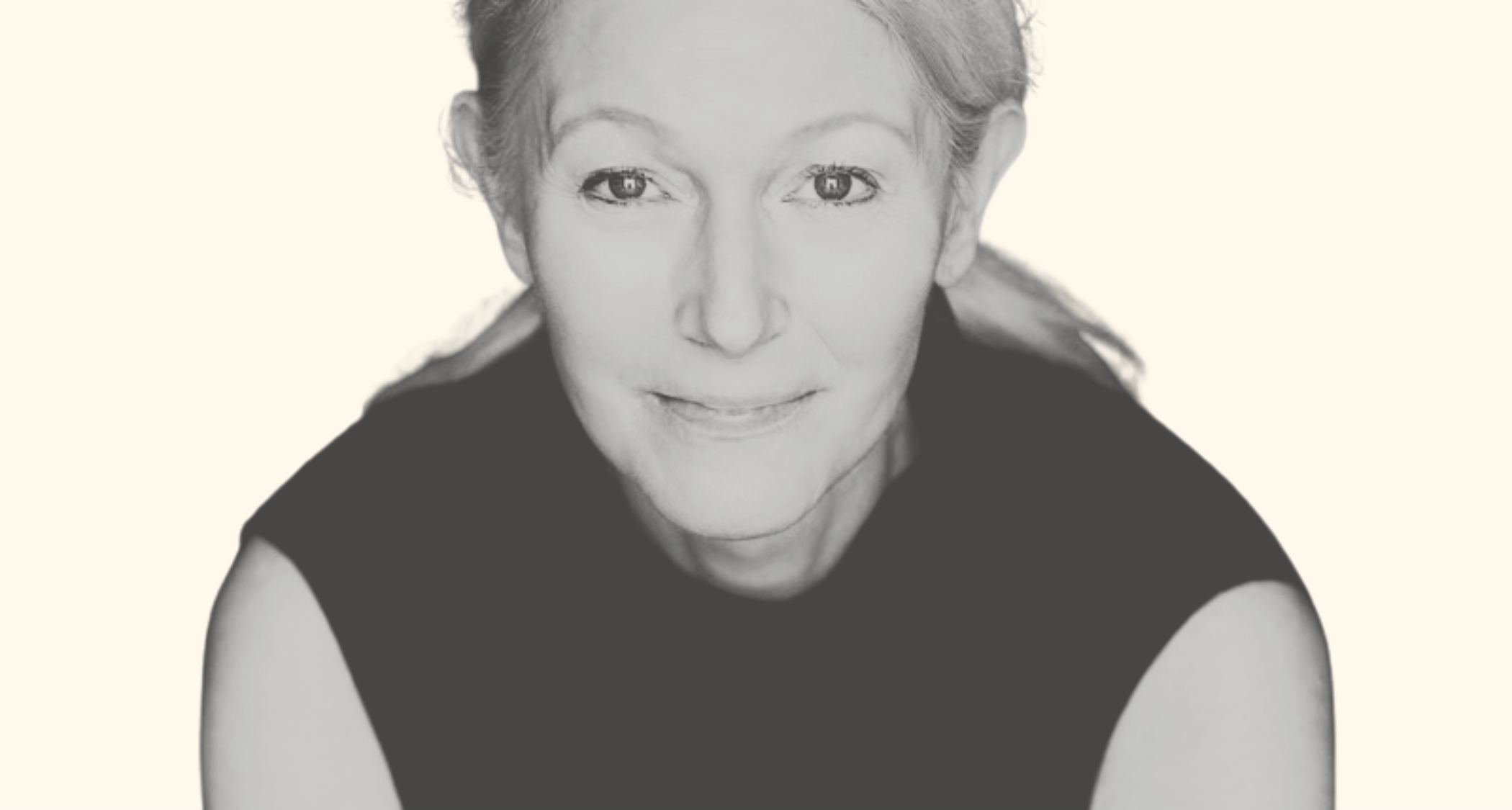
Nina Schuyler, the award-winning climate fiction author, grew up surrounded by bodies of water in Washington State. She spent most of her summers as a girl in or on Gravelly Lake, which was carved out by a glacier, so it was very deep and very blue, she explains. The lake is surrounded by Douglas fir and hidden homes. She sailed, swam and snorkeled in that water, which she says was like a second home. On a paddle boat, she’d head out to a buoy, tie it up, and read for hours in the middle of the lake.
Her family also spent a lot of time at Puget Sound. She and her sisters wandered the shore, playing house with the small crabs and building rock homes for them. They would find oysters and bring them to their dad, who’d open them with a knife, squeeze lemon juice on them and they’d eat them. They had a rowboat named Rosie, and would head out and look for sharks.
At the Deschutes River in Oregon, the sisters would ride their bikes alongside the river and have a picnic along its shores. Their dad taught them how to fly fish on that river.
These experiences gave her a bone-deep understanding of the natural world that shines through in her new novel, Open the Floodgates, a book that opens with a major character, the River, arriving at a small-town courthouse for a trial to determine its rights going forward.
*
Jane Ciabattari: In our last conversation about In This Ravishing World, which won the PEN Oakland Josephine Miles Literary Award, the W.S. Porter Prize for Short Story Collections, the Prism Prize for Climate Literature and was a finalist for the Northern California Book Award, you told me you were working on “something experimental-ish involving nature….I’m in that stage of letting it unfold, trying not to judge it or rein it in. I’m back to that refrain: go ahead, what am I waiting for? Let it rip.” How did that approach work for you?
Nina Schuyler: It meant that in early drafts, with the story breathing down my neck and the River waiting to come to life, I paid attention to rhythm and sound and movement and the way the text felt rather than to rules. Rules that would have suffocated the story and steered me far from what I wanted to write, which was to have the text feel like a current on the page, swishing here and there. Instead of steadiness, with one or two points of view, I wanted an oceanic point of view, with the view sometimes very close and sometimes panoramic. It allowed me to move from character to character, even in the middle of a scene. It was thrilling and scary because I didn’t know if it would work. If I’d listened to a lot of the rules stuffed in my brain, I wouldn’t have done any of it. But this let-it-rip approach (coupled with: what do you have to lose?) said Yes, go ahead. Do it!”
JC: How would you trace the evolution of Open the Floodgates?
NS: During law school, my favorite class was water law. My professor was a passionate man about water. Over the years, I’ve followed the legal trend of granting personhood to natural entities: rivers, mountains, forests, sea turtles, valleys. Not only is it fascinating legally, moving what is usually considered property into the category of person, but also at the language level, conflating the word “river” with “person”; what an unexpected jolt, kicking my brain into high gear with a bunch of “what ifs.” Once that happened, I began reading everything about the Rights of Nature movement and the granting of personhood to natural entities.
I thought, for once, instead of a river in the background and humans in the foreground, the River and humans would be on the same ground.
In the real world, a river that’s granted personhood is appointed guardians—humans—to represent it in court. But why not let the River do it? In fact, the River doesn’t trust humans so much anymore that it would want to do it. And, I thought, for once, instead of a river in the background and humans in the foreground, the River and humans would be on the same ground.
JC: Where did the title come from?
NS: I was writing and writing this novel and my husband turned on a beautiful, haunting, gorgeous song. I think I stopped writing and started dancing. The song was Thom Yorke’s “Open the Floodgates.” He’s probably not singing about a river, but whatever: Once you put art out into the world, a listener, a reader, a viewer can interpret it however they want. So for me, it was about the River and the book as a whole, and York’s refrain, “someone lead me out of the darkness,” stayed with me, keeping the language alive and energetic and bright, and the light shining in the story.
JC: How did you envision the river as a character, as a voice, as a consciousness, as a physical presence, as imagined on the page and also as evoked by the type on the page?
NS: I went down the standard pathway of characterization and thought about the defining qualities and idiosyncratic details of a river, which was challenging in the best of ways. A river that’s still alive is moving. It’s flowing downhill to another body of water, maybe a lake or the ocean or another river. So I imagined (the imagination, what a beautiful thing, the heart of everything) and felt how hard and baffling it would be for the River to sit still in court in a chair. To even be in court, a rectangle, a shape that makes no sense to the River. All the River’s metaphors would invoke an image from nature.
Around the third draft, I thought: the River wouldn’t move down the page in a straight block of text. That’s too close to what humans have done to rivers, which is to turn them into straight lines for our convenience. Instead, when the River moved, it would wind its way down the page, swaying left and right. I wanted the reader to feel the movement, the swing and sway.
Time has a different texture for the River, I imagined; in my story, the River is three million years old. I began to see the River as a vessel of memory; it knows everyone in town, remembers when they were young, knows their ancestors, on and on. The River remembers the cottonwood trees that once lined its bank and the fish that swam along the gray bottom stones, and the birds that came to drink and eat. Remembers when Hazel and the other women would come down with their children and wash clothes in the water. Remembers Hazel, who is seventy-five, “as a toddler in diapers, a girl in a yellow summer dress, a teen holding hands with James Colville, the rascal, a young woman with Ted Walker and his sturdy shoulders; when he walked the earth shook slightly and his abundance spread out like moss.”
JC: You note that Virginia Woolf’s stream-of-consciousness style inspired your “river-of-consciousness,” “swishing between characters” style in this novel. How did you build this set of characters in this manner? Which characters were easiest to convey? Which were most difficult, the last to figure out?
NS: After finding the River’s voice (which took a pretty long time), I knew there had to be a judge and that led to the Judge’s wife, the defense attorney, and then pigeons perched on the courtroom windowsill. I gave the opening twenty pages to a couple of writer friends and asked if it was working. It wasn’t. It was swishing too fast, the waters too choppy. So I slowed it down, letting the reader swim around in one consciousness long enough to feel something for the character before moving on.
The river is a force. It contains both passivity and agency, calmness and violence. These two states of being create tension and ambiguity, which is great for a story because you don’t know which one will prevail.
If the story was hitting rough waters (sorry for this extended metaphor), I included an omniscient first-person narrator who mapped it out for the reader: “There’s a nervous energy in the courtroom, so prepare yourself. No one has ever seen the River, or any river for that matter, in court, so the energy is flying wild in here, like a rubber ball bouncing off the walls.”
For all of this, the operative word here is play, playing around. And listening and feeling the prose. In another revision, I built connective tissue, passing the baton from one consciousness to another via a gesture, a scent, a word, dialogue, vision.
It was easy for me to imagine nine-year-old George, who testifies on behalf of the River. I have two sons, and they both had immense, active, buoyant boy energy. I spent a lot of time on Ed, who is from a local tribe, working and writing to avoid stereotypes. Gary, the defense attorney who is hired by big agriculture companies, was difficult too. It’s too easy for a reader to hate a character like that, so I worked to complicate him, revising until the very end, creating vulnerabilities— those soft places for the reader to feel softer toward him.
JC: Which legal cases did you find most useful in developing this novel? How were you able to project future cases? Which legal scholars were most helpful? Did you own law degree help?
NS: A case from 2006 was hugely inspirational: the Community Environmental Legal Defense Fund worked with the community in Tamaqua Borough, Pennsylvania, to draft a law granting personhood to the waterways. With state and federal approval, Lehigh Coal & Navigation Corporation planned to dump toxic sludge in abandoned coal mine pits. The community fought it and the ordinance was passed, making Tamaqua Borough the first municipality in the United States to recognize the legal rights of nature.
Ecuador heard about this case and contacted CELDF, which assisted with the country’s constitutional convention, drafting Rights of Nature language, and granting personhood to all of nature. The national constitution was ratified in 2009 by over 60% of the Ecuadorian population, making it the first country to take this step. Since then, about two dozen cases have been brought on behalf of nature in Ecuador, including a cloud forest and a river.
I think my law studies helped me understand the profound reframing that happens with personhood: what was in one category, property, is moved to another category, a person, who has rights and responsibilities. So far, no one has sued a river for damaging property, but it’s in the realm of possibility. Once you’re a person, you can sue, but you can also be sued. I think this area of law is evolving and at some point, the concept of personhood will have to be revised for natural entities, eliminating the “responsibility” prong so they can’t be sued.
JC: The research into rivers seems extensive. Which were your most valued sources of information?
NS: Cindy Lowney, a river and water resources engineer, patiently and generously talked to me about all things river: a river’s critical role in sustaining life; what constitutes a healthy river; the vital riparian world, or life around the river; how humans are, in many ways, like rivers; and finally, the damage humans have done to rivers. The Great Thirst: Californians and Water, 1770s-1990s by Norris Hundley Jr. helped me understand California rivers and the history of water. So did Cadillac Desert: The American West and Its Disappearing Water by Marc Reisner.
JC: Did you have any specific floods in mind in the section of the book devoted to the power of a river risen outside its banks, especially when its original shape has been corralled and distorted by development?
NS: In December 2005, my family and I were living in Fairfax, California, right next to San Anselmo Creek, when a “Pineapple Express,” coupled with a “King Tide,” caused the creek to rise and charge out of its muddy bank. The creek took over roads and yards, slammed into houses and businesses, and four feet of water sped down San Anselmo Avenue, scattering cars, breaking windows, and flooding the fire station. On December 30, what was usually a gurgling, calm sound became a roar, and we stayed up all night watching the water rapidly rise in our yard, and rise and rise, right up to the doorstep. We hauled everything that was downstairs upstairs in anticipation of a flooded first floor. The water didn’t make it that far, but for many people, the creek took back their first floor and more. That’s right—the creek took it back. Much of San Anselmo and Fairfax are built right next to the creek in the flood zone.
JC: What draws you to climate fiction?
NS: The ecological collapse is the biggest existential crisis facing humanity and I can’t look away. We are a species that loves stories—we’re story makers. Stories take the reader by the hand and say, “Come live here for a while. Let’s experience life this way.” I can’t do many things that well, but I can write stories.
JC: This novel’s cover by Luis F. Ramos is gorgeous. Can you tell us about how it was developed?
NS: Luis did a beautiful job! There was a great deal of back and forth. I wanted something minimalist yet beautiful, and Luis got it. He really did. He read the book, so maybe he felt the aliveness of the river, and so the cover, at least to me, feels full of movement and aliveness.
JC: Back to Virginia Woolf. Which of her books did you read first? Which has most influenced you? Does her death by filling her pockets with rocks and walking into the river Ouse behind her home in Sussex on March 28, 1941 have any influence on Open the Floodgates?
NS: I first read Mrs. Dalloway, which demolished all that I thought a book had to be. I was—and am—in awe of her style, her innovation, her ear for language. She taught me so much about rhythm, sound and repetition; about how you can write a coherent, polyphonic story by using multiple consciousnesses. Then I read To the Lighthouse. I could talk endlessly about this novel, but I’m looking slightly beyond the midpoint, at the section “Time Passes,” in which humans and their lives are shuffled into brackets and the night and day and the little airs take over, certain airs “detached from the body of the wind.” And soon, Woolf has the little airs questioning and wondering and playing with the objects of humans. I was smitten; I was charmed that something other than humans could be the foreground of story.
I hadn’t thought about Woolf ending her life in the River, but in my novel, I remind everyone that the river is a force. It contains both passivity and agency, calmness and violence. These two states of being create tension and ambiguity, which is great for a story because you don’t know which one will prevail.
JC: What are you working on now/next?
NS: I’m staying in the realm of climate fiction and the human and more-than-human relationship. With each book, I try to do something different, and so this one, too, means I’m lost in a big field, wandering around blindly, touching dirt, trees, the sky, and a huge blizzard, and it’s marvelous.
______________________________
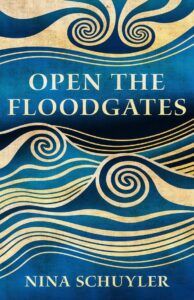
Open the Floodgates by Nina Schuyler is available from Reverberations Books.

Jane Ciabattari
Jane Ciabattari, author of the short story collection Stealing the Fire, is a former National Book Critics Circle president (currently on the Advisory Board ) and a member of the Writers Grotto and Page Street. Her reviews, interviews and cultural criticism have appeared in NPR, BBC Culture, the New York Times Book Review, the Guardian, Bookforum, Paris Review, the Washington Post, Boston Globe, and the Los Angeles Times, among other publications.