







Revolutions always begin with ugly stepsisters. Our little sister was neither ugly nor revolutionary. Who knows what darkness lurked in her heart when she strapped on a bomb and blew herself up.
The curtain rises: disaster and ruin slither out into the audience, pushing onward into homes and hospital waiting rooms. Then into your bedroom, into your bed. Filling them with black smoke, with rubble and shattered glass, with frantic firefighters, with civilians huddled at the police line, necks craned. Cries resound: Make way. Coming through. Ya Allah, Ya Allah. Amidst the footfalls are screams and wails; the asphalt is littered with body parts, blurred for broadcast.
This is the first explosion.
Annisa is not there. Only two bombs later do we discover her, the beautiful sister, the pious one, the apple of Papa’s eye.
Annisa, our little sister, yours and mine—the reason our faces are spattered with blood, which the water of ablution will not wash away, which demands greater restitution: her two older sisters must look back, must find out where they left her behind.
You will be a beautiful bride.
Nana’s prophecy to little Annisa, remember? Tell me, what kind of bride did you think she’d make?
The surviving sisters exchange glances and wonder: if we had known Annisa would wind up here, at this point, this day, maybe we wouldn’t have felt remorse or doubted ourselves. We should have tossed her into the well after all, those many years ago, like Yusuf’s brothers when they betrayed Yusuf. We should have taken her life before she robbed others of theirs. But who could have foreseen it? Even Nana couldn’t have predicted such a Ramadan, explosions ringing in our ears, flame and burnt flesh searing our eyes. The stench, alas, can’t be captured on camera. You have to be there, in that city, at the sites of tragedy, for it to drive you mad.
This is a tale of three sisters. Isn’t it always? And who doesn’t grow up hearing tales of home, family, us. But this also is the tale you didn’t ask for, a tale of the unseen, the unheard, the unremembered. The two who remain seek clues—why, whose fault, when? For the shame and regret are unbearable, and maybe there’s a way out, like at Nana’s, when everyone played that game, the hunt for the hidden key. The three granddaughters combing every corner of Victoria’s House—familiar terrain. The dark kitchen with its black cement floor; the enormous pots and pans hanging from sturdy hooks; the well out back—goading, goading; the forbidden chamber; and the soft lullabies of some presence neither alive nor dead, drifting through the walls. Whoever finds my key shall travel far, said Nana, though people whispered that the road to her house had no end. You’re always on the same path, going in circles. You never arrive.
There is no answer to be found in this story, no magic pill, pleasingly round, to be halved or crushed, then swallowed. It’s a story of those who fail, who fall into debt, who shift shape. During our search we find ourselves focusing on trivial matters. Everything else, so soft and smooth, slips through our grasp. Like our little sister.
What color did Annisa wear that day? I’m sure no one paid much attention—her clothes were blown to smithereens. The newspapers dubbed her the woman in black. But black never appealed to Annisa. Only white, jasmine white, pure and immaculate, the white of her wedding day, when guests lined the hall, left and right, in eager anticipation, eyes fixed on the radiant bride approaching the platform, the long hem of her gown and embroidered lace veil skimming the ground, the rest of the procession bringing up the rear, chubby-cheeked nieces and nephews, the bride’s father and mother, and her jealous sisters, also in white; a heady fragrance sweeping in, as if from Paradise. Or from the grave.
Annisa, celestial maiden, garlanded in jasmine, has now passed. For Jannah, she created Jahannam—for Heaven, she created Hell.
__________________________________
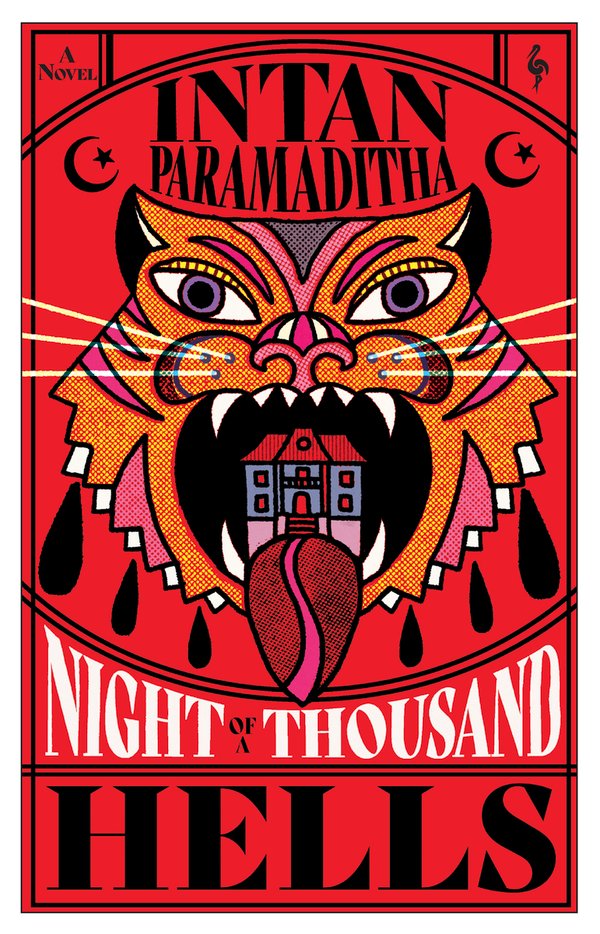
From Night of a Thousand Hells. Translated from Indonesian by Stephen Epstein and Tiffany Tsao. Used with permission of the publisher, Europa Editions. Copyright © 2026.