Meet Hyman Judah Schachtel, the Anti-Zionist Rabbi of Houston
Benjamin Moser on the Political and Religious Debates Among American Jews As World War II Raged
“Never a dull moment during the bygone year!!” wrote Leopold Meyer, president of Congregation Beth Israel of Houston, Texas, in May 1944. In and among the usual chatter in his annual report (“Mr. and Mrs. Isaac S. Brochstein and Mr. and Mrs. Sam Brochstein complimented the Congregation with two beautiful fern boxes, which appropriately adorn the Temple Altar”) was a conflict so vitriolic that, in the middle of a world war, it landed Beth Israel in the pages of Time magazine and The New York Times.
This was not where Beth Israel liked to be.
The Greek columns on its facade, south of downtown on the corner of Holman and Austin Streets, proclaimed the stability— the unimpeachable correctness—of one of the city’s most enduring institutions. Beth Israel was a flagship of American Judaism, its origins stretching back to 1844, when Texas was still an independent republic. It was proud of its status as the oldest temple in Texas and the largest congregation in the South. Its rabbi, Dr. Henry Barnston, had served for forty-three years. Its board was drawn from the same captains of industry—bankers, retailers, insurance men—who would have occupied such positions in any similar synagogue. These were not people—this was not a place—that went looking for trouble.
Yet trouble had found Beth Israel. In mid-1943, the congregation was riven by a scandal so intense that for months it relegated even the most shocking reports from Nazi-occupied Europe to the inner pages of the Jewish newspapers. The controversy went to the heart of what it meant to be Jewish and what it meant to be American, and created a schism that reverberated for a generation. It took its most fervent participants by surprise. The cause, as ever, was Zionism.
The congregation was riven by a scandal so intense that for months it relegated even the most shocking reports from Nazi-occupied Europe to the inner pages of the Jewish newspapers.
*
On September 7, 1943, Beth Israel’s Board of Trustees approved a single page of “Basic Principles.” These—which would soon earn its authors comparisons to Adolf Hitler, the Ku Klux Klan, and the Spanish Inquisition, and which would be called the Jurenberg Laws, reminiscent of the Nuremberg Laws—included seven points.
They proclaimed the unity of God. They vowed to usher in a messianic age of brotherhood, rather than awaiting a personal Messiah. They asserted the religious equality of women and men. They embraced the moral core of the Bible while rejecting rules that “regulate diet, priestly purity, dress, and similar laws…which today are entirely unsuited, unnecessary and foreign to the beliefs and observances of progressive Judaism in modern America.” They said that Hebrew, unknown to most congregants, should for the most part give way to English so that prayer would not become a “soulless form.” They promised to “help our co-religionists whenever and wherever the need may arise, even as we must help all mankind that may be in need, in accordance with the principles of our faith.”
In American Reform synagogues, this was boilerplate. So, until recently, was the second of the seven principles, the paragraph that unleashed the controversy:
We are Jews by virtue of our acceptance of Judaism. We consider ourselves no longer a nation but we are a religious community and, therefore, we expect neither a return to Palestine nor a restoration of any of the laws concerning the Jewish State. We stand unequivocally for the separation of Church and State. We are neither a nation, a nationality nor a race. Our religion is Judaism. Our nation is the United States of America. Our nationality is American. Our flag is the “Stars and Stripes.” Our race is Caucasian.
No current member would be obliged to subscribe to these principles. Any new member must either accept them or, in case they could not, become “associate members,” who would enjoy full access to the temple’s religious, social, and educational services—everything but the right to vote.
*
In September 1943, these principles provoked outraged howls. The outrage was not unpredictable. There had always been tensions among American Jews, and these, in Texas, had a specific character. The core Texas Jewish families traced their origins to Western Europe. Their ancestors had entered the United States through Southern ports, especially New Orleans and Galveston, which gave them a different political and cultural orientation from those who had entered through the East, and above all through New York. Their religious orientation was different, too: Far more so than in the North, Southern Reform congregations rejected anything that smacked of Orthodoxy.
From the late nineteenth century, Jews poured into the United States. In a single decade, from 1910 to 1920, the Jewish population of Texas doubled. By 1940, it had grown almost another 50 percent, to around fifty thousand. Those who arrived in the 1900s had very different cultural, political, and religious backgrounds from the older Texas Jews. They were more likely to speak Yiddish—and, as persecution of Jews increased following World War I, they were more likely to be Zionists. In the context of Texas, these differences might not have mattered, since the Jews, like other citizens of the fast-growing state, were adept at absorbing immigrants. But by 1943, there was a more urgent context.
That, of course, was the war. Interspersed among the 553 pages of documents relating to the Basic Principles in the Beth Israel archives are many that refer to the events not yet known as the Holocaust. These give an idea of what an average American Jewish community would have known, in those years, about those events. By 1943, much was known, some firsthand: Houston was full of refugees, among whom was my grandfather, a Berlin lawyer who had reached the United States five years before. Beth Israel collected the desperate advertisements placed in the national newspapers.
From February and March 1943, for example:
Massacred By Foe, Ignored By Friend, A PEOPLE APPEALS TO THE CONSCIENCE OF AMERICA…
German Postal Authorities Now Use A Stamp Which Reads “Died in the course of liquidation of the Jewish Problem”…TWO MILLION JEWS HAVE ALREADY BEEN EXTERMINATED!
THE PEOPLE HAVE SPOKEN—Save the 4,000,000 remaining Jews of Europe by ACTION—NOT PITY!
These advertisements stressed the importance of allowing Jews to immigrate to Palestine, a small country where there was hostility to such immigration. They did not stress the importance of allowing Jews to come to large Western countries that could have absorbed them—Great Britain, South Africa, Brazil, Canada, Argentina, Australia, New Zealand, for example—and neither did they stress, or indeed even mention, the most obvious destination of all: the United States of America.
*
The first whisper of trouble, and the earliest document preserved in the archives, appeared in Houston’s leading Jewish newspaper, The Jewish Herald-Voice, on January 7, 1943. Titled “We Reject Zionism: An Anti-Zionist Leader States the Position of His Group,” the article was the work of a New York rabbi named Hyman Judah Schachtel.
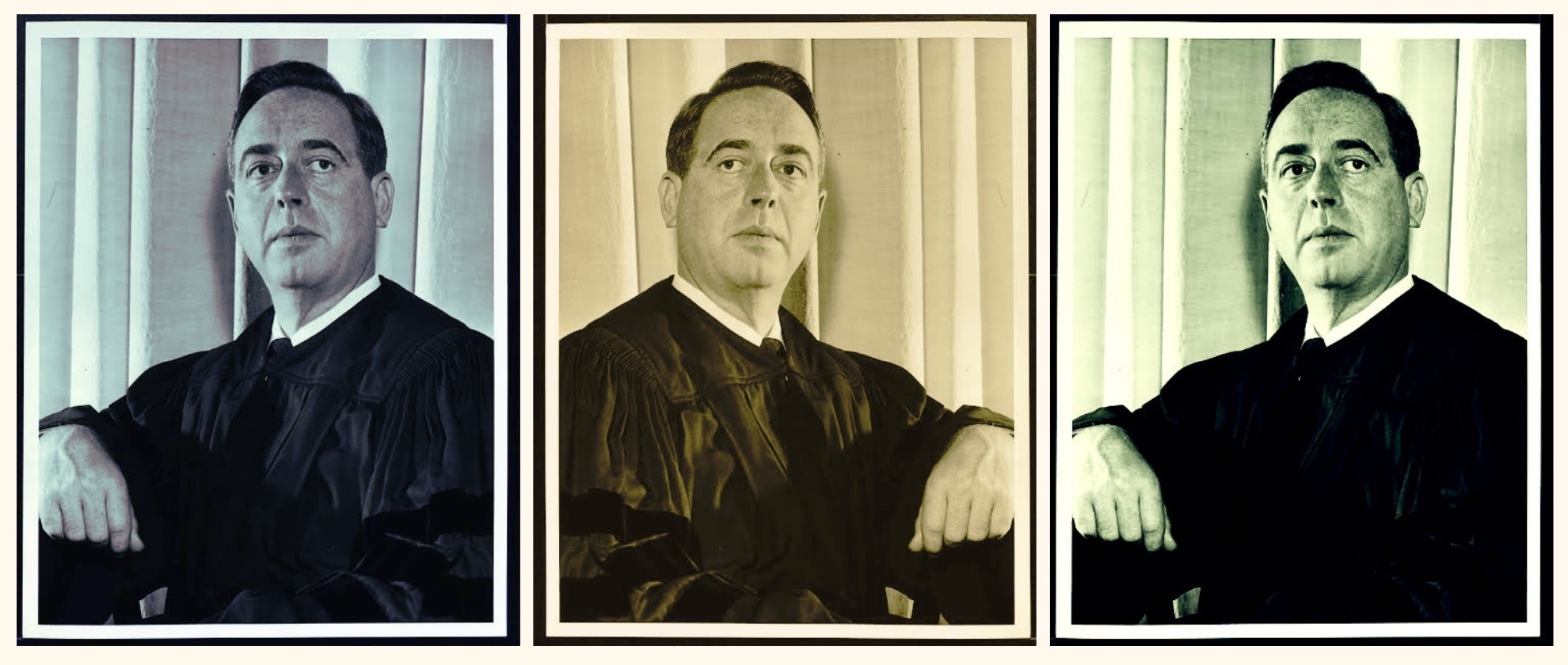
Schachtel was thirty-five. He had been born in 1907 in London, where his father, an opera singer from Kalisz, had been recruited by Oscar Hammerstein to join a company he was hoping would rival the Royal Opera House in Covent Garden. Following his opera career, Schachtel’s father became a cantor and married a granddaughter of Yitzchak Elchanan Spektor, a rabbi of Grodno, after whom the seminary of Yeshiva University is named. Unusually for a girl of her time, Schachtel’s mother had learned Hebrew and Talmud. Because of this background, Schachtel said, “I had very little chance to be anything else but what I am.”
The family sailed on the Lusitania in 1914, a year before a German torpedo sank the ship and killed nearly twelve hundred people. At Ellis Island, a tragedy: The family’s nanny, nicknamed Silly Lulu, was turned back because she was unable to read. “I can still see her screaming and my brothers and I crying because we wanted Silly Lulu to stay with us,” he would later recall.
Schachtel grew up in Buffalo. He was a ginger who used to pray that he would wake up with his brothers’ dark hair. “All redheads develop an inferiority complex,” he said. His father died shortly before he was ordained in 1931, and then an early marriage ended in divorce. He then married a younger woman, a student at Vassar named Barbara Levin. His rich voice—“That’s what attracted me to him in the first place,” said Barbara—rang with authority. He joined the West End Synagogue in Manhattan, and was employed there when the article appeared in Houston.
In it, Schachtel rejected the Zionist idea “that we are Jews by race and nationality.” It rejected the idea that Jews were homeless: “We American Jews are not homeless. The British Jews fighting valiantly for Britain do not regard themselves as homeless. Nor do the Russian Jews shedding their blood along the 2,000-mile front.” And he took a long historical view. “True, the last two decades have been bitter ones in some countries [!], but those decades were only part of a stream of history which in the last century and a half has shown enormous progress in the expansion of freedom.” The problem, as Schachtel saw it, was not homelessness; it was the denial of universal human rights. This was exactly what people as different as Edwin Montagu, Sadiq Saad, and Aaron Samuel Tamares had also maintained. In the middle of the war, Schachtel’s message was optimistic:
For us to maintain that postwar Europe will be eternally and unchangeably hostile to the Jew is to call the objectives of the United Nations so much poppycock and to imply that the world tomorrow will only carry on the evils of the world of yesterday. It is to accept a barren philosophy of defeatism to believe that while the Axis will be defeated, the Axis ideology will be triumphant. It is to grant Hitler NOW his victory in making Europe “Judenrein” (without Jews).
The documents do not say why this appeared in The Jewish Herald-Voice, but a movement was afoot to replace the seventy-five-year-old Dr. Barnston, Beth Israel’s long-serving leader. Though unanimously respected and resolutely opposed to Zionism, Barnston was aging. The board tried to ease him out diplomatically, but he refused. They tried to ease him out less diplomatically, suggesting that they might go public with his shortcomings—“shaky delivery of sermons, poor health, and inability to draw a crowd,” according to the historian Hollace Ava Weiner—and even showed him a surreptitiously snapped photograph that revealed the rows of empty pews at a recent service. The trustees feared that if something happened to him, his heir apparent, Robert Kahn, would replace him, and it was known that Kahn had Zionistic inclinations. Conveniently from their point of view, Rabbi Kahn was thousands of miles away in the Pacific, serving as a chaplain in the U.S. Army. They were seeking a suitable replacement for Dr. Barnston before Kahn returned. They found Schachtel.
The controversy went to the heart of what it meant to be Jewish and what it meant to be American, and created a schism that reverberated for a generation.
Though every effort was taken to make Dr. Barnston’s departure appear voluntary—the official reason was poor health—he was fired on May 19, 1943. This was four months after Schachtel’s piece appeared, perhaps as an audition. By his own account, Schachtel was not looking for another job. As he told it, Rabbi Jonah Wise, son of Isaac Mayer Wise, called to say that a Mr. George Cohen of Houston—the owner of Foley’s, one of Houston’s most prestigious department stores, as well as the brother-in-law of the synagogue’s president, Leopold Meyer—wished to meet him in his suite at the Waldorf Astoria. The meeting went well. Schachtel visited Houston, with its notoriously hot and humid climate, and was chauffeured from home to hotel to restaurant in such a crisply air-conditioned bubble that he reported to Barbara, in New York, that the place was “freezing.” The welcome, though, was warm. Still, he was hesitant. “I loved New York City and couldn’t see myself coming here,” he remembered. “Whereupon some of the outstanding colleagues of mine in the country called me and said it is your duty to do this.”
The board would not have dismissed Barnston without a ready replacement, and the reference to “outstanding colleagues” pressuring Schachtel to go to Houston is a hint that the nationwide anti-Zionist camp considered it a priority to keep a synagogue as prominent as Beth Israel from embracing Zionism. There is no evidence that other candidates were considered. Schachtel had been active in the American Council for Judaism, which led the charge against Zionism in the United States. He had helped to round up signatures for an open letter from American rabbis, and was described as one of the new group’s hawks.
This earned him the opprobrium of one of the leaders of the New York rabbinical establishment, Stephen S. Wise, who blocked Schachtel’s election as the head of the New York Board of Jewish Ministers. In reply, sixteen rabbis walked out. This defeat only made Schachtel more visible among the anti-Zionists. The American Council for Judaism was especially prominent in the South, with its more integrated Jewish communities, and brought him to the attention of the Houston congregation.
To the public, Beth Israel’s board maintained that, following Barnston’s resignation, they sought a man “becoming the importance and dignity of Beth Israel,” one who “subscribed to the principles of the faith as taught by Dr. Barnston for nearly forty-four years, and from which the members of Beth Israel would brook no departure.” The phrase “principles of the faith” was code for opposition to Zionism, and clearly understood as such. Only three days after Barnston’s firing, a congregant named Jacob L. Farb, whose letters would reveal a taste for flamboyant metaphors, used the first of the Nazi comparisons that would punctuate the following months. “The deftness of the proceeding”—the firing of Dr. Barnston—“has all the ear-marks of a ‘blitz’ plainly marked ‘made in Germany.’”
Two months later, on July 14, Rabbi Schachtel was officially offered the job. On July 23, he telegraphed his acceptance. In the meantime, a special meeting was called for August 4, one that “likely will always be recalled by the members of Congregation Beth Israel as highly eventful, to say the least.” Some were upset about Dr. Barnston’s departure; some, about the failure to elevate Kahn. President Leopold Meyer noted that “for the first time in the history of Beth Israel…there were hopelessly irreconcilable factions within our Congregation, and, shockingly, that a small segment of our membership was more devoted to National Zionism than to Judaism.” The dissidents knew well, Meyer wrote, that “if Rabbi Schachtel were elected, the death knell of National Zionism within Beth Israel would be sounded.” Rubbing it in, Meyer wrote that the “hopeless and helpless minority” went down to a “thunderous and ignominious defeat.” He added, “The entire Jewish community was definitely aroused by the character of the claptrap presented.”
Following the meeting, on August 13, Meyer appointed a Policy Formulation Committee, under the chairmanship of Israel Friedlander, founder of an important local bank, the Gibraltar Savings and Loan Association. On September 7, the committee approved the Basic Principles. After receiving a letter of protest, President Meyer summoned a general meeting on November 23. In advance of that meeting, letters, pamphlets, and articles started to fly around the nation, debating the meaning of Judaism and the place of the Jews in America.
____________________________

From Anti-Zionism: A Jewish History by Benjamin Moser, published by Doubleday, an imprint of the Knopf Doubleday Publishing Group, a division of Penguin Random House LLC. Copyright © 2026 by Benjamin Moser.
Audio excerpted with permission of Penguin Random House Audio from ANTI-ZIONISM by Benjamin Moser, read the author. Benjamin Moser ℗ 2026 Penguin Random House, LLC. All rights reserved.
____________________________
Watch Benjamin Moser discuss his new book with Rashid Khalidi here.

Benjamin Moser
Benjamin Moser is the author of Why This World: A Biography of Clarice Lispector, a finalist for the National Book Critics Circle Award and a New York Times Notable Book of 2009. For his work bringing Clarice Lispector to international prominence, he received Brazil’s first State Prize for Cultural Diplomacy. Sontag: Her Life and Work won the Pulitzer Prize in 2020, and The Upside-Down World: Meetings with the Dutch Masters appeared in 2023. He completed the present book at the Dorothy and Lewis B. Cullman Center for Scholars and Writers at the New York Public Library.