







Ruth
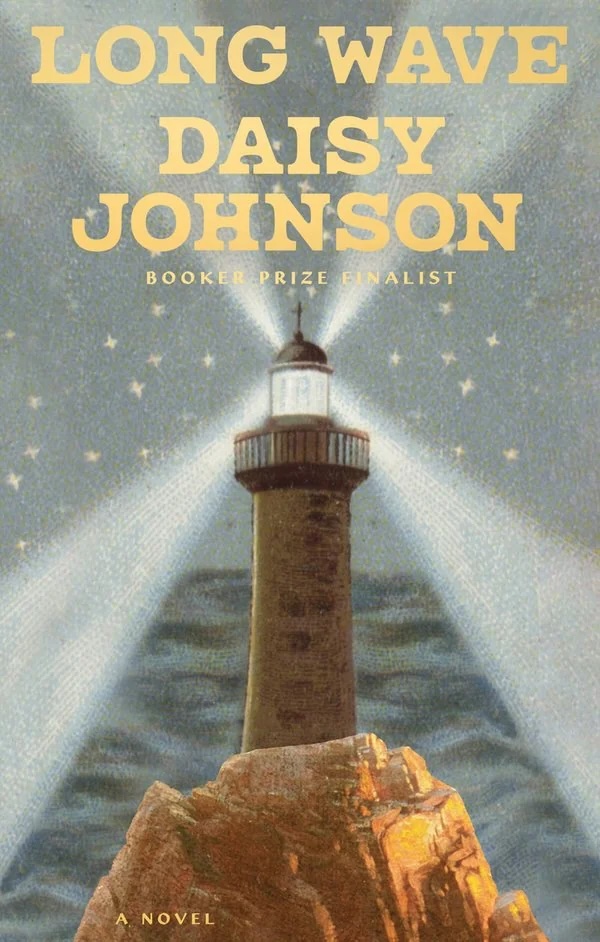
There is the house in the town where Ruth grew up and ran away from. There is the door with the lock and the garden with the tree and the school car park in the darkness. There is the river hurrying out of the town and passing through the country and to the sea. There is Ruth when she was a child and the dream of the island moved up the walls of her room and became almost all she could see. There is, now, Ruth—a decade gone from the house in the town—on the island, finally. There is the island. Here it is. Magnificent and terrifying, divine. It was made so long ago, it was battered by ice from the rock. Here and there, in the craggy cliff, the ground opens up, smaller and larger entrances leading to caves and tunnels below, the gush and bellow of the sea moving in and out. At the highest point, a white exclamation mark: a lighthouse.
Ruth leaves her daughter at the lighthouse and walks out to the cliff. At some point she stops and looks back to see if she can make out the clearing where Ori waits, but already it is out of sight. She keeps going. She sees birds with white-tipped arrow wings, seals slipping into the water. She sees beaches protected from the wind. She must go back now. She must. OK, she says, here I come.
She turns and starts walking back to Ori. The ground is treacherous. The island spins around her, fills her; she keeps walking. As she walks she gives away some of the island—it belongs only to her, beloved, the clear and ringing dream of it that she has had since she was a child in that house by the river—and she thinks: I am walking to Ori. I am walking back to Ori. They will return to the caravan now, to JP and Nora and Leo. She walks fast. She will take her daughter back to real life now and save them both from the tangles of this swooping dream. She walks, thinking of the words she will say to Ori. I love you, I will always love you. The ground ahead is—
Ori
Along the paper fold of the country, there is an island. The cliff winds are hard and wild but the derelict, long‑abandoned lighthouse is in a clearing surrounded by scrubby trees. The doorway of the lighthouse is a mouth,
the concrete floor inside is cracked open, weed‑covered.
In the clearing Ori waits for her mother to come back. The stones she has found here are so, so beautiful. Grey with darker bands, others mottled and rough, a few with holes bored right through them. She strokes them against her cheeks, puts them in her mouth, fills her pockets. She is six years old and wearing red dungarees and torn bee wings, she is singing songs without words into the tickling wind, she is waiting for her mother to come back to her. They will go home, they will eat Chinese takeaway, they will tell the others about their trip, the island will be a story again. This is what will happen.
*
It begins to get dark. She crawls into the sleeping bag and pulls it shut over her head. When she hears her mother coming, she will wait and wait and then she will leap out. SURPRISE!
When she wakes her mother has still not returned. Ori is wrapped in the sleeping bag, underneath the sky. She gets on all fours and looks around. She needs a wee. She needs something to drink. She is hungry. She stands and shouts her mother’s name. She shouts and shouts and shouts until her throat is sore. She retreats inside the lighthouse. She wets herself, as she has not done for a long time, and it is warm until it cools uncomfortably. She calls for Ruth. She calls her by every name she has ever called her by. She gets out of the sleeping bag and drinks water from the little spring with her hands. She gets a Babybel from the bag and eats it.
She dozes in the doorway of the lighthouse. When she wakes there is a ghost dancing. It is a hare. She screams for Ruth and the hare does not run but freezes, flattened on its belly, waiting.
Night, and a dark so impenetrable she cannot even see the tree two paces in front of her. She pulls the sleeping bag over her head.
*
A storm comes. Rain first and then thunder, getting closer. She is afraid and hides inside the lighthouse. The storm is directly overhead. Momentous clashes of sound, the rain spattering through holes in the ceiling, the lightning illuminating the jaggedy branches of the trees.
When she wakes, she understands immediately her mistake. The storm has blown itself out and the sky is white and gentle. She fumbles out of the sleeping bag, kicking it aside. She takes out two smooth stones from her pocket and holds them in her hands. There is the smell, still, of the burnt brambles, the charred walls. She holds one stone in each hand and knocks and knocks them together. Surely the sound must travel across the whole island. And yes, there, someone is coming into the clearing. Her mother is coming through the trees towards her.
She thinks that the sky is filling with pieces of cut paper, like snow; although it is not. White particles turn into flakes turn into sheets until everything is blank.
Min
It is March, the spring equinox. The man named Min is on the island to look for hares. He has pitched his tent
in the island lowlands. There are traces of the hares everywhere, although for two days he does not see them. The distinctive, long footprints run circles around him; on the rock he finds their droppings and in the grass signs of abandoned forms. A few times, carried on the wind, he thinks he hears their warning thumps, although he cannot be certain. An enclosed environment like the island could be the perfect place for his experiment. He finds himself easily tired, out of breath even after a small walk or climb. He thinks that he must dream in the tent. He is studying the dreams of hares and surely he must also dream.
He travels slowly around the island. The hares here are of the mountain variety and not native to the coast. He can see the destruction and mutation that has been caused by their proliferation. The saplings are cut off near to the ground and the bark on the trees stripped right back. The hares have decimated a lot of the plant life and in turn that has changed the bird population. There are historical reports of shearwaters on the island, of at least three kinds of petrels that came here to breed; they are gone now.
He stakes out, lies in wait. He sees cormorants diving for fish on the scummy waves. He eats his sandwiches wrapped in foil, sheltering from the bone‑biting wind. It is getting late. If he doesn’t return to the tent now, he will be stumbling around on the cliff. Beginning to gather his things, he looks up. At the apex of the rise above him he sees movement. He does not immediately recognise the creature for what it is. It is stretched upwards from the ground. Something in its stance, and he finds himself waiting for it to speak, to call out to him. It is a thin ghost, risen from the earth. The wind smacks him a blow and he focuses. It is a hare. If it dropped to its belly, it would be hidden, but it is stood upright, ears splayed, chin tipped to the sky, enormous eyes widened, split lip. He takes a photograph of it. The sound of the shutter is an explosion. The hare sees him, flees. No one in that land runs as fast. He marks the position on his map. He longs to stay or to follow it—hares were once considered messengers, guides—but soon it will be hard to see and if he falls no one will ever find him, so he leaves.
Over the next two days he sees the same hare again often. It is a jill, quite young but already big and very strong. He sees her fighting a buck, tearing its ears so that blood rains on the ground. He sees her visiting her babies, feeding them and then leaving to lure away predators. He knows that she sees him. Sometimes she rises up the way she did that first day, boxes the air.
During his time at the university he came across descriptions of experiments which observed the brains of rats as they moved around a maze, noting the neurons in the hippocampus related to place which became active as they went. When the rats were sleeping the same neurons were found to fire up, in such a particular pattern that the rats could be tracked moving, in their dreams, through the maze. He wanted to repeat the experiment with hares but there were difficulties specific to the genus. Hares were almost impossible to domesticate; the experiment would need to take place in the wild. They were flighty, difficult to catch, and sedate, sensitive to change. He looks at the hare and tries to imagine the harness he would need to design for her to wear, lightweight, almost unnoticeable.
He lies in the tent and listens to the whoop of the wind loosening and then pulling taut the plastic. He stays in the tent for two days, sleeping and sleeping. When he rouses himself, finally, the wind has lessened. He trudges out. The hares are dancing and then running. It is the reason he first loved them, for their speed. When he was a boy he imagined he could one day run that fast. The sky is white. He glimpses the mother hare racing. She streaks up the rock and he follows her. The cliff is a wreckage of holes leading to the caves beneath. There is a crevice that widens out into a maw, the sound of the whooshing sea coming up from beneath. He glimpses a tattered flash of yellow caught around a sharp spear of rock.
He follows the hare. Ahead there is a thicket of wind-beaten trees. He crosses the threshold of the clearing. There is a plastic sheet flapping on the ground and a scattering of pots and pans, the burn mark of a fire on the rock, a stack of wood heaped up unevenly. In the doorway of the light-house is the hare, risen up, belly revealed. He hesitates. The hare seems to crumple, dropping forward. He goes quickly towards it. Up close it is not a hare at all but a child in a white hat too big for her and bare, nearly blue arms. Her hands are closed tightly. He takes off his coat and wraps her in it, picks her up. As her hands loosen, a clutch of stones falls out. He bends, scoops them up. They are hardly warm at all from her skin. He puts them in his pocket. She weighs very little, like an armful of snow. He turns away and begins to run back to the beach.
__________________________________
From Long Wave by Daisy Johnson. Used with permission of the publisher, Riverhead Books. Copyright © 2026 by Daisy Johnson.