How Translating Korean Literature Made Me a Better Fiction Writer
Lizzie Buehler on Incorporating Techniques From Literary Translation Into Her Writing Practice
There is one conversation I remember most distinctly from my MFA in literary translation. I was chatting with a nonfiction student about the novel I was translating at the time when she said with a slight air of amazement, “I could never be a translator. I’m too selfish.”
“What do you mean?” I asked, confused. I had no idea what translating had to do with selflessness.
“I want what I’m writing to be mine,” she replied.
I’ve thought about this conversation frequently in the years since, first as a translator who didn’t think I had an interest in writing my own prose, and later as a soon-to-be novelist. There is the obvious fact that, as a translator, our names are never going to come first on the book cover. It will be in small letters underneath the author’s name, if it’s there at all. Translators will also always have to share the text that we’ve worked so hard on. We may have come up with all the English words on the page, but many readers won’t see what we’ve created as our own, because they don’t realize that translation involves a lot more effort than one-to-one correspondence of vocabulary.
If translating a novel felt like hanging drywall in a newly framed house, writing a novel felt like framing the whole house myself.
In my view, though, the point of translation is that the text is never one single person’s work: it’s always a collaboration, between the author and the translator, or even multiple translators. (I’ve noticed that co-translations are much more common than co-authored prose, perhaps directly reflecting the openness to working in community that is inherent to the translator’s ethos.)
So, no, you can’t be so selfish as a translator that you want the text all to yourself. But if you wanted that, why be a translator at all? And honestly, why be a writer?
My favorite way to begin the writing process is to jot down observations from daily life in my journal, be it a funny phrase overheard at the grocery store or an interaction noticed between two strangers waiting at a crosswalk. It feels like scrapbooking, using specific moments as the tokens I’m trying to remember, and when I have enough moments swirling around in my head, they combine into a specific story. This is a common way for writers to approach fiction—from parts to the whole, rather than beginning with a predetermined story—but I didn’t think about story building in this way until I became a translator, and specifically a translator of the Korean writer Yun Ko-eun.
I’ve now worked with Yun on two novels and one short story collection. I’ve talked with her at length about her creative process, participating in interviews where she discussed the inspiration for her dystopian climate novel The Disaster Tourist, the absurdist story collection Table for One, and her more recent art-world satire Art on Fire. Yun describes specific moments that grow from seeds into a full plot: weird little things that she sees, or questions she has about everyday occurrences. She sums up her way of thinking in the following description of The Disaster Tourist’s protagonist: “Yona was always wondering about…unknown information—like where rocks that fell off the side of a mountain ended up. And what about the scales removed from a filleted fish, or unwanted potato sprouts, or even bullets?”
Would I, too, have learned to wonder like Yona, and to channel this into my own writing, without spending hundreds of hours intently focused on Yun Ko-eun’s words? Maybe, but the apprenticeship via translation certainly helped the process. And beyond the specificities of Yun as a writer, there are so many more general Korean literary details I’ve come to know and appreciate as a translator that have made me think What’s stopping me from doing this in English? Korean doesn’t have English’s fear of repeating the same word over and over—instead of immediately seeing this as clunky, I’ve come to appreciate the rhythm that repetition can enable. There’s also the Korean tendency to anonymize characters or locations in literature by referring to them as A, or B City, or C University—a habit I find oddly charming. Having access to a specific language’s literary quirks is like opening a second toolbox for your own writing.
So rather than seeing a translation practice as selfless, I’d argue that it’s a bit selfish. By translating, you gain so much confidence and experience as a writer. When I was revising my debut novel The Obsessed, I struggled with the opening, rewriting the chapter multiple times before scrapping it and creating an entirely new scene. The experience was daunting—how was I supposed to throw away all the words I’d written and come to feel comfortable with? What if the sentences I wrote to replace them were worse than the originals?
Now that I’d written my own novel, I returned to translation with a new level of belief in my stylistic decisions.
But I’d had this experience before. When translating The Disaster Tourist, I too struggled most with the opening scene, rearranging, deleting, and replacing my rendition of Yun’s sentences multiple times. It was painful, but eventually I found the right arrangement of English words to match Yun’s Korean.
My translation practice doesn’t serve only to benefit my writing; the inspiration and benefits go both ways. Translation requires you to come up with creative reworkings of preexisting ideas; you move these ideas between languages and cultures, but for the most part, you don’t come up with plot yourself. Writing, on the other hand, forces a sense of self-confidence that one can sometimes avoid when translating. That was what really scared me at the beginning of my own novel-writing process. When translating, I trusted that the plot of the story was good, because it had already been published in the source language—vetted by the “experts.” But my novel hadn’t been published in any language; it was still a draft. I had only my own belief in my writing to lean on. My close friends and family who read early versions of The Obsessed reacted positively, but can you really trust the people who love you to tell you if the creative work you’ve invested so much in is terrible? If translating a novel felt like hanging drywall in a newly framed house, writing a novel felt like framing the whole house myself.
But now that I know how to install the foundation on my own—having leaned on the toolbox of skills offered to me by my translation practice—I am able to go back and affix the drywall, too, with greater confidence than ever. The later stages of novel revisions felt like I was back to translation editing; I was no longer being asked to rearrange scenes, change timelines, or cut out and add entire plotlines, but rather to focus on the way paragraphs flowed between each other, and how dialogue embodied certain voices. At the time, I was also simultaneously translating my fourth book from Korean (and my third book by Yun Ko-eun), the novel Art on Fire. Every new translation provides its own challenges—Yun’s new book is a parody of the art world, a sphere about which I don’t know much—but as much as is possible, I was able to translate the novel with a newfound confidence. Now that I’d written my own novel, I returned to translation with a new level of belief in my stylistic decisions.
Jumping between edits on my translation and edits on my own novel was dizzying, but doing so allowed me to see how the two work in tandem together. Being a good translator—knowing when to trust your gut, when to accept edits, when to reject them—means being a good writer. I can only hope—selfishly or not—that the two skills will continue to build upon each other in my future as a translator and author.
____________________________
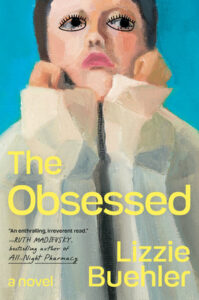
The Obsessed by Lizzie Buehler is available from G.P. Putnam’s Sons, an imprint of Penguin Publishing Group, a division of Penguin Random House, LLC.

Lizzie Buehler
Lizzie Buehler is the translator of The Disaster Tourist (winner of the CWA Dagger for crime fiction in translation), Art on Fire, and Table for One by Yun Ko-eun, and Korean Teachers by Seo Su-jin. She holds an MFA in literary translation from the University of Iowa and has studied comparative literature at Harvard and Princeton. The Obsessed is her debut novel.