How Medical Racism Impacted the Work of Langston Hughes and Zora Neale Hurston
Jesse Waggoner on the Harlem Renaissance's Contributions to Modern Disability Rights
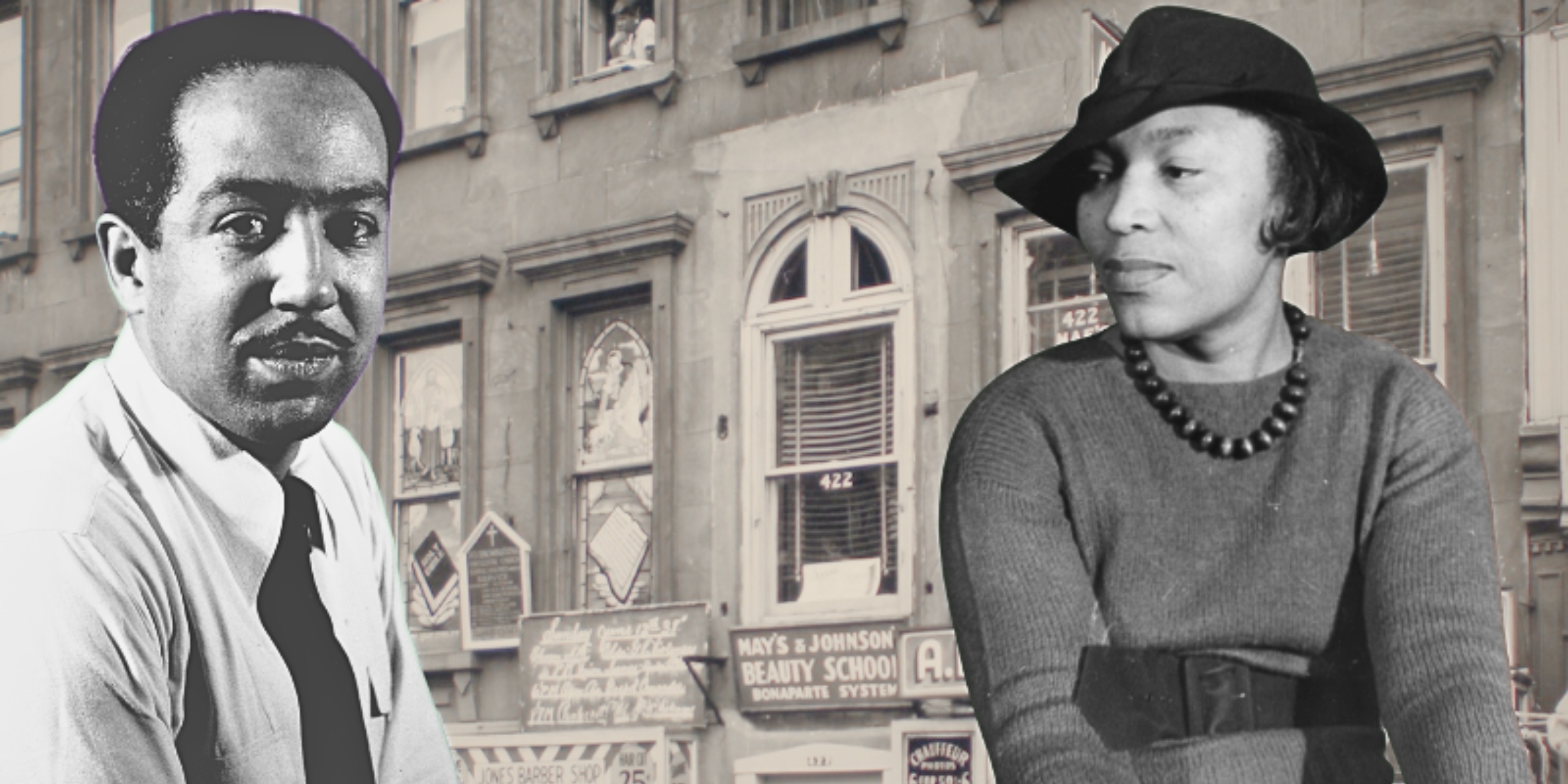
If the Harlem Renaissance was—according to Henry Louis Gates Jr.—“surely as gay as it was black,” it was also disabled. Steeped in a nascent Black disability culture characterized by rejecting eugenics, medical segregation, and ableist politics of racial respectability, writers like Langston Hughes and Zora Neale Hurston used their writing to recount their experiences of racist medical abuse.
In his 1944 essay for the Chicago Defender, “On Human Loneliness,” Langston Hughes muses on the isolation of waiting spaces such as prison cells, dentist’s offices, and doctor’s offices. He writes, “A doctor’s office is even more intently lonely, though it may be crowded with people. Each person has his own illness, or his own fear of illness.” Medical segregation in the Jim Crow era is the unnamed backdrop of “On Human Loneliness,” laying bare the isolation of unjust care systems from Hughes’s waiting rooms into the present moment. By the time Hughes was writing about these medical scenes of waiting in 1944, he had accumulated ample experiences of illness and deferred medical care.
The economic and social precarity created by the artistic patronage system—particularly, in this case, Hughes’s and Zora Neale Hurston’s relationships with their white patron Charlotte Osgood Mason—directly led both writers to experience medical malpractice and extortion. Mason withdrew financial support from Hughes and Hurston in the early 1930s as retaliation for their alleged disregard of her influence. As Hughes wrote in The Big Sea (1940), “She possessed the power to control people’s lives—pick them up and put them down when and where she wished.” Hughes’s mental distress over the loss of Mason’s friendship and support made his anxious stomach consistently churn and his appetite disappear. He wrote of the physical and mental effects of his encounter with Mason, “I felt as if I was going to die.” Hughes described Mason as “possessive,” “terrifying,” and severely controlling of both the themes and the volume of his literary output. Hughes was devastated to learn that his decision to no longer ask for money from Mason did not enrich the friendship, as he had hoped, but rather ended it altogether: “I thought she’d liked me, my patron. But I guess she only liked my writing, and not even that any more.”
Through literature, film, personal accounts, and photojournalism, Black writers such as Hurston and Hughes registered the deep disappointments of modernity and progress for vulnerable citizens living under Jim Crow.
The same day Mason ended their friendship, Hughes attended a dinner party and was forced to leave and seek medical assistance for his troubled stomach and mind, when “the world started to float away.” Hughes’s primary care doctor recommended him to a group of white specialists, who “took samples of my blood, my urine, my spittle, and whatever else there was about me to take, charged me a high fee—in advance—and a week later reported to my physician that I had a Japanese tapeworm.” Hughes was then shuffled into “a large room where the doctor was lying on a couch in an old dressing gown,” after already being charged multiple high fees and seeing six doctors for his ailing bodymind. Instead of conducting an examination and offering a diagnosis and treatment plan, the doctor briefly glanced at Hughes from his couch and “barked,” “You’ve got no Japanese tapeworm.” Hughes was charged an astronomical ten dollars (nearly two hundred dollars in the early 1930s) for a single glance from this disheveled white doctor.
Awaiting a diagnosis that never came and drained of funds from a dizzying sequence of medical neglect and malpractice, Hughes could no longer afford a safe place to rest. Out of options, he returned to Cleveland to convalesce at his mother and stepfather’s small home, where “very kindly my mother gave me the only bed and they slept on the davenport.” A decade after recounting these troubling incidents in The Big Sea, Hughes penned one of the most resonant articulations of the violence of waiting, “A Dream Deferred,” transforming the passive nonagency of waiting into a dream that might “fester” and “run” like a wound or “explode” in the face of an endless deferral of justice. His experience of chronic illness, in other words, had a profound impact on Hughes’s literary output.
Zora Neale Hurston suffered similar medical abuse during her visit to an expensive white-owned medical practice. Her 1944 Negro Digest essay, “My Most Humiliating Jim Crow Experience,” exemplifies the dilemma of racism’s impact on Black health throughout the twentieth century. In 1931, on the uninformed recommendation of Mason, Hurston saw a doctor in Brooklyn for intestinal discomfort, recalling that “[the office’s] reception room was more than swanky, with a magnificent hammered copper door” and “[the] receptionist was obviously embarrassed when I showed up.” She was promptly alienated by both the receptionist and the doctor and placed in what appeared to be a dirty linen closet instead of an examination room.
Despite the signs of Jim Crow, Hurston stayed through the doctor’s callous examination: “He went through some motions, stuck a tube down my throat to extract some bile from my gall bladder….Being the sort of objective person I am, I did not get up and sweep out angrily as I was first disposed to do. I stayed to see just what would happen, and further to torture him more.” During this icy inspection, Hurston decided to inflict as much discomfort as possible on her oppressors by remaining in the office as a form of passive resistance. In the end, the doctor charged her twenty dollars for this swift and unwelcoming visit. In response, she “got up, set my hat at a reckless angle and walked out, telling him that I would send him a check, which I never did.”
By studying the literature of the Harlem Renaissance through the lens of disability…we can encounter the myriad Black disabled and ill lives that deeply contributed to the formation of modern disability rights.
In Hurston’s noncompliance—her refusal to leave quietly, or to pay an outrageous fee—we can observe the intertwined histories of literature, racial resistance, and a growing sense of disability justice. Hurston wrote that she left the office “feeling the pathos of Anglo-Saxon civilization,” deeply skeptical of medical modernity and white “civilization,” and indicting the sheer unsustainability of a white supremacy exemplified by medical segregation.
Through literature, film, personal accounts, and photojournalism, Black writers such as Hurston and Hughes registered the deep disappointments of modernity and progress for vulnerable citizens living under Jim Crow, developing a Black modern disability consciousness in protest of these short comings. This protest, I argue, manifested in two key ways. The first emerged through a proliferation of Black-authored narratives centering Black disabled people. The second appeared through resounding critiques of the ways that whiteness during this era came to include some disabled people under its ideological purview, while white disability advocates adopted discourses of white supremacy and excluded disabled people of color to advance their agendas. In brief, the white disabled subject gained traction as a modern subjectivity and identity often at the expense of Black disabled people.
These erasures of disability—and health-based protest by Black Americans, then and now—contribute to current inequities surrounding racial health disparities. In Black Crip Modern, Black thinkers such as Langston Hughes, Wallace Thurman, Claude McKay, Pauli Murray, Chester Himes, and Zora Neale Hurston navigate illness and disability alongside structural racism, sexism, transphobia, and homophobia. However, none of these authors are canonically recognized as essential generators of disabled cultural production due to a lack of intersectional inquiry into their lives and works as well as the (ever-decreasing) dominance of what Christopher Bell has famously coined “white disability studies.”
By studying the literature of the Harlem Renaissance through the lens of disability, and by highlighting the way artists, writers, and activists disputed the associations of respectable disability with whiteness and masculinity, we can encounter the myriad Black disabled and ill lives that deeply contributed to the formation of modern disability rights and disability justice movements.
____________________________
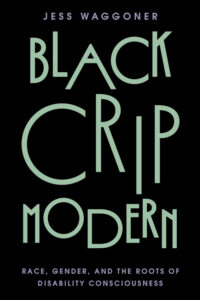
Black Crip Modern: Race, Gender, and the Roots of Disability Consciousness by Jesse Waggoner is available from NYU Press.

Jesse Waggoner
Jesse Waggoner is Assistant Professor in the Department of Gender & Women’s Studies and English at UW-Madison.