G’Ra Asim on 99 Problems Finding the 1
In Conversation with Whitney Terrell and V.V. Ganeshananthan on Fiction/Non/Fiction
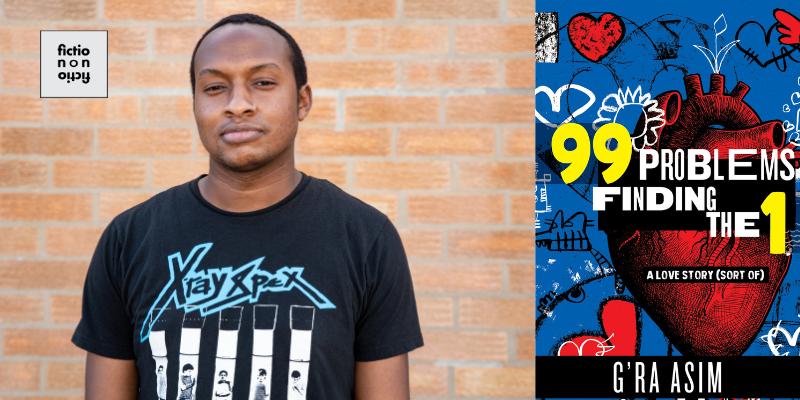
Nonfiction writer G’Ra Asim joins co-hosts V.V. Ganeshananthan and Whitney Terrell to talk about his new book, 99 Problems Finding the 1: a love story (sort of). Asim discusses Afropessimism, heteropessimism, and their relationship to his pursuit of love as a cis straight black man; defines the idea of “thinkful wishing”; and recalls the ways in which black couples in his family, including his parents, have modeled relationships for him. He explains how—inspired by the viral New York Times essay “The 36 Questions That Lead to Love”— he came up with a series of inquiries that push two participants to reflect on their experiences of gender and race. He talks about how culture influences understanding of romance, mentioning Destiny’s Child, Dexter, and Minor Feelings. He reads from 99 Problems Finding the 1.
To hear the full episode, subscribe through iTunes, Google Play, Stitcher, Spotify, or your favorite podcast app (include the forward slashes when searching). You can also listen by streaming from the player below. Check out video versions of our interviews on the Fiction/Non/Fiction Instagram account, the Fiction/Non/Fiction YouTube Channel, and our show website: https://www.fnfpodcast.net/ This podcast is produced by V.V. Ganeshananthan and Whitney Terrell.
99 Problems Finding the 1: : a love story (sort of) • Boyz n the Void: a mixtape to my brother
Others
“On the Necessity of Turning Oneself into a Character,” by Phillip Lopate from To Show and to Tell: The Craft of Literary Nonfiction •“Is Having a Boyfriend Embarrassing Now?” | Vogue • Dexter (TV Series 2006–2013) – IMDb • Atlanta (TV Series 2016–2022) – IMDb • Destiny’s Child – Soldier ft. T.I., Lil’ Wayne • “The 36 Questions That Lead to Love,” by Mandy Len Catron, The New York Times • Minor Feelings by Cathy Park Hong • Dreams from My Father by Barack Obama
EXCERPT FROM A CONVERSATION WITH G’RA ASIM
V.V. Ganeshananthan: A couple of other concepts that you dive into early that really push the thinking in the book forward are heteropessimism and Afropessimism. Pretty early on in the book, you write that in the dating world, heteropessimism and Afropessimism work together like that old medical school adage: “if you hear hoofbeats behind you, think horse, not zebra.” I wonder if you can share your definitions of those concepts and talk about how they connect in your thinking about romance.
G’ra Asim: So I guess to frame the answer, as you requested, I think about Afropessimism as a school of thought constituted loosely by a group of thinkers and critical theorists, who believe that anti-racism is the mortar that holds the world as we know it together, which means, from their perspective, that the only way to rid the world of anti-Black racism would be to destroy the world as we know it. Heteropessimism, even though the word makes it sound as severe and as high stakes as Afropessimism, seems to me to be more of a viral meme than a school of thought. Although, it’s a viral meme that has quite a bit of traction in culture in a lot of different ways. Thinking, for instance, of a recent viral article, maybe it was in The Cut, where the title was something like, “Is it embarrassing to have a boyfriend now? Just citing that to illustrate the degree to which people are taken with this cynical view of romantic possibilities between people of different genders.
The adage that you mentioned that I reference in the book is essentially talking about how the longer people date, the more they become cynical about dating, and they tend to envision that any pause, yellow light, or uncertainty in the process of getting to know someone is evidence of a disqualifying fundamental unfitness. I think it’s really clear to me, based on my parents’ relationship and based on my interpersonal relationships, romantic and otherwise, that it’s very difficult to cultivate meaningful closeness with another person if you are too rigidly committed to the expectation that they are destined to let you down. They are destined to be less than you desire them to be. Of course, we’re all compromised. Of course, we’re all faulty. But this fixation on anticipating bad news or difficulty, and in fact, heading it off at the pass can very often prevent us from discovering exactly the things that would delight us if we were patient enough to let them unfold.
Whitney Terrell: There’s a passage in the book where you’re texting or in a conversation with somebody that you’re dating. She says, “I don’t want the narrative of this book to be that I wanted you more than you wanted me.” Is that what you’re talking about, a kind of “I don’t want to admit that I like you. I’m already certain that I’m already envisioning the end of this?”
GA: That’s right. The person who said that to me wasn’t even talking about the book. She was just saying the narrative of the relationship. She was already thinking about the relationship as a story, which I can’t blame her. People are consumed with social media apps that arrange their lives according to Freytag’s pyramid. They spend so much time mining their own experience for content. I see how someone gets there, but at the same time, this preoccupation with the end or where the story appears to be going can directly preclude recognition of what’s happening right now.
VVG: You also really helpfully and early in the book push back on rigid constructions of masculinity and femininity and the notion that straight and queer identities are not fluid; that they don’t have overlap. All of this makes these kinds of lowered expectations all the more inappropriate. They’re not necessarily going to hold in a world that’s much slipperier. Whitney and I were talking last night about the Stockdale Paradox, which I had not heard of until I read about it in your book. And I wonder if you can talk a little bit about the Stockdale Paradox, tell our listeners what it is and how it applies to this situation.
AG: Sure, the Stockdale Paradox, as I understand it, is a commitment to taking an unflinching look at the most brutal facts of your situation, while maintaining an ineradicable conviction that you will prevail. It’s directly contrary to heteropessimism, and Afropessimism in a different way. I mention it in the book partially because in the intro I close read the Destiny’s Child song “Soldier,” which I would argue is an amazing song, but has done irreparable damage to the capacity for sensitivity of people of my generation across all genders. I was looking at the Stockdale Paradox, which comes from James Stockdale, a former prisoner of war in Vietnam. I was looking at the Stockdale Paradox as another way of considering this militarism-inflected view of love that was less fearsome and more constructive. Even though I’m not someone who goes around lionizing soldiers or romanticizing war, I do find the concept of the Stockdale Paradox completely inspirational, including as it pertains to romance.
WT: So, what you essentially mean in that, in terms of discussing the Stockdale Paradox, is like even if bad things might happen, you need to keep an open mind to the possibility that things will work out?
GA: I might even take a step further and say, if you are determined to find and sustain a fulfilling relationship, then you don’t want to just hold on to the idea that it might work out. I think there’s something to be gained from deciding that it will absolutely work out, that there’s no other possibility, as David Stockdale did when he was in prison.
WT: I totally agree with that. People have to create positive narratives for each other. I felt like you talk about your parents a lot in the book, but my grandparents were really good at creating positive stories about how their relationship went and what they felt about each other. Even if they fought or whatever, they still spent time creating narratives about themselves that were like “This worked.”
GA: Which I’m sure, if that was a successful relationship, I’m sure that is not incidental to longevity, right? I mean, keeping morale high is something that’s useful to almost any collaborative endeavor, and I don’t think love is any kind of exception to that.
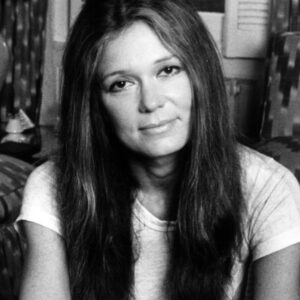
Transcribed by Otter.ai. Condensed and edited by Rebecca Kilroy. Photograph of G’Ra Asim by Kate Hoos.

Fiction Non Fiction
Hosted by Whitney Terrell and V.V. Ganeshananthan, Fiction/Non/Fiction interprets current events through the lens of literature, and features conversations with writers of all stripes, from novelists and poets to journalists and essayists.