From My Hometown to Vietnam, Searching For My Biological Father
Robert K. Brigham Remembers His Decades-Long Quest to Unearth the Truth About His Family History
Marge loved to talk on the phone. I hated it. But I indulged her, calling almost every day for forty years. This phone call was special. It was my adoptive mother’s birthday. Marge was turning ninety-one while in hospice care in a nursing home in Polk County, Florida. I knew that this might be one of our last phone calls. It was the height of the global COVID-19 pandemic in 2020, and I felt guilty about not being able to visit her. I wouldn’t be able to say my final goodbyes and thank her in person for all that she had done for me. I just had this phone call. I spent hours planning what to say, but Marge had other ideas.
“Tell me everything. Don’t spare any details. I don’t remember things like I used to, so pretend I don’t know anything. Don’t hold anything back,” Marge pleaded. “Tell me all about your search for your biological family. I want to know that you have family in your life before I die.”
“Where do I start? It’s so complicated,” I replied.
“Start at the beginning,” Marge demanded.
For the next two hours, I told Marge every detail.
How I thought my biological mother had died of cancer shortly after giving birth to me. How I had come to believe that my biological father had fought and died in Vietnam and how I had become a historian of his war because of that story in my head.
I could never find the words to tell Mary that I loved the Brighams and I mourned the loss of my first family and my roots. Both were true.
How I learned that my biological family had suffered through the most unbelievable tragedies and that my connection to them was more than just a series of remarkable coincidences.
How the rich eat the poor.
How America treated unwed mothers and the children they gave up for adoption.
How foster care failed my aunts and uncles.
How I carved out a meaningful life from all this pain with the help of family, good teachers and mentors, and a small town that helped raise me.
At age fifty-eight, I discovered my biological family from a DNA test that Marge had given to me. I found an unbelievable connection to my biological father and learned he had been with me most of my life. How Tim O’Brien, the Vietnam vet novelist, wrote, “A true war story makes the stomach believe…A true war story is about sorrow.” The story I discovered, my story, was a true war story.
*
“Good God, Bobby! You’re driving me up the wall with your obsessions. I can’t believe you gave Baldy a list of people to investigate. What were you thinking?” Marge asked. “This is a small town. How do you expect to live here in peace if you put everybody and everything under a microscope?”
“But I didn’t put everybody and everything under a microscope, Mom. It’s just fifty-two names.”
“I have supported your desire to know your past at every turn. But this just takes the cake. This goes too far. Please stop,” Marge begged. “For the love of God, please stop.”
I could tell that Marge was serious. And she had a point. I never felt comfortable investigating my neighbors. Marge thought I lacked introspection, like most men. But her begging me to stop searching for my Vietnam dad among my friends and neighbors really did cause me to think about my search and what I was doing with my life.
After a few days’ reflection, all that any teenage boy could stand, I concluded that my Vietnam dad might not be from Cambridge after all. This conclusion was a measure of self-preservation. I could stop conducting research on my friends and neighbors. I could look elsewhere, somewhere less problematic. This decision also got me out of my depression. I had given up on ever finding my Vietnam dad because of the difficulty of finding him in Cambridge. In an odd way, the more difficult task of finding him in some unknown town gave my search new life. I had more research to do. Research lifted the veil.
“Mom, I feel better now that I know my Vietnam dad is not from Cambridge,” I announced confidently one day. It was the first time I used the phrase “Vietnam dad” in front of her. I could tell she wasn’t amused. She didn’t say a word. She didn’t have to. She was relieved that I would leave the good townspeople of Cambridge alone. But she also thought that the search for my Vietnam dad was a fool’s errand. Ironically, it was just the kind of quest that Al did all the time. Like the time he tried to rescue Soviet dissidents from a gulag through someone he knew from Finland. Just the kind of tilting at windmills that drove Marge up the wall. But I wasn’t getting in trouble anymore now that I had a research agenda. Naturally, I was maturing. But I was also putting my energy into something productive. Marge liked my growth, but she thought that I had more work to do to improve myself.
The next Sunday, after church, Marge pulled Reverend Payne aside. “Reverend, can you help Bobby get some peace? Can you pray for him to let go of his obsessions and focus on what really matters in life? Can you get him off this Vietnam kick so that he can make something of himself?” Of course, I was standing right next to her. Marge believed in prayer. She believed in God’s intercession. She thought God could save me with Reverend Payne’s help.
Reverend Payne met with me on Tuesday and prayed for me to find my way. “Lord, we lift up this lost teenager, a good boy really, to Your guiding light. Please help him find his way through the darkness of confusion and uncertainty and lead him toward the path of righteousness and wisdom,” Reverend Payne said breathlessly. He continued, “Lord, grant Bobby the strength and courage to make the right choices and do the right things.” Then Reverend Payne looked toward the ceiling and loudly asked, “And Lord, may Your love and grace be his compass in this tumultuous time in his life. Amen.”
I prayed that Reverend Payne’s prayers would work. I didn’t want to be a lost soul. I didn’t want to be confused and on the wrong path. I wanted to be a normal teenager with normal teenage problems. I wanted salvation and inner peace. I wanted my anxiety about being adopted and the stress over my search to end. But I thought I could only get to this state of grace with God’s help and by finding my first family. These things became intertwined. Marge had always told me that God helped those who helped themselves. I was helping myself. I was taking direct action to find my first parents. If that wasn’t helping myself, what was? I could see the beginning of my search for my Vietnam dad, but it was impossible to see the end. God would see me through this journey, I thought.
During my prayer session with Reverend Payne, he had to take a phone call. While he was gone, I tried a little prayer on my own. “Dear Lord, help me find my first mother’s grave and my first dad who served in Vietnam.” Then I sat and listened, waiting for the voice of God. Nothing. Not a thing. When Reverend Payne returned, I told him about my prayer.
“That’s not how it works, Bobby. God doesn’t immediately answer our prayers.”
“Would God answer my prayer if I tried to help myself again?” I asked Reverend Payne. He hadn’t the slightest idea what I was talking about, but he nodded and said goodbye.
Armed with the approval of God’s servant, I decided that I needed to dig deeper into my first mother’s death and my Vietnam dad’s life. I went to the library and looked at all the obituaries I could find for any young women who died in Washington County between 1960 and 1965. I went all the way up to twenty-one years of age. The library had the new county death index for the 1960s, so this was a far more efficient path than walking Washington County’s cemeteries again. I found nothing that seemed a likely match.
Undaunted, I turned my attention to my Vietnam dad. I decided that there had to be a reason that he wasn’t looking for me. If my first mother was anything like me, and I hoped that we were exactly alike in every way, then I knew she would have had the courage to tell him about being pregnant with me no matter the circumstances. But the more I thought about it and the more research I did, the more I realized that my Vietnam War story wasn’t adding up.
If my first mother died in the early 1960s shortly after giving birth to me, and my Vietnam dad had gone to war, why wasn’t he home yet? If my first mother had told him about me, wouldn’t he come find me?
The next Sunday in church, I sat silently looking out the stained-glass window during the sermon when it hit me like a bolt of lightning. My Vietnam dad never knew about me because my first mother never had the chance to tell him. She died just as he was taken prisoner of war (POW). I was sure of it. This explained everything. I immediately knelt on the prayer bench and whispered, “Thank you, God.”
There were over 660 Americans held prisoner in North Vietnam. Most of them had been shot down during bombing missions. The prisoners quickly became a bargaining chip for Hanoi during the Paris peace talks, which had begun in April 1968. President Nixon insisted that that the final phase of the US troop withdrawal, which began one year later, in April 1969, was dependent on Hanoi handing over the American POWs. For years, the POW issue had been front and center in all discussions on the war.
I bought a POW bracelet and put a POW sticker on my bedroom wall and inside my locker at school. I tried to find a POW flag to fly from our house, but the one at the mall was too expensive. I was sure that the government in Hanoi was holding American prisoners even as the war was winding down. I was sure that my Vietnam dad had been held against his will in some dank, dark prison cell. I followed this evolving story with all the intensity of a convert. And my new Vietnam War story tied me once again to the headlines.
The beginning of Operation Homecoming, the return of POWs, was scheduled for the same night as the junior high school’s Valentine’s Day dance, Saturday, February 10, 1973, just a few weeks after the official signing of the Paris Peace Accords, ending America’s military involvement in Vietnam. The official ceremony would take place two days later, on Monday, February 12. I desperately wanted to watch the late news on Saturday to see if I could get a glimpse of my Vietnam dad among the returning POWs. I was sure that I would easily recognize him, even after years of imprisonment.
I went late to the Valentine’s Day dance, arriving just in time to dance with my girlfriend, Wendy, to her favorite song, the Rolling Stones’ “Wild Horses.” We swayed out of rhythm in a tight embrace like the other seventh graders while I kissed her neck. After a few more dances, I told Wendy that I had to leave to watch the news. As I left the auditorium Wendy yelled, “You just can’t let it go, can you? I’m here for you as a friend, but I can’t be your girlfriend. I can’t be second to a daydream. Good fucking luck finding some girl who can.”
The entire auditorium grew silent. The only thing you could hear was Carly Simon’s “You’re So Vain” and Wendy screaming at me.
That night, the late newscasts described the path the POWs would take from Hanoi to the Philippines and then home. It would take about three months for them to make their way back to the US. All that spring, my attention turned to the returning veterans. Every news report showed photos of them, but none of them ever struck me as my Vietnam dad.
Not satisfied, I researched every single POW from New York State. The New York Times had run a list of returning POWs and the missing in action (MIAs) on January 29. There was an advertisement on the same page for the Tensor Telephone Recorder, something I had never seen or heard about, and it seemed oddly out of place. It took me a few weeks to get through the list, but I found 143 POWs/MIAs from New York State. There was only one name on the list from Washington County, a young man who had been killed while in captivity. He was also only thirteen years old when I was born, too young to be my Vietnam dad. My research taught me that I needed to revise my story.
I struggled for months. What was God trying to tell me? I was so confused that I finally confided in my sister Jane about my Vietnam dad and my evolving war story. I hadn’t wanted to bother Jane with my troubles because she was having troubles of her own. Jane and Marge were constantly fighting. Jane rebelled against Marge’s efforts to manage her choices, especially on whom to date. Eventually, Jane moved in with Al, but not without a lot more drama. Still, Jane had always been there for me, and I really needed her sage advice. Her life was usually off the tracks, but she had always been excellent counsel for me. I think she liked taking care of me rather than thinking about her relationship with Marge.
Jane listened patiently, nodded, and said, “I know you’ve talked with Tom Hunt and Dan Severson; did they help?” I told Jane that it was great to hear Tom’s and Dan’s stories from their time in the military, but they really didn’t have much to say other than to encourage me to search for my Vietnam dad. “Why don’t you talk to Lenny?” Jane suggested. “I think his dad was in Vietnam. Maybe he could help.”
I saw Lenny all the time at school. He was a couple of grades below me, but he was good friends with some of the guys I played football with. We were also on the student council together and he hung out with some of Jane’s friends. It would have been easy for me to ask Lenny almost anything. Anything, that is, except about his father. As teenagers, nobody ever, ever asked anything about your parents. It would be just too uncool. For nearly a year I thought about walking up to Lenny and saying simply, “Your dad was in Vietnam?” I thought about it and thought about it. But I never got up the nerve.
My war story had evolved over the preceding eight years, and it continued to evolve, but it remained the center of who I thought I was and why my life was as it was.
Had I started that conversation, though, for the first time in my life, I would have been talking to a blood relative.
Lenny was my first cousin. His father Jerry was my dad’s older brother, a fact I learned forty years later. Jerry did serve in the Army during the Vietnam War. Lenny and I did look alike. We had the same long dark wavy hair, we had the same dark eyes, we had the same wiry bodies, and we were about the same height and weight. I didn’t think anything of it. Had I known that he and I were cousins, it would have made all the difference to my sense of self. That hole in my guts would have been partially filled. I would have connected with my roots, known where my people were from, and how I got to Cambridge. He could have told me all about my Vietnam dad and more. I could have confided in him. I would have belonged. No amount of daydreaming would have been able to replace the knowledge that Lenny could have shared. If only I had had the courage to ask him about his father’s service in the military. If only we had known. But we didn’t. Nobody did.
And so my daydream took on yet another form shortly after my fifteenth birthday, when on April 30, 1975, communist forces smashed through the Presidential Palace gates in Saigon with Soviet-built tanks, ending the Vietnam War. That final campaign of the war began in March 1975 when North Vietnamese troops captured Buon Ma Thout in the Central Highlands. The military command in Saigon ordered a strategic military retreat from the region, hoping that the South Vietnamese Army could defend the coast and Saigon. In early April, communist troops captured Xuan Loc after a bloody battle against South Vietnamese forces. Refugees fled south as communist troops stormed down Highway 1, heading for the nation’s capital, Saigon. On April 21, South Vietnamese president Nguyen Van Thieu resigned, and by the end of April, communist tanks had surrounded Saigon. Iconic images of South Vietnamese fleeing to the US embassy for safety and evacuation remain part of the war’s legacy. The war was over.
All that summer, I once again waited for my Vietnam dad to return. I wasn’t sure where he had been or what he had been doing since my birth, but I was sure that there was a logical explanation why he hadn’t returned to me.
“I just know he is going to walk through that door any minute,” I told my new girlfriend Mary. “He’s just going to walk through that door and be in my life forever.”
“What if he doesn’t?” she asked. “Are you ready to live your life without looking over your shoulder all the time? You deserve to have a full life, but I think your obsession with the Vietnam War is holding you back. Why don’t you want to talk about something other than the war? If your first father does come back from the war, maybe he won’t want to talk about it at all. Lots of vets don’t, ya know. What will you talk about then?” Mary demanded. She always tilted her head to the side when she was giving me advice on how to improve myself, which she did quite often. Like Marge, she thought there were great gaps in my education and that I wasn’t applying myself fully at school. Mary was ambitious; she had her life all planned out. After college she would go to medical school and become a doctor to improve the lives of others. Until then, she worked full time improving me.
“I believe in you, Bobby. I think we have a future together. I know you can achieve great things. But you must let this Vietnam obsession go,” Mary warned. “Let’s set some goals together and work towards them. Let’s do this together. It’s up to you to make the most of your abilities, and right now, you’re not working hard enough. Right now, you’re not well-rounded enough. You need to move on. You need to grow.”
If Mary wasn’t so cute I would have run away after the first sentence. And there were more sentences to come.
“You know, you were lucky that the Brighams adopted you,” she lectured. “You don’t know what your life would have been like with your birth family. The Brighams are good people. And they love you more than air.”
Marge and Al were good people, and they did love me. That wasn’t the point. I could never find the words to tell Mary that I loved the Brighams and I mourned the loss of my first family and my roots. Both were true.
Mary pushed me harder. “You know, there are so many people in the world who have things a lot tougher than you do. Yes, you were adopted. Yes, your parents got divorced. But you have shelter, clothes, and food, and the Brighams love you. They support your interest in history. They’ve put up with your Vietnam nonsense forever. They want you to dream bigger. What more do you want?”
I wanted it all. I wanted everyone to know what it was like to have your life start with a fake birth certificate, a new name, no family medical history, and the sentence, “When you came to us….” I had no choice in any of this. I wanted choice. And I wanted more of everything. I wanted more love, more life, and more possibilities. I could get those things, I thought, if I knew more of my story— the one about the dead teenage mother and a dad who served in Vietnam.
Mary thought I could get those things if I gave up on my silly war story. Marge felt the same way, though she would never tell me.
By late July 1975, when I was fifteen years old, I knew that my Vietnam dad was never coming home. After several weeks of agonizing reflection, I concluded that he died in Vietnam serving his country. Now when I entered my Ghost Kingdom, my Vietnam dad had died a heroic death. He was always saving other soldiers when he died. He fell on a grenade; he rushed a strongly fortified machine gun or jumped in front of a sniper’s bullet to save a brother in arms. This story made the most sense to me, and for the next forty years his death became the rationale and justification for my Vietnam War obsession. My war story had evolved over the preceding eight years, and it continued to evolve, but it remained the center of who I thought I was and why my life was as it was. The only constant was that he died a hero’s death in Vietnam and would never be coming home to find me.
____________________________
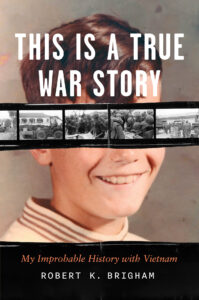
Reprinted with permission from This Is a True War Story: My Improbable History with Vietnam by Robert K. Brigham. Published by The University of Chicago Press. © 2026 by The University of Chicago. All rights reserved.
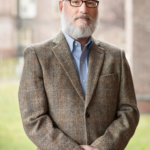
Robert K. Brigham
Robert K. Brigham is the Shirley Ecker Boskey Professor of History and International Relations at Vassar College. He is the author or coauthor of ten books, among them Reckless: Henry Kissingerand the Tragedy of Vietnam.